
Planning a trip to China? Whether you're dreaming of the Great Wall, exploring Shanghai's skyline, or wandering through panda reserves in Chengdu, understanding China tourist visa (L-visa) requirements is essential. This comprehensive China L visa guide 2025 covers everything from documents needed for China tourist visa to the step-by-step application process and the game-changing 240-hour visa-free transit policy. Optimized for travelers, we've included China visa application tips, fees, processing times, and FAQs to make your journey seamless.
📌 Key Takeaways: 2026 China Tourist Visa at a Glance
-
Passport Requirements: Your passport must be valid for at least 6 months from your date of entry and have at least two blank visa pages.
-
10-Year Visas: U.S. and Canadian citizens are eligible for multiple-entry L-Visas valid for up to 10 years, allowing 30 to 90 days per stay.
-
The 240-Hour Transit Rule: If you are transiting through China to a third country (e.g., USA → Shanghai → Japan), citizens of 54 eligible countries can stay up to 240 hours (10 days) visa-free. Note: Standard round trips (USA → China → USA) do not qualify for this rule.
-
Application Process: You must complete the application form online, but final submission and fingerprinting must be done in person at a Chinese Visa Application Service Center (CVASC) or your local Consulate.
🧭1. What is the China Tourist Visa (L-Visa)?
The L-Visa is issued to foreign citizens who intend to travel to mainland China for tourism, sightseeing, or visiting friends/family.
|
Feature |
Details |
|---|---|
|
Visa Type |
L-Visa (Tourist) |
|
Purpose |
Tourism, sightseeing, visiting friends (in a non-business capacity) |
|
Validity |
Typically 3 months, 6 months, 1 year, or sometimes 10 years (for US/Canada citizens), allowing multiple entries. |
|
Duration of Stay |
Usually 30 to 90 days per entry. |
|
Application Location |
Chinese Embassy, Consulate General, or a China Visa Application Service Center (CVASC) in your country of residence. |
📋2. L-Visa Application Requirements: The Essential Checklist!
2.1. Core Application Documents
-
Valid Passport: Must have at least six months of remaining validity and at least two blank visa pages.
-
Completed Visa Application Form: The form must be filled out online (typically via the CVASC website) and printed. Ensure all fields are accurate.
-
Photo: One recent (within the last six months), color passport-style photo. The photo must meet strict specifications (white background, full face, no glasses or hats, 33mm x 48mm size). Please refer to the link for Chinese visa photo specific requirement. (If you need help with the Chinese visa photo, you may check out this website: https://www.snap2pass.com)
-
Proof of Legal Stay/Residence: If you are applying outside your country of citizenship, you must provide the original and copy of your visa or residence permit in the country where you are applying.
2.2. Proof of Travel and Itinerary
-
Round-trip Airline Ticket Booking: Proof of confirmed bookings for entry into and exit from China.
-
Hotel Reservations: Proof of confirmed hotel bookings for the entire duration of your stay in China. If you are staying with friends/family, you must provide an invitation letter (see below).
-
Detailed Itinerary: A simple, printed document outlining your planned schedule, including cities, dates, and activities.
2.3. Invitation Letter (If Staying with a Host)
If you are not staying in a hotel, your host in China must provide a formal invitation letter, which should include:
-
Information about the Applicant: Full name, gender, date of birth, passport number.
-
Information about the Trip: Purpose of visit (tourism/visit), dates of arrival and departure, places to be visited, and relationship with the host.
-
Information about the Inviter: Name, address, phone number, signature, and an attachment of their Chinese ID card (or residency permit/passport if they are non-Chinese).
⏳3. Step-by-Step L-Visa Application Process
The application process is standardized across most countries, largely managed by the China Visa Application Service Center (CVASC).
Step 1: Online Preparation and Appointment Booking
-
Fill out the Online Application Form: Go to your local CVASC website and complete the comprehensive online form. This is mandatory and must be done before visiting the center.
-
Print the Form: Print the completed form and sign it exactly as required.
-
Book an Appointment: Use the CVASC website to book a date and time for your in-person submission. Most centers do not accept walk-ins.
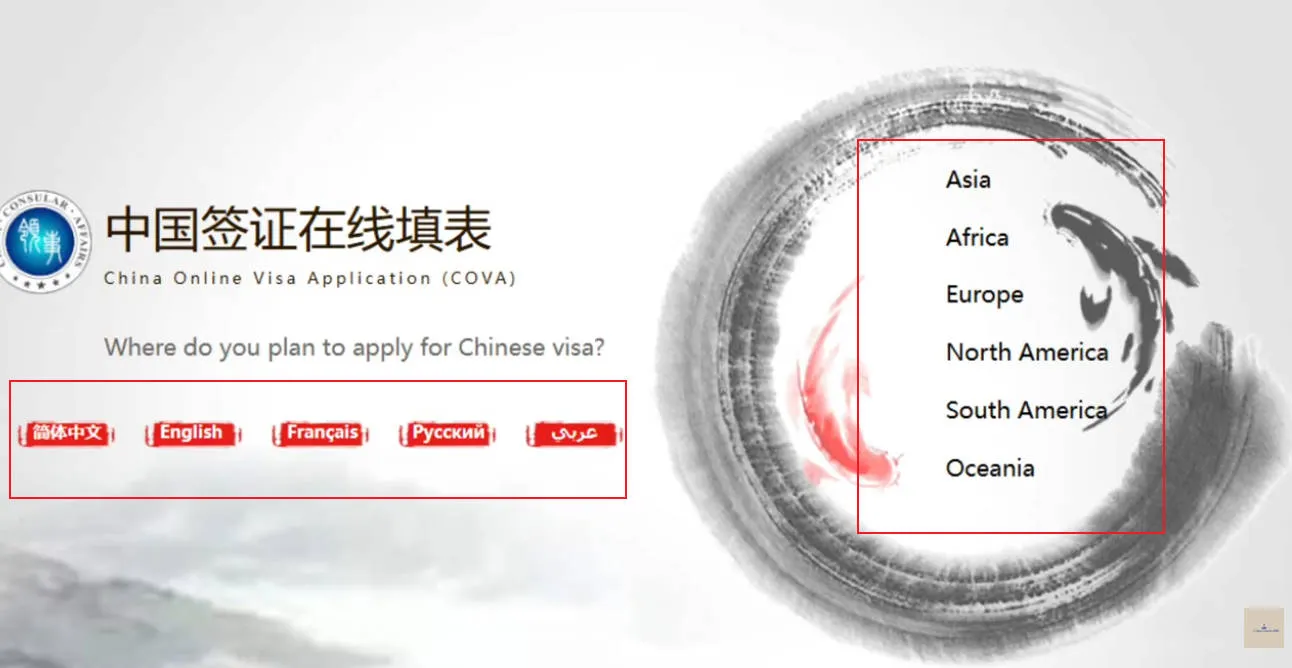
Fill out the application form online:
👉Go to official Chinese visa application website. Just search for China visa online application on Google and you will find the page. Choose your preferred language as well as your country and city. The system will automatically match your with the correct embassy or consulate.
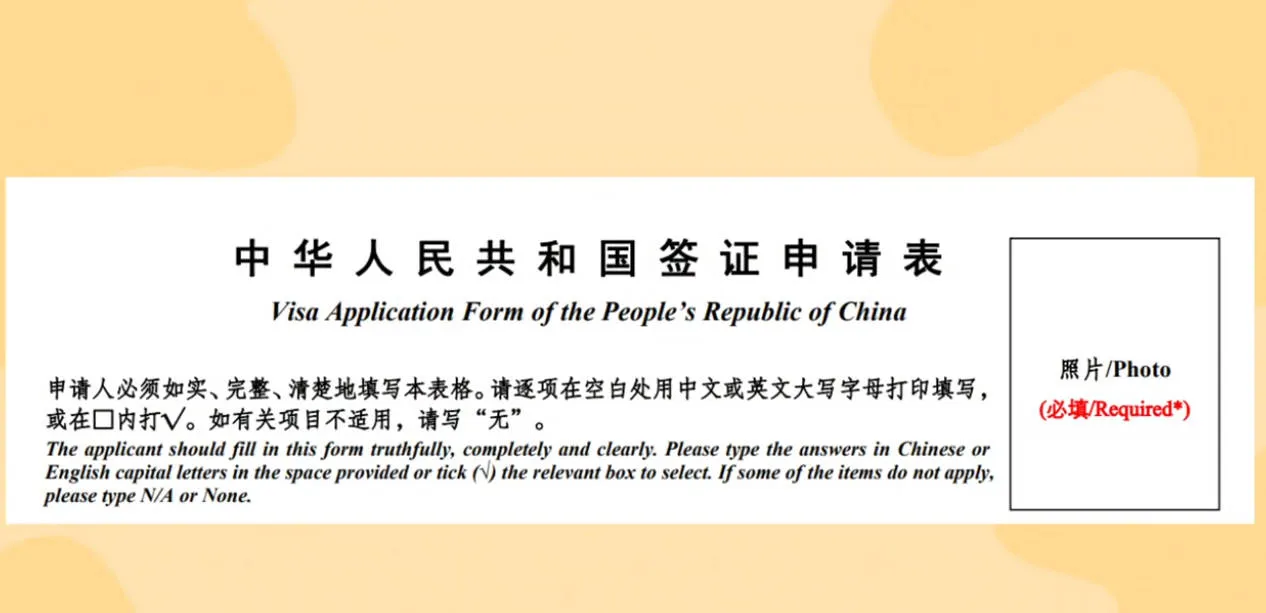
Fill in the online form. It has nine sections.
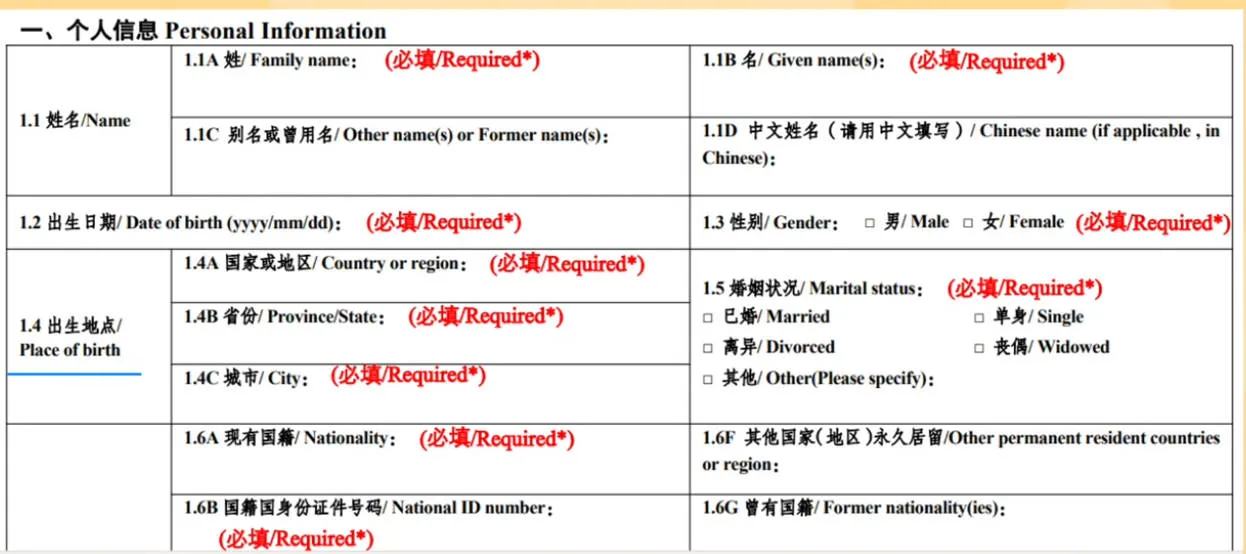
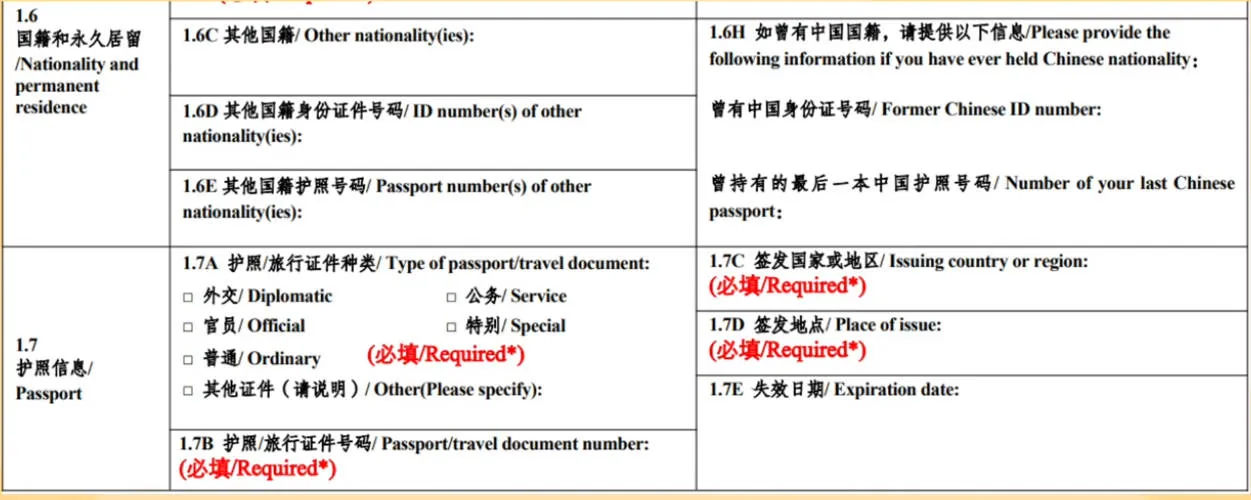
1️⃣Section one: personal information including name, date of birth, place of birth, nationality, and a passport details.
2️⃣Section two: visa information. For tourism, select L visa. A independent tourist. (Important: If a whole family is traveling, each person fill out their own form separately. )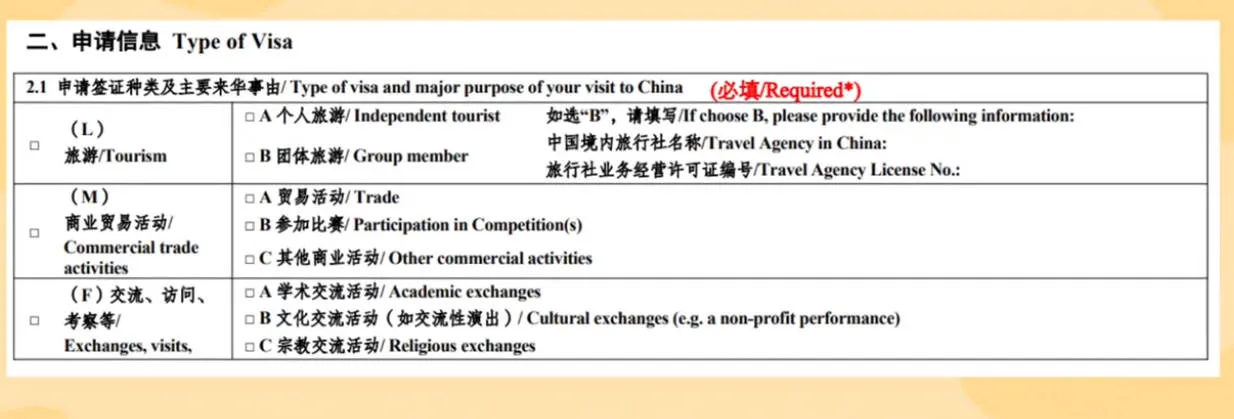
3️⃣Section three: employment details. Your profession and work history for the past five years.
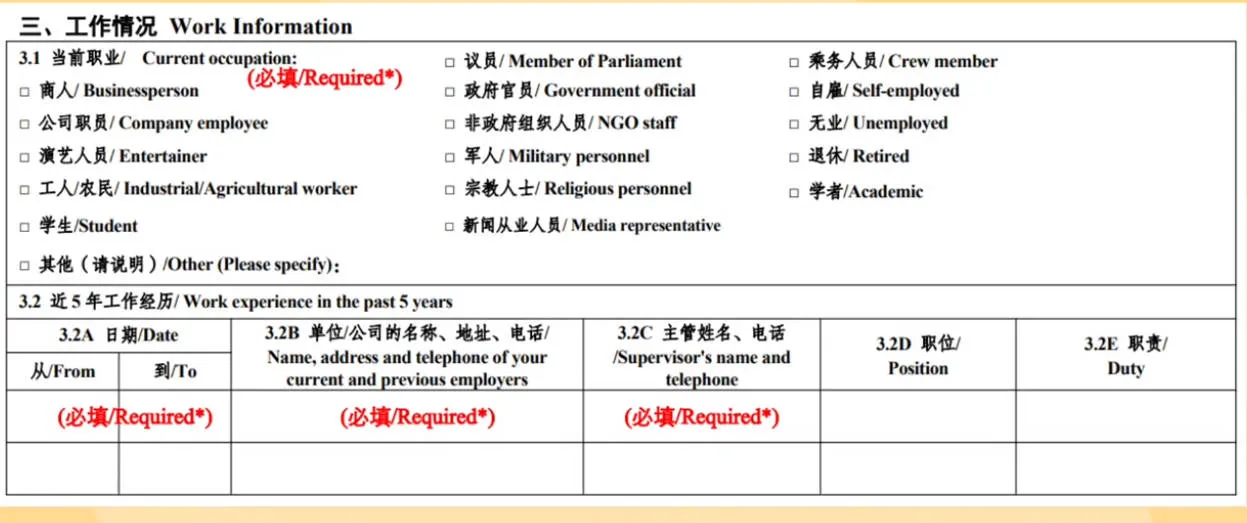
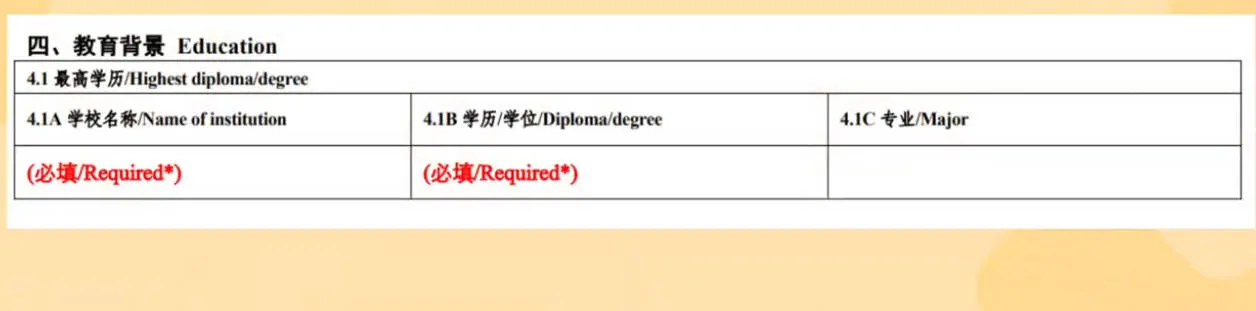
4️⃣Section four: education background. Your highest degree and school. Field of stydy is optional.
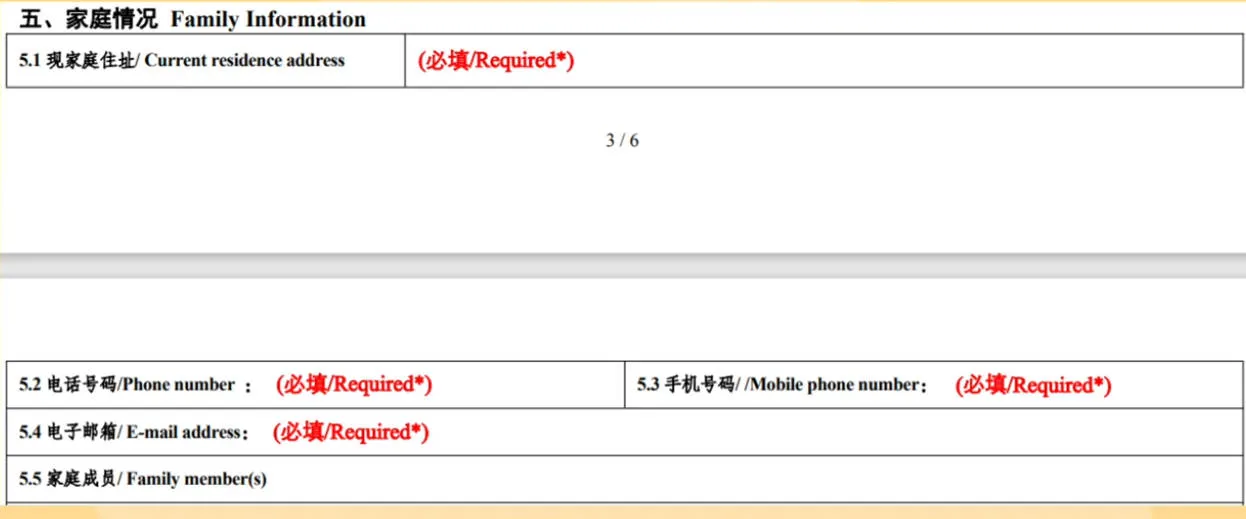
5️⃣Section five: family details, address, phone, email, family members information.
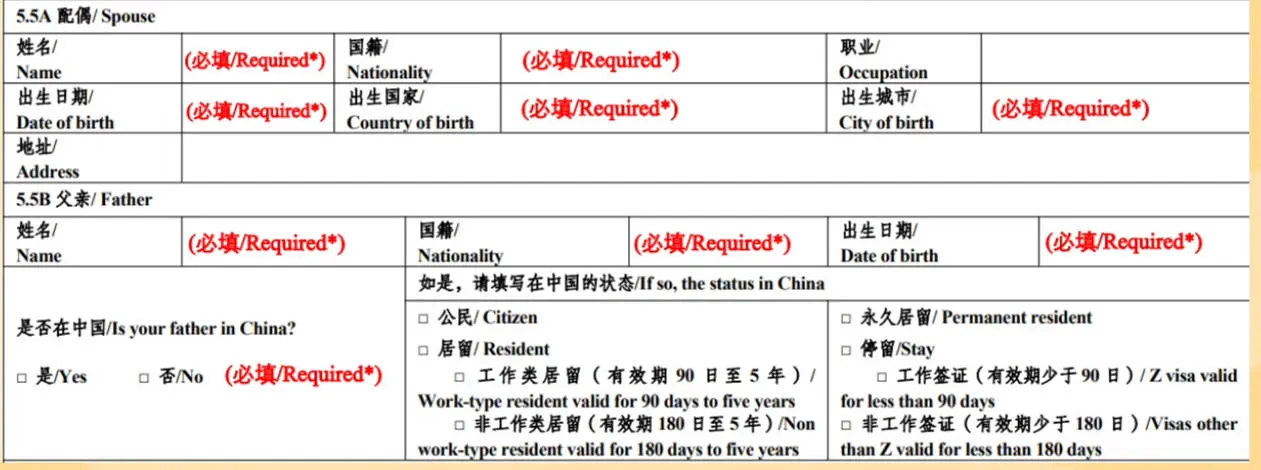
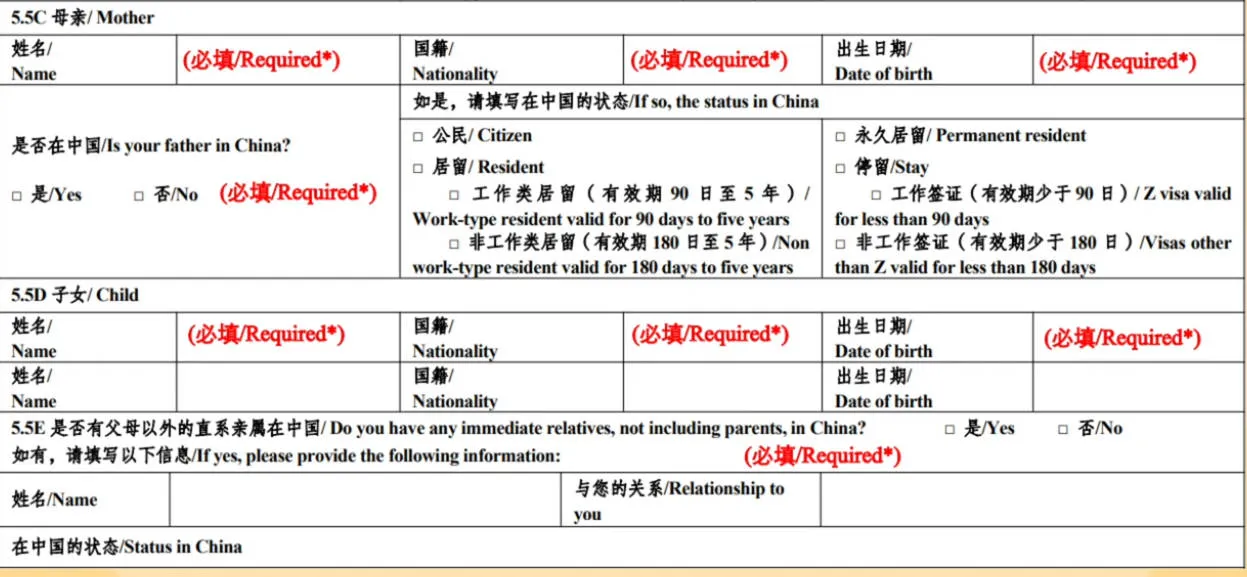
6️⃣Section six: travel details, entry and exit dates, cities to visit, emergency contact, who pays for the trip.
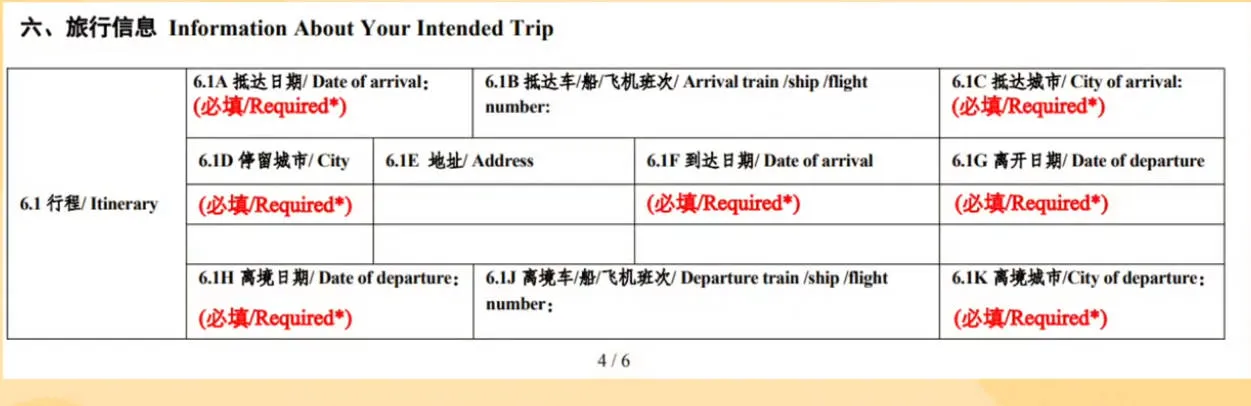
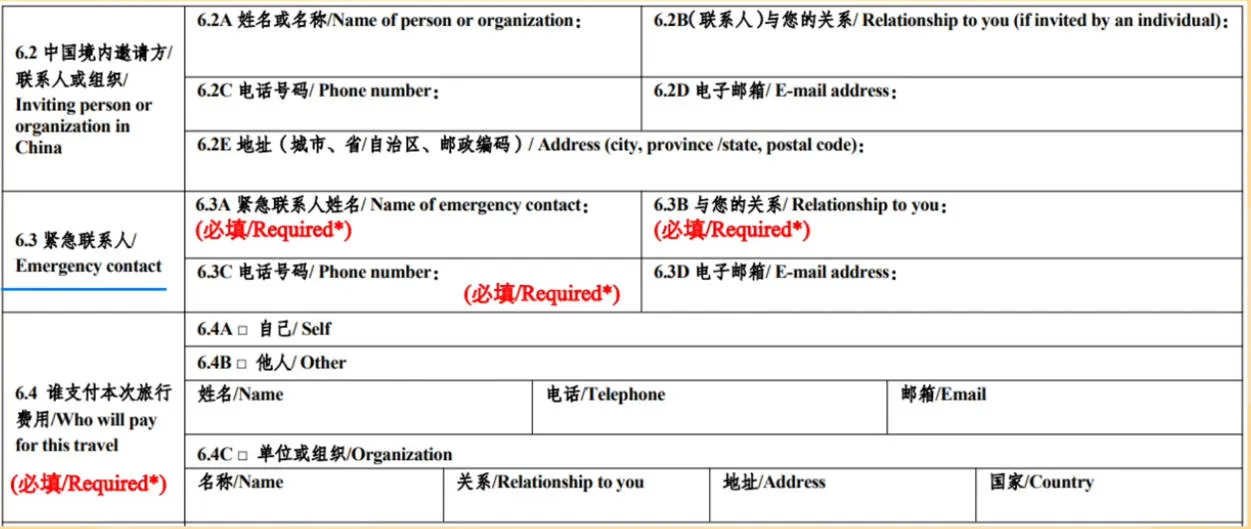
7️⃣Section seven: travel history, previous visits to China and countries visited in the past 12 months.
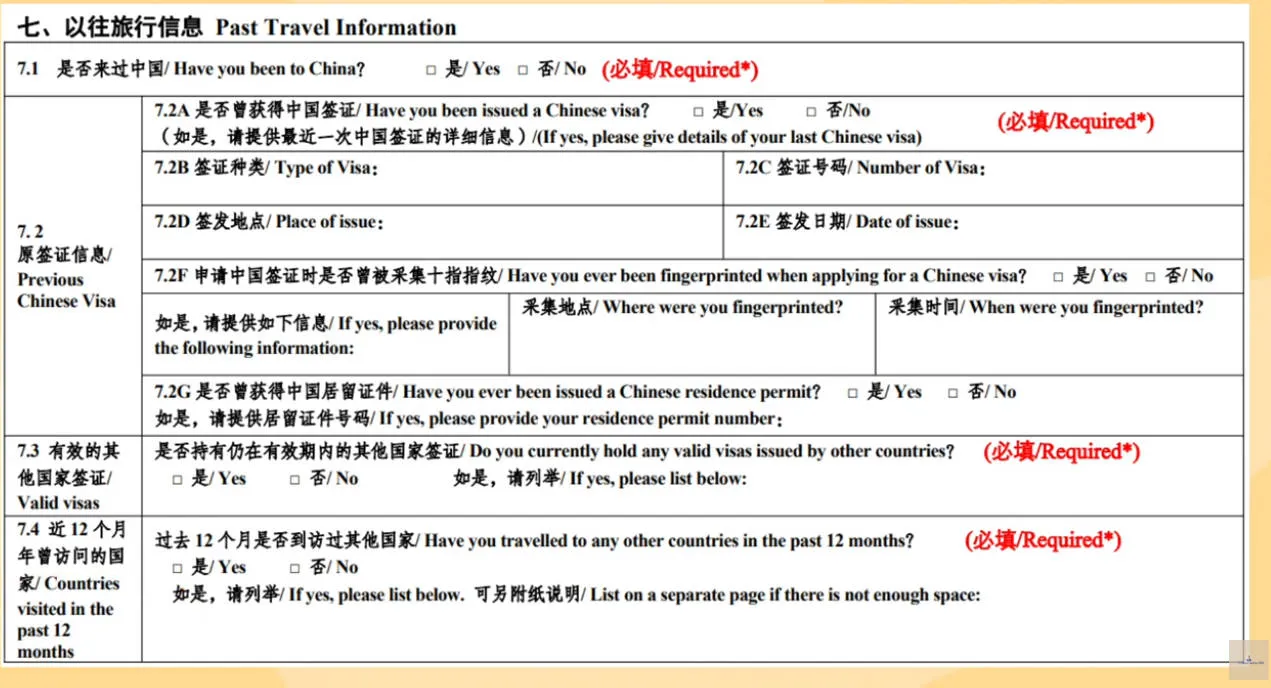
8️⃣Section eight: other questions. They are the standard visa related questions.
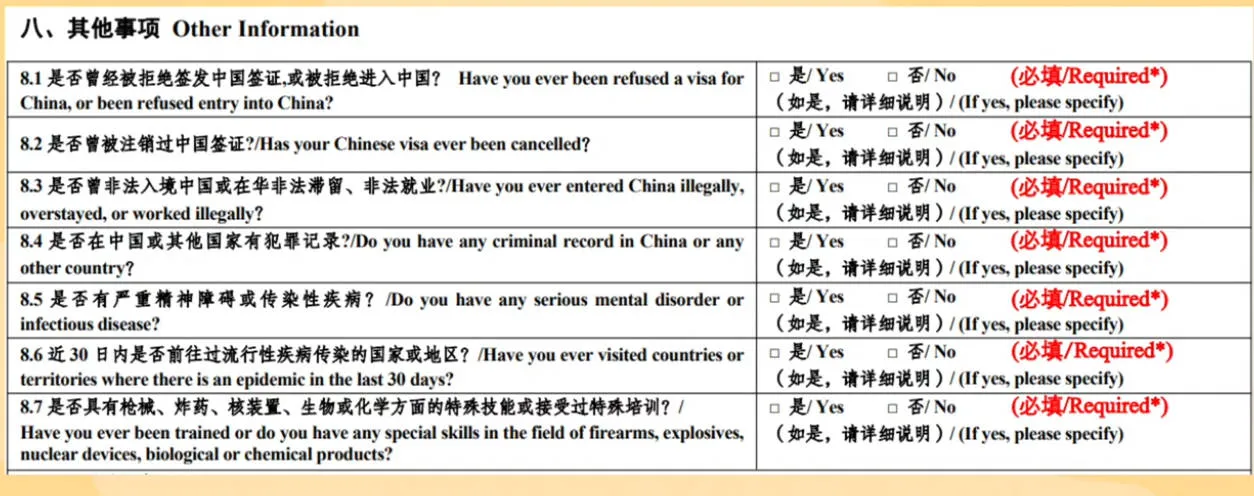
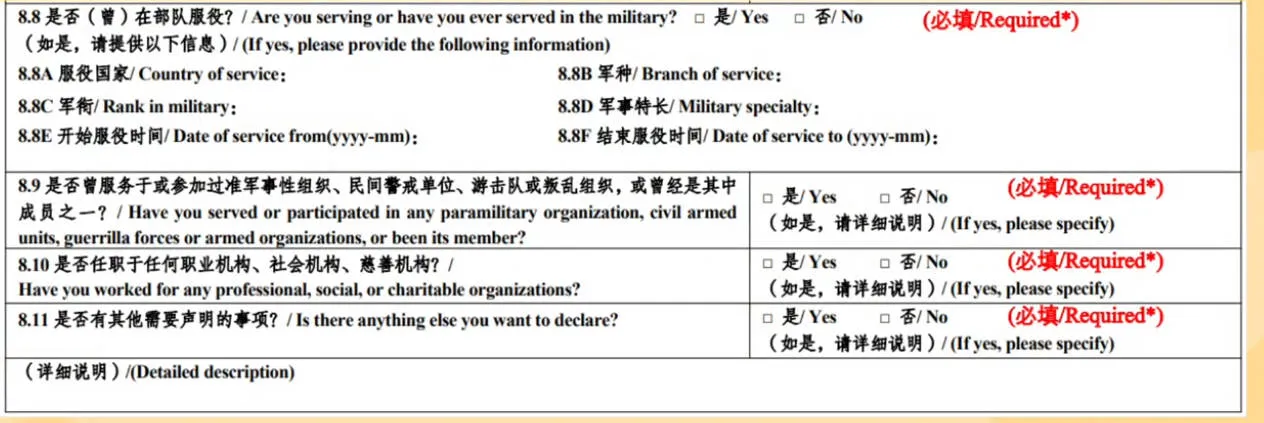
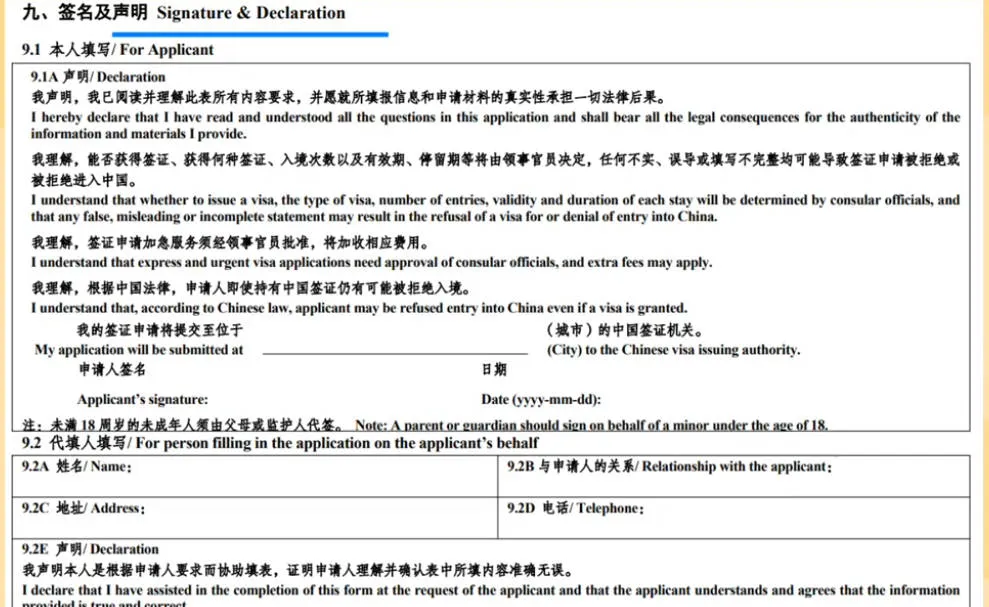
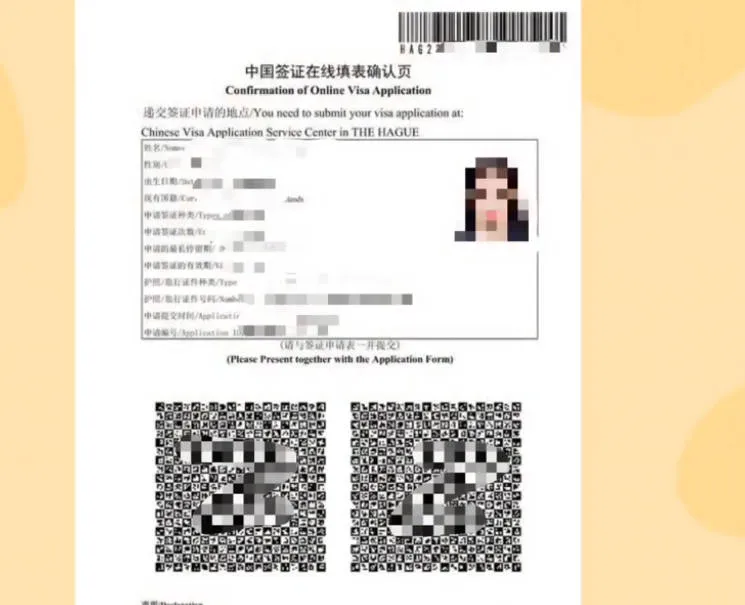
9️⃣Section nine: declaration and signature. Print the form after submission, then sign by hand. After submission, the system will generate a PDF accompanied by an application number. For example, NYC 123456789 and a barcode. Print and sign it for submission. Be sure to note down the application number as it will be required for subsequent appointment scheduling and status inquiries. Please remember to carefully review all information as erros cannot be modified once the application is submitted. If mistakes are discovered, you must log back into the system and create a entirely new application.
Step 2: In-Person Submission
-
Visit the CVASC/Embassy: Go to the application center with all your original and copy documents on your appointment date.
-
Document Check: A staff member will verify your documents, photo, and application form for completeness.
-
Fingerprints: Most applicants are now required to have their fingerprints taken on-site (exceptions apply for children under 14 and adults over 70).
Step 3: Payment and Collection
-
Receive the Pick-up Slip: After submission, you will receive a pick-up slip with the estimated collection date.
-
Payment: Visa fees and service fees are typically paid upon collection, though some centers require upfront payment. Fees vary based on nationality, number of entries, and desired processing speed (standard, express, rush).
-
Collect Your Passport: Return on the specified date to collect your passport with the new L-Visa affixed inside.
Payment for visa processing, service and shipping
|
Chose A
Service Level |
Time needed
|
All Fees
|
||
|---|---|---|---|---|
|
VisaRite Pre-check
and Prepare |
Consular Prescreening
and Processing |
Embassy Fee
|
Service Fee
|
|
|
Regular Service (Pre-check+Submission)
|
5-10 days
|
2 - 3 Weeks
|
$140
|
From $249
|
|
Express Service (Pre-check+Submission)
|
2-5 days
|
8-10 days
|
$165
|
From $349
|
- Service fees and schedules vary based on different consulates. Additional fee may apply for Q, S visa, some difficult jurisdictions and applications of Chinese descendants.
- Return Shipping Fee from $36 via FedEx will apply. If your return address is in Alaska, Hawaii, Puerto Rico, shipping extra will apply.
- Processing schedule posted is for reference purpose.
- Consular Processing Time is based on submission date and is subject to change without notice.
💰 Understanding China Visa Fees: Official vs. Agency Costs
When applying for your China Tourist Visa, it is crucial to understand the difference between official government fees and third-party agency fees.
-
Official Consulate Fees: This is the mandatory base fee set by the Chinese government. For U.S. citizens applying in the U.S., the standard official fee is $140 for an L-Visa (this applies whether it is a single-entry or a 10-year multiple-entry visa). Citizens of other countries may have different official fees (typically ranging from $30 to $90).
-
Third-Party Agency Fees (Optional): If you choose to use a visa service agency (like VisaRite, CIBTvisas, etc.) to pre-check your documents and submit the application on your behalf, they will charge a service fee. These agency fees typically add $100 to $200+ on top of the official $140 fee, bringing your total out-of-pocket cost to around $249 - $349 depending on the agency's processing speed.
💡 Pro Tip: To save money, you can complete the online form and submit your documents directly to the Chinese Visa Application Service Center (CVASC) or your local Consulate in person.
📔4. Understanding the China Transit Without Visa (TWOV) Rule
For travelers with short layovers or brief sightseeing needs, China offers a valuable Transit Without Visa (TWOV) policy, which can potentially save you the time and cost of a full L-Visa application.
The 240-Hour Transit Without Visa (TWOV) policy in China is an extension of previous visa-free transit options (like the 72-hour and 144-hour rules). It is a significant measure designed to facilitate international travel and tourism by allowing eligible foreign nationals to stay in China for up to 10 days without a visa under specific conditions.
Here are the key components of this policy, based on the latest information:
4.1. Duration and Purpose
-
Duration: Up to 240 hours (10 days)
-
Purpose: Travelers can engage in tourism, business, exchange visits, or visit family/friends.4 Work, study, or reporting activities still require the appropriate visa.
4.2. Eligibility Requirements
To qualify for the 240-Hour TWOV, a traveler must generally meet all of the following criteria:
-
Eligible Nationality: Be a citizen of one of the approximately 55 eligible countries (this list can change, but typically includes many countries from Europe, the Americas, Oceania, and Asia like the US, Canada, UK, France, Australia, Japan, South Korea, etc.).
-
Connecting Ticket: Hold a valid international travel document (passport) and a confirmed onward ticket (air, ship, or train) to a third country or region with a confirmed seat and date within the 240-hour limit.
-
Crucial Point: You cannot use this for a round trip to your home country (e.g., USA → Shanghai → USA). It must be a genuine transit (e.g., USA → Shanghai → Japan).
-
-
Designated Ports: Enter and exit China through one of the 60 designated ports of entry/exit (major international airports, seaports, or train stations).
4.3. Area of Stay
-
Expanded Regions: The area where you can travel has been significantly expanded. In many cases, travelers are allowed to visit the entire province or a group of interconnected provinces/municipalities surrounding the port of entry. For example, entry through Shanghai may allow travel across Shanghai, Jiangsu Province, and Zhejiang Province. You must remain within the designated transit area.
4.4. Important Considerations
-
Counting Time: The 240 hours are generally counted starting from 00:00 (midnight) on the day following your entry into China.
-
Accommodation Registration: Like other visa-free stays, you must generally register your accommodation with the local police station within 24 hours of arrival (this is usually handled automatically by hotels).
-
Airline Check: It is highly recommended to confirm with your airline well in advance that they recognize and will allow you to board under the 240-Hour TWOV policy, as procedures can sometimes cause confusion at check-in.
Disclaimer: Visa and transit policies are subject to frequent changes by the National Immigration Administration (NIA) of China. Always check the official website of the Chinese Embassy or Consulate in your country or the NIA for the most current list of eligible countries, ports, and specific rules before booking your travel.
🛫 Demystifying the 240-Hour Transit Without Visa (TWOV) Routes
The newly expanded 240-hour (10-day) visa-free transit rule is a fantastic way to explore China, but the flight routing rules are strict. To qualify, you must be in genuine transit to a third country or region (Note: Hong Kong, Macau, and Taiwan count as third regions for this policy). You cannot use this rule for a standard round trip.
✅ Valid Routes (Transit to a Third Region):
-
USA → Shanghai (stay up to 10 days) → Japan → USA
-
UK → Beijing (stay up to 10 days) → South Korea → UK
-
Australia → Guangzhou (stay up to 10 days) → Hong Kong → Australia
❌ Invalid Routes (Round Trips or Non-Transit):
-
USA → Shanghai → USA (This is a round trip. You need a standard L-Visa.)
-
USA → Japan → Shanghai → Japan (The country you arrive from and depart to cannot be the same.)
💡 Pro Tip: Your onward ticket to the third country must be fully confirmed with assigned dates and seats before you check in for your flight to China. Standby tickets do not qualify.
✈️5. Popular Cities for China's 240-Hour Visa-Free Transit (VFT)
The 240-hour VFT allows citizens from 55 eligible countries to enter through designated ports and travel freely within the approved province(s) or municipality for up to 10 days before flying to a third country/region.
| Popular Transit Hub | Permitted Area of Stay | Top Tourist Highlights |
| Beijing | Beijing Municipality, Tianjin Municipality, and Hebei Province | History & Culture: The Great Wall of China, Forbidden City, Temple of Heaven. |
| Shanghai | Shanghai Municipality, Jiangsu Province, and Zhejiang Province | Modernity & Scenery: The Bund, Oriental Pearl Tower, West Lake (in Hangzhou), Classical Gardens (in Suzhou). |
| Guangzhou | Entire Guangdong Province | Food & Commerce: Canton Tower, Pearl River night cruise, local Cantonese cuisine. Easy access to Shenzhen and Hong Kong/Macau. |
| Chengdu | 11 cities in Sichuan Province (including Chengdu, Leshan, etc.) | Wildlife & Cuisine: Giant Panda Research Base, Leshan Giant Buddha, authentic Sichuan hotpot. |
| Xi'an | Entire Shaanxi Province | Ancient History: Terracotta Army Museum, Ancient City Wall, Muslim Quarter. |
| Chongqing | Chongqing Municipality | Unique Cityscape: Yangtze River, famous spicy hotpot, Hongyadong stilt houses. |
🌍6. The 240-Hour Visa-Free Transit Eligible Countries (55 Nations)
As a reminder, you must be a citizen of one of the following countries to qualify for the 240-hour VFT policy:
| Region | Eligible Countries |
| European (Schengen) | Austria, Belgium, Czech Republic, Denmark, Estonia, Finland, France, Germany, Greece, Hungary, Iceland, Italy, Latvia, Lithuania, Luxembourg, Malta, Netherlands, Norway, Poland, Portugal, Slovakia, Slovenia, Spain, Sweden, Switzerland. |
| European (Non-Schengen) | Russia, United Kingdom, Ireland, Cyprus, Bulgaria, Romania, Ukraine, Serbia, Croatia, Bosnia-Herzegovina, Montenegro, North Macedonia, Albania, Monaco, Belarus. |
| Americas | United States, Canada, Brazil, Mexico, Argentina, Chile. |
| Oceania | Australia, New Zealand. |
| Asia | South Korea, Japan, Singapore, Brunei, United Arab Emirates (UAE), Qatar, Indonesia. |
💡7. Tips for a Successful Visa Application
-
Book Flexible Travel: Use "booking confirmations" (reservations) rather than purchasing non-refundable tickets and hotels until your visa is issued.
-
Start Early: Visa processing typically takes 4 business days (standard) or 2-3 business days (express), but unforeseen delays can occur. Start your application 1-2 months before your planned travel date.
-
Double-Check the Photo: The photo is the number one cause of application rejection. Ensure it meets all size and background specifications.
-
Review CVASC Requirements: Always check the official website of the Chinese Embassy or CVASC in your country, as specific documentation requirements can change without notice.
⚠️8. Frequently Asked Questions (FAQ)
Q: How long can I stay in China with an L-Visa?
A: Usually 30 days per entry, though extensions may be possible at a local Public Security Bureau.
Q: Can I extend my tourist visa in China?
A: Yes. You can apply for an extension 7 days before your visa expires at a local Exit and Entry(Public Security Bureau (PSB) Exit and Entry Administration.).
Q: Can I work in China with an L-Visa?
A: No. The L-Visa is strictly for tourism. Working or volunteering is prohibited.
Q: Is the 240-hour visa-free policy available for U.S. citizens?
A: Yes, U.S. citizens are eligible if they meet all transit and route conditions.
Q: Do I need to appear in person?
A: Yes, you must submit your application in person at the Chinese Visa Application Service Center (CVASC) or the Embassy/Consulate within your consular jurisdiction. Some jurisdictions may allow submission by an agent.
Q: Can I use my old passport with a valid visa?
A: Yes, if your personal data (name, date of birth, etc.) is exactly the same, you can generally travel with your valid visa in the expired passport along with your new, valid passport.
Q: What if I was a former Chinese citizen?
A: You will have special requirements, including submitting your previous Chinese passport and possibly your naturalization certificate. Check the specific consulate's guidance.
With this guide, you're well-equipped to tackle the China visa process. Whether you're planning an extensive tour requiring an L-Visa or a quick stopover using the transit rule, your journey to the Middle Kingdom is within reach. Start gathering your documents and get ready for an unforgettable adventure!