Quick Facts About the Beijing Metro
-
Can I use a foreign credit card? Yes! The easiest way for tourists to ride is by linking a foreign Visa/Mastercard to the Alipay app to generate a scan-and-go QR code.
-
Is there an English app? Yes. Download MetroMan for English route planning, and use Alipay or Apple Maps for live navigation.
-
How much does it cost? Fares are distance-based, mostly ranging from ¥3 to ¥7 RMB (less than $1 USD) for trips within the city center.
-
Airport Connections: The Capital Airport Express connects PEK, while the Daxing Airport Express connects PKX to the downtown network.
Welcome to Beijing! As one of the largest and most dynamic cities in the world, navigating Beijing can seem daunting, but its excellent transportation system, centered around the Beijing Metro, makes exploring a breeze. The subway network is efficient, affordable, and incredibly extensive, connecting all major tourist attractions, business districts, and airports. For any tourist, mastering the Beijing Metro is the first step to a successful and stress-free trip.
This ultimate guide will provide you with everything you need: from the best ways to pay to navigating the crucial Airport Express lines.
1. Overview of the Beijing Metro
The Beijing Subway opened in 1971 and is the oldest metro system in China and on the mainland of East Asia. The Beijing Subway is the rapid transit system of Beijing Municipality that consists of 29 lines including 24 rapid transit lines, two airport rail links, one maglev line and two light rail tram lines, and 524 stations. The rail network extends 879 km (546 mi) across 12 urban and suburban districts of Beijing and into one district of Langfang in neighboring Hebei province. In December 2023, Beijing Subway became the world's longest metro system by route length, surpassing the Shanghai Metro. With 3.8484 billion trips delivered in 2018 (10.544 million trips per day) and single-day ridership record of 13.7538 million set on July 12, 2019. Before the system began its rapid expansion in 2002, the subway had only two lines. The existing network still cannot adequately meet the city's mass transit needs.
At present, there are 8 subway lines under construction. According to the long-term plan, by 2035, Beijing will own a metro network with over 30 lines.
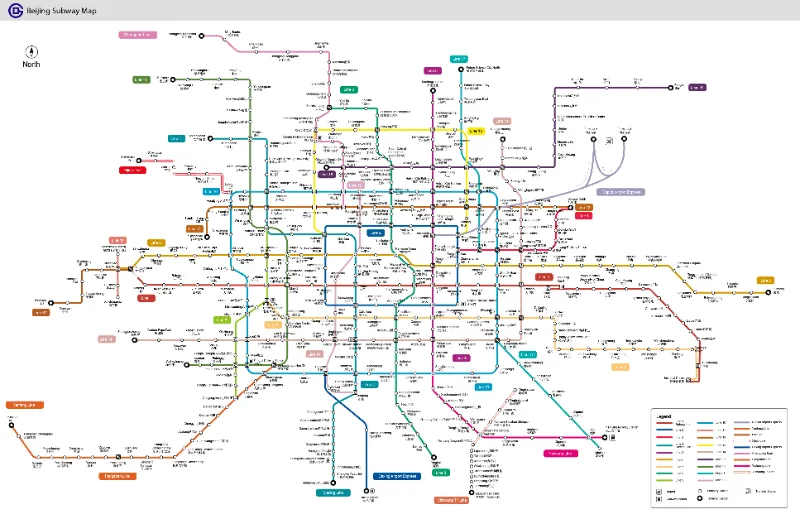
Beijing Subway Map PDF Download
2. Lines in Operation
Beijing Subway lines generally follow the checkerboard layout of the city. Most lines through the urban core (outlined by the Line 10 loop) run parallel or perpendicular to each other and intersect at right angles.
2.1 Lines through the urban core
The urban core of Beijing is roughly outlined by the Line 10 loop, which runs underneath or just beyond the 3rd Ring Road. Each of the following lines provides extensive service within the Line 10 loop. All have connections to seven or more lines. Lines 1, 4, 5, 6, 8, and 19 also run through the Line 2 loop, marking the old Ming-Qing era city of Beijing.
▶️Line 1: Gucheng ↔ Sihuidong
Length: 31 kilometers (19 miles)
Main Stops: Babaoshan, Wukesong, Gongzhufen, Junshi Bowuguan (Military Museum), Xidan, Tian'anmenxi, Tian'anmendong, Wangfujing, Jianguomen, Guomao
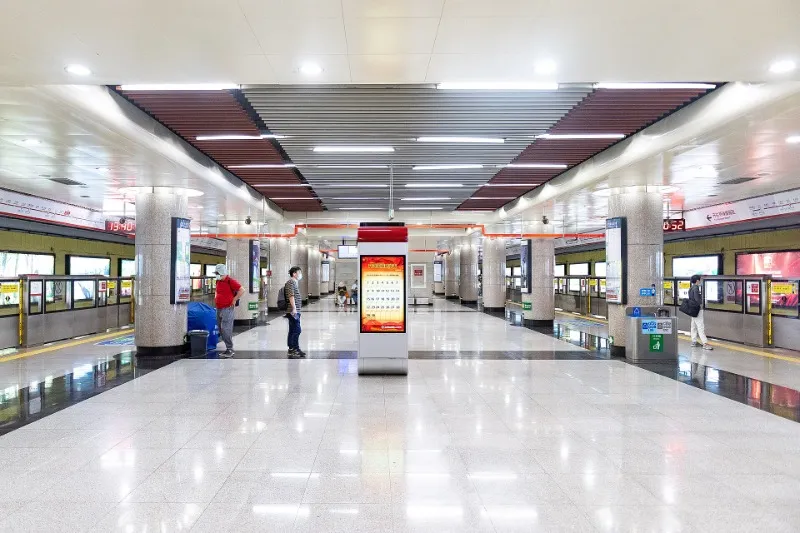
▶️Line 2(circle line): It is a line running beneath the 2nd Ring Road
Outer Ring: Xizhimen - Fuxingmen - Dongzhimen - Xizhimen
Inner Ring: Jishuitan - Dongzhimen - Fuxingmen - Jishuitan
Length: 23.1 kilometers (14.4 miles)
Main Stops: Xizhimen, Gulou Dajie, Yonghegong, Dongzhimen, Chaoyangmen, Jianguomen, Beijing Zhan (Beijing Railway Station), Qianmen, Xuanwumen, Fuxingmen
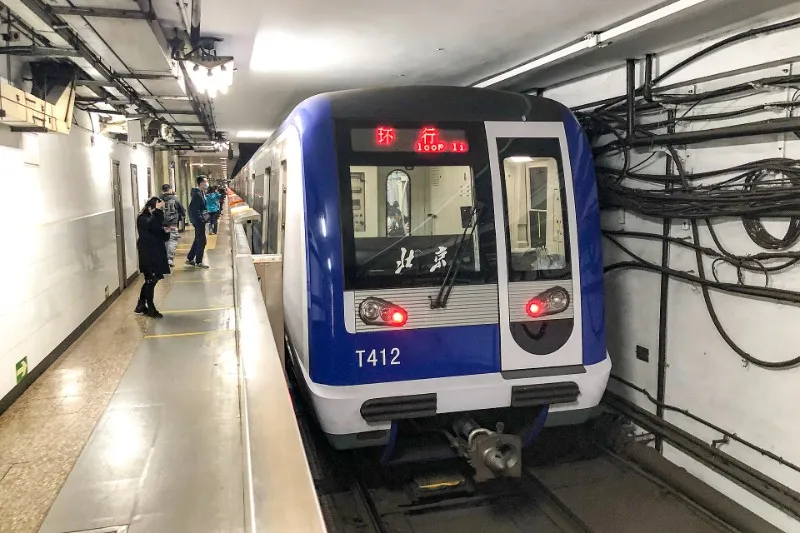
▶️Line 3: Dongsi Shitiao ↔ Dongba North
Length: 14.7 kilometers (9.1 miles)
Main Stops: Workers' Stadium, Chaoyang Park, Dongba North
▶️Line 4: Anheqiaobei ↔ Gongyi Xiqiao
Length: 28 kilometers (17 miles)
Main Stops: Yuanmingyuan, Peking University East Gate, Zhonguancun, Renmin University, National Library, Beijing Zoo, Xizhimen, Xidan, Taoranting, South Railway Station
▶️Line 5: Tiantongyuanbei ↔ Songjiazhuang
Length: 27.6 kilometers (17 miles)
Main Stops: Heping Xiqiao, Yonghegong, Dongsi, Dengshikou, Dongdan, Chongwenmen, Temple of Heaven East Gate
▶️Line 6: Jin'anqiao ↔ Lucheng
Length: 53 kilometers (33 miles)
Main Stops: Pingguoyuan, Cishousi, Chegongzhuang, Ping'anli, Nanluogu Xiang, Chaoyangmen, Hujialou, Tongzhou Beiguan
▶️Line 7: Beijing West Railway Station ↔ Huanqiu Dujiaqu (Universal Resort)
Length: 40 kilometers (25 miles)
Main Stops: West Railway Station, Caishikou, Ciqikou, Shuangjing, Happy Valley, Huazhuang, Huanqiu Dujiaqu (Universal Resort)
▶️Line 8: Zhuxinzhuang ↔ Yinghai
Length: 51.6 kilometers (32.1 miles)
Main Stops: Aolinpike Gongyuan (Olympic Park), Aoti Zhongxin (Olympic Sports Center), Gulou Dajie, Shichahai, Nanluogu Xiang, Wangfujing, Qianmen
▶️Line 9: Guogongzhuang ↔ National Library
Length: 16.5 kilometers (10 miles)
Main Stops: Guojia Tushuguan (National Library), Junshi Bowuguan (Military Museum), West Railway Station, Liuliqiao, Fengtai Nanlu
▶️Line 10(cricle line): Taking Bagou as terminal
Clockwise: Bagou - Chedaogou
Anticlockwise: Chedaogou - Bagou
Length: 57.1 kilometers (35.5 miles)
Main Stops: Bagou, Haidian Huangzhuang, Mudanyuan, Sanyuanqiao, Liangmaqiao, Nongye Zhanlanguan (Agriculture Exhibition Center), Guomao, Shuangjing, Panjiayuan, Caoqiao, Shoujingmao, Fengtai Railway Station, Gongzhufen
▶️Line 12: Sijiqingqiao - Dongba North
Length: 29 kilometers (18 miles)
Main Stops: Remin University, Dazhongsi, Sanyuanqiao, Dongba North
▶️Line 13: Xizhimen ↔ Dongzhimen
Length: 40.5 kilometers (25 miles)
Main Stops: Xizhimen, Dazhongsi, Wudaokou, Qinghe Railway Station, Huilongguan, Beiyuan, Shaoyaoju, Dongzhimen
▶️Line 14: Zhangguozhuang ↔ Shangezhuang
Length: 50.8 km (31.6 miles)
Main Stops: Yuanboyuan (Garden Expo Park), Dawayao, Qilizhuang, Xiju, Lize Shangwuqu (Lize Business District), South Railway Station, Shilihe, Chaoyang Park, Wangjing
▶️Line 16: Bei'anhe ↔ Yuyuantan Dongmen
Length: 31.9 kilometers (19.8 miles)
Main Stops: Yongfeng, Xiyuan, Wanshousi, Guojia Tushuguan (National Library), Yuyuantan Dongmen
▶️Line 19: Xingong ↔ Mudanyuan
Length: 22.4 kilometers (13.9 miles)
Main Stops: Xinfadi, Caoqiao, Niujie (Ox Street), Jishuitan, Mudanyuan
2.2 Lines serving outlying suburbs
Each of the following lines provides service predominantly to one or more of the suburbs beyond the 5th Ring Road. Lines 15, S1 along with the Changping, Daxing, Yanfang lines extend beyond the 6th Ring Road.
▶️Line 11: Xinshougang ↔ Jin'anqiao
Length: 4.2 kilometers (2.6 miles)
Main Stops: Xinshougang, Beixinan, Jin'anqiao, Moshikou (not open yet)
▶️Line 15: Qinghua Donglu Xikou ↔ Fengbo
Length: 41.4 kilometers (25.7 miles)
Main Stops: Aolinpike Gongyuan (Olympic Park), Wangjing, Guozhan (China Int'l Exhibition Center), Shunyi
▶️Line 17: Jiahuihu ↔ Shilihe
Length: 45.7 kilometers (28.4 miles)
Main Stops: Ciqu, Shilihe, Workers' Stadium, Xibahe
▶️Batong Line: Sihui ↔ Huazhuang
Length: 23.4 kilometers (14.5 miles)
Main Stops: Tongzhou District, Universal Resort, Tu Qiao, Gaobeidian
▶️Changping Line: Qinghe Zhan ↔ Changping Xishankou
Length: 31.9 kilometers (20 miles)
Main Stops: Shisanling Jingqu (Ming Tombs), Changping Dongguan, Shahe Gaojiaoyuan (Shanhe University Park), Shengming Kexueyuan (Life Science Park), Qinghe Railway Station
▶️Daxing Line: Xingong ↔ Tiangongyuan
Length: 21.8 kilometers (13.5 miles)
Main Stops: Xihongmen, Huangcun Railway Station, Shengwu Yiyao Jidi (Biomedical Base)
▶️Fangshan Line: Dongguantounan ↔ Yancundong
Length: 32 kilometers (20 miles)
Main Stops: Shoujingmao (Capital Univ. of Economics & Business), Guogongzhuang, Liangxiang Daxuecheng
▶️Yanfang Line: Yancundong ↔ Yanshan
Length: 14.4 kilometers (9 miles)
Main Stop: Fangshan Chengguan, Xingcheng, Yancun
▶️Yizhuang Line: Songjiazhuang ↔ Yizhuang Huochezhan (Yizhuang Railway Station)
Length: 23.3 kilometers (14.4 miles)
Main Stops: Xiaohongmen, Yizhuang Wenhuayuan (Yizhuang Culture Park), Ciqu, Yizhuang Railway Station
▶️Capital Airport Express Line: Beixinqiao ↔ Dongzhimen ↔ Sanyuanqiao ↔ T3 ↔ T2 (Capital Airport)
Capital Airport Express trains first depart Beixinqiao, stop at Dongzhimen and Sanyuanqiao, then stop at Terminal 3. Trains then reverse at Terminal 3 and head to Terminal 2. Trains reverse again and proceed to Beixinqiao, stopping at Sanyuanqiao and Dongzhimen along the way.
A one-way fare on the Capital Airport Express costs ¥25, with no free transfers to or from other lines.
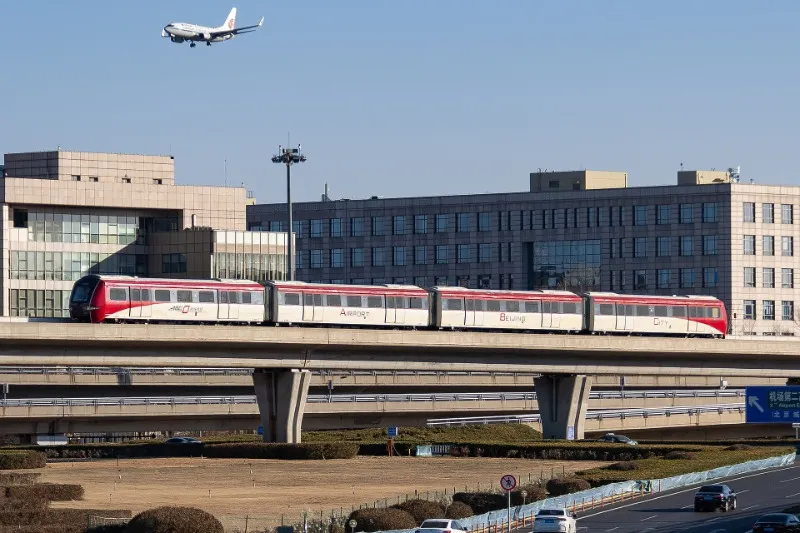
▶️Daxing Airport Express(New Airport Line): Caoqiao ↔ Daxing Airport
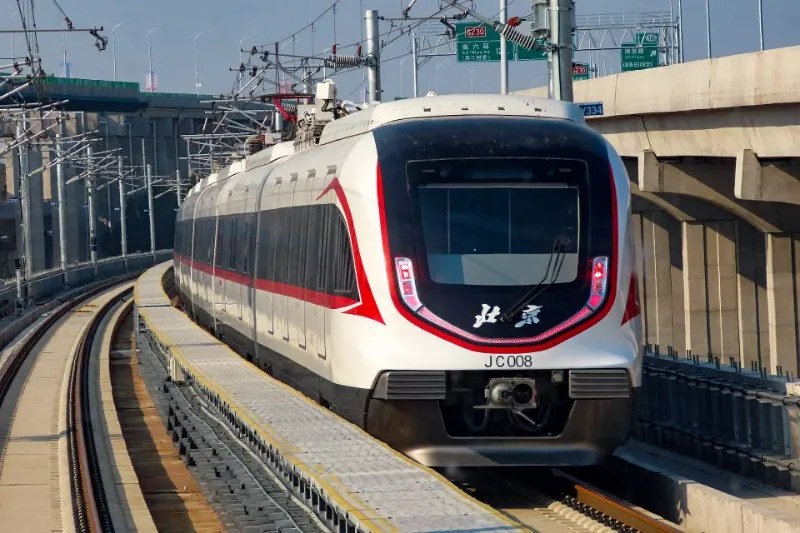
The Beijing Daxing International Airport Express, aka Daxing Airport Express or New Airport Line, has been put into use together with the operation of Beijing Daxing International Airport in 2019. The Daxing Airport Express Line is 41.36 km (25.7 mi) long and has three underground stations. It starts from Caoqiao Station in Fengtai District in the north, passes through Daxing New City, and ends at the Terminal of Daxing International Airport in the south.
The Daxing Airport Express adopts the world's highest level of fully automatic driving system. With a top speed of 160 km (99 mi) per hour, the one-way journey from Caoqiao to Daxing Airport takes only 19 minutes. It runs from 6:00 to 22:30 with a train frequency of 8.5 to 10 minutes. The ticket prices of Daxing Airport Express range from ¥10 to ¥50, depending on the distance. Caoqiao Station of this New Airport Line establishes a city terminal building, which provides pre-check-in service.
related guide: Capital International (PEK) vs Daxing International (PKX)
▶️Line S1: Pingguoyuan ↔ Shichang
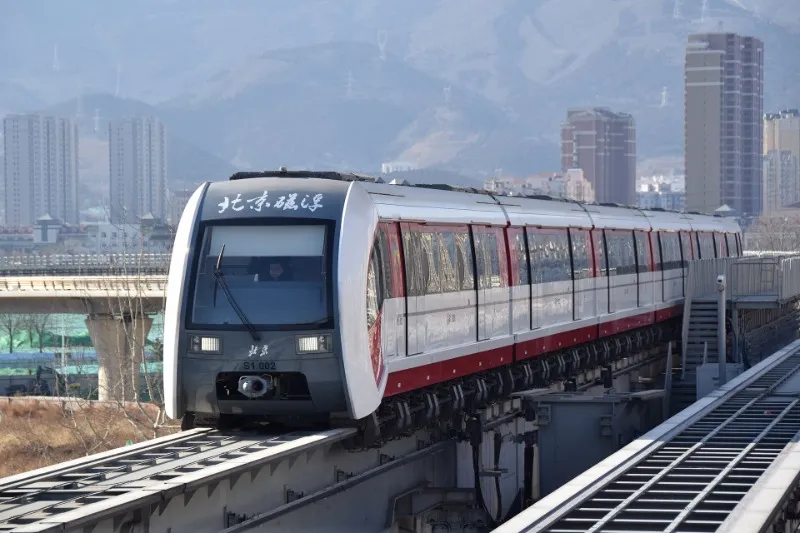
Beijing Subway Line S1, also known as Beijing Maglev Line or Mentougou Metro Line, is the second medium-low speed maglev line in China and the first in Beijing. The Line S1 was first opened in 2017 and has been extended to form the current route by the end of 2021. The total length of Line S1 is 10.2 km (6.3 mi), with 8 stations, all of which are elevated stations.
The route of Beijing Subway Line S1 is from northeast to southwest, starting from Pingguoyuan Station in the east, passing through Shijingshan and Mentougou Districts, and ending at Shichang Station in the west. It uses medium and low speed maglev trains, and the entire one-way trip takes only 18 minutes. Passengers can transfer to Line 1 or Line 6 at Pingguoyuan Station or Jin’anqiao Station to reach the city center. According to the long-term plan, the Line S1 will be extended west, possibly connecting to the Tanzhe Temple.
▶️Xijiao Line (West Suburban Line): Bagou ↔ Xiangshan
Length: 9.4 kilometers (5.8 miles)
Main Stops: Summer Palace West Gate, Botanical Garden, Fragrant Hills
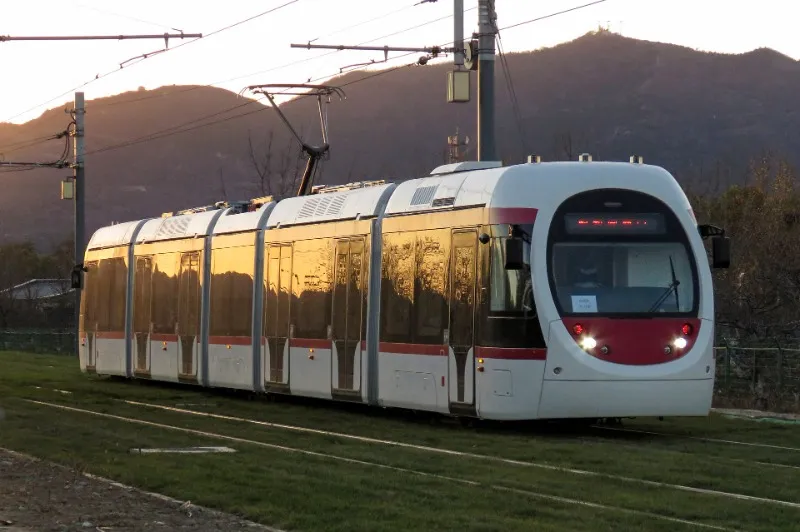
▶️Yizhuang T1 Line: Dinghaiyuan ↔ Quzhuang
Length: 13.25 kilometers (8.2 miles)
Main Stops: Beijing Etrong Int’l Exhibition & Convention Center, Rongchang Dongjie
2.3 Operating Hours
The Beijing Metro operates daily, with most lines running from approximately 5:00 AM to 11:00 PM. However, exact times can vary by line and station:
- First Trains: Typically depart between 5:00 AM and 6:00 AM.
- Last Trains: Generally depart between 10:00 PM and 11:00 PM.
During peak hours (around 7:00 AM to 9:00 AM and 5:00 PM to 7:00 PM), trains arrive every 3 to 5 minutes. In off-peak times, intervals may extend to 6 to 10 minutes.
3. Tickets, Fares & Payment Methods
The Beijing Metro offers several ticket and payment options, especially for international visitors.
3.1 Fare Schedules
A. Single-ride fare: The Beijing Metro charges single-ride fare according to trip distance for all lines except the two airport express lines.
| Distance | Fare (CNY) | Notes |
| First 6 km | ¥3 | Base price for a single journey. |
| 6 km to 12 km | ¥4 | |
| 12 km to 22 km | ¥5 | |
| 22 km to 32 km | ¥6 | |
| Over 32 km | +¥2 for every additional 20 km. |
The Capital Airport Express has a fixed fare of ¥25 per ride.
The Daxing Airport Express is the only line to maintain class-based fares with ordinary class fare varying with distance from ¥10 to ¥35 and business class fare fixed at ¥50 per ride.
Same-station transfers are free on all subway lines except the two Airport Express lines, the Xijiao Line and the Yizhuang T1 Line, which require the purchase of a new fare when transferring to or from those lines.
💡Notes:
- A child shorter than 1.3 meters (4.3 feet) cannot ride metro alone. If an adult takes one child below 4.3 feet high on the metro, the child is free of charge; if two, one of the children is free of charge.
- Senior citizens over the age of 65, individuals with physical disabilities, retired revolutionary cadres, police and army veterans who had been wounded in action, military personnel and People's Armed Police can ride the subway for free.
- Tickets are issued for one-day use only.
B. Unlimited-rides fare: Since January 20, 2019, riders can purchase unlimited rides fare tickets using the Yitongxing (亿通行) App on smartphones, which generates a QR code with effective periods of one to seven days.
| Period | Price |
|---|---|
| 1 day | ¥20 |
| 2 days | ¥30 |
| 3 days | ¥40 |
| 5 days | ¥70 |
| 7 days | ¥90 |
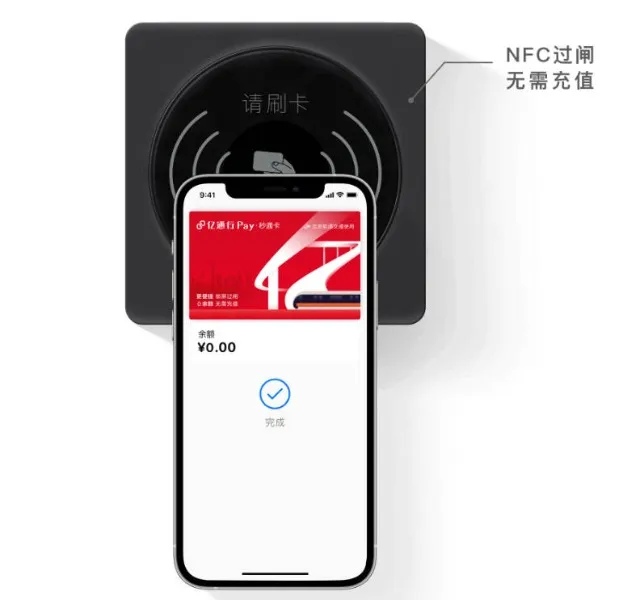
3.2 Fare Collection and Payment Methods
Each station has two to fifteen ticket vending machines. Passengers can purchase tickets and add credit to the Yikatong card at ticket counters or vending machines in every station.
A. Single-Ride Tickets
-
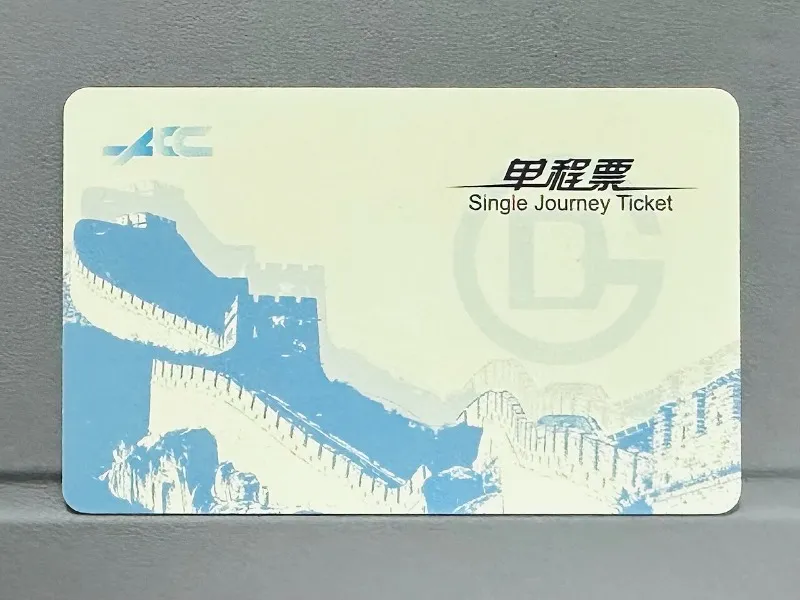
These tickets take the form of an RFID-enabled flexible plastic card.
-
Passengers must insert the ticket or scan the card at the gate both before entering and exiting the station.
-
Single-ride tickets are reused by the system upon exit.
-
Journey Time Limit: To prevent fraud, passengers are required to complete their journeys within four hours upon entering the subway. If the four-hour limit is exceeded, a surcharge of ¥3 is imposed.
B. Beijing Yikatong Card (Rechargeable Transport Card)
-
This is a reusable, stored-value card used by locals and tourists for the metro, buses, and even some taxis and convenience stores.
-
How to Get It: Purchase a physical card at manned ticket counters in subway stations. A refundable deposit (usually ¥20) is required, plus your initial top-up.
-
Usage: Tap when entering and exiting the subway. You can top up the card at ticket machines (most have an English option) or service counters.
-
Tip: Some cards, such as the Beijing Pass or the Hutong Card (with the China T-Union logo), can be used on public transport in multiple cities across China.
C. Contactless Foreign Credit/Debit Cards (Tap-and-Go)
-
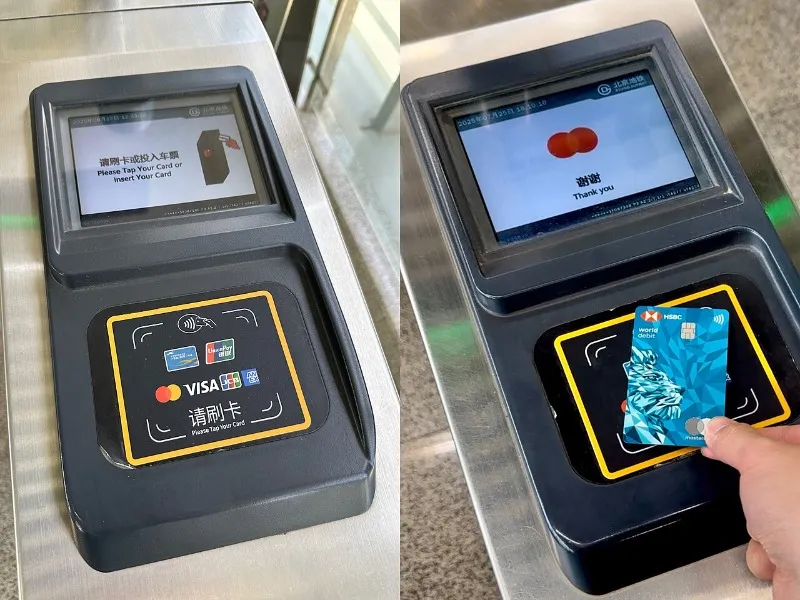
Ease of Use: This is one of the easiest options. Simply tap your card (or a device linked to it, like a phone or watch) on the contactless reader at the turnstile when entering and exiting.
-
Accepted Cards: Overseas-issued Visa, Mastercard, UnionPay, JCB, and American Express are accepted at all gates across the entire network.
- Note: The system automatically calculates the distance-based fare and charges your card.
D. Mobile Payment Apps (QR Code)
-
Alipay and WeChat Pay are widely used in China. After setting up your account (including linking an international credit card) and enabling the "Transport" feature for Beijing Metro, you can scan the generated QR code at the turnstile to enter and exit.
-
Download the "北京地铁" (Beijing Subway) official app. While some sections are in Chinese, the core functionality is simple.
You must link a local payment method (WeChat Pay or Alipay) or set up the payment function within the app itself.
3.3 Discounts for Yikatong Card Users
Yikatong card users who spend more than ¥100 on subway fare in a calendar month receive credits to their card the following month. The discount is calculated as follows:
-
Spending ¥100 - ¥150: 20% of any further spending up to ¥150 will be credited.
-
Spending ¥150 - ¥400: 50% of any further spending up to ¥250 will be credited.
-
Spending over ¥400: Further spending will not earn any more credits.
| Monthly Expenditure (¥) | Net Expenditure After Credit Rebate (¥) | Net Discount |
| ¥50 | ¥50 | 0% |
| ¥100 | ¥100 | 0% |
| ¥150 | ¥140 | 6.67% |
| ¥200 | ¥165 | 17.5% |
| ¥250 | ¥190 | 24% |
| ¥300 | ¥215 | 28.3% |
| ¥350 | ¥240 | 31.4% |
| ¥400 | ¥265 | 33.75% |
| ¥450 | ¥315 | 30% |
| ¥500 | ¥365 | 27% |
💡 Tips for Foreign Visitors:
-
Language: Ticket Vending Machines and signs generally have an English language option.
-
Manned Counters: If you have trouble with the machines or need to buy/top-up a Yikatong card, look for the manned ticket counter (often called the Customer Service Center). Be prepared to show your passport.
4. Essential Apps for the Beijing Metro
Successfully navigating the Beijing Metro relies heavily on the right smartphone applications. These are the Beijing Metro Apps you must have.
4.1 Navigation and Route Planning Apps
Since Google Maps does not function reliably in China, you will need a local alternative for detailed transit information.
MetroMan / Beijing Subway App (Recommended for Metro Only)
-
Function: Specifically designed for the subway system. Provides the most user-friendly experience for transit planning.
-
Key Features:
-
Offline Map: Downloadable, interactive map of the entire Beijing Metro network, perfect for avoiding connection issues.
-
Route Planner: Quickly calculates the fastest routes, estimated travel times, and exact fares between two stations.
-
English Interface: Generally offers a full English interface, making station names and information easy to understand.
-
Baidu Maps (百度地图) or Amap / AutoNavi (高德地图)
-
Function: China's leading, all-in-one navigation apps (replacing Google Maps).
-
Key Features:
-
Comprehensive: Provides walking, driving, bus, and public transport directions, including real-time traffic updates.
-
Subway Integration: Offers precise subway transfer guidance and is necessary for navigating the surface streets after exiting the station.
-
Note: While features are robust, the primary interface is Chinese. You may need to rely on pinyin input or the automatic translation function if available.
-
4.2 Payment Apps (Essential for Cashless Travel)
Cashless payment is the dominant method in China, including for public transport. Linking an international credit card to one of these apps is highly recommended.
Alipay (支付宝)
-
Function: One of China's two primary digital wallets, now fully integrated for foreign users.
-
Metro Use: The easiest way to pay for the subway.
-
Link your overseas Visa or Mastercard to your Alipay account.
-
Open the "Transport" section and select the "Metro" card for Beijing.
-
A QR code will be generated. Scan this QR code at the turnstile to enter and exit. The fare will be deducted automatically from your linked card.
-
WeChat (微信)
-
Function: China's super-app for messaging and payments.
-
Metro Use: Similar to Alipay, you can link an international card to WeChat Pay. You may then be able to access a public transport "Mini Program" (like 乘车码) to generate a QR code for scanning at the turnstile.
-
Bonus: Essential for all other payments (restaurants, shops, taxis) and communication while in China.
Yitongxing (亿通行) App
-
Function: The Beijing Metro's official application for buying tickets and passes.
-
Key Features:
-
QR Code Travel: Allows foreign users to register with overseas identity documents and phone numbers to generate a QR code for entry and exit.
-
Unlimited Passes: Used to purchase the 1-day, 2-day, or 7-day unlimited ride passes.
-
5. Step-by-Step Guide to Riding the Beijing Metro
Riding the Beijing Metro is a straightforward process, but knowing the steps for security, payment, and navigation will make your journey smooth and efficient.
5.1 Enter the Station and Security Check
-
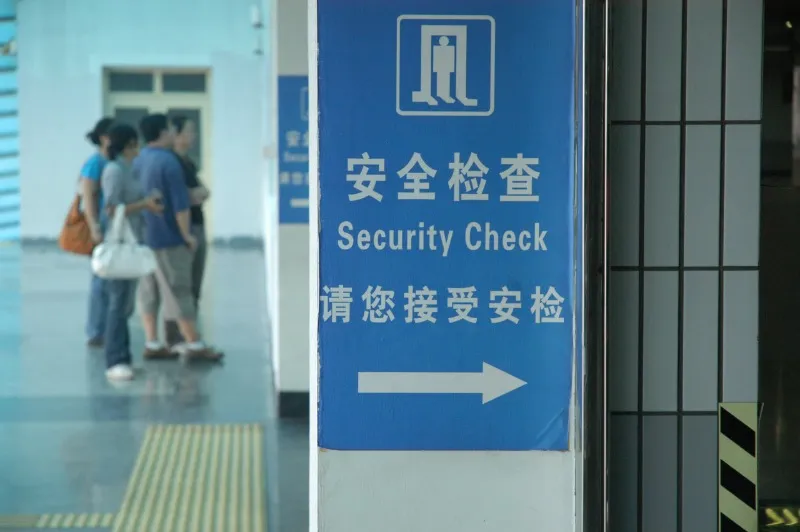
Security Screening is Mandatory: Unlike many other metro systems, Beijing requires 100% security screening before you can enter the paid area.
-
Process: Place your bags, backpacks, and any metal items on the conveyor belt for x-ray scanning. You will also need to walk through a metal detector. This process is usually quick.
5.2 Purchase/Prepare Your Ticket
Once past security, you need to pay your fare using one of the following methods:
| Method | Action | Tip for Visitors |
| Contactless Card | Tap your overseas Visa/Mastercard directly on the turnstile reader. | This is the easiest method for foreigners. |
| Mobile QR Code | Open the Alipay or Yitongxing app and select the Beijing Metro QR code. | Ensure you've linked your card and enabled the Transport function beforehand. |
| Single-Ride Ticket | Use a Ticket Vending Machine (TVM) or go to the Manned Counter to select your destination and pay the fare. | TVMs have an English option. Cash (small denominations) or local mobile pay is accepted. |
| Yikatong Card | Tap your stored-value card on the turnstile reader. | Ensure your card has a minimum balance of ¥3 before entering. |
5.3 Pass Through the Turnstile
-
Entry: Place your QR code, contactless card, or Yikatong card on the designated reader, or insert your single-ride ticket into the slot.
-
The screen will display your entry information, and the gate will open.
5.4 Navigate to the Correct Platform
-
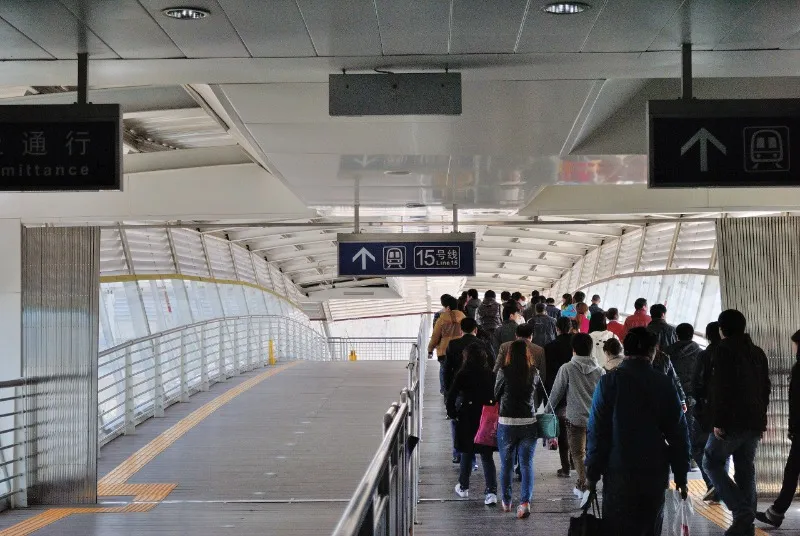
Follow Signs: Follow the overhead and wall signs directing you to your line and direction. Signs are always displayed in Chinese and English (Pinyin).
-
Example: Look for signs that say "Line 4" and the direction of the final stop (e.g., "To Anheqiao North").
-
-
Platform Screen Doors: Most Beijing Metro platforms have screen doors, which open only when the train is properly aligned.
5.5 Board the Train
-
Wait in Line: Line up on the platform behind the marked safety lines. Let passengers exit the train completely before attempting to board.
-
Check the Line Map: Once on the train, check the line map above the doors or the digital displays to track your journey and prepare for transfers. Announcements are typically made in Mandarin Chinese and English.
5.6 Transfer (if needed)
-
Follow Transfer Signs: At a transfer station, exit the train and follow the signs for the new line.
-
Most Transfers are Free: Most connections within the subway network do not require you to exit the fare gates. Just walk along the transfer corridor to the new line's platform.
5.7 Exit the Station
-
Pass Through the Turnstile:
-
Single-Ride Ticket: Insert the ticket into the turnstile slot. It will be collected, and the gate will open.
-
All Other Methods (QR, Contactless Card, Yikatong): Tap your method on the reader again. The system will calculate the distance-based fare and deduct it automatically (or update your credit).
-
-
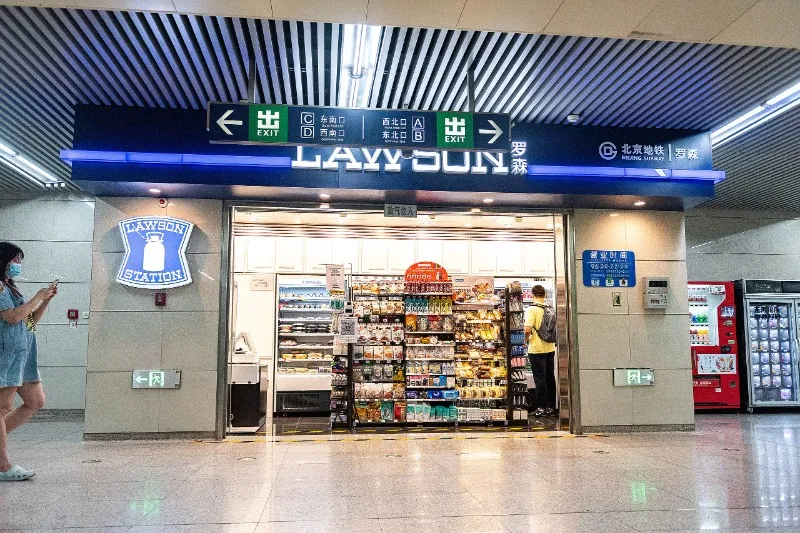
Exit Signage: Once outside the fare gates, follow the signs marked with letters (e.g., "Exit A," "Exit B") to reach the street exit that corresponds to your destination.
6. Safety & Tips for Tourists
The Beijing Metro is widely considered to be extremely safe and secure, making it an excellent mode of transportation for tourists, expatriates, and residents.
6.1 Comprehensive Security Checks
The most notable feature of the Beijing Metro is its security screening system, which is similar to airport security but designed to handle high passenger volume quickly.
-
Mandatory X-ray Screening: Every station entrance requires passengers to put all bags, backpacks, and luggage through an X-ray machine.
-
Metal Detection: Passengers must walk through a metal detector before reaching the fare gates.
-
Purpose: These checks are designed to prevent weapons, flammable materials, and other prohibited items from entering the system, significantly lowering the risk of major incidents.
6.2 Low Crime Rate
-
Violent Crime: Violent crime is extremely rare in Beijing, and this extends to the subway system. Passengers generally feel safe walking alone or using the metro late at night.
-
Petty Crime: As with any major metro system globally, the main concern is petty theft, particularly pickpocketing in crowded areas. This risk is highest during rush hours or near major tourist sights.
-
Tip: Always keep bags zipped and held in front of you in crowded cars or on busy platforms.
-
6.3 Staff and Surveillance Presence
-
Staff and Police: Stations are clean, well-lit, and constantly monitored. Security personnel, plainclothes police, and station staff are visibly present throughout the network, contributing to a sense of order and security.
-
Surveillance: Stations and trains are extensively covered by CCTV cameras.
6.4 Operational Safety and Cleanliness
-
Modern Infrastructure: The Beijing Metro is ultra-modern, with clean facilities, clear signage (often in English), and advanced train technologies.
-
Platform Screen Doors: Almost all platforms are equipped with platform screen doors (or platform edge doors), which separate the platform from the track. This is a crucial safety feature that prevents accidental falls onto the tracks.
-
Emergency Management: The system has well-defined emergency management protocols, with a strong focus on prevention, preparedness, and rapid response in case of an incident.
6.5 Tips for Tourists
While the system is very safe, awareness is always recommended, especially due to the high volume of people.
-
Not to Take: Alcohol; Over 120ml sunscreen spray or similar spray bottles; More than two lighters; Over two boxes of matches; Knife of any kind; Inflammable and explosive articles and Harmful chemicals.
- Eating is not allowed inside the metro train.
-
Avoid Rush Hour: If possible, avoid travel during peak hours (7:00 AM–9:30 AM and 5:30 PM–8:30 PM on weekdays). Overcrowding is the biggest inconvenience, and it's when petty theft is most likely to occur.
-
Be Assertive: During rush hour, you may experience heavy pushing and shoving to enter or exit a train. Don't be shy about asserting your space to avoid being swept along by the crowds.
-
Stand Behind the Line: Always stand behind the yellow line on the platform, and do not lean on the platform screen doors.
- Know Your Stop: Have your destination and any necessary transfer information ready, especially since the crowds can make it difficult to see signs once the train is full.
In summary, the Beijing Metro is one of the safest and most efficient public transport systems in the world, prioritizing passenger security through rigorous and constant screening.
7. Subway Stations Nearby Major Attractions
The Beijing Metro is the most effective and affordable way to reach almost all of the city's major attractions. Here is a guide to the nearest and most convenient subway stations for Beijing's famous landmarks.
🏛️ Central Beijing Landmarks
| Attraction | Nearest Subway Station(s) | Metro Line | Recommended Exit | Notes |
| Forbidden City & Tiananmen Square | Tian'anmen East (天安门东) | Line 1 | Exit A | Closer to the East Gate and Tiananmen Gate Tower. |
| Tian'anmen West (天安门西) | Line 1 | Exit B | Closer to the National Centre for the Performing Arts and Meridian Gate (Forbidden City main entrance). | |
| Qianmen (前门) | Line 2 | Exit A | Closer to Tiananmen Square (south side) and Qianmen Street. | |
| Temple of Heaven | Tiantandongmen (天坛东门) | Line 5 | Exit A or B | Directly at the East Gate of the Temple of Heaven Park. |
| Wangfujing Street | Wangfujing (王府井) | Line 1 | Exit A or C | Leads directly to the main shopping and commercial street. |
| Nanluoguxiang | Nanluoguxiang (南锣鼓巷) | Line 6 & 8 | Exit E or F | Leads to the north end of the famous hutong and adjacent area. |
🏞️ Historical Parks and Gardens
| Attraction | Nearest Subway Station(s) | Metro Line | Recommended Exit | Notes |
| Summer Palace | Beigongmen (北宫门) | Line 4 | Exit D | Closest to the North Gate, a short 3-minute walk. |
| Xiyuan (西苑) | Line 4 | Exit C2 | A slightly longer walk (10-15 mins) to the East Gate area. | |
| Old Summer Palace (Yuanmingyuan) | Yuanmingyuan Park (圆明园) | Line 4 | Exit B | Directly outside the South Gate of the park. |
| Beihai Park | Beihai North (北海北) | Line 6 | Exit B | Leads to the North Gate of the park. |
🧱 The Great Wall of China
The Great Wall is outside the urban metro network, but the subway is essential for reaching the transit hubs for the most popular sections.
| Great Wall Section | Subway Hub Station | Next Step (Bus/Train) | Notes |
| Badaling (八达岭) | Huoying (霍营) | Transfer to the S2 Suburban Railway Line at Huangtudian Station (near Huoying, Exit G4). | The easiest public transit option. The S2 train takes you directly to Badaling Great Wall Station. |
| Mutianyu (慕田峪) | Dongzhimen (东直门) | Take Bus 916 Express from the Dongzhimen Bus Hub. | This bus goes to Huairou, where you must transfer to a local bus or taxi to reach the wall entrance. |
| High-Speed Train Option | Beijing North Station (北京北站) | Take a High-Speed Train (Fuxing) directly to Badaling Great Wall Station. | Fastest overall transport option (about 30 minutes). Accessible via Lines 2, 4, and 13. |
💡 The Verdict: The Best Way to the Great Wall
If you want the fastest and most comfortable route to Badaling, take the High-Speed Train from Beijing North Station (accessible via Subway Lines 2, 4, and 13). It takes only 30 minutes! For a more budget-friendly, scenic route, take Subway Line 8 or 13 to Huoying Station, and transfer to the S2 Suburban Railway Line.
8. Frequently Asked Questions (FAQ)
Q: Can tourists use international credit cards?
A: Yes, through Alipay or WeChat Pay after linking the card.
Q: Do all stations have English signs?
A: Yes, 100% of Beijing Metro stations include English.
Q: Does the metro run 24 hours?
A: No. It mostly runs 5 AM–11 PM, depending on the line.
Q: Is there Wi-Fi on the subway?
A: Wi-Fi is available at some stations but not consistently inside trains.
Q: Is the Beijing Subway safe?
A: Extremely safe, one of the most secure metro systems in the world.
The Beijing Metro system is a world-class network that will reliably transport you to nearly every corner of this incredible city. By utilizing the QR code payment through the "Beijing Subway" app, knowing your Airport Express transfers, and keeping this guide handy, you are all set to explore Beijing efficiently and affordably.
Have a fantastic time riding the rails!