Alipay vs. WeChat Pay for Tourists
-
Do you need both? Yes. While both accept foreign credit cards, it is highly recommended to download both. If one app glitches with your foreign card, the other is your backup.
-
The Verdict: Alipay is generally more foreigner-friendly. It has better built-in translation, easier registration, and superior mini-programs for booking DiDi taxis and subway tickets. WeChat Pay is better if you have Chinese friends, as it allows you to split bills and receive "Red Envelopes" (Hongbao) within chats.
-
The Golden Rule: Link your foreign Visa, Mastercard, or Discover card before you arrive in China.
Welcome to China, the undisputed capital of the mobile payment revolution. In this truly cashless society, mobile payment is not limited to simple transactions; it governs virtually every aspect of daily life, from paying daily life bills, riding public transit and ordering food to communicating and paying at small vendors. Understanding and setting up your mobile wallet is not just a convenience; it is an absolute necessity for seamless travel.
This comprehensive guide is designed for Foreign Tourists and Business Travelers and focuses on the two dominating forces in the market: Alipay (Zhifubao), backed by Ant Group/Alibaba, and WeChat Pay (Weixin Zhifu), integrated into Tencent's pervasive social app. The key takeaway? To fully navigate China's mobile payment system, you must understand and set up both platforms.
I. What You Need Before Traveling to China
To use mobile payments smoothly, prepare the following:
-
A passport (for identity verification)
-
A phone number capable of receiving international SMS
-
At least one international credit card (Visa/Mastercard recommended)
-
Stable mobile data or eSIM
-
Optional: prepaid card
-
200–300 RMB cash for emergencies
II. Getting Started: Download and Set Up as a Foreign User (Step-by-Step)
The process of setting up these apps has become significantly easier for international visitors in recent years, specifically by eliminating the old requirement of needing a local Chinese bank account.
A. App Download and Registration
The first step for any foreign traveler is simply downloading the Alipay App and the WeChat App from your respective app store. When registering, you will be required to input a phone number.

Download Alipay @ Google Play & Apple Store | WeChat Pay @ Google Play & Apple Store
Registration:
Alipay:
Step 1: Open the app and tap 'Sign Up'. Select the option for 'International User'.
Step 2: Enter your International Phone Number (select your correct country code and ensure it works in China for SMS verification. Step 3: Complete the initial SMS verification code process.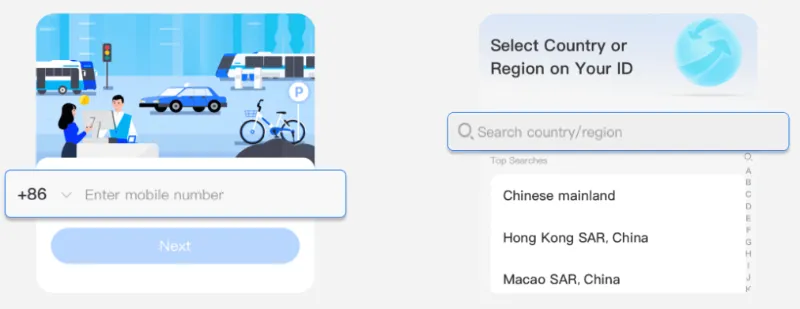
WeChat Pay:
Step 1: Enter your name, region/country, and a valid mobile phone number > Create a password > Accept the terms and conditions.
Step 2: Request a verification code to be sent to the mobile number you entered & enter the SMS verification code sent to your phone. 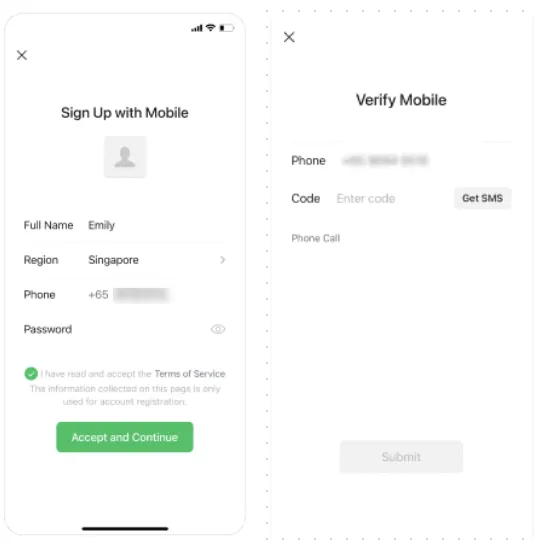
Crucial Step: The Phone Number. While you can register with your home country's number, we strongly recommend you to ensue you can receive SMS verification codes using your primary phone number. Both apps rely heavily on text messages for crucial security verifications, password resets, and confirming high-value transactions.
B. Real-Name Verification (RNV)
To comply with Chinese financial regulations, both wallets require Real-Name Verification (RNV). This authentication is mandatory for binding your International Credit Cards and unlocking full functionality.
Process: You will be prompted to submit scans or photos of your passport (and potentially your entry visa). This process is usually quick and is essential for unlocking full payment functionality.
Alipay:
Step 1: Navigate to Me > Settings > Account & Security > Identity Verification.
Step 2: Upload clear photos of your valid Passport and fill in all required personal details. Step 3: Alipay reviews this information; this process usually takes just a few minutes, but can sometimes take longer.
WeChat Pay:
Step 1: Display the QR code on your screen. Ask an eligible friend who already been WeChat users for 6+ months to open WeChat, tap + > Scan, and scan it within 10 minutes.
Step 2: If no WeChat users are available to assist, you can verify with bank card by tapping "Verify via Payment Card" or activating Weixin Pay when it is offered. Tap Verify via Payment Card > Enter bank card details (number, name, expiry) > Complete SMS/OTP authentication from your bank.
Step 3: Activate WeChat Pay. Tap Verify and Activate Weixin Pay > Enter personal info (full name as on bank docs, ID like passport) > Link bank card > Set payment password > Verify via SMS.
C. Linking International Cards: The Key to Cashless Travel
This is the game-changer for foreigners. Recent policy updates now allow easy binding of major international credit or debit cards:
-
Supported Cards: Visa, Mastercard, JCB, Diners Club, and American Express.
-
The Benefit: Once your International Card is linked, the payment system acts as an intermediary, deducting funds from your card in your home currency. This means you do not need to deal with the complexities of pre-loading a digital balance.
Alipay:
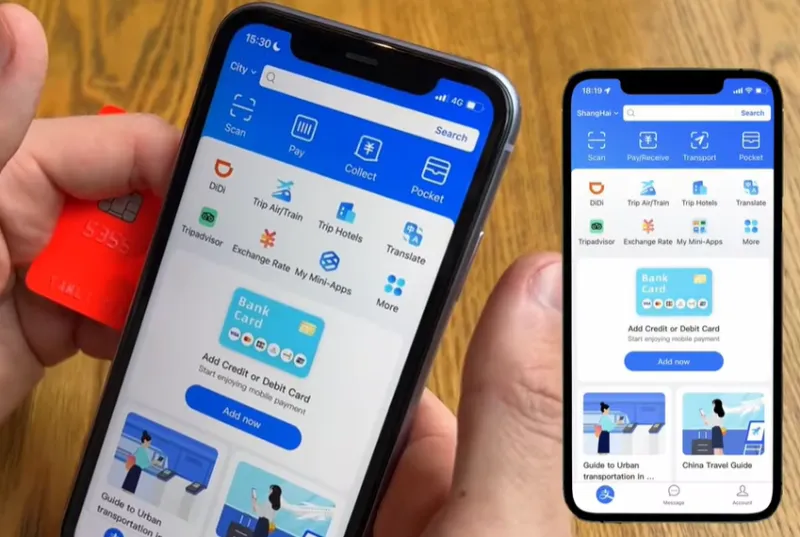
Step 1: On the homepage you can tap "add now", or go to Me > Bank Cards and tap the '+' icon in the corner.
Step 2: Enter your card number. You can link all types of bank cards including Visa, Mastercard, JCB, Discover, and Diners Club International.
Step 3: Complete the bank's security verification process.
WeChat Pay:
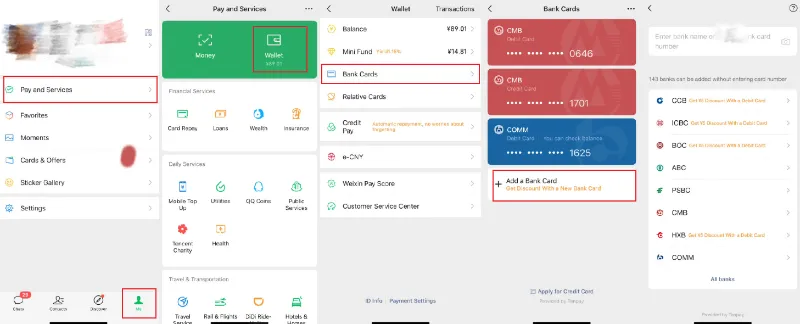
Step 1: Open WeChat → Me → Pay and Services → Wallet
Step 2: Select Bank Cards → Tap Add a New Card and input your 6-digit Payment Password (if set) (you can link all types of bank cards including Visa, Mastercard, JCB, Discover and more, but functions may be limited to online purchases or small in-app payments).
Step 3: Enter card information Step 4: Wait for SMS verification code
D. Payment Mechanics
Both apps utilize two primary methods of payment:
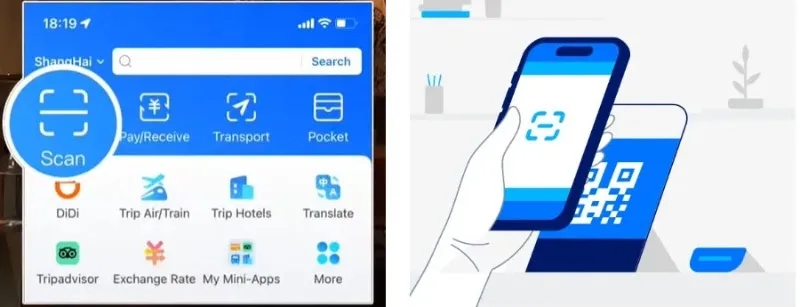
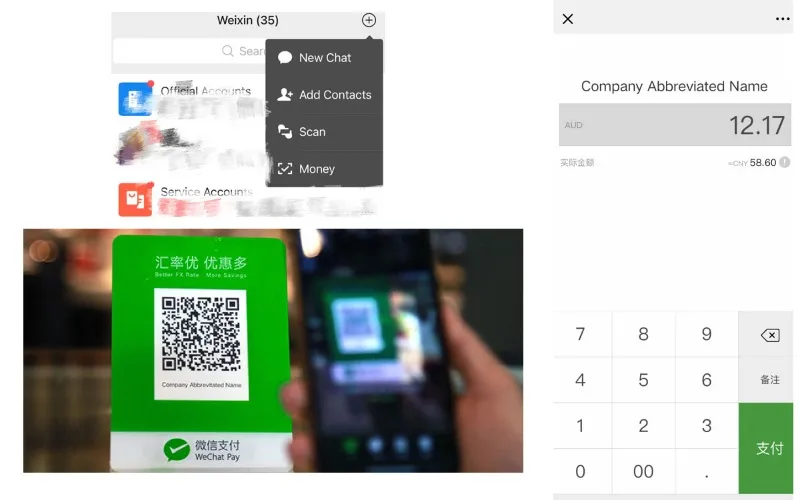
Scan to Pay: You use your phone's camera within the app to scan a static QR code displayed by the merchant (common at street stalls).
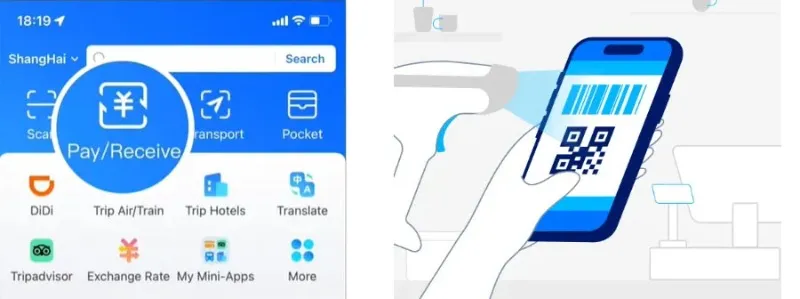
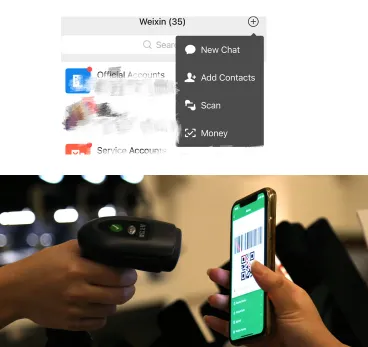
Show Code: You display a dynamic, auto-refreshing QR code on your phone screen, and the merchant scans it with their device (common at cash registers in large stores).
Alipay:
① Scan Merchant QR code
②Show-to-Pay (The Merchant Scans Your Code)
WeChat Pay:
① Scan to Pay
② Merchants scan your QR code
About Alipay TourCard: The Alipay TourCard is a prepaid virtual card (issued by the Bank of Shanghai) within the Alipay app, designed for international visitors traveling in China.
TourCard is largely obsolete for tourists in 2025/2026.
Because foreigners can now link Visa/Mastercards directly to the main app (with a $50,000 annual limit), bothering with the buggy TourCard top-up system is no longer recommended.
Process: Search for the "TourCard" Mini-Program on Alipay homepage. Follow the steps to load funds from your international card into the prepaid account: Step 1 verify your information; Step 2 top up money; Step 3 use QR code to pay.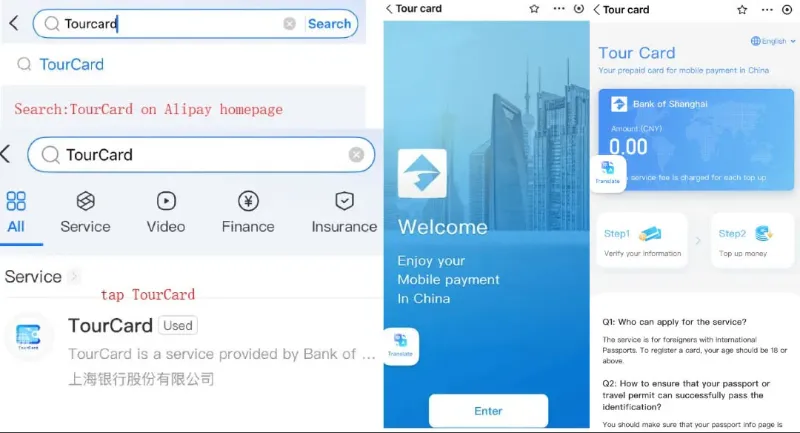
III. The Head-to-Head Comparison: Key Metrics
This table compares the critical features most relevant to international users deciding how to manage their spending in China.
|
Feature |
Alipay (Zhifubao) |
WeChat Pay (Weixin Zhifu) |
|---|---|---|
|
Supports Foreign Cards |
Yes (Visa, MC, Amex, etc.) |
Yes (Visa, MC, Amex, etc.) |
|
Chinese Phone Number Required |
No |
No |
|
Public Transit |
Yes (Metro, Bus, Shared-Bikes, Trains) |
Yes (Metro, Bus, Shared-Bikes, Trains) |
|
English Interface Available |
Yes, extensive multi-language support (English, Japanese, Korean). |
Yes, the WeChat app supports multiple languages, including the Pay function. |
|
Transaction Fee (Foreign Card) |
Approx. 3% for international transactions. Note: Small transactions (e.g., under ¥200) are often exempt. |
Approx. 3% for international transactions. Note: Small transactions (e.g., under ¥200) are often exempt. |
|
Spending Limit |
High Annual Limit (e.g., $50,000 - $60,000 equivalent) and high per-transaction limits, sufficient for most travel. |
High Annual Limit (e.g., $50,000 - $60,000 equivalent) and high per-transaction limits. |
|
Cash Withdrawal from Wallet Balance |
No. Balances received from transfers cannot be withdrawn back to an international card; must be spent. |
No. Balances received from transfers cannot be withdrawn back to an international card; must be spent. |
|
Top Up(Prepaid Wallet) |
Yes. TourCard mini program associates with Bank of Shanghai |
No. But you can receive red packets or transfers from WeChat friends. It will be deposited in in your WeChat balance. |
|
Acceptance in Stores |
Excellent |
Excellent |
|
Best for Tourists |
Very strong |
Essential if staying longer |
IV. Practical Usage Scenarios (Mini Programs) and Distinct Advantages
While both apps cover the same core payment function, their distinct strengths make them ideal for different travel needs. And Both Alipay and WeChat are featured to powerful mini-program functions. (Mini-programs are small apps inside Alipay or WeChat, requiring no download and loading instantly.)
A. Alipay: The Financial & Lifestyle Hub (Utility Focus)
Alipay is designed primarily as a financial platform, making it the better choice for managing complex utility payments and logistics while traveling.
-
Strength: Handling larger, utility-based payments and accessing specific city services.
-
The Power of Mini-Programs: Many of Alipay's core utilities (like booking and transit) are accessed via mini-programs—lightweight apps that run within the main Alipay application. This ecosystem is richer and more developed on Alipay for traveler needs.
-
Essential Utility: Public Transit Access: One of Alipay's most important features is the ability to easily generate digital bus and subway passes/codes via local city mini-programs. This is crucial for navigating China's extensive public transit networks without relying on physical cards.
-
Other Examples: Booking trains, flights, and hotels using integrated mini-apps, and making high-value purchases at major retail chains.
Public Transit Access:
Forget buying physical tickets; digital transit is mandatory in major Chinese cities.
-
Open Alipay and search for 'Transport' or 'Ride Code' on the homepage.
-
Select "Metro or Bus", tap the "Get Now" button and generate the ride code
-
Use the generated QR code to scan the reader at the bus or subway turnstile.
-
System Feature: This is a 'pay-after-you-ride' system, meaning the fare is calculated and charged to your linked card only after you exit the transport.
-
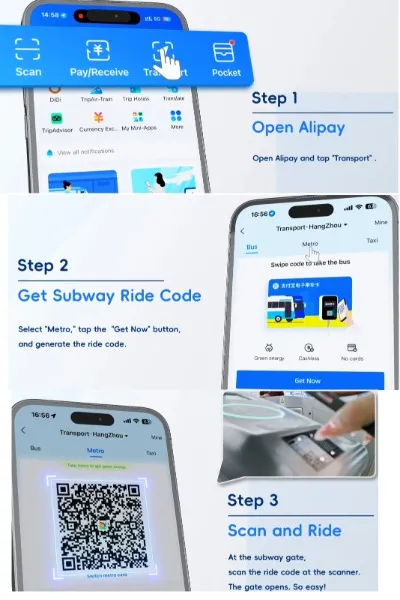
Mini-Programs: within the Alipay mini-program, you can hail a ride, ride a shared bike, and book hotels, flights, and train tickets without downloading a separate app.
How to use mini programs within Alipay?
Step 1: Open Alipay > Swipe down on the home screen (pull-down menu) or tap the magnifying glass search icon
Step 2: Type the mini program name to search
Step 3: Tap the result - it loads instanly
Step 4: You can pin mini program for later use or swipe down on home screen for quick access to recently used mini programs
Hail a ride (Didi) via Mini Program
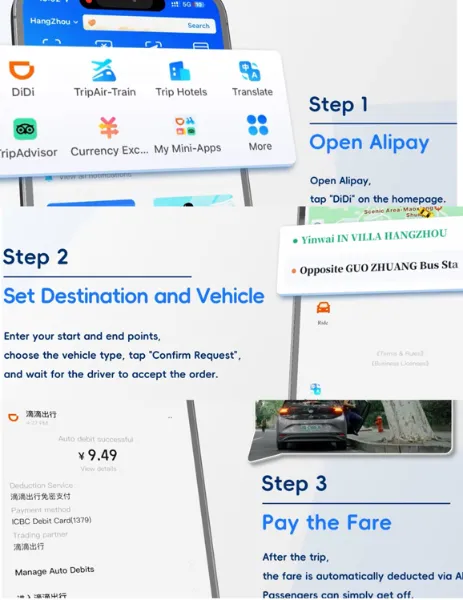
Step1: Open Alipay, tap "Didi" (or tap the magnifying glass search icon & search Didi) on the homepage.
Step2: Enter your start and end points, choose the vehicle type, tap "Confirm Request". and wait for the driver to accept the order.
Step3: After the trip, the fare is automatically deducted via Alipay. Passengers can simply get off. You can pay later by reopening the mini-program if needed.
Ride a shared-bike (HelloBike) via Mini Program
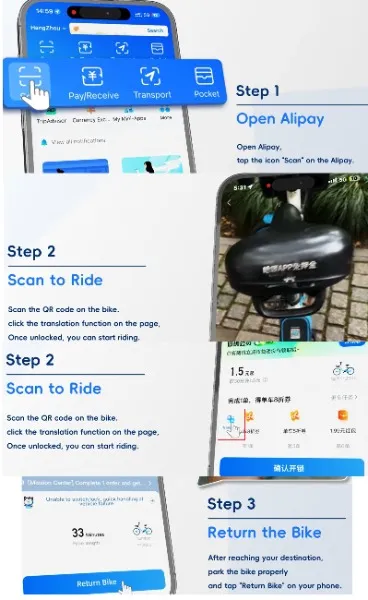
Step1: Open Alipay, tap the icon "Scan" on the Alipay.
Step2: Scan the QR code on the bike, click the translation function on the page. Once unlocked, you can start riding.
Step3: After reaching your destination, park the bike properly, and tap "Return Bike" on your phone.
Mini programs are perfect for foreigners in China for quick tasks like booking rides (Didi), public transport (bus/metro QR codes), food delivery (Meituan or Eleme), book trains/flights tickets & hotels (Trip.com). Use the above methods and built-in translation function to search for mini programs you need.
B. WeChat Pay: The Social Wallet (Daily/Small Focus)
WeChat is the ubiquitous social messaging app in China. WeChat Pay is deeply integrated into this ecosystem, making it perfect for daily, low-value, and social transactions.
-
Strength: Seamless integration into daily social interactions and fast payments.
-
Examples:
-
Peer-to-Peer: The preferred method for sending/receiving money from friends (a crucial social norm) and splitting bills (AA-ing). Foreign banks cards are limited to this.
-
Hongbao (Red Envelopes): Participating in the cultural tradition of giving digital red envelopes. Foreign banks cards users can only receive red envelopes.
-
Speed: Paying quickly at small street vendors, coffee shops, and taxis due to its simpler, embedded interface.
- Chat or Group Chat: Send texts, voice messages, photos, files, and even short videos. You can also make video calls for free. This feature is perfect for communicating with tour guides or hotel staff.
-
Like Alipay, WeChat also offers services for subway, bus, shared bike, taxi, and flights/train tickets, all accessible through mini-programs.
How to use mini programs within WeChat?
Step-by-step guide to take a subway through WeChat mini program
Step 1: search for local transit.
In the WeChat search bar, search for your city's transit app (e.g., "Shanghai Metro", "Chengdu Bus") > Select the official Mini-Program or Official Account.
Step 2: Access the QR Code Function.
Inside the Mini-Program, look for the option labeled Code (乘车码) or Ride Code.
Step 3: Agree to Terms/Activate.
You will be prompted to agree to a user agreement and potentially complete a one-time identity verification.
Step 4: Link WeChat Pay
The Mini-Program will ask for permission to deduct funds automatically from your WeChat Pay account. Tap Authorize or Confirm.
Step 5: Generate and Use
The dynamic QR code is now ready. Open this Mini-Program when you reach the subway gate, scan the code, and walk through!
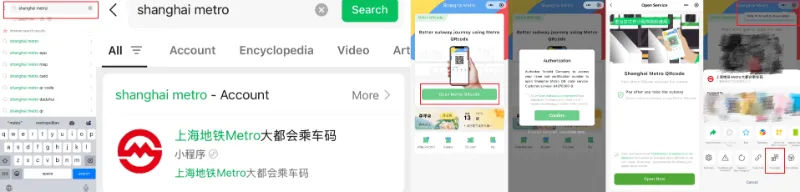
Use the above methods to search for mini programs you need.
C. Most useful mini-program categories:
-
Metro QR codes & city transit passes
-
Didi ride-hailing
-
Bike-sharing
-
Food ordering inside restaurants
-
Tourist attraction tickets
-
Hotel check-in and reservations
-
Maps and navigation
-
QR menus in cafés and street stalls
Which app has better mini-programs?
-
WeChat has a larger ecosystem
-
Alipay has excellent tourism-focused options
How to Use Alipay in China as a Foreigner (2026 Setup Guide)
How to Use WeChat in China: 2026 Setup & Pay Guide for Foreigners
V. Troubleshooting and Essential Tips
The "Can't Withdraw" Trap
This is the most critical piece of advice: Do not rely on your wallet balance for cash. Any funds received from a peer-to-peer transfer from a friend are typically "trapped" in your wallet balance. Foreign visitors cannot withdraw wallet balance to overseas bank accounts.
Pro-Tip: To prevent this, always ensure your payment is deducted directly from your linked international card, not your wallet balance, wherever possible.
Offline Access is Impossible
China’s mobile payment system is entirely dependent on real-time internet connectivity. You need a data connection (Wi-Fi or mobile data) to generate the dynamic QR codes and process the transaction. A dead battery or no signal means no payment.
Currency Conversion Clarity
When using a linked international card, you will typically be charged in the local currency (RMB), and your card issuer will handle the currency conversion. The 3% foreign transaction fee noted in the table is standard for international card usage, though the exemption for small transactions is a major bonus for travelers.
💡 Pro Tip: How to Avoid the 3% Foreign Card Fee
Both Alipay and WeChat charge a 3% transaction fee when you use a linked international credit card—but only on single transactions over ¥200 CNY (approx. $28 USD). To legally avoid this fee, simply ask the merchant to split larger bills. For example, if your dinner costs ¥300, ask the waiter to charge you ¥150 twice. Both transactions fall under the threshold, meaning you pay zero app fees!
Mobile Phone Security
Treat your mobile payment app like your physical wallet. Use secure passwords, enable biometric authentication (fingerprint/face ID), and always keep the registered phone number active and secure throughout your trip.
QR code doesn’t scan
Increase brightness of your phone screen or Try “Scan” instead of “Show payment code”
The Great Firewall and Connectivity Warning
Mobile payment requires a stable, uninterrupted connection to servers. If you are using a VPN, it can sometimes interfere with the payment app's ability to communicate with the payment server, leading to transaction failures or slow processing.
Pro-Tip: If a payment fails, try turning off your VPN briefly to complete the transaction, especially if you are using a stable Wi-Fi connection or local mobile data.
Cash as an Essential Backup
While rare, cash is essential for emergencies, remote areas, or highly specialized businesses (e.g., some temples, local markets, or when a payment terminal is down).
Pro-Tip: Always carry a small amount of cash (¥500 - ¥1000 RMB). You can withdraw cash using your international debit/credit card at major bank ATMs (Bank of China, ICBC, Agricultural Bank) that support Visa/Mastercard networks.
VI. Final Recommendations: Which App Should Foreigners Use in 2026?
Navigating China’s mobile payment landscape is simple, provided you prepare correctly. You don't need to choose a winner; they complement each other perfectly.
The Decisive Summary: When to Use Which App
|
Scenario |
Recommended App |
Rationale |
|---|---|---|
|
Daily Street Vendors & Coffee Shops |
WeChat Pay |
Embedded in the dominant social app; faster for small, spontaneous purchases. |
|
Public Transit (Bus/Subway) |
Alipay |
Stronger, more integrated mini-program ecosystem for generating city-specific transit codes. |
|
Splitting a Bill (AA) |
WeChat Pay |
Seamlessly integrated with your friends list for easy peer-to-peer transfers. |
|
Large Retail/Luxury Purchases |
Alipay |
Generally preferred for higher-value financial transactions and greater perceived security. |
|
Booking Trains/Flights/Hotels |
Alipay |
Its utility focus provides richer, dedicated mini-programs for logistics and travel planning. |
By setting up both and understanding their respective strengths, you can confidently enjoy the speed and convenience of China's highly advanced mobile payment ecosystem from the moment you land.
Related guide: How to Use WeChat in China?
How to Use Alipay in China?