The Quick Answer to China Transportation
-
Does Uber work in China? No. DiDi is the Chinese equivalent to Uber.
-
What app should foreigners use? DiDi Chuxing is the best choice because it offers a full English interface, accepts foreign credit cards directly, and has built-in real-time chat translation.
-
How do I pay? China is a cashless society. You must link an international Visa or Mastercard to the DiDi app, Alipay, or WeChat Pay before you arrive. Cash is rarely used, even in traditional street taxis.
-
The Golden Rule: Never answer phone calls from drivers. Hang up and use the in-app chat so the text auto-translates to English!
Traveling around China has become incredibly convenient thanks to its advanced ride-hailing ecosystem and abundant taxis. Whether you're visiting Beijing, Shanghai, Guangzhou, Chengdu, or small tourist towns, you will rarely be far from a reliable transportation option.
This detailed resource completely solves the biggest pain points for non-Chinese speakers—from setting up DiDi's English App and linking international credit cards (Alipay, WeChat Pay) to navigating the complex aggregator system like Amap (Gaode). Travel confidently, pay easily, and never worry about the language barrier again.
Part 1: How Ride-hailing Works in China
The Landscape: Taxis, Apps, and Digital Integration
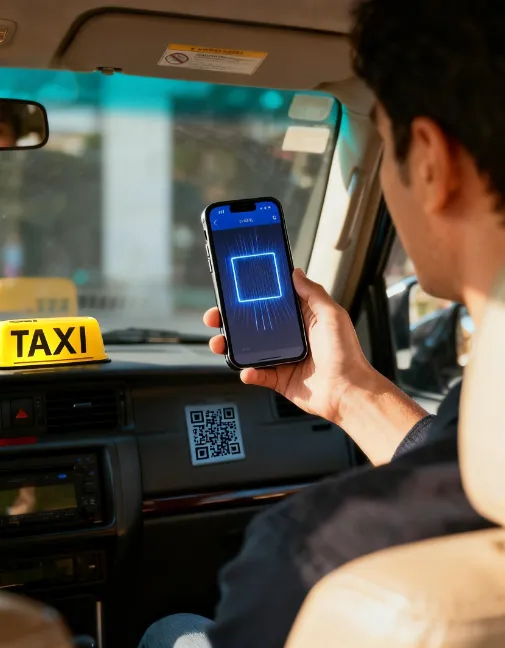
China offers two primary, ubiquitous methods for point-to-point transportation: Traditional Taxis and Ride-Hailing Platforms. Both are legal, readily available, and utilized by millions daily. While ride-hailing offers maximum convenience via apps, traditional taxis remain a vital and common option, particularly at major transport hubs and designated queues. The key feature of both is digital integration: even traditional taxis are increasingly booked and paid for using mobile apps.
Cashless Society
A crucial point: China operates largely without physical cash. Ride-hailing services are completed digitally. Traditional taxis which accept QR code scan payments via Alipay/WeChat (linking international VISA / MasterCard) and cash. Securing your mobile payment setup (Part 5) is mandatory before you can complete any trip.
The Ecosystem: Apps and Aggregators
The digital transportation market is structured around these platforms:
-
DiDi (滴滴): The single, dominant ride-sharing platform (China’s Uber/Lyft), which also allows you to hail traditional taxis.
-
Aggregators (Gaode/Meituan): Platforms that don't own cars but search and dispatch vehicles from multiple independent fleets (like T3 and CaoCao) and often include traditional taxis as well.
🚗 Where is Uber? (The DiDi Monopoly)
If you open your Uber app after landing in Beijing or Shanghai, you will find it completely non-functional. In 2016, DiDi officially acquired Uber's operations in China. Today, DiDi is the undisputed king of Chinese ride-hailing. Fortunately, the interface feels exactly like Uber, allowing you to drop a pin, choose a car tier, and ride seamlessly.
Part 2: Safety Tips & General Advice (Cultural Differences)
Safety First
All major app-based rides are fully regulated, GPS-tracked, and linked to registered drivers and license plates. They are generally considered very safe.
-
Legitimacy: Always book through a verified app.
-
The "Black Taxi" (Hei Che 黑车) Warning: Never accept a ride from strangers who approach you in airports or train stations shouting "Taxi?" or "Need a ride?" These are illegal operators. Always use the official taxi queue or a pre-booked app ride.
Cultural Norms
-
NO Tipping: Tipping is not a cultural practice in China. The price displayed on the app is the final price.
-
Silence is Golden: Chinese drivers are highly professional and focused on efficiency. Don't expect conversation, especially due to the language barrier. It is not rude; it is efficient.
-
Seatbelts: Mandatory for all passengers, front and back.
Note Peak Hours
-
Morning: 8:00–9:30
-
Evening: 17:00–19:00
May take longer waits and possible surge pricing.
Part 3: The Language Barrier Survival Guide
The biggest challenge for foreign visitors is communication. Follow this protocol for a smooth trip:
Rule #1: NEVER Answer the Phone
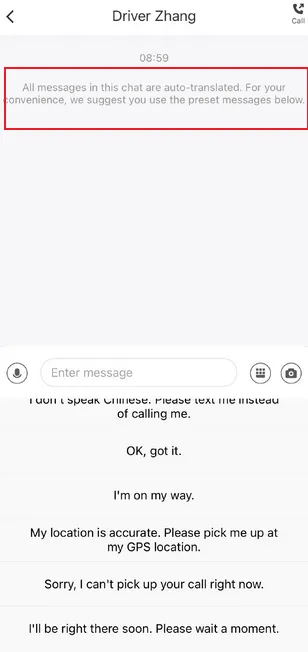
When your ride-hailing order is matched, the driver will almost always call you to confirm the pickup point. Do not answer it.
-
The Strategy: Hang up immediately. Open the ride details screen and look for the "Message" or "Chat" button.
-
Why: DiDi and other major platforms feature built-in auto-translation in the text chat function. Phone calls do not. Use the chat for all communication.
Rule #2: The "Location Card" Trick
English street names are useless to drivers. Before you hail a ride, make sure you have the destination address saved in large Chinese Characters (Hanzi).
-
For App Rides: Paste the Chinese characters into the destination box.
-
For Traditional Taxis: Keep a screenshot or a hotel business card with the destination to show the driver.
Rule #3: Trust the Pin (But check it)
Drivers rely entirely on the precise GPS pin you drop.
-
When booking, ensure the small green "Pickup Dot" is placed on a main road or a designated pickup point to avoid confusion.
Part 4: Traditional Taxis (Street Hailing)

While less common, traditional taxis are still useful in specific situations and provide a low-tech alternative to ride-hailing apps.
A. When to use them
-
When your phone battery or data has failed.
-
When using a designated Taxi Rank queue at airports/train stations (Part 11).
B. Pricing and Payment
-
Pricing: Metered (Da Biao 打表). The fare starts with a Flag-fall price (varies by city, e.g., 14 RMB in Shanghai) and increases based on distance and time. Late nights, high-way toll, certain areas like airports may cause extra charge.
Base Fares in Major Cities (approx.)
|
City |
Starting Fare (Flag-Fall) |
Charged Per Kilometer After Starting Fare |
Notes |
|---|---|---|---|
|
Beijing (北京) |
¥13 (for 3 km) |
¥2.3/kilometer |
Plus ¥1 fuel surcharge. |
|
Shanghai (上海) |
¥14 or ¥16 (for 3 km) |
¥2.7/kilometer |
Varies by car model. Higher rate for standard electric vehicles. |
|
Guangzhou (广州) |
¥12 (for 3 km) |
¥2.6/kilometer |
Subject to government-guided floating price. |
|
Shenzhen (深圳) |
¥10 (for 2 km) |
¥2.7/kilometer |
Pure electric and fuel taxis share the same fare structure. |
|
Hangzhou(杭州) |
¥13 (for 3 km) |
¥2.5/kilometer |
An additional 50% return surcharge will be applied for distances exceeding 10 kilometers. |
|
Chengdu(成都) |
¥8 or ¥9 (for 2 km) |
¥2.3/kilometer |
Night rate (22:00-06:00) is typically ¥10. |
-
Payment:
-
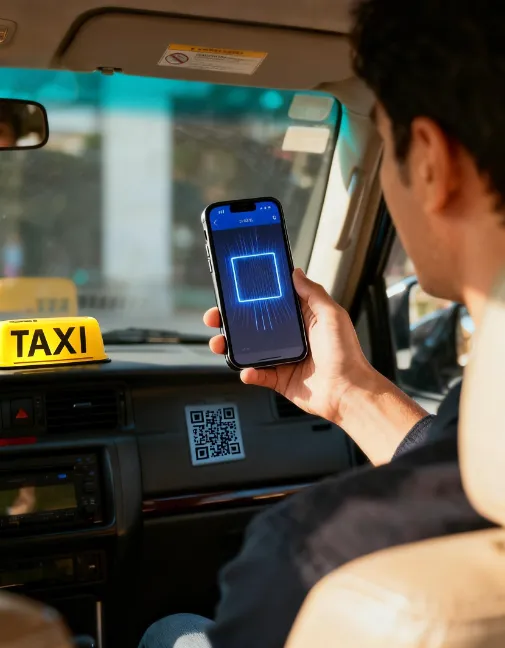
QR Scan (Recommended): Scan the Alipay/WeChat QR code sticker found on the back of the front seats.
-
Cash: Acceptable, but try to use small notes (20 RMB or less).
-
C. Challenges
No Auto-Translation: If you hail a taxi, you lose the safety net of the in-app chat translation. Be ready with your Chinese address (Part 3, Rule #2).
Part 5: Before You Go (The Essentials Setup & Payment)
Getting set up is the first hurdle. Complete these steps before you need your first ride.

|
Requirement |
Action |
Notes |
|---|---|---|
|
Essential Apps |
Download Alipay, WeChat, and DiDi (English). |
DiDi is key for English UI. Alipay is key for payment and access to Aggregators. |
|
Payment Setup |
Link an international Visa/Mastercard to your Alipay or WeChat Pay account. |
Crucial. Without this, you cannot pay for app rides. Search for the "TourPass" within Alipay feature if direct linking fails. |
|
Phone Number |
Ensure you have a working Chinese SIM card (preferred) or an international number with roaming. |
You need to receive SMS verification codes for registration and occasionally for driver contact (though you should use chat). |
The Absolute Must-Have Apps for China Transportation (2026 Guide)
How to Use Alipay in China as a Foreigner (2026 Setup Guide)
How to Use WeChat in China: 2026 Setup & Pay Guide for Foreigners
Troubleshooting Payment Setup
Foreign card linking can be tricky. Here are additional tips:
-
Alipay's TourPass/International Version: Ensure you are using the international version or have activated the "TourPass" feature within Alipay to simplify the card linking process. This often involves providing passport information once.
-
Double Check Region: Sometimes, apps require your phone's region or the app store account region to match for smooth linking.
-
Verify with Bank: If the card linking fails repeatedly, call your bank and notify them you are trying to link the card in China; they may be blocking the verification attempt.
Part 6: Overview of Major Ride-hailing Platforms
Before diving into how to use each app, here is a quick guide to the primary players in China's digital transportation ecosystem.
|
Platform |
Chinese Name |
Role |
Foreigner Friendliness |
|---|---|---|---|
|
DiDi |
滴滴出行 |
The single, dominant ride-hailing platform, acting as a direct booking service. |
High (Full English UI, in-app translation) |
|
Gaode (A Map) |
高德打车 |
They search and dispatch vehicles from multiple independent fleets, offering competitive pricing. |
Medium (Access via A Map App or Alipay/WeChat mini-programs) |
|
Meituan |
美团打车 |
They search and dispatch vehicles from multiple independent fleets, offering competitive pricing. |
Medium (Access via Meituan App or Alipay/WeChat mini-programs) |
|
T3/ Caocao Chuxing |
T3出行/曹操出行 |
High-quality B2C service providers that own their cars and employ drivers directly (B2C model). |
Medium (Standardized service, often found via Aggregators) |
Ride-Hailing Vehicle Types & Service Levels
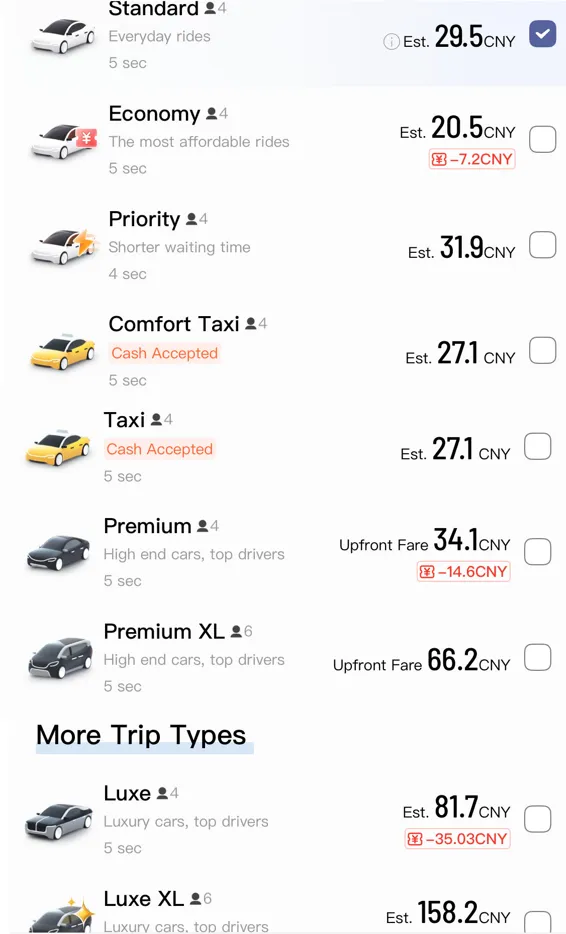
All Chinese ride-hailing services adhere to similar tier-based pricing and service levels.
|
Service Level |
Chinese Name |
Description |
Key Features |
|---|---|---|---|
|
Economy / Standard |
Kuai Che (快车) |
The standard, most affordable tier, similar to UberX. Private car owners are common. |
Best for budget and speed. |
|
Premium / Executive |
Zhuan Che (专车) |
Business Class service. 20-40% higher price. |
Higher-end cars, uniformed drivers, complimentary bottled water, smoother ride. |
|
Luxury |
Hao Hua (豪华) |
The highest tier, featuring luxury sedans (e.g., Mercedes-Benz, BMW). 50-100% higher price. |
Top-tier comfort, suited for VIP or special occasions. |
|
Company Fleets |
T3 / CaoCao (自营车队) |
Not a tier, but a type of operator. These companies own their cars and employ drivers directly (B2C model). |
Consistent quality, clean cars, strict standards. Less risk of private car issues. |
|
Taxi |
Chu Zu Che (出租车) |
Traditional, metered city taxi. |
Hailed via app or street. Price is strictly by the meter. |
Part 7: The Best Option: DiDi Chuxing (English Version)
DiDi should be your primary ride-hailing app due to its superior language support. You can download Didi app or use it within Alipay / Wechat mini program.
A. Why DiDi?
-
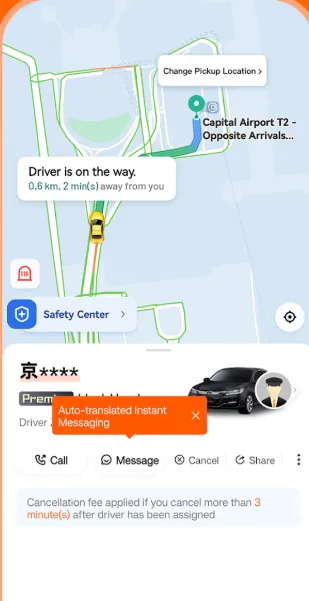
Full English Interface: The entire user experience, from booking to payment, is mirrored in English.
-
Native Chat Translation: The text-to-text chat is reliable and fast.
-
Safety Center: Features like sharing trip status and one-click police assistance offer extra security.
- 24/7 bilingual customer service
B. Scheduling and Booking Ahead
This feature is vital for early morning flights or train departures when demand is low.
-
After entering your destination, look for the "Schedule" or "Reservation" button (often next to the "Book Now" button).
-
Select the desired date and time.
-
The app will confirm the booking, and a driver will be assigned closer to the time.
C. Pricing and Fees
DiDi uses Dynamic Pricing. This means prices will surge (increase) during peak hours, bad weather (rain/snow), or high demand.
-
Tolls and Highway Fees: Any highway or bridge tolls incurred during the trip are automatically included in the final fare shown on the app. You do not need to pay the driver separately.
-
Cancellation Fees: A small fee is charged if you cancel a ride after the driver has been dispatched for a few minutes.
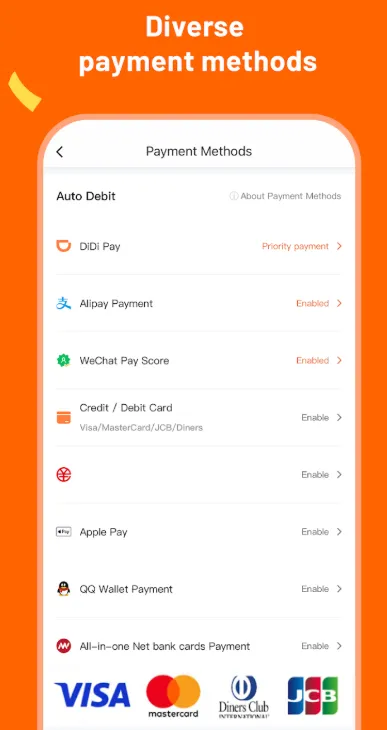
D. DiDi Payment Methods: Foreign Card Success
DiDi stands out because it offers one of the most streamlined payment experiences for international travelers.
-
Direct Card Acceptance: Unlike some platforms that rely heavily on WeChat or Alipay wallets, DiDi’s international version allows you to directly link and use major foreign credit cards (Visa, Mastercard, American Express, etc.) within the app.
-
How it Works: Once you link your card during setup (see Part 5), DiDi automatically charges the final fare to your card after the trip is completed, eliminating the need to worry about manually paying the driver via QR code. This makes the payment process entirely hands-off and worry-free.
Part 8: Amap (Gaode)
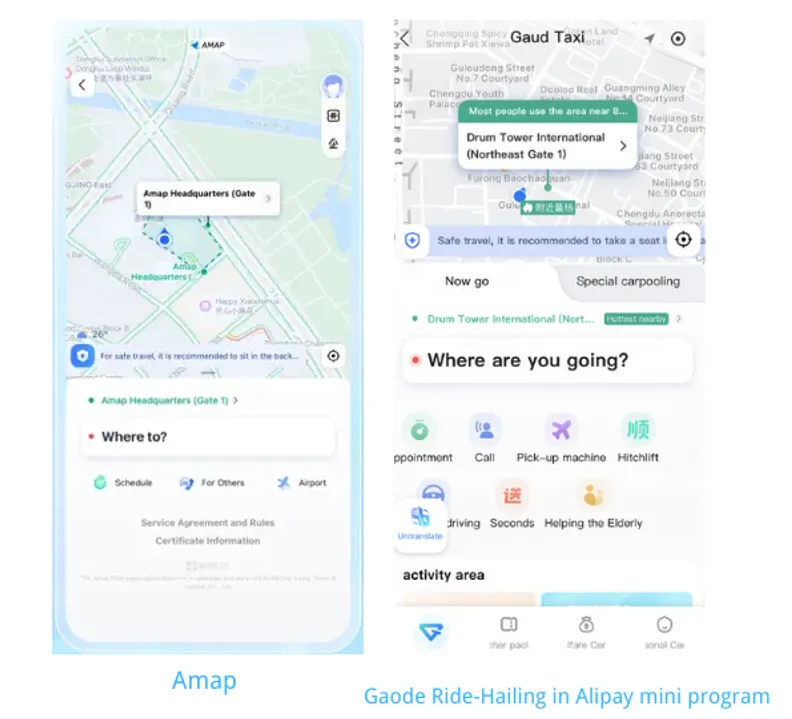
Amap (高德地图) is China's most accurate and widely used mapping application. While the ride-hailing interface is primarily in Chinese, it is an essential tool for cross-referencing destinations and accessing a large pool of vehicles when DiDi is experiencing high demand. Gaode ride-hailing service is integrated into the Amap app, or you can search for it (gaode高德打车)on WeChat/Alipay mini-programs.
A. Why Use Amap?
-
Vehicle Pool: As an aggregator, Amap searches and dispatches vehicles from numerous fleets (including T3 and CaoCao), increasing your chances of finding a ride quickly during peak hours.
-
Accuracy: Provides the most reliable GPS tracking and routing for complex Chinese addresses.
-
Access Method: You must select the "打车 (Ride-hailing)" function within the map app, which will then display available vehicles from various fleets. Or, search "gaode" in Alipay or Wechat mini program.
B. Payment Methods
Since Amap is an aggregation platform, it does not handle payment directly. When booking a ride through Amap:
-
Required Linkage: You must have a working mobile payment method (Alipay or WeChat Pay) linked to your bank card (see Part 5).
-
Automatic Deduction: Amap directs the payment to the underlying payment platform (Alipay or WeChat Pay) associated with your phone number. The final fare is automatically deducted from your chosen wallet after the trip is completed.
-
No Direct Foreign Card Link: Unlike DiDi, Amap does not offer an option to link an international credit card directly within its interface. Payment must flow through a pre-configured mobile payment wallet.
Part 9: Alternative Aggregators & Company Fleets (Meituan, T3, CaoCao)
These platforms provide excellent alternatives, often offering superior service standards (Company Fleets) or competitive pricing (Meituan).
A. Access via Alipay & Meituan
-
Alipay "Transport" (Recommended Access): Open Alipay and search for "Transport" or "Ride-hailing." This mini-program offers an English-friendly overlay and is the easiest way for foreigners to access multiple fleets (including T3 and CaoCao) without navigating Chinese-only apps.
-
Meituan (美团打车): Meituan is primarily a food delivery app, but its ride-hailing service is highly competitive, often used to find budget-friendly express rides.
B. Prioritizing Company Fleets (T3 & CaoCao)
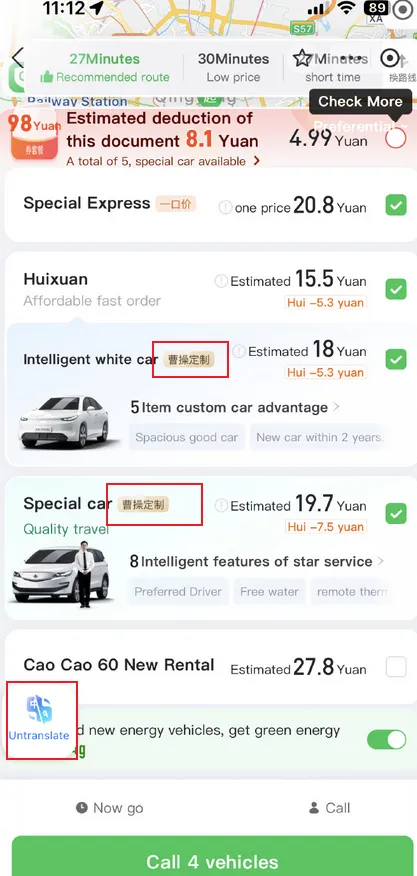
When your search results show available providers, look specifically for T3 Mobility or CaoCao (曹操出行) Mobility. These are "Company Fleets" (B2C model):
Caocao 👇
-
Quality & Standardization: They own their cars and employ drivers directly, ensuring highly consistent service, clean cars, and professional, uniformed drivers.
-
Features: Most of these B2C fleets offer a scheduling feature similar to DiDi for booking rides ahead of time.
C. Fixed Price Option (一口价 Yī kǒu jiǎ)
Many rides offered through these aggregators allow you to select a Fixed Price. This is useful as the fare will not change, even if you are stuck in unexpected traffic or experience minor delays.
Part 10: Practical Tips for a Smooth Pickup
A. How to Identify Your Car Quickly
In crowded urban areas or pickup zones, it can be hard to spot your driver. Use these three checks:
-
License Plate: This is the most reliable method. The license plate number is shown prominently in the app (e.g., 京A-12345).
-
Car Color: Note the color shown in the app (White, Black, Silver).
-
Car Model: The app lists the model (e.g., Toyota Camry, BYD Song).
B. Adding Multiple Stops (途经点 Tú jīng diǎn)
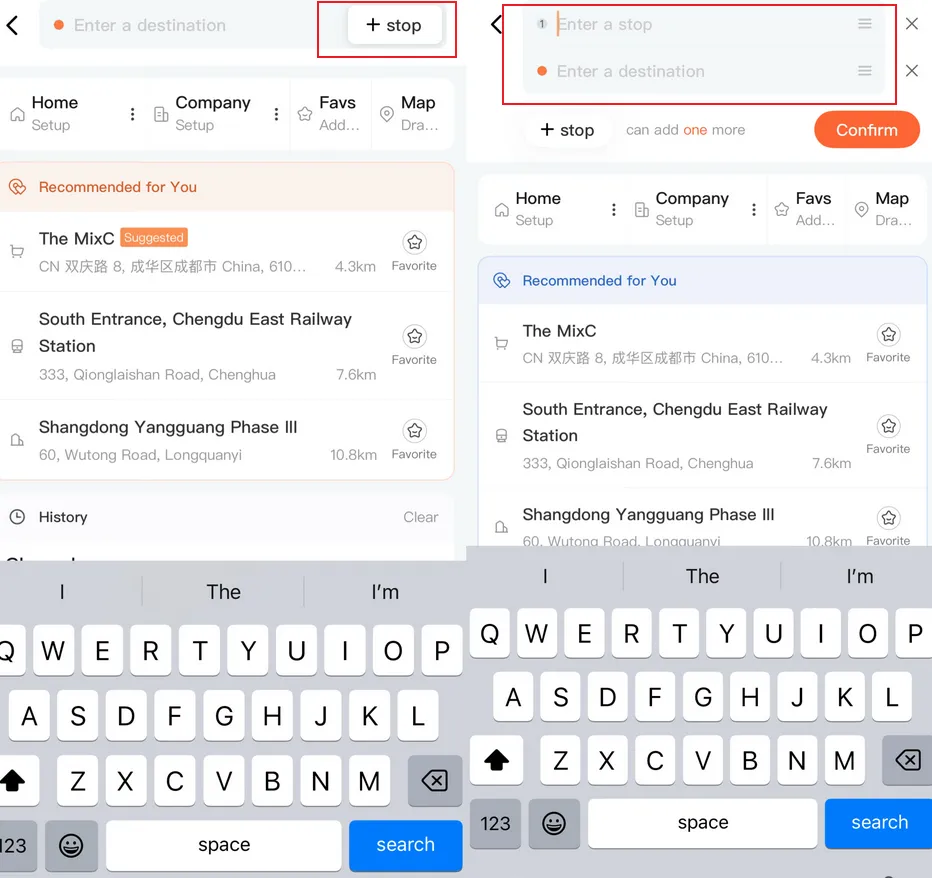
If you need to make a stop before your final destination:
-
Add Stop Button: Look for the "+" button next to your destination input field.
-
Fee Adjustment: The fare will automatically recalculate and adjust based on the extra distance and time. It is important to add stops before the trip begins.
C. Invoices (Fapiao 发票)
If you require an official receipt for business expenses:
-
Digital Invoices (Fapiao): App-based rides (DiDi, T3, etc.) allow you to request an electronic invoice directly through the app after the trip is completed. Look for the "Invoice" or "Fapiao" button in your ride history.
Part 11: The Arrival Guide: Airports & Train Stations
Navigating these hubs can be confusing due to strict traffic controls.
A. The "Two Worlds" Rule
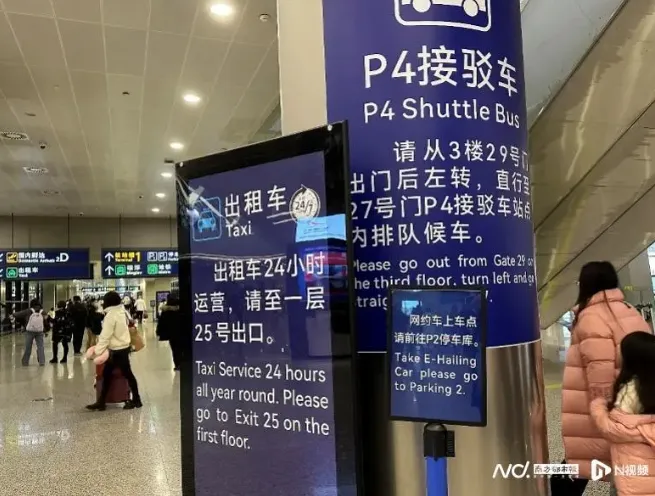
-
Taxi Rank (出租车候车区): The official line for traditional metered taxis. These are typically on the Ground Floor (Arrivals). (Refer to Part 4 for traditional taxi details)
-
Ride-Hailing Zone (网约车上车点): The designated area for all app-booked cars (DiDi, T3, etc.). This is often located in a multi-story parking garage (e.g., P1, P2) and requires you to take an elevator. Follow the specific app instructions carefully.
B. Navigating the App
When booking an app ride at an airport, the app will prompt you to select your Terminal and then a specific Pickup Zone (e.g., "Gate 5," "P3 Pillar 12"). Do not proceed to the zone until you have received your match and know the license plate number.
C. Avoiding Scams
Stick to the official signage. Ignore anyone who offers you a ride or tries to guide you to an unmarked car.
Part 12: Lost Items and Support
What to do when things goes wrong.
A. Lost and Found (Immediate Action)
If you realize you left an item in an App-booked car (DiDi, T3, etc.):
-
Contact Driver Immediately: Go to your Ride History in the app. There will be a "Contact Driver" button (usually valid for 24-48 hours). Use the In-App Chat for translation.
-
Report to Support: If the driver doesn't answer, immediately use the App's Customer Support function (usually under "Help" or "Support") to report the lost item. Provide the time, license plate, and a detailed description of the item.
-
Note: For Traditional Taxis (Part 4), remedial measures are much harder as there is no digital trace of the driver. Always get a receipt if possible.
B. Disputes and Refunds
-
Pricing Dispute: If you believe the fare was incorrect (e.g., charged for a cancelled trip), use the "Help" or "Support" menu within the app. App records are precise, and most platforms process refunds quickly.
-
Safety Concern: Use the Safety Center feature to report any serious issues immediately. This automatically flags the driver and initiates a formal investigation by the platform.
Part 13: Summary & Platform Comparison
For easy reference, here is a breakdown of your best options:
|
Feature |
DiDi (English App) |
Amap (Gaode Map) |
T3/Caocao/Meituan |
Traditional Taxi |
|---|---|---|---|---|
|
Foreigner Friendly |
⭐⭐⭐⭐⭐ (Best) |
⭐⭐⭐⭐ (Good) |
⭐⭐⭐ (Good via Alipay overlay) |
⭐⭐⭐ (Better now that the process is clearly defined) |
|
English Interface |
Yes (Native) |
Yes |
Partial (via Alipay translation) |
No (Driver speaks Chinese) |
|
Translation Tool |
Built-in Chat |
Partial |
Overlay Translation |
None |
|
Payment |
In-App (Intl. Cards supported) |
In-App (Alipay/WeChat required) |
In-App (Alipay/WeChat required) |
Scan QR code via Alipay/WeChat / Cash |
|
Best For |
First-time visitors, daily secure travel |
Accuracy, finding rides during Peak Hours |
Rush Hour, booking Company Fleets (T3/CaoCao) |
Spontaneity, when your phone fails, or at a dedicated Taxi Rank. |
Part 14: Frequently Asked Questions (FAQ)
Q: Do I need a VPN to use DiDi or other ride-hailing apps?
A: No. All major Chinese domestic apps, including DiDi, Alipay, and WeChat, are designed to work perfectly fine without a VPN. You only need a working mobile data connection or Wi-Fi.
Q: Can I pay for my DiDi ride with cash?
A: No. DiDi and other major ride-hailing apps are exclusively digital and require payment via a linked international card or a local mobile payment system (Alipay/WeChat). Only traditional street-hailed taxis (Part 4) accept cash, but QR scanning is preferred.
Q: What if I have oversized luggage or a lot of people?
A: If you have more than 4 passengers or large suitcases (more than 3), select the Business/Executive (Zhuan Che 专车) or Premium XL (Seven-Seater) options within the app. These guarantee a larger vehicle size, avoiding issues with small sedan cars.
Q: How long should I wait after booking before I cancel?
A: If the driver has arrived or is very close (e.g., within 200 meters), wait at least 3-5 minutes before cancelling. Most platforms will charge a cancellation fee if you cancel too quickly after a match or after the driver has been waiting for two minutes.
Final Verdict:
-
Start with DiDi (The Language Security Blanket): It offers the easiest setup and the best English language security blanket, ensuring smooth communication and direct international card payment.
-
Set up Alipay (The Payment Backbone): This is non-negotiable. Use it as your payment backbone and your secondary way to access Amap/Meituan to book faster, high-quality Company Fleet cars (T3/CaoCao) during peak demand.
-
Remember the Taxi Rank (The Emergency Backup): Always know where the official taxi queues are at major transport hubs, as they are your guaranteed ride when your phone battery dies or the app network is congested. Ensure you have small cash or an active Alipay/WeChat to scan the in-car QR code.