Quick Facts About Using DiDi in China
-
Does Uber work in China? No. DiDi acquired Uber China in 2016. DiDi is the only ride-hailing app you need.
-
Is there an English version? Yes! The main DiDi app has a fully functional English interface with built-in real-time translation for driver messages.
-
How do I pay? You can link your foreign Visa, Mastercard, or JCB directly to the DiDi app, or book DiDi through your verified Alipay/WeChat Pay accounts. No cash is needed.
-
Do I need a Chinese Phone Number? No. You can register using your home country's phone number, though having internet access (via eSIM or roaming) is mandatory to hail a ride.
Traveling through China's bustling cities like Beijing, Shanghai, or Guangzhou can feel overwhelming without reliable transportation. Enter Didi—the country's dominant ride-hailing app, often dubbed "China's Uber." With over 500 million users, Didi offers affordable, on-demand rides that make getting around seamless for tourists. Whether you're heading to the Great Wall or navigating Shanghai's Bund, mastering Didi will save you time, money, and hassle compared to traditional taxis, which often involve language barriers and fixed meters.
In this 2025 guide, we'll walk you through everything from downloading the app to tipping off potential pitfalls. Optimized for international travelers, it includes tips on using Didi with foreign phone numbers and cards. No Chinese SIM required—just your passport and a bit of prep. Let's dive in and get you riding like a local.
What is DiDi in China?
DiDi, officially DiDi Global Inc. (滴滴出行, Didi Chuxing in Chinese), is the dominant and most popular mobile transportation platform in China. It is essentially the Chinese equivalent of ride-hailing services like Uber, but it offers a much broader range of services.
Key Aspects of DiDi
-
Core Business: DiDi's main service is ride-hailing, allowing users to book rides from private cars, taxis, and premium vehicles directly through a mobile app.
-
Dominance: It is the largest ride-hailing platform in China, serving hundreds of millions of users and managing millions of rides daily. It successfully acquired Uber's China business in 2016, cementing its market leadership.
-
Service Variety: Beyond basic ride-hailing, DiDi's ecosystem in China includes:
-
Taxi-Hailing
-
Private Car Services (like DiDi Express, Premier, and Luxe)
-
Designated Driving (chauffeur services)
-
Bike and E-bike Sharing
-
Car Rental
-
Intra-city Freight Services
-
Food Delivery
-
Financial Services
-
-
Technology: The company uses technologies like Artificial Intelligence (AI) to optimize dispatching, manage traffic, and develop autonomous driving solutions.
-
Usage: People can access DiDi's services through its dedicated app or often through integrated mini-programs within popular Chinese apps like WeChat and Alipay.
In short, DiDi is the go-to app for almost all app-based transportation needs across China's major cities.
🚗 Does Uber Work in China? (DiDi vs. Uber)
If you open your Uber app in Beijing or Shanghai, you will quickly find that it does not work. In 2016, DiDi officially acquired Uber's operations in China. Therefore, DiDi is the absolute equivalent of Uber in China. The interface works almost exactly the same way: you drop a pin, choose your car tier, and the fare is automatically deducted from your linked card.
I. Pre-Departure Setup: Getting Your Account Ready
The key to a smooth trip is setting up your DiDi account before you land in China. This avoids relying on unstable airport Wi-Fi.
1. Download the Correct App
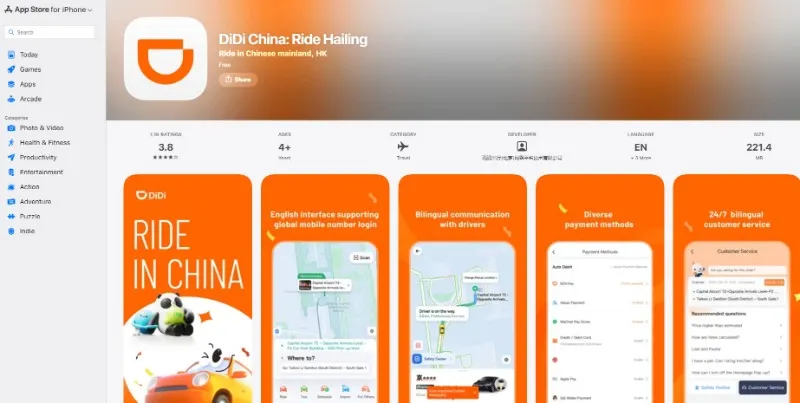
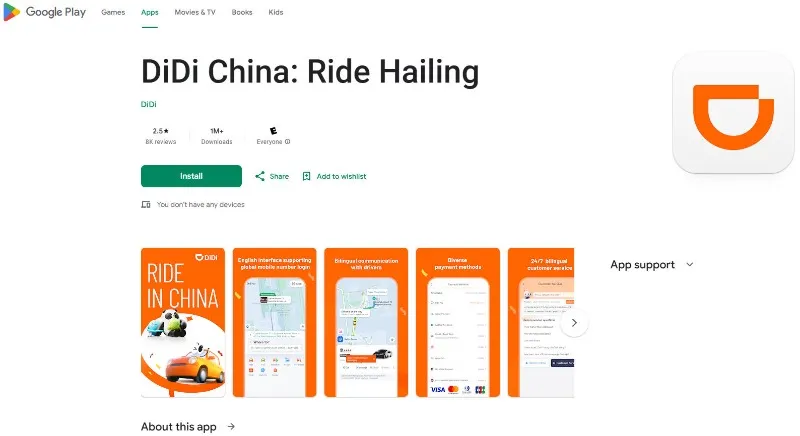
Search for "DiDi" (or DiDi Chuxing) in your region’s App Store or Google Play. Ensure you download the main version, as it typically includes the international traveler-friendly features.
2. Account Registration
-
Phone Number: DiDi requires a phone number for registration. While you can often use your home country's number to register, having a local Chinese SIM card once you arrive is highly recommended for stable service and driver communication.
-
Verification: Complete the SMS or email verification process.
3. Switch to the English Interface (Crucial!)
One of DiDi’s best features for foreigners is its built-in English interface.
-
Open the DiDi app.
-
Navigate to the Settings or Profile section (usually via a button or your profile picture).
-
Look for the "Language" option and select English.
4. Payment Integration: The Most Important Step
Payment is the biggest hurdle for travelers. You must link a valid payment method.
|
Method |
Recommendation |
Notes |
|---|---|---|
|
International Card |
Good |
Link your Visa, Mastercard, or Amex directly to the DiDi app. This works for most rides. |
|
WeChat Pay / Alipay |
Best |
Linking DiDi to your verified WeChat Pay or Alipay account provides the most seamless experience, as these are the universal payment methods in China. |
Tip: Ensure your international payment apps (WeChat/Alipay) are set up and working with your credit cards before you leave home.
II. Step-by-Step Guide to Booking a Ride
Once you’re set up, hailing a ride is straightforward.
Step 1: Set Your Destination and Pickup
The app works just like Uber or Lyft. Enter your destination first.
-
Pickup Point: DiDi automatically uses your GPS location. You can drag the pin or manually search for a specific building entrance.
-
Drop-off Point: This is where the English interface truly shines. You can enter destinations using:
-
English Names: For major landmarks (e.g., "The Bund," "Forbidden City").
-
Pinyin: The Romanized spelling of Chinese names (e.g., "Tian'anmen Guangchang").
-
Chinese Characters: Copy and paste the address if you have it.
-
Pro Tip: If the address is tricky, search for the nearest major hotel or subway station and use that as the destination. You can walk the rest of the way.
Step 2: Choose Your Ride Service
DiDi offers several tiers. The estimated fare is displayed once you select the service.
|
Service Name (English) |
Chinese Name |
Description & Use Case |
|---|---|---|
|
DiDi Express |
快车 (Kuàichē) |
The standard, cheapest, and most common option. Perfect for everyday travel. |
|
DiDi Premier |
专车 (Zhuānchē) |
A premium service with higher-quality vehicles and better-rated drivers. Ideal for business travel or special occasions. |
|
DiDi Taxi |
出租车 (Chūzūchē) |
Hails a standard, meter-run taxi. Fares are calculated by the taxi meter, but you pay through the app. |
|
Luxe |
豪华车 (Háohuá chē) |
Premium vehicles for special occasions, featuring high-end vehicles and white-glove service from the driver (e.g., opening doors, snacks/water). |
|
Express Pool |
拼车 (Pīnchē) |
Share rides with others (not always available for tourists) for a cheaper fare. |
Step 3: Confirm and Wait
-
Review the estimated fare and estimated wait time.
-
Click the final "Call" or "Confirm" button.
Once confirmed, the app will display the driver's details: Driver Photo, Car Model, and License Plate Number.
Crucial: Note the license plate number. This is the only reliable way to identify your ride in a crowded area.
III. Communication and Navigation During the Trip
Don't panic if you get a call or a message! DiDi is designed for travelers.
1. The In-App Translation Feature
If your driver messages you in Chinese (usually asking, "Where are you?") or calls you, DiDi offers a fantastic solution:
-
Pre-Translated Messages: The app provides quick-reply buttons (e.g., "I'm at the designated pickup point," "I will be there in 2 minutes") that automatically translate your English response into Chinese for the driver.
-
Real-Time Chat Translation: Use the chat function to type a custom message. DiDi will translate it for the driver and vice versa.
2. Meeting Your Driver
-
Location Naming: Drivers rely heavily on the name of the pickup point shown on their screen, which is usually in Chinese. If you are standing outside a major hotel, try to be near the main entrance where it is easy to pull over.
-
The Honk/Flash: Once you see the car matching the license plate, give a small wave. Drivers often give a quick flash of their lights or a tap of the horn to confirm they have seen you.
IV. Cancellation Rules
The DiDi cancellation rules primarily depend on when you, as the rider, cancel the trip relative to when the driver accepts the request and arrives at the pickup point.
1. Rider Cancellation Rules
| Situation | Action | Fee Charged? |
| Before Driver's Arrival | Cancel within 5 minutes of the driver accepting the request. | No |
| Before Driver's Arrival | Cancel more than 5 minutes after the driver accepted the request. | Yes, a cancellation fee will be charged, unless the driver has not made sufficient progress toward the pickup point. |
| After Driver's Arrival | Cancel the trip. | Yes, a cancellation fee will be charged. |
| Driver Cancels (Before Arrival) | The driver cancels the trip before arriving at the pickup point. | No |
| Driver Cancels (After Wait Time) | The driver cancels after the designated "Waiting Period" has expired (usually a few minutes, e.g., 3 minutes for DiDi Express). | Yes, a cancellation fee will be charged (as this is considered a rider no-show). |
Note: The exact "Waiting Period" may vary slightly by trip type (e.g., DiDi Express vs. DiDi Share) and region. Please check the current terms in your DiDi app for the most precise details.
2. Key Points to Keep in Mind
-
Rider No-Show: If the driver arrives and waits for the full Waiting Period, and you do not show up, the driver can cancel the ride, and you will be charged a cancellation fee.
-
Driver Progress: If you cancel after the initial free cancellation window, DiDi may waive the fee if their system detects the driver was not actively progressing toward your location.
-
Constant Cancellations: Consistently canceling rides may potentially lead to issues with your user account on the platform.
V. How Much Does DiDi Cost
The cost of a DiDi ride varies significantly based on several key factors, including the city, the time of day, and the type of service you choose. Generally, DiDi operates on a dynamic pricing model similar to other ride-hailing services, meaning the price you pay is calculated in real-time.
The final fare is usually a combination of:
- Base Fare (Flagfall): A fixed starting fee for the ride.
- Distance Rate: A per-kilometer charge.
- Time Rate: A per-minute charge, especially for when the car is moving slowly or stuck in traffic.
- Surge Pricing (Dynamic Pricing): Fares increase automatically during periods of high demand (like rush hour, bad weather, or late-night) when there are more riders than available drivers.
- Tolls/Fees: Any applicable road tolls or booking fees are added to the final price.
Typical Estimated Fares (Based on China)
As DiDi's largest market is in China, here are some sample estimates, which can give you a general idea of the relative cost, although actual prices will vary by location:
-
Short Trip (4-6 km / 15-20 min): Approximately ¥8–¥20 CNY (Yuan) for DiDi Express.
-
Medium Trip (e.g., 20 min/8 km in a major city): Roughly ¥30–¥40 CNY for DiDi Express.
-
Airport Transfer (Long distance): Can range from ¥70–¥260+ CNY depending on the distance, city, and traffic.
The best way to know the cost is to use the app itself. DiDi provides a fare estimate before you confirm and book the ride. I recommend inputting your pickup and drop-off locations in the app to get a real-time, accurate price estimate for your specific trip.
VI. Essential DiDi Tips & Troubleshooting for Foreigners
Tip 1: Handling Surge Pricing
Like all ride-hailing services, DiDi uses surge pricing during peak hours (commute times, heavy rain). If the fare looks suspiciously high, simply wait 5-10 minutes and check again. Prices usually stabilize quickly.
Tip 2: The Safety Center
DiDi has a robust Safety Center accessible from the map screen. This allows you to:
-
Share Your Trip: Send your trip details (map, car information) to a trusted contact via text or WeChat.
-
Emergency Button: Directly call the DiDi emergency line or local police if needed.
Tip 3: Tipping and Payment
Payment is handled automatically through your linked card or wallet upon trip completion. There is no need to exchange cash. The app will often prompt you with an optional tipping screen; this is voluntary and not expected.
Tip 4: Using International vs. Local Versions
Some travelers might encounter the "DiDi International" app. While this version is excellent, the main "DiDi Chuxing" app downloaded in your home country usually has the full English interface and works seamlessly across China. Stick to the main app for the best coverage.
VII. Didi Bike (青桔)
DiDi Bike, known by its Chinese name 青桔 (Qīngjú), which translates to "Green Tangerine," is the bike-sharing service operated by the ride-hailing giant DiDi Chuxing. It is one of the "big three" major bike-sharing platforms in mainland China, alongside Meituan Bike (yellow) and Hello Bike (blue).
1. How DiDi Qingju Bikes Work
-
Color: The bikes are generally a distinctive shade of green or greenish-blue.
-
Availability: They are widely available in major Chinese cities, including Shanghai, Beijing, and Shenzhen, often seen parked along sidewalks or in designated parking zones.
-
Dockless System: Qingju operates on a dockless system, meaning you can pick up and drop off a bike anywhere within the designated operating zone of the city, not just at a fixed station. However, users are required to park in marked spots to avoid penalties.
2. How to Rent a Bike
The service is highly integrated and can be accessed via a few different mobile platforms:
-
The DiDi App: The easiest way is usually through the main DiDi ride-hailing app, which has a dedicated "Bike" or "Shared Bike" section (青桔单车).
-
Standalone Qingju App: There is also a dedicated Qingju app.
-
Mini-Programs: You can often access the service through mini-programs within apps like WeChat or Alipay.
3. General Steps to Ride
-
Find the Bike: Use the in-app map to locate an available Qingju bike nearby.
-
Unlock: Walk up to the bike and use the app's scanner to scan the QR code located on the bike (usually on the handlebar or near the seat lock).
-
Ride: The lock will automatically disengage, and you can start your ride.
- Lock & Pay: When you finish, you must park the bike in a designated parking area (shown on the app map), manually lock the bike, and the app will automatically calculate the fee and deduct it from your linked payment method.
4. Cost and Payment
The pricing model generally consists of a base rate for a certain time, with a small per-unit fee afterward.
-
Typical Fee Structure: A common fee is around ¥1.5 to ¥2.0 CNY for the first 30 minutes of riding, and then a small incremental fee for every additional time unit.
-
Monthly/Time Cards (Monthly Pass): For frequent riders, the apps offer daily, monthly, or quarterly passes (e.g., a 30-day card for around ¥20 CNY), which allow for an unlimited number of rides within a specified duration (typically up to 2 hours per ride).
-
Deposit: Most modern bike-sharing systems in China, including Qingju, do not require an initial deposit anymore, provided the user has a good credit rating in the linked payment system (like Alipay's Zhima Credit).
VIII. Special Service Options
For more unique needs, DiDi provides specialized services (availability may vary by city).
-
Designated Driving (代驾 Dài Jià): This service is for people who have their own car but are unable to drive it (e.g., after drinking). You hire a professional driver to drive your vehicle home.
- DiDi Bus (滴滴公交Gōng Jiāo): It's not a single service but rather a suite of offerings designed to improve the efficiency and convenience of bus travel. Unlike their ride-hailing services, which use private vehicles, DiDi Bus focuses on existing public and specialized bus networks.
-
Hitch (顺风车 Shùnfēngchē): This is a long-distance car-pooling service where you share a trip with a private car owner who is already going in the same direction. It must be booked in advance and is strictly regulated.
-
DiDi Freight (货运 Huò Yùn): This is a delivery or moving service for transporting goods or large items, not passengers.
- E-Bike (电单车Diàndānchē): This service is fully integrated into the main DiDi app (or the DiDi mini-program in WeChat/Alipay).
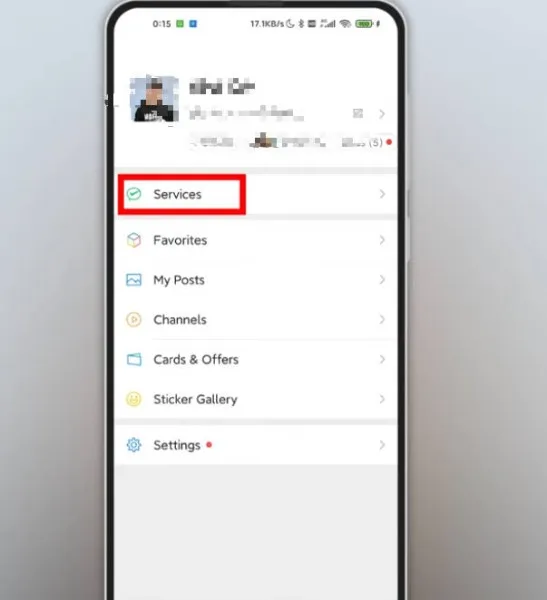
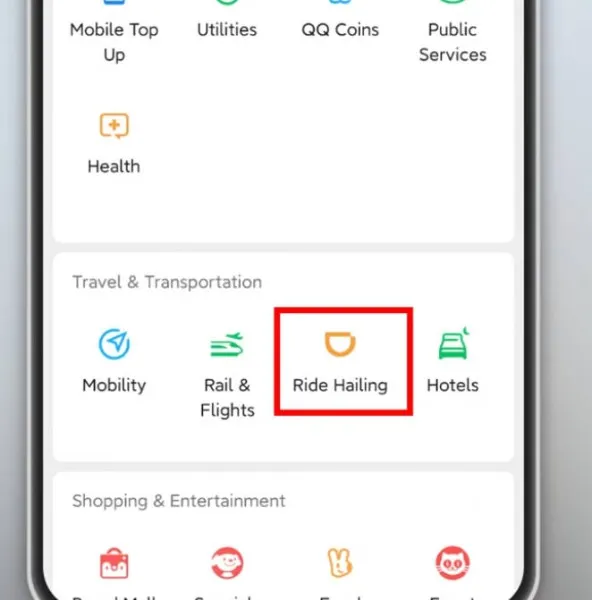
IX. How to Use DiDi on Alipay & WeChat
Using DiDi through the Alipay and WeChat mini-programs is the most convenient way for international visitors to access the service in China, as it leverages your existing setup within those apps for payment and requires no separate download.
1. DiDi on Alipay
Alipay is often considered the most straightforward platform for foreigners, as its overall interface and verification process are very streamlined.
| Step | Action | Notes |
| Setup (Crucial) | Ensure your Alipay account is verified (passport upload) and your international credit/debit card (Visa, Mastercard, etc.) is successfully linked. | The ride fare will be automatically deducted from this linked card. |
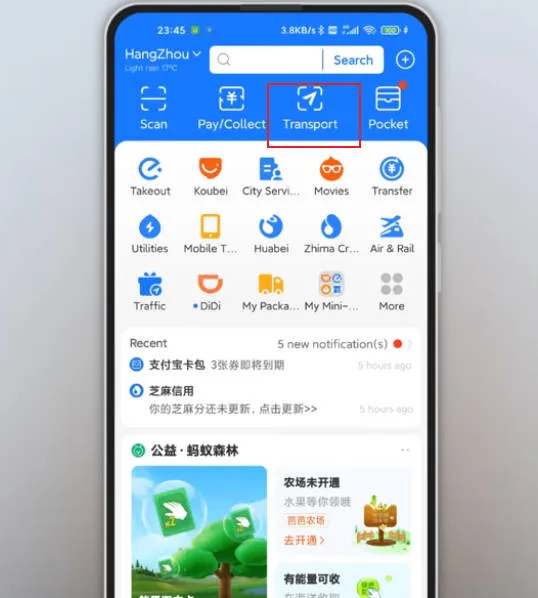
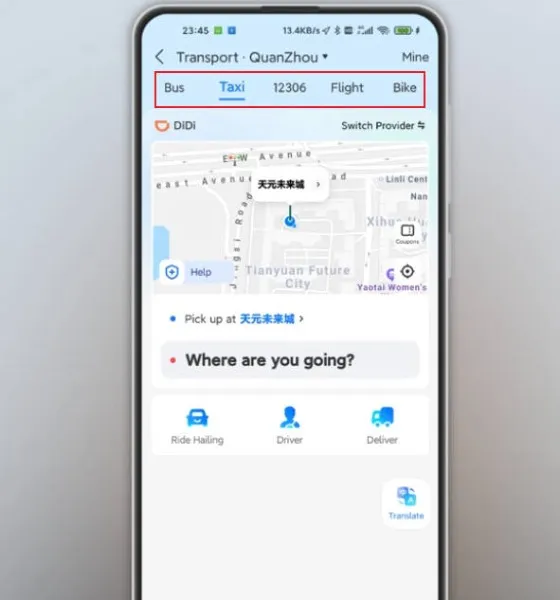
| Find DiDi | Open the Alipay app. The DiDi icon is usually displayed prominently on the home screen, often labeled "Transport" or "Didi Travel" (look for the car icon). | If not visible, use the Search Bar and type "DiDi" or "Taxi". |
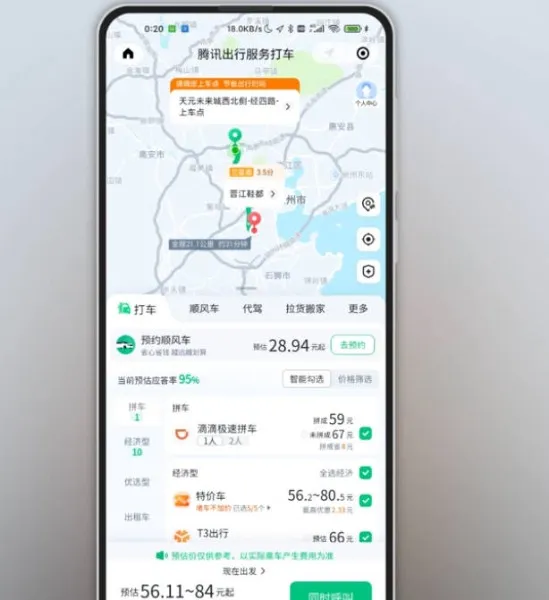
| Set Location | Tap the DiDi mini-program. Grant location access. The app will use your GPS location for the pickup point. | Adjust the pin if the location is slightly off, or type the address (English/Pinyin usually works). |
| Book & Pay | Enter your Destination. Select your preferred ride type (Express, Premier, etc.). Tap "Confirm Request." | The fare is automatically deducted from your linked card via Alipay when the ride is complete. You do not need to do anything after getting out of the car. |
2. DiDi on WeChat
WeChat is primarily a messaging app, but its integration with DiDi is also highly reliable for ride-hailing and payment.
| Step | Action | Notes |
| Setup (Crucial) | Ensure your WeChat Pay is fully set up and your international credit/debit card is successfully linked to your WeChat Pay wallet. | Payment will be charged automatically to this linked card. |
| Find DiDi | Open the WeChat app. Tap "Discover" (on the bottom bar) $\to$ "Mini Programs" $\to$ Search for "DiDi" or the Chinese name 滴滴出行. | Tip: Once you find it, you can "Pin" it to your chat list for quicker access later. |
| Set Location | Tap the DiDi mini-program. Grant location access. Set your Pickup point. | WeChat's chat function for drivers often includes an in-built translation tool, which can be very helpful for communicating if needed. |
| Book & Pay | Enter your Destination. Select the ride type you want. Tap "Confirm Request." | The fare is automatically deducted from your linked card via WeChat Pay when the ride is complete. |
3. Key Tips for International Users:
-
Payment Setup: Verify your account and link your card before you travel to avoid delays or issues once you arrive in China.
- Driver Identification: Once a driver is matched, the app will display the License Plate Number and Driver's Name/Photo. Always confirm the plate number matches before getting into the car.
-
Location Accuracy: Chinese addresses can be complex. If the English name doesn't work perfectly, try to have the address in Chinese characters ready to copy/paste, or simply drop a GPS pin on the map where you are waiting.
-
Confirmation: The driver may ask for the last four digits of your phone number (used to register the account) to confirm your identity. It's helpful to have this number written down.
X. Conclusion: Ride Confidently
DiDi Chuxing is the modern traveler's best friend in China. It removes the language barrier, provides price transparency, and offers a safer, more reliable alternative to flagging down taxis—especially in high-traffic cities.
By completing these simple setup steps and following the guide, you’ve secured the key to comfortable and efficient travel throughout your China adventure. Enjoy the ride!
Frequently Asked Questions (FAQ)
Q: Is DiDi cheap in China?
A: Yes, DiDi is generally an affordable transportation option in China and is often cheaper than traditional taxis.
Q: Is DiDi safe in China?
A: DiDi takes safety very seriously and has invested significantly in safety measures. The app features an SOS button where you can immediately reach law enforcement services. You can also share your trip with someone you trust with their live GPS tracking. Phone numbers are hidden, and your specific pick-up and drop-off locations will be hidden after your trip.
Q: Can I use an international credit card on DiDi?
A: Yes, you can use an international credit card or a Wise card on DiDi. Some international cards charge foreign transaction fees, so check before you pay. The Wise card allows you to pay in the local currency, helping you avoid any hidden fees and get the mid-market exchange rate.
Q: Do I need a China number to use DiDi?
A: No. You can register with any international number, but you'll need to enable roaming to receive the SMS verification code when signing up.
Q: Does DiDi work everywhere in China?
A: DiDi works in most cities (including Beijing, Shanghai, Guangzhou, Chengdu), but availability decreases in remote rural areas. Major tourist destinations are all covered.
Q: Does the app have an English interface?
A: Yes. Both the standalone DiDi app and the mini-programs within Alipay/WeChat have English language settings.
Q: What if I left an item behind?
A: Go to your Trip History in the app and use the "Lost Item" feature to contact the driver. It is recommended to offer a small reward (e.g., ¥20-50 CNY) to incentivize a quick return.