Which Station Do I Need?
-
Going to Shanghai, Hangzhou, or Nanjing? You need Beijing South (北京南).
-
Going to Xi'an, Chengdu, or Hong Kong? You need Beijing West (北京西).
-
Going to Harbin or Shenyang? You need Beijing Chaoyang (北京朝阳).
-
Going to the Great Wall (Badaling)? You need Beijing North (北京北) or Qinghe (清河).
-
Taking a slow, overnight sleeper train? You likely need the historic Beijing Station (北京站).
Welcome to Beijing! As the capital and heart of China, Beijing is the central nervous system of the country's world-class High-Speed Rail (HSR) network. Traveling by HSR offers a distinct advantage over flying: it’s often more punctual, connects city center to city center, and provides a comfortable, scenic journey.
However, Beijing is served by multiple major railway stations, each handling different regions and types of trains. Choosing the wrong station is one of the most common mistakes a foreign traveler can make. This comprehensive Beijing train stations guide for foreigners will help you understand the system and choose the perfect station for your journey.
Overview of the 7 Key Beijing Train Stations
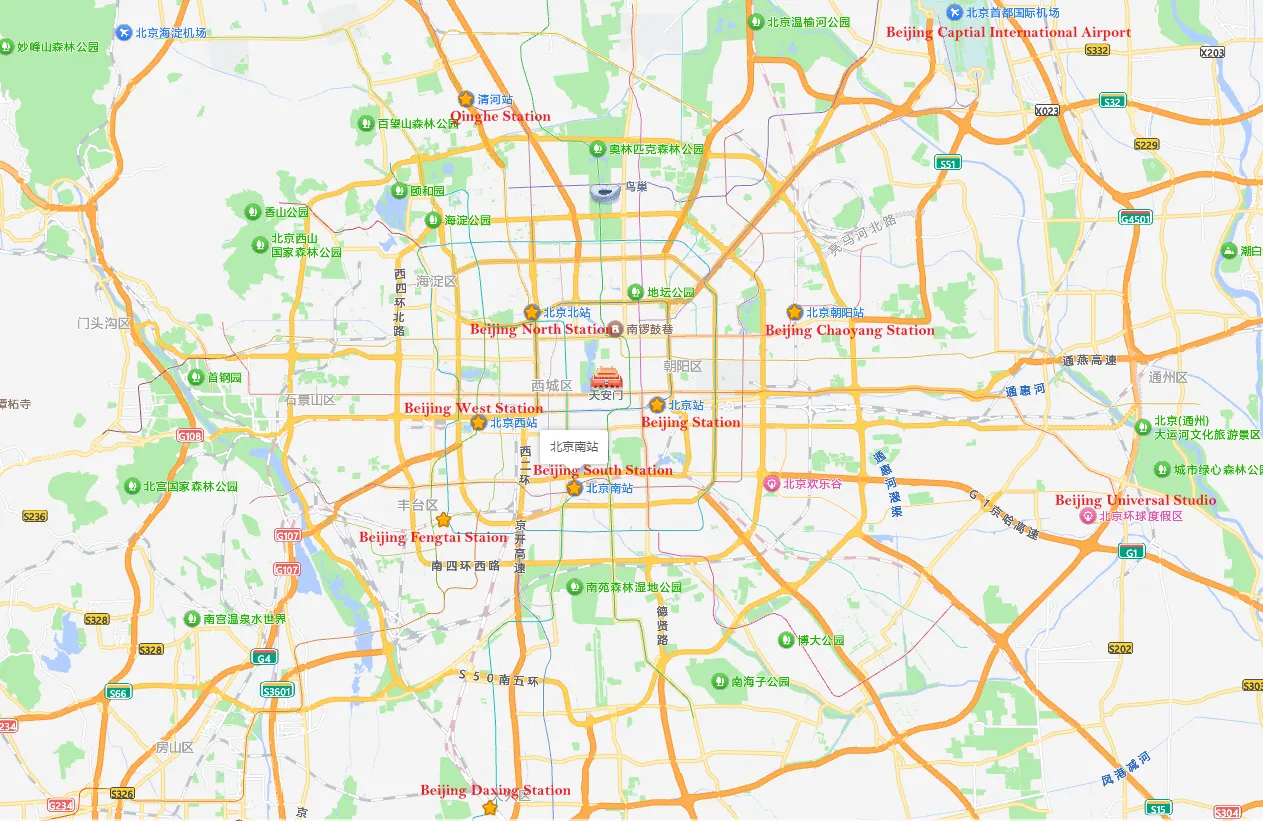
Beijing has 7 major passenger stations, each serving a primary direction or function. This guide will provide detailed comparisons of the 'Big 4' that handle the vast majority of inter-city HSR traffic, but here is a complete overview:
|
Station Name |
Primary Function & Direction Served |
|---|---|
|
Beijing South (北京南) |
The premier hub for HSR services to the South (Shanghai, Nanjing, Hangzhou). |
|
Beijing West (北京西) |
The main gateway for HSR to the West and Southwest (Xi'an, Chengdu, Guangzhou, Hong Kong). |
|
Beijing Chaoyang (北京朝阳) |
The modern hub for HSR to the Northeast (Harbin, Shenyang, Dalian). |
|
Beijing Station (北京站) |
The historic, central station for traditional, overnight, and international trains. |
|
Beijing Fengtai (北京丰台) |
A massive, newer hub handling a mix of HSR and traditional trains, mainly serving overflow and Southern routes. |
|
Beijing North (北京北) |
Key station for the high-speed rail to the Badaling Great Wall section. |
|
Beijing Fengtai (北京丰台) |
A massive, newer hub handling a mix of HSR and traditional trains, mainly serving overflow and Southern routes. |
|
Qinghe (清河) |
Alternative station for the high-speed rail to the Badaling Great Wall and Zhangjiakou. |
This section covers the absolute essentials you must know before arriving at any Beijing train station.
1. Station Name Alert (CRITICAL for Beijing Travel)
Confusing station names is the number one cause of missed trains in Beijing.
-
"Beijing Station" (北京站 - Běijīng Zhàn): This is a single, specific, historic station in the downtown area.
-
"Beijing [Direction]" (Beijing South, Beijing West, etc.): These are separate, modern hubs serving specific directions. Do not assume your ticket to "Beijing South Station" means you can start at "Beijing Station."
-
Common Mix-ups: Always double-check the Chinese characters on your ticket to distinguish Beijing South (北京南) from Beijing West (北京西).
2. E-Tickets, ID, & Boarding Essentials for Foreign Passport Holders
-
Passport is your ticket for direct boarding: For most HSR trains (G/D series), your passport is sufficient for entry and checking in at the gate.
-
CRITICAL: First-Time Passport Validation (首次验证): If this is your very first trip using a foreign passport on a Chinese train, you MUST first go to the manual ticket counter (售票处) to complete a one-time identity and ticket validation process. Skipping this step means your passport won't work at the gate.
-
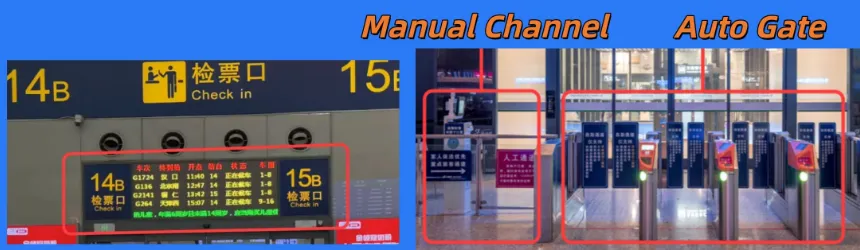
The "Manual Channel" (人工通道 - Rén Gōng Tōng Dào): This is vital. Foreign passports cannot be read by the automatic entry/ticketing gates. ALWAYS look for the manual channel, which is staffed by railway personnel.
-
The "60-Minute Rule": Due to the mandatory security screening, large station size, and ID checks, plan to arrive at the station at least 60 minutes before your scheduled departure.
-
Gate Closure Alert: Boarding gates open about 15-20 minutes before departure, but they close exactly 5 minutes before departure. Miss this window, and you miss your train.
- How to Buy China Train Tickets
Below is a detailed comparison of the four main Beijing railway hubs, structured for maximum traveler utility.
|
Station Name |
Primary Function & Direction Served |
Approx. Distance to Tiananmen Square |
|---|---|---|
|
Beijing South (北京南) |
The premier hub for HSR services to the South (Shanghai, Nanjing, Hangzhou). |
~7.5 km |
|
Beijing West (北京西) |
The main gateway for HSR to the West and Southwest (Xi'an, Chengdu, Guangzhou, Hong Kong). |
~8 km |
|
Beijing Chaoyang (北京朝阳) |
The modern hub for HSR to the Northeast (Harbin, Shenyang, Dalian). |
~15 km |
|
Beijing Station (北京站) |
The historic, central station for traditional, overnight, and international trains. |
~4 km |
1. Beijing South Railway Station (Beijingnan) – The Modern Standard HSR Hub
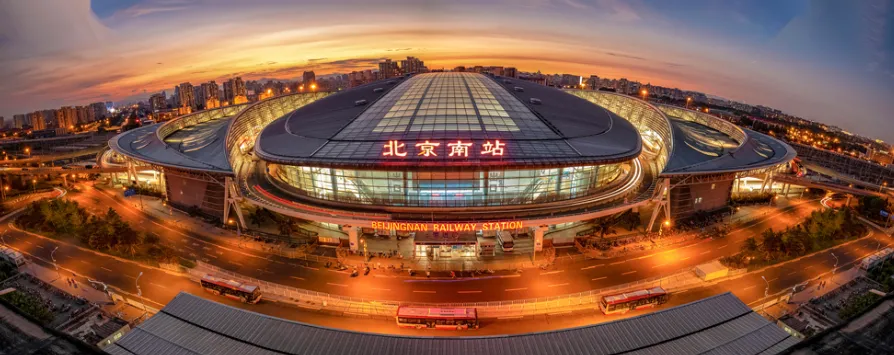
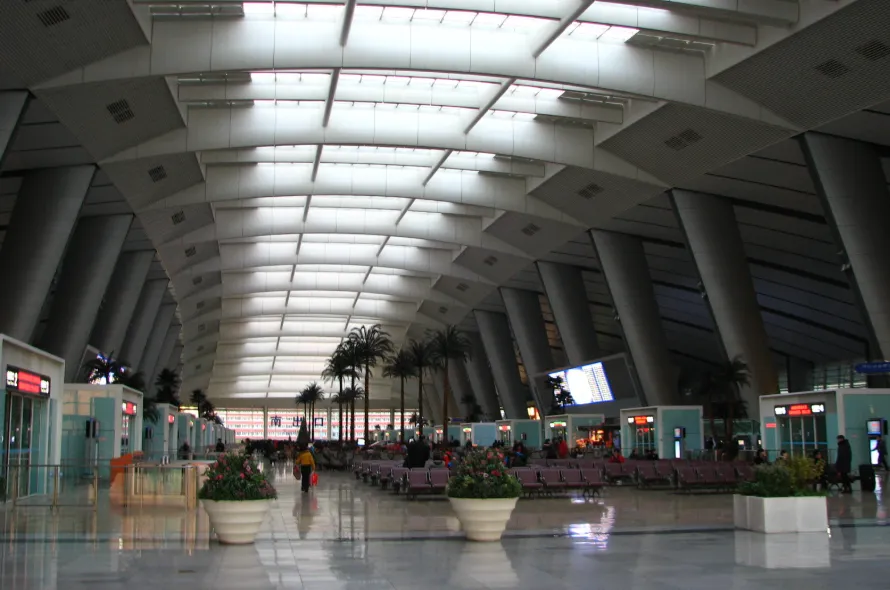
Beijing South, situated in the Fengtai District on the South 3rd Ring Road, southern part of Beijing, is the capital's flagship HSR terminal and the ideal choice for first-time foreign visitors. Beijing South Railway Station has 24 tracks and 13 platforms, primarily used for the departure and arrival of high-speed trains such as the Beijing-Shanghai High-Speed Railway and the Beijing-Tianjin Intercity Railway. Opened in its current form in 2008, the station features a futuristic design with spacious waiting halls and advanced facilities. It handles hundreds of thousands of passengers daily, offering fast and convenient connections to major cities such as Shanghai, Tianjin, Jinan, and Nanjing. With its efficiency, scale, and modern services, Beijing South Railway Station plays a vital role in China’s high-speed rail network.
-
Approx. Distance to Center: Approximately 7.5 km south of Tiananmen Square.
-
Main Destinations & Regions Served: This hub is the primary connection to East China and the Yangtze River Delta, serving major cities such as Shanghai, Nanjing, Hangzhou, and Hefei.
-
Popular Routes:
-
Shanghai: The flagship route. Uses G-Series (HSR) trains, taking approximately 4.5 - 6 hours, with very high, hourly frequency.
-
Nanjing/Hangzhou: Also served by high-frequency G-Series trains. Travel times are approximately 3-4 hours (Nanjing) and 5.5-7 hours (Hangzhou).
-
-
How to Get There: Beijing South offers the city's best subway access, connecting directly to Subway Line 4 & Line 14. It is also the closest major HSR hub to the Beijing Capital Airport (PEK) via connecting subway lines.
-
Facilities & English Support: Excellent. The station is modern, clean, vertically organized (Airport-Style Layout: quick, clear flow between floors), and provides the best English signage and dedicated service desks for foreign travelers. It hosts extensive, high-quality Food Courts and Retail options.
-
Security Check & Luggage Tips: Security flow is highly efficient, but lines can be long during peak times. The HSR platform level is one floor up from the entrance. Ensure you use the Manual Channel immediately upon arrival.
-
Nearby Hotels & Landmarks: It is relatively close to the Temple of Heaven (via Line 4). Many business and budget hotel options are nearby due to its status as a major transport hub.
-
Pros & Cons for Foreign Travelers:
-
Pros: Most modern, easiest to navigate, highest quality English support.
-
Cons: Can be extremely busy, located far to the south of the city center.
-
2. Beijing West Railway Station (北京西) – The Busy Gateway HSR Hub
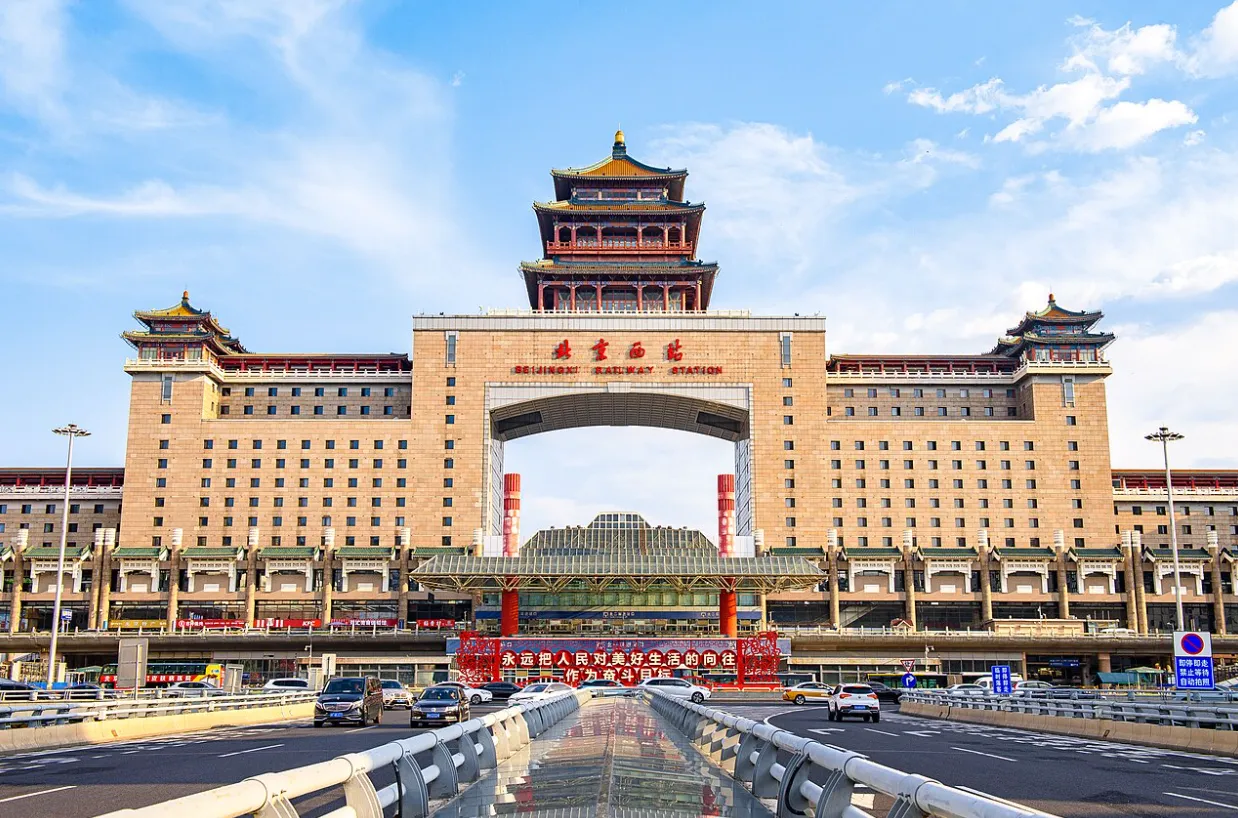
Beijing West is one of the largest and busiest railway stations in China located in the Fengtai District on the West 3rd Ring Road, connecting the capital to the central and western parts of the country including Xi’an, Chengdu, Guangzhou, and Lhasa. The station is equipped with 18 railway tracks and 10 passenger platforms, enabling it to handle a massive volume of trains and travelers every day. With its grand architectural style, extensive transport links, and high capacity, Beijing West Railway Station plays a crucial role in China’s national railway network.
-
Approx. Distance to Center: Approximately 8 km west of Tiananmen Square.
-
Main Destinations & Regions Served: This station serves Central, Northwest, and Southwest China, including major destinations like Xi'an, Chengdu, Guangzhou, and the Hong Kong West Kowloon terminal.
-
Popular Routes:
-
Xi'an: G-Series trains run at high frequency, with a travel time of usually 4 - 4.5 hours, making it the best option for visiting the Terracotta Army.
-
Hong Kong/Guangzhou: These are long-haul G-Series HSR routes. It takes approximately 8.5 - 12 hours to Hong Kong and 8 - 10 hours to Guangzhou, with daily services.
-
-
How to Get There: It is accessible via Subway Line 7 & Line 9. Transfer from downtown is straightforward but requires using two lines. The transit time from PEK/PKX airports is longer and more complex than reaching South Station.
-
Facilities & English Support: Good, but the station's layout is highly complex and horizontal (requiring long walks), divided into North and South Squares. English signage is present but less intuitive than South Station. Food options are generally fast-food and mass-market, catering to large volumes of travelers.
-
Security Check & Luggage Tips: CRITICAL TIP: Security and ticket queues can be extremely long due to the station's high volume. Allow an extra 15-20 minutes buffer beyond the standard 60-minute rule.
-
Nearby Hotels & Landmarks: It is close to the Military Museum and surrounded by major, high-volume hotels and commercial centers catering to travelers.
-
Pros & Cons for Foreign Travelers:
-
Pros: Essential gateway for major tourist and business cities in the West/Southwest.
-
Cons: Often severely overcrowded, older and more confusing layout, requires significant buffer time.
-
3. Beijing Chaoyang Station (北京朝阳) – The New Northern Star
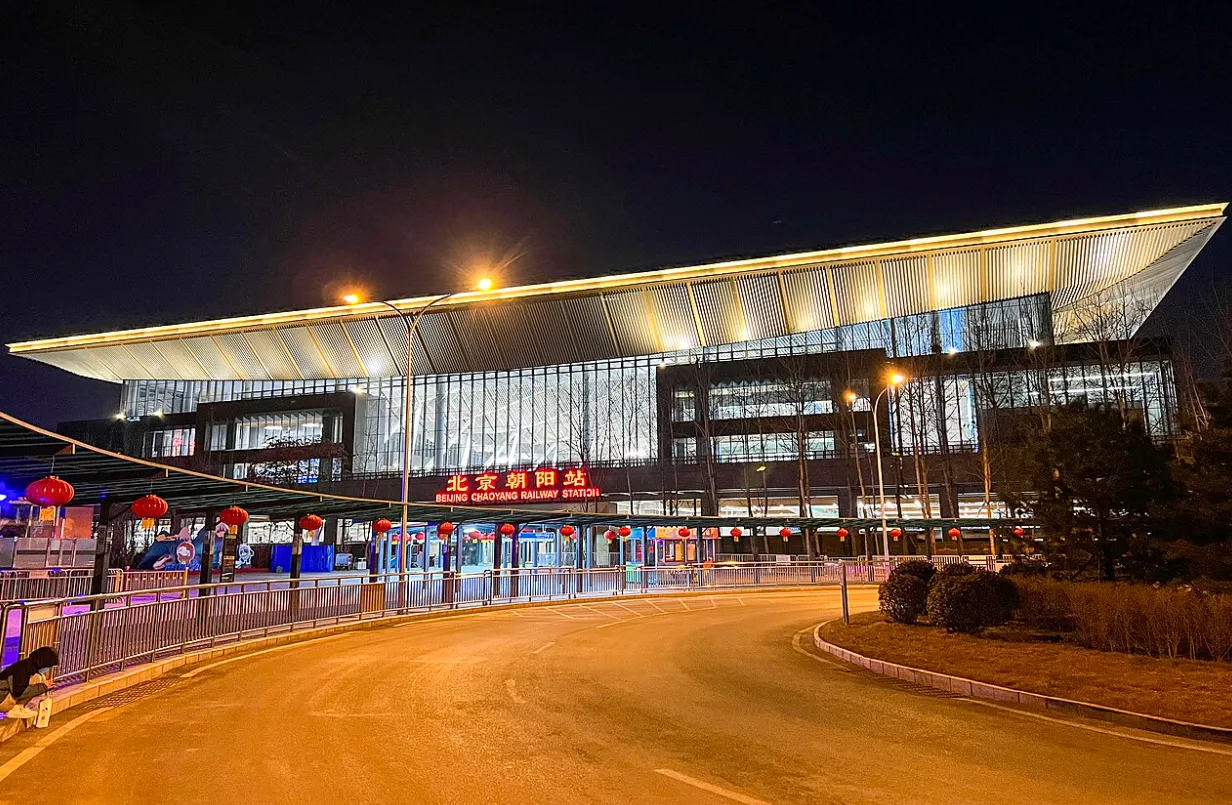
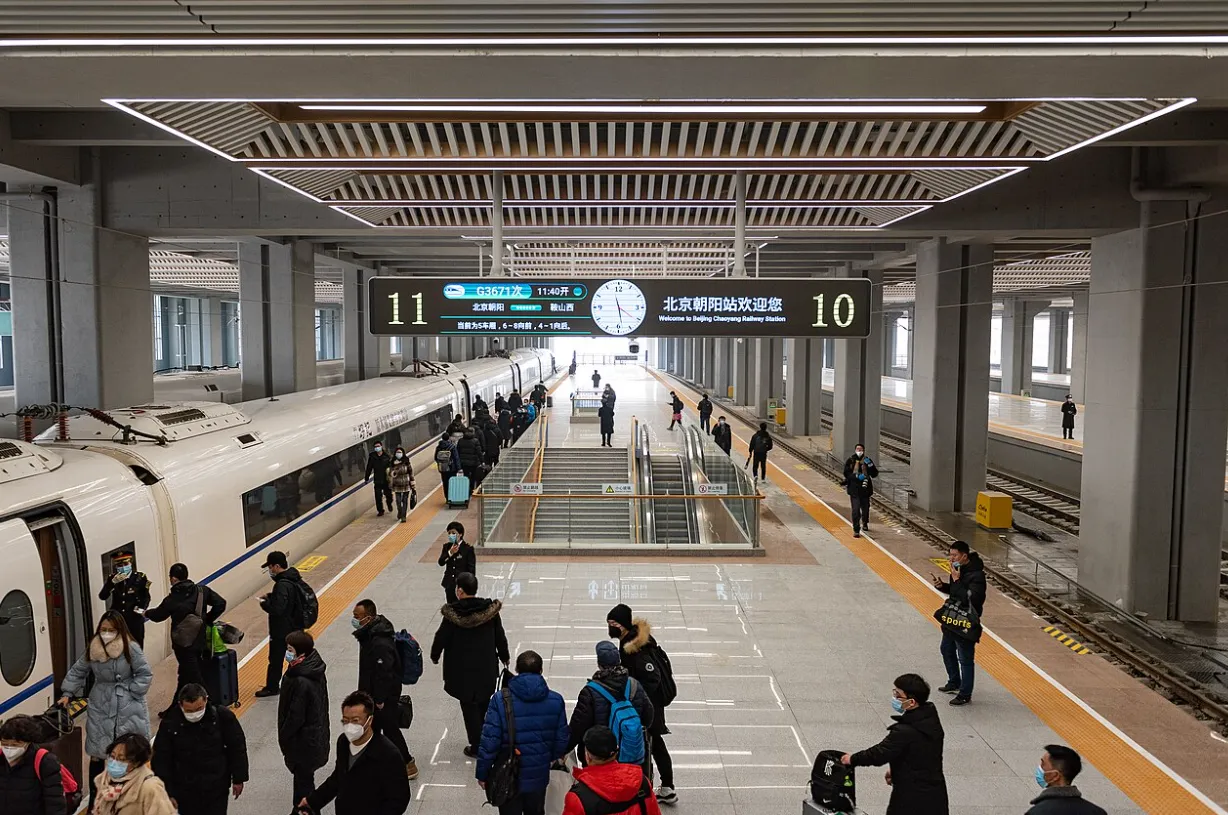
Beijing Chaoyang Railway Station is a modern high-speed railway hub located in the northeastern part of Beijing (in Chaoyang District near the Wangjing area, East 4th Ring Road). Officially opened in 2021, it mainly serves high-speed train services on routes such as the Beijing–Harbin, Beijing–Shenyang, and Beijing–Chengde railways. The station is equipped with 20 railway tracks and 10 passenger platforms, providing strong capacity for both departures and arrivals. With its sleek architectural design, efficient passenger flow, and advanced facilities, Beijing Chaoyang Railway Station has become an important gateway linking Beijing with Northeast China and surrounding regions.
-
Approx. Distance to Center: Approximately 15 km northeast of Tiananmen Square.
-
Main Destinations & Regions Served: This station is the dedicated high-speed gateway to Northeast China, including Harbin, Shenyang, Dalian, and Changchun.
-
Popular Routes:
-
Shenyang: G-Series trains run at very high frequency, taking approximately 2.5 - 4 hours.
-
Harbin: G-Series trains are frequent, with travel times around 5 - 6.5 hours. This station is dedicated to the Beijing-Harbin HSR line.
-
-
How to Get There: It is accessible via Metro Line 3 (newly connected). Downtown travelers will require a subway transfer from the CBD/central areas. Taxi or Didi rides are often faster but dependent on traffic.
-
Facilities & English Support: Excellent. It features spacious halls, efficient flow. The layout is vertical and streamlined, designed for efficiency. Retail/food options are modern and generally uncrowded.
-
Security Check & Luggage Tips: Security processes are highly efficient due to its modern design, resulting in less stress and shorter waits than the South or West stations.
-
Nearby Hotels & Landmarks: Located in a more residential/business area (near Wangjing). While there are no immediate major tourist landmarks, it offers good access to the 798 Art Zone by short taxi ride.
-
Pros & Cons for Foreign Travelers:
-
Pros: Modern, spacious, high-tech, minimal crowds, ideal for Northeast routes.
-
Cons: Less central location, requires a dedicated transfer from downtown (Metro Line 3 is less extensive than Line 4/2).
-
4. Beijing Railway Station (北京站) – The Historic Classic
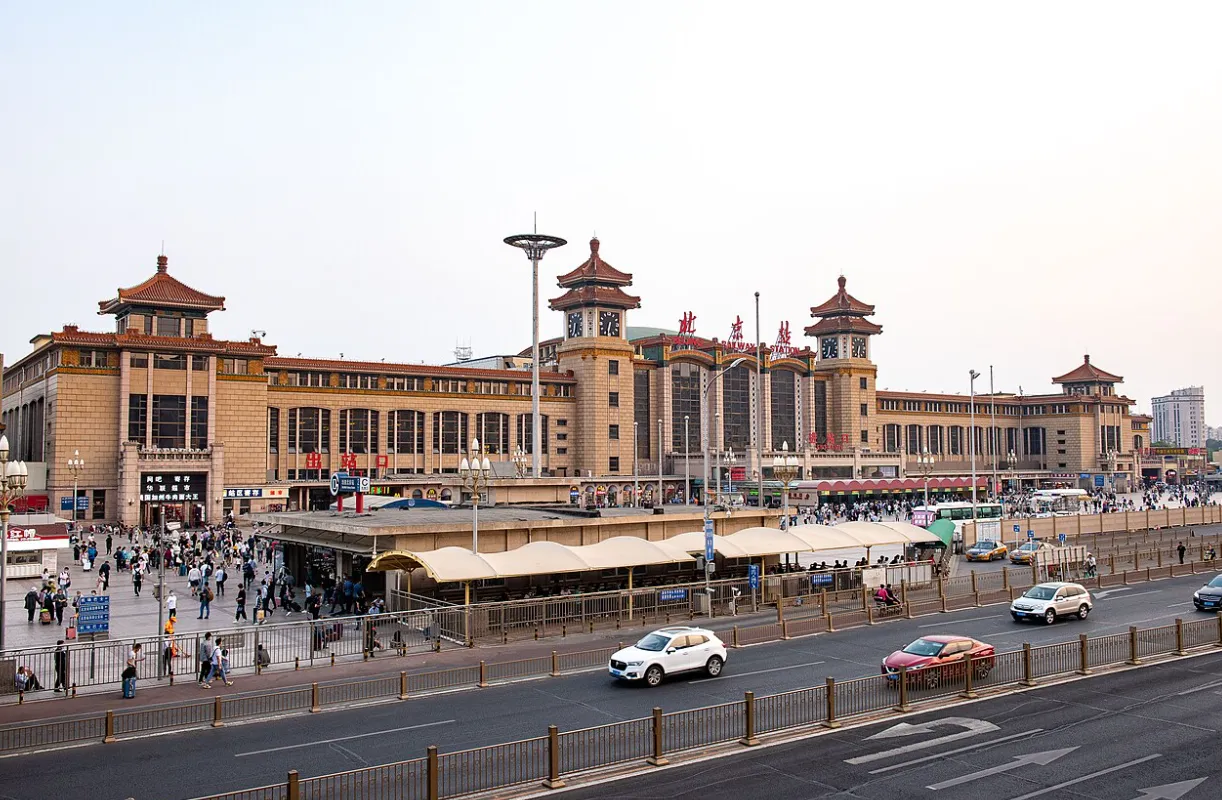
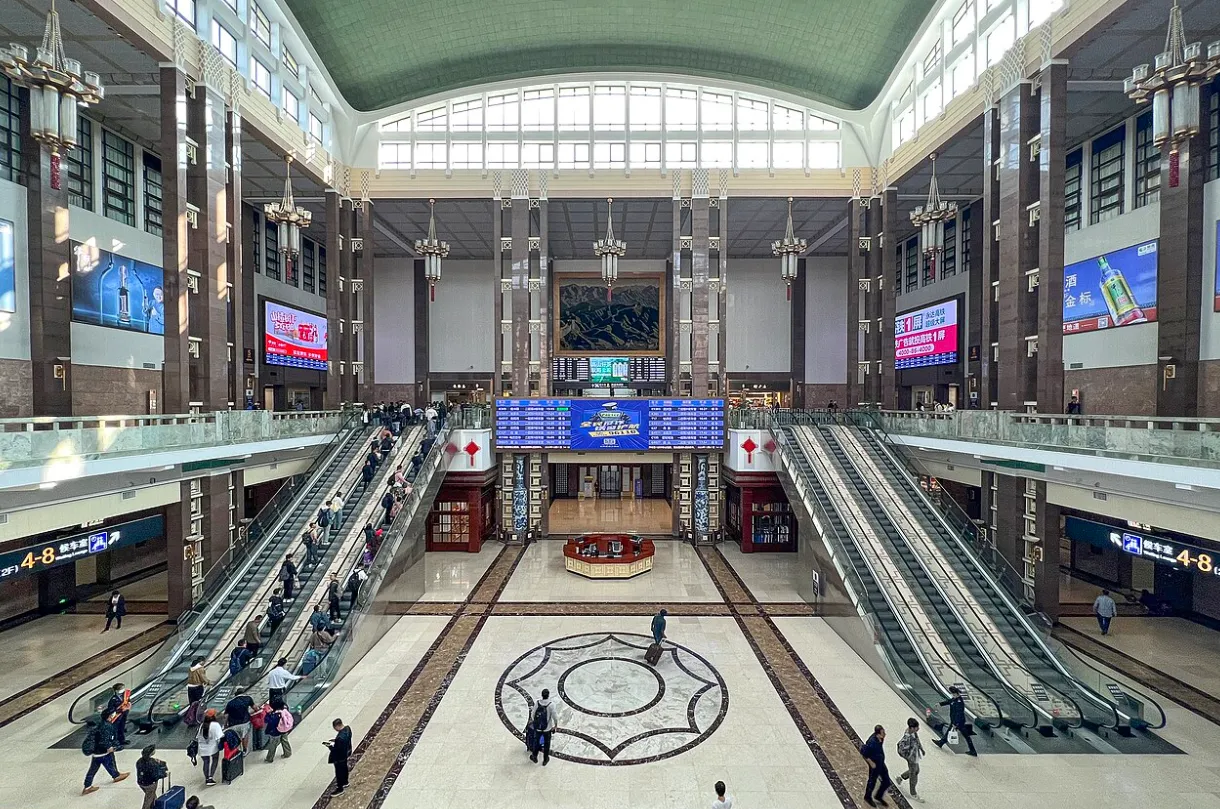
Beijing Station is the historical heart of the railway network, maintaining a traditional atmosphere in the Dongcheng District (Central, just inside the East 2nd Ring Road). It served as a key gateway connecting Beijing with major cities across the country, including Harbin, Shenyang, Shanghai, and Guangzhou. The station is equipped with 16 railway tracks and 8 passenger platforms, enabling it to manage a large volume of conventional and express train services every day. With its iconic architecture, rich history, and vital transport role, Beijing Railway Station remains a symbolic landmark in China’s railway network.
-
Approx. Distance to Center: Approximately 4 km east of Tiananmen Square.
-
Main Destinations & Regions Served: Primarily focuses on Conventional/Slower trains (Z/T/K series) and International routes to Mongolia, Russia, and North Korea.
-
Popular Routes:
-
International Trains: The starting point for the famous Trans-Siberian Railway (K3 to Moscow) and K27 (to Pyongyang), though service is infrequent.
-
Domestic: Mainly handles traditional, overnight sleeper trains (Z/T/K Series) to various cities (e.g., Harbin, Shanghai), suitable for budget travelers.
-
-
How to Get There: It has direct subway access via Line 2 (the inner loop), providing the best accessibility from central hotels by taxi or subway.
-
Facilities & English Support: Older facilities and more basic amenities compared to the modern hubs. English signage is limited, concentrated mainly at the ticket offices and main gates. Staff English proficiency is generally lower. The layout is traditional and ground-level; expect limited and dated food/retail choices compared to the HSR hubs.
-
Security Check & Luggage Tips: Security check processes are often slower and more manual due to older infrastructure. Expect longer queuing times than at HSR hubs.
-
Nearby Hotels & Landmarks: Very close to the Beijing Ancient Observatory and easily accessible to Wangfujing Street and the central business/embassy district.
-
Pros & Cons for Foreign Travelers:
-
Pros: Extremely central, best for conventional/sleeper trains, excellent subway access.
-
Cons: Oldest facilities, very crowded, limited high-speed routes (mostly slower D-series or conventional).
-
These stations serve highly specific functions that are crucial for certain trips (e.g., tourism or airport transfer), but are rarely used for general city-to-city travel between Beijing and major hubs like Shanghai or Xi'an.
5. Beijing North (Beijinbei) & 6. Qinghe Station: – The Great Wall Express
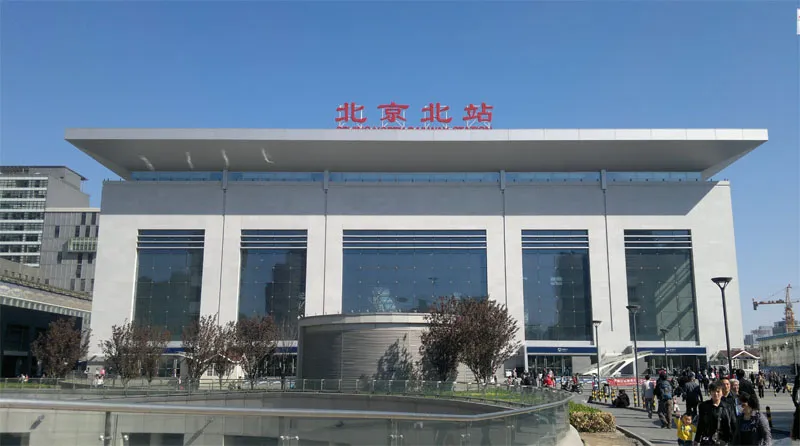
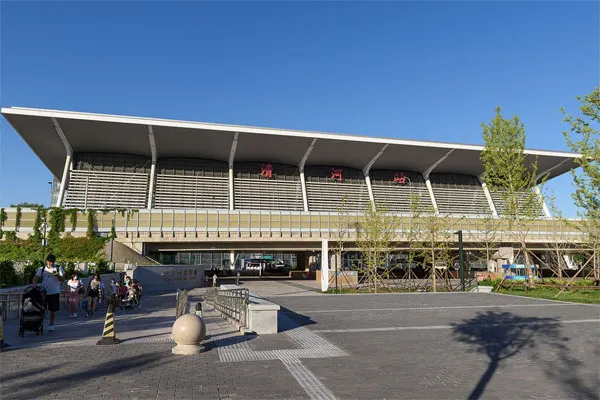
These two stations serve as the starting points for the Beijing-Zhangjiakou Intercity Railway, a line crucial for tourists and travelers heading northwest from the capital.
-
Operational Scope: Both stations primarily run trains along the Jingzhang Intercity Railway (京张城际铁路). This high-speed line connects Beijing with major destinations including Badaling Great Wall (八达岭长城), Huailai (怀来), Xuanhua North (宣化北), and the Winter Olympic host city of Zhangjiakou (张家口).
-
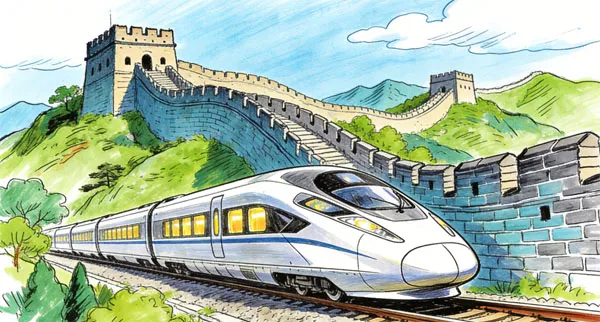
Key Route Feature: The line is crucial as it features the Badaling Great Wall Station, a massive underground station built deep beneath the Great Wall—a significant engineering feat. The journey is fast and comfortable, making it the most efficient way to reach the Badaling section.
-
Beijing North (Beijinbei): Located near Xizhimen, this is the station closer to the city center. It is easily accessible via Subway Lines 2, 4, and 13, making it an ideal choice for a quick start from downtown.
-
Qinghe Station (清河): Located further north, near the Olympic Forest Park. It is generally larger, newer, and often serves as the main gateway for trains heading towards Zhangjiakou and beyond. It is accessible via Subway Line 13 and Changping Line.
7. Beijing Fengtai Station (北京丰台) – The Comprehensive Giant
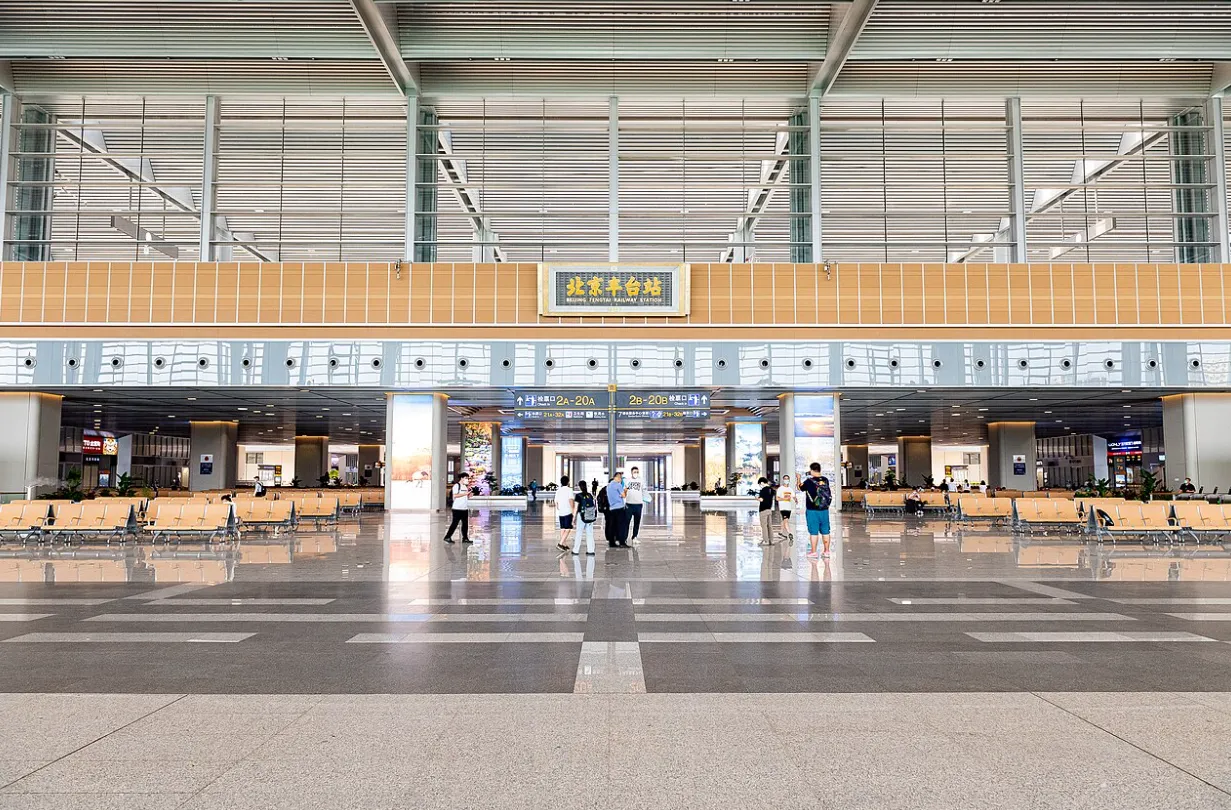
Fengtai Station, reopened in 2022 after extensive reconstruction, is one of Beijing's largest and most historic railway sites, now operating as a modern, integrated transport hub.
-
Primary Function: It acts as a major overflow and relief station for Beijing South and Beijing West, handling a mix of Conventional Trains (K/T/Z series) and High-Speed EMU Trains (G/D series), primarily serving southern and southwestern routes (e.g., Wuhan, Changsha, and some Shanghai lines).
-
Operational Scope & Destinations: Fengtai operates some trains on the Beijing-Guangzhou High-Speed Railway (京广高铁) and the Beijing-Shanghai High-Speed Railway (京沪高铁), serving as a relief station for the main hubs. Key HSR destinations include Shijiazhuang, Zhengzhou, Wuhan, and Changsha. It also handles a large number of conventional overnight sleeper trains heading to the Southwest region.
-
Key Feature: Fengtai is Beijing's first station to integrate conventional trains (ground level) and HSR trains (elevated platforms) under one roof. It is massive in scale and modern in design.
-
Location Warning: Despite its size and modernity, it is located far from the city center in Fengtai District. Taxi/Didi rides can be prone to severe traffic congestion, and subway access often requires transfers.
8. Beijing Daxing Station (北京大兴) – Airport and New Area Hub
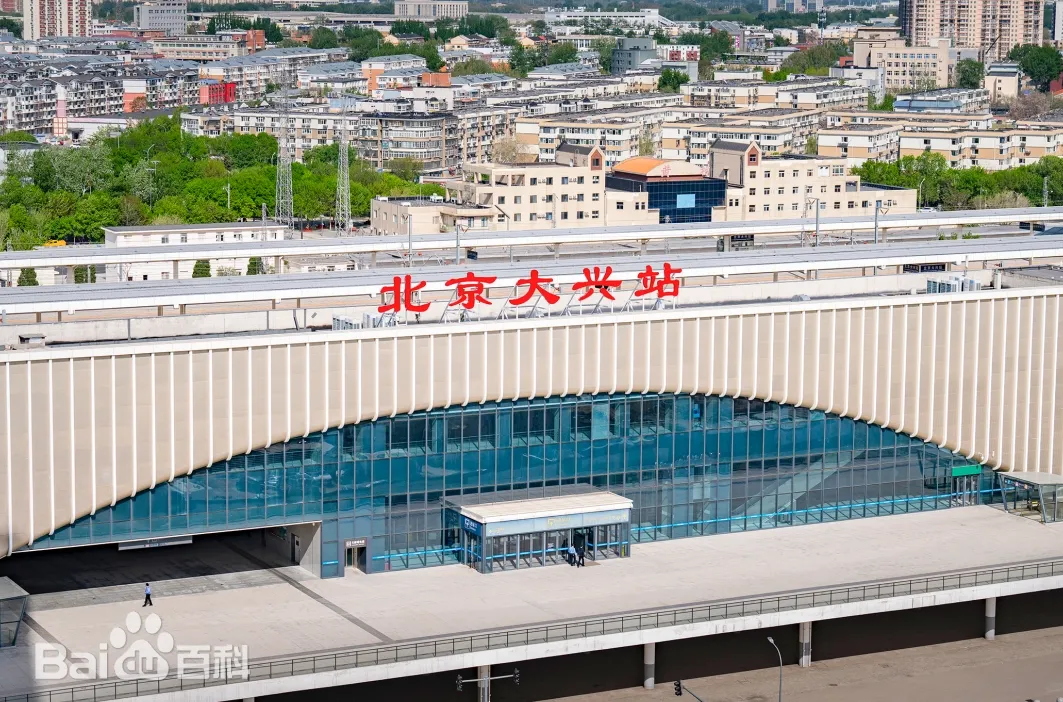
Located in southern Beijing, this station is highly specialized, primarily serving transfers related to the new international airport.
-
Primary Function: Serves the Jingxiong Intercity Railway (connecting Beijing to Xiong'an New Area) and provides a direct rail link to Beijing Daxing International Airport (PKX).
-
Operational Scope & Destinations: This station primarily serves the Jingxiong Intercity Railway (京雄城际铁路). Its main destination is the Xiong'an New Area (雄安新区), a key development zone located south of Beijing. Additionally, it provides fast intercity rail services to and from Beijing Daxing International Airport (PKX).
-
Best Feature: Seamless air-rail transfers. If you land at Daxing Airport and need to transfer to the main HSR network, this station is part of the integrated transport hub, making transfers quick and efficient.
-
Travel Context: It is generally not recommended for travelers starting or ending their journey in the central Beijing core, as its primary function is connecting the airport and the distant Xiong'an New Area, not the downtown area.
Use this quick-reference table for immediate decision-making:
|
Traveler Type / Scenario |
Recommended Station |
Reasoning |
|---|---|---|
|
First-Time Visitor / Anxious Traveler |
Beijing South (Beijingnan) |
Modern, best English, simplest layout. |
|
Heading to Shanghai, Hangzhou, or Nanjing |
Beijing South (Beijingnan) |
Dedicated hub for the fastest high-speed routes to Eastern China. |
|
Heading to Xi'an, Chengdu, or Hong Kong |
Beijing West (Beijingxi) |
Dedicated hub for Central, Southwestern, and Southern China. |
|
Late Night or Early Morning Departure |
Beijing Station (Beijing Zhan) |
Closer to downtown, good transport links 24/7. Always check your specific route first. |
|
Going to the Great Wall (Badaling) |
Beijing North (Beijinbei) or Qinghe |
Only stations offering the dedicated line for the Great Wall. |
|
Business Traveler (Fastest connection to Northeast) |
Beijing Chaoyang |
Newest station for high-speed lines to Harbin/Shenyang. |
This section details the necessary steps for your physical journey, from security to payment, regardless of which station you choose.
1. Security & Luggage Rules (The China Difference)
Security in Chinese train stations is mandatory and operates like airport security. All passengers and luggage must be screened before entering the main waiting areas.
-
Strict Security Checks: Be prepared to put all bags and coats through the X-ray machine.
-
Prohibited Items:
-
Knives: All knives (including small fruit knives, pocket tools, and utility knives) are strictly banned.
-
Aerosols/Sprays: Pressurized containers like hair spray or sunscreen are limited to containers under 120ml (4 oz).
-
-
Power Bank Rules (The Crucial Detail): Power banks (portable chargers) must be clearly labeled with their capacity (Wh or mAh). The limit is typically 20,000mAh (or 100Wh), and they must be carried onto the train, never checked in.
-
Luggage Allowance: Standard luggage dimensions should not exceed 160cm total (length + width + height). High-speed trains offer overhead racks and limited luggage closets.
2. Payment, Language, and Booking
-
Digital Payment is Essential: Chinese stations operate almost entirely on digital platforms. Having a functioning WeChat Pay or Alipay account (ideally linked to your international card) is crucial for food, drinks, and incidentals.
-
Taxi Payment: Traditional (non-Didi) taxis often prefer cash (small bills), so keep some Yuan handy for arrival or departure.
-
Language & Service: While signage is good, staff English proficiency can be limited. Before traveling, have your destination address, train number, and any complex questions written in Chinese characters or use a reliable translation app.
-
Booking Platform: We recommend using Trip.com or the official 12306 app (requires more setup) for reliable booking.
3. Decoding Train Types & Peak Time Travel
-
The "Alphabets" of Chinese Trains (Decoded):
Series Name (Pinyin) Speed & Standard Common Use G Gāotiě (高) Fastest (300+ km/h). Highest standard, premium experience. East-West or North-South long-haul HSR. D Dòngchē (动) Fast (250 km/h). Comfortable, slightly slower HSR. Regional and medium-distance routes. Z/T/K Zhíkuài/Tèkuài (直/特/快) Classic/Slow sleeper trains. Budget travel, overnight journeys, and long-distance routes not covered by HSR. -
Avoiding the Crush: Peak Times & Holidays:
-
Rush Hours (Beijing Metro): 7:30–9:30 AM & 5:30–7:30 PM (Weekdays). If your train departs during these windows, add a minimum of 30–45 minutes buffer to your travel time.
-
Public Holiday Warnings: During Chinese New Year (Chūnyùn) & National Day (October 1–7), travel is extremely congested. If you must travel, arrive 90–120 minutes early.
-
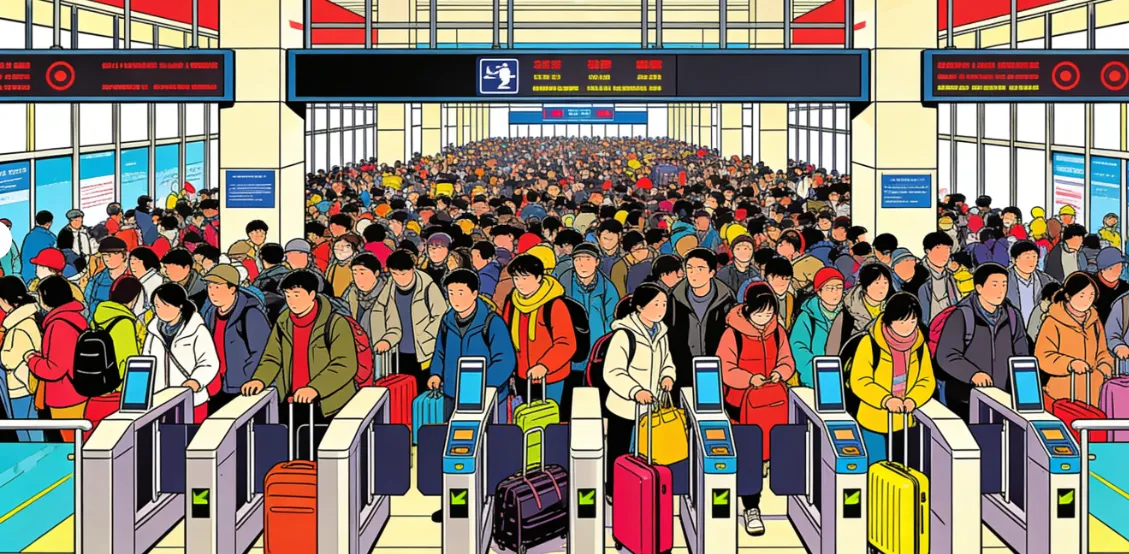
Use this checklist before you head to the station!
Mistake 1: Confusing Station Names. Never confuse the historical "Beijing Station" with the modern hubs like "Beijing South" or "Beijing West."
Mistake 2: Arriving Too Late. The "60-Minute Rule" is non-negotiable.
Mistake 3: Trying to Use the Automatic Gate. Your foreign passport will not work. You MUST use the Manual Channel/Staff Lane for entry and exit.
Mistake 4: Not Bringing Paper Booking Confirmation. While not strictly required, a printout of your booking confirmation greatly assists ticket counter staff if you need assistance.
Mistake 5: Carrying Prohibited Items. Do not forget to check the 120ml limit for aerosols and remove any small knives (even pocket tools) from your luggage.
Mistake 6: Relying on English for Complex Needs. Have your booking details and destination written down in Chinese characters, especially for taxi drivers or emergency questions at the station.
⚠️ Survival Warning: The Foreign Passport Turnstile Trap
Do not waste time lining up at the automated electronic turnstiles! Foreign passports cannot be scanned by the standard machines. You must look for the "Manual Channel" (人工通道), usually located at the far left or right of the gate array, where a human staff member will manually check your passport against the system.
-
Q: Are there Western toilets?
-
A: Yes. Modern stations (South, Chaoyang, West) have both squat and sitting toilets. Look for the international handicap sign or the "sitting toilet" icon on the door.
-
-
Q: Is there Wi-Fi?
-
A: Yes. all major stations have public Wi-Fi, but connecting often requires a Chinese mobile phone number to receive a verification code. Rely on your own international data plan if you don't have a local SIM card.
-
-
Q: What if I miss my train?
-
A: China Railways has a ticket change policy ("Găi Qiān" - 改签). Even if you miss your scheduled departure, you can usually apply for a change to another train on the same day at the ticket counter (presumed there are available seats). There may be a small fee.
-
-
Q: Are there luggage storage services?
-
A: Yes, major stations typically have a "Left Luggage" (行李寄存 - Xínglǐ Jìcún) counter or lockers, usually located near the main entrance/exit areas. Fees apply per bag, per day.
-
-
Q: How do I get from PEK/PKX Airport to the train station?
-
A: Both Beijing Capital (PEK) and Daxing (PKX) airports connect to the subway system. Use the Airport Express line to reach the city subway network, then transfer to the line serving your destination station. Allow at least 90 minutes for the full transfer.
-
Conclusion
While navigating Beijing's vast railway system can seem complex initially, the network is incredibly efficient, punctual, and comfortable once you understand the basic rules. Keep your passport handy, follow the 60-minute rule, and always remember to use the manual check-in channel.
Happy travels!