Wondering if foreigners can use facial recognition gates at China train stations? Read our ultimate guide on passport checks, the 12306 app, and finding the manual lane for a seamless high-speed rail trip.
Step Into the Future of Travel 🚄 Picture this: You’ve just arrived at a bustling high-speed railway station in China, your ticket is booked, and you're ready to catch your train. Ahead of you lies a row of sleek, futuristic facial recognition gates. Travelers are breezing through with a quick look at a camera and a flash of their ID cards. It feels like stepping straight into a sci-fi movie! 🎬✨
The Digital Dilemma 👤❓ But as a expat or international traveler holding a foreign passport, a sudden wave of anxiety hits. Can these high-tech gates actually recognize my face? Will my passport work, or am I going to trigger a loud beep and block the entire line? 🤦♂️ Sweating under the neon lights of a departures hall while trying to figure out Chinese digital infrastructure is nobody’s idea of a fun vacation.
Your Ultimate Guide to Seamless Transit 🗺️ Don't worry, we’ve got you covered! China is leading the world in digital identity and biometric transit, but navigating this cashless, paperless ecosystem as a foreigner can feel like cracking a secret code. In this ultimate China high-speed rail foreigner guide, we’ll break down exactly how China’s station gates work, whether international travelers can actually use the facial recognition lanes, and what you need to do to ensure a smooth, stress-free journey. 👇🎈
Quick Takeaways for Foreign Travelers:
-
Facial Recognition: Foreign passports cannot use the automated face-scan gates designed for Chinese ID cards.
-
The Solution: Always look for the Manual Lane (人工通道) for a quick 3-second passport scan.
-
Preparation: Verify your passport on the official 12306 Railway App before your trip.
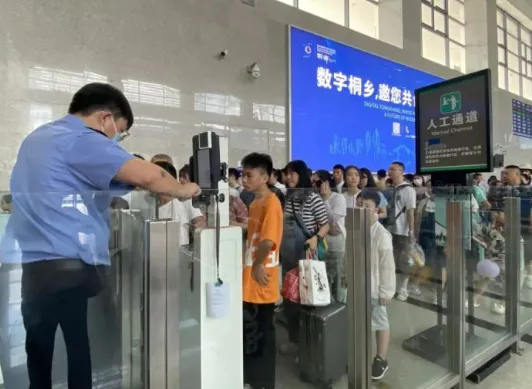
🙋♂️🛑 The Million-Dollar Question: Can Foreigners Use the Facial Recognition Gates?
The short answer? No, not for facial recognition—but yes, you can often use the automated gates with your physical passport! 🛂⚡
Let’s clear up the confusion. When you see local commuters sprinting through the gates by just glancing at a camera, they are utilizing China’s "Face Scanning" (人脸识别 - Rénliǎn Shíbí) system. This system is directly tied to the national resident ID database.
Because international passports are not integrated into this specific local biometric database, foreign travelers cannot pass through the gates using facial recognition alone. 🛑❌
However, China's railway infrastructure has evolved rapidly! Here is exactly what happens when you approach those high-tech turnstiles:
📸 The "Passport Swipe" Reality (The New Automated Gates)
At major hubs (like Shanghai Hongqiao, Beijing South, or Guangzhou South), many of the newer automated gates are equipped with advanced optical passport readers.
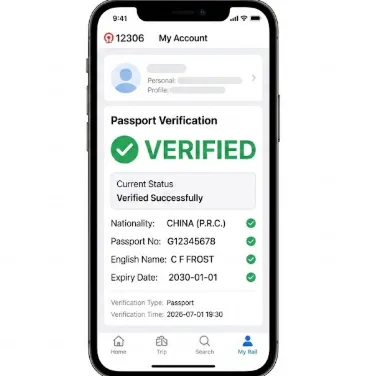
If your passport has already been fully verified on the official 12306 Railway App (which involves uploading your passport photo page and a selfie during registration), you can often place your physical passport photo-page down onto the scanner. The gate will read your passport data, match it to your digital ticket, and open up! 🔓✨
⚠️ The 30% Rule: While tech is improving, passport scanners on automated gates can still be finicky. Sometimes they fail to read a passport due to glare, formatting, or slight software glitches.
🚶♂️ Your Safest Bet: The Manual Lane (人工通道)
If the automated gate flashes red, gives you an error beep, or if you simply want to avoid any station anxiety, look to the far left or far right of the gate lineup.
There, you will find the Manual Lane (人工通道 - Réngōng Tōngdào), staffed by a railway employee. 👩✈️👨✈️
Instead of a machine trying to read your face, a real person will scan your physical passport with a handheld device, verify your digital ticket in less than three seconds, and wave you through.
📊 Quick Guide: How to Pass the Gates
| If you hold a... | Can you use Face Scan? | Can you use the Automated Gate? | Best Practice 💡 |
| Chinese Mainland ID | 🟢 Yes | 🟢 Yes | Glances at camera, breezy transit. |
| Foreign Passport (Verified on 12306 App) | 🔴 No | 🟡 Sometimes (Depends on the station's gate model) | Try scanning your passport face-down; if it fails, step over to the manual lane. |
| Foreign Passport (Unverified/Third-party ticket) | 🔴 No | 🔴 No | Go straight to the Manual Lane to avoid blocking the line! |
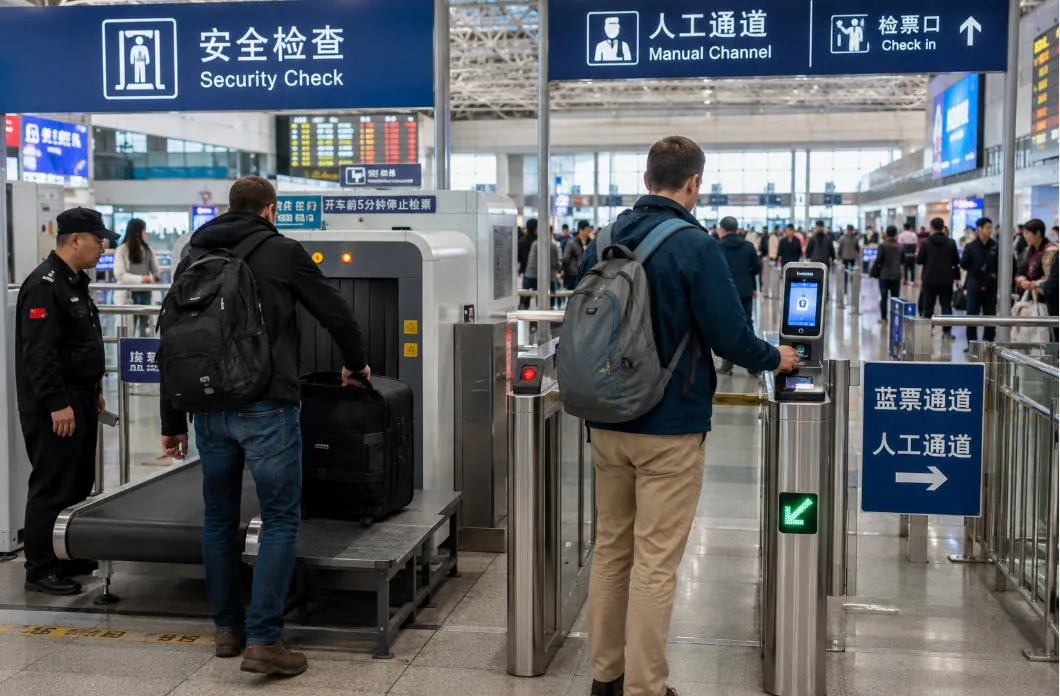
🤖💻 The Tech Breakdown: Why Chinese IDs Work Differently Than Passports
To understand why international visitors can't just flash a smile at the camera and walk through, we have to look under the hood of China’s massive transit ecosystem. It all comes down to a fundamental difference in data infrastructure and hardware design. ⚙️🌐
Here is the tech-driven breakdown of why the system behaves differently for locals versus global travelers:
⚡ The Power of the National ID Database (Resident ID Cards)
For Chinese citizens, the "Face Scan" process is incredibly fast because of a highly integrated, centralized database.
-
The Magic Chip: Chinese Resident ID cards contain an embedded RFID chip packed with encrypted biometric data, including high-resolution facial mapping. 💳🔒
-
Real-Time Matching: When a local traveler places their ID card on the gate's reader, the camera captures their live face and runs a local, instantaneous cross-reference against the chip and the national registry. It's a closed, standardized loop designed to handle billions of checks a year in milliseconds. 🚀
🛂 The Global Passport Problem
International passports, while highly secure, present a completely different challenge for automated transit infrastructure:
-
No Biometric Sync: China’s domestic railway database does not have direct, open API access to the biometric databases of foreign governments. The machine cannot pull your official government photo from the cloud to verify your live face. ❌☁️
-
The OCR Hurdle: Passports rely on Optical Character Recognition (OCR). Instead of reading a standardized internal chip via RFID instantly, the gate's scanner must physically photograph your passport page, adjust for reflections or creases, and manually "read" the Machine-Readable Zone (MRZ)—those two lines of text and arrows at the bottom of your photo page. 📸📄
-
Physical Formatting Discrepancies: A US passport looks different from a French passport, which looks different from an Australian passport. Slight variations in paper thickness, hologram placement, and font styles make it incredibly difficult for a single automated turnstile camera to consistently execute flawless OCR and biometric matching on the fly. 🗺️🌀
🧠 The 12306 Bridge: Why 12306 passport verification is Your Key to the Gates
This is where the official 12306 Railway App comes into play. When you complete your 12306 passport verification by uploading a selfie on the app, you are essentially creating a temporary digital identity profile within China’s railway network. 📱🌉
How it works: When you scan your passport at a compatible automated gate, the machine reads the MRZ text, finds your verified profile in the 12306 database, confirms you bought a ticket for that specific train, and opens the barrier.
Because it relies on reading the text of your passport rather than an instant chip-to-database biometric match, it is naturally slower and more prone to minor errors than the face-scanning lanes used by locals. ⏳
12306 App English Guide: How to Buy China Train Tickets will help you if you are a first time user.
🚪👮♂️ The Golden Solution: Finding the China train station manual lane (人工通道)
If the thought of wrestling with a finicky automated passport reader while a line of fifty impatient commuters waits behind you gives you travel anxiety—take a deep breath. There is a foolproof, 100% reliable savior at every transit hub: the China train station manual lane (人工通道 - Réngōng Tōngdào).✨🧘♂️
While it might feel counterintuitive in a country famous for its hyper-automated tech, heading straight for the human-staffed booth is actually the ultimate travel life hack for foreign passport holders.
🌟 Why the Manual Lane is Your Best Friend
Instead of gambling on whether a machine's optical scanner can read your passport's specific security holograms, the manual lane bypasses the AI completely.
-
Zero Tech Glitches: A real human being handles the verification. No red blinking lights, no error beeps, and no technical rejection. ❌🤖
-
Incredible Efficiency: Don't let the word "manual" fool you. Station staff are armed with high-speed handheld scanners. They will flip to your photo page, scan the Machine-Readable Zone (MRZ), verify your ticket in the system, and wave you through in less than 3 seconds. ⚡⏱️
-
Priority Treatment: In many larger stations, the manual lane doubles as the priority lane for families with strollers, the elderly, and travelers needing assistance. It is often shorter and moves surprisingly fast!
🗺️ How to Spot It and Use It Like a Pro
When you approach the massive wall of ticket gates, don't just walk up to the first open slot. Look at the very ends of the row.
-
Look to the Extreme Flanks: The Manual Lane is almost always located at the far left or far right of the entire gate lineup. 🧭
-
Spot the Staff: Look for a small glass booth or an open lane where a uniformed railway employee is standing next to a small gate. 🧑✈️👩✈️
-
The Magic Phrase: Walk up, hand them your physical passport (open to the photo page to save time!), and give them a polite smile. If you want to flash your Chinese skills, you can say:
"Nǐ hǎo, wǒ yòng hùzhào." (你好, 我用护照。) — "Hello, I am using a passport."
⚠️ Pro-Tips for a Flawless Passing
-
Keep it Physical: Digital photos or screenshots of your passport on your phone will not work at the gate. You must have your physical, original passport in hand. 📖
-
Keep it Accessible: Don't pack your passport away deep in your backpack after security. Keep it in your jacket pocket or an easily accessible cross-body bag until you are fully boarded onto the train. 🎒🔑
-
Trust Your Gut: If you try an automated passport gate once and it fails, do not try a second time. Step out of line immediately and head straight to the manual lane to keep the flow of traffic moving and keep your stress levels at zero. 👋🚶♂️
🗺️👣 How to take a train in China as a foreigner: A Step-by-Step Walkthrough From Entrance to Carriage
Navigating a Chinese high-speed railway station can feel like navigating a massive international airport. To make sure you don't get lost in the sea of commuters, here is your chronological, step-by-step game plan from the moment you arrive at the station to the moment you sink into your train seat. 🚄🎒
📍 Step 1: The Main Security Gate (Station Entrance)
What happens here: Before you can even enter the station building, you must pass through an initial security check.
-
The Setup: You will see a row of gates where travelers scan their IDs to enter.
-
Your Action: Do not try the automated gates here. Head straight to the far side where a security officer is checking physical documents.
-
Process: Hand them your passport. They will scan it, verify you have a valid ticket booked for that day, and put your bags through the X-ray machine. 🎒🔍
🗺️ Step 2: Finding Your Departure Gate
What happens here: Once inside the massive departure hall, you need to locate your specific boarding gate.
-
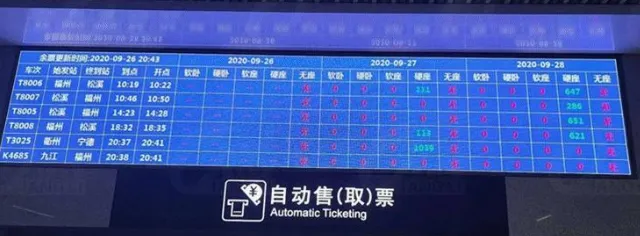
The Setup: Look up at the giant LED departure boards hanging from the ceiling. 📺
-
Your Action: Find your train number (e.g., G14 or D2204). The board will list your train's status and its designated Boarding Gate (检票口 - Jiǎnpiào Kǒu), which is usually a combination of a number and a letter (e.g., 12A or 12B).
-
Pro-Tip: Gates A and B usually lead to the same train, just different ends of the platform. Check your ticket/app for your coach number (车厢 - Chēxiāng) to pick the closest gate! 🧮
⏱️ Step 3: The Waiting Game & The Green Light
What happens here: Waiting in the departure hall until boarding begins.
-
The Setup: Unlike airports where boarding happens 45 minutes prior, Chinese train boarding is incredibly precise and fast.
-
Your Action: Find a seat near your gate. Boarding usually begins 15 minutes before departure and closes strictly 3 to 5 minutes before the train leaves.
-
The Cue: When the LED screen above your gate turns Green, and the announcement plays, it’s time to line up. 🟢🏃♂️
🚪 Step 4: Cracking the Boarding Gate (The Passport Moment)
What happens here: This is the main event where you actually pass through to the platforms.
-
The Setup: You will see a massive line form at the automated turnstiles.
-
Your Action: Bypassing the crowd, walk straight to the Manual Lane (人工通道) on the far left or right. 🚪👮♂️
-
Process: Open your physical passport to the photo page, hand it to the attendant, smile, and walk through as soon as the barrier opens.
🚉 Step 5: Finding Your Platform and Carriage
What happens here: Walking down to the train tracks.
-
The Setup: Once through the gate, follow the crowd down the stairs, escalators, or elevators to the platform.
-
Your Action: Look at the signs on the platform pillars. They will show coach numbers. Look at your digital ticket for your Coach Number (车厢) and stand in the corresponding waiting area on the platform. 🔢
-
Look down: Look at the colored markings on the platform floor. They tell you exactly where the doors of your specific coach will stop. 👣
💺 Step 6: Boarding the Train & Finding Your Seat
What happens here: Stepping onto the bullet train!
-
The Setup: The train will glide into the station seamlessly. Let arriving passengers off first.
-
Your Action: Step inside, load your heavy luggage onto the racks near the entrance doors, and place smaller bags in the overhead bins above your seat. 🧳
-
The Final Check: Match your ticket’s Seat Number (座位号) (e.g., 05A for a window or 05C for an aisle) to the labels above the rows. Sit back, relax, and enjoy the smooth 350 km/h ride! 🚄💨
🌟💳 The New "Five-Star Card": A Special Exception for Permanent Residents
While standard foreign passport holders have to stick to the manual lane, there is a very elite group of expats who get to experience the train stations exactly like a local. If you hold China’s newly upgraded Foreign Permanent Resident ID Card (外国永久居留身份证)—affectionately dubbed the "Five-Star Card" (五星卡)—the game changes completely! 🌟💳
Introduced by the National Immigration Administration to maximize convenience for long-term foreign residents, this card is a masterpiece of technological integration.
💳 What Makes the Five-Star Card Different?
Unlike a standard passport, the Five-Star Card is embedded with the exact same high-frequency RFID chip technology found in Chinese citizens' local ID cards.
Because of this built-in hardware compatibility:
-
Direct Database Sync: The card communicates seamlessly with China’s domestic public infrastructure, including the national railway booking system. 🧬
-
True Biometric Matching: Your biometric data and high-resolution facial profile are pre-registered into the secure national network when the card is issued.
🏃♂️💨 How to Use It at the Station: True "Face-Scanning" Freedom
If you are lucky enough to hold one of these cards, you can completely bypass both the manual lane and the standard passport queue. You get to use the high-speed Facial Recognition Gates just like a local commuter:
-
The Entrance Check: Walk right up to the automated gates at the station entrance. Place your physical Five-Star Card onto the designated scanning zone. 💳
-
The Camera Glance: Look directly at the overhead camera attached to the turnstile for a brief second. 📸
-
The Instant Open: The system will read your chip, match your live face to your verified profile, confirm your ticket, and slap the gates open in less than a second! 🔓⚡
📝 Note: This works perfectly at both the main station security entrance and the individual train boarding gates (检票口).
📱 Pairing with the 12306 App
To make the process completely flawless, holders of the Five-Star Card can use their permanent ID number to register directly on the 12306 App. Once registered, your identity status is instantly marked as "Verified" (已核验), meaning you never need to carry a paper backup or worry about manual passport checks again.
For the global citizen living long-term in China, the Five-Star Card bridges the digital divide, turning what used to be an anxious transit bottleneck into a seamless, sci-fi travel experience. 🚄✨
🗣️🇨🇳 Essential "Survival Chinese" Phrases for the Train Station
Even with the best tech apps and English signage, you might occasionally need to talk to a human staff member—especially when heading to the manual lane!
Don't let the language barrier intimidate you. Station staff are incredibly used to helping travelers. Keeping these key phrases and signs saved on your phone will make you look like a seasoned expat pro. 🌟📱
🛑 Crucial Station Signs to Recognize
Before you speak, look up! These are the characters you will see on the large overhead hanging signs throughout the station:
| The Sign 🪧 | Pinyin | English Meaning 🇬🇧 |
| 人工通道 | Réngōng Tōngdào | Manual Lane / Staffed Lane 🚪👮♂️ |
| 检票口 | Jiǎnpiào Kǒu | Boarding Gate (e.g., Gate 12A) 🎫 |
| 站台 | Zhàntái | Platform 🚉 |
| 车厢 | Chēxiāng | Train Carriage / Coach 🔢 |
| 座位 | Zuòwèi | Seat Number 💺 |
| 出站口 | Chūzhàn Kǒu | Exit Gates (Way Out) 🏃♂️ |
💬 Phrases for Passing Through the Gates
When you approach the manual lane or security checkpoint, use these quick phrases to explain why you aren't using the automated face scanners:
-
"Hello, I am using a passport."
-
Chinese: 你好,我用护照。
-
Pinyin: Nǐ hǎo, wǒ yòng hùzhào.
-
When to use: Handing your physical passport to the attendant at the manual lane. 🛂
-
-
"Where is the manual lane?"
-
Chinese: 请问,人工通道在哪里?
-
Pinyin: Qǐngwèn, réngōng tōngdào zài nǎlǐ?
-
When to use: If you are standing in front of a wall of automated gates and can't find the staff member. 🧭
-
-
"My passport cannot be scanned."
-
Chinese: 我的护照刷不了。
-
Pinyin: Wǒ de hùzhào shuā bù liǎo.
-
When to use: If you tried the automated passport machine and it gave you a red error light. 🤖❌
-
🙋♂️ Getting Help on the Platform & Onboard
Once you are past the gates, use these to make sure you are getting on the right train:
-
"Is this the train to [Destination]?"
-
Chinese: 请问,这是去[上海]的车吗?
-
Pinyin: Qǐngwèn, zhè shì qù [Shànghǎi] de chē ma?
-
When to use: Double-checking with the conductor standing outside the train door before stepping inside. 🚄
-
-
"Where is Carriage Number [5]?"
-
Chinese: 请问,[五]号车厢在哪里?
-
Pinyin: Qǐngwèn, [wǔ] hào chēxiāng zài nǎlǐ?
-
When to use: If you are lost on the long platform and can't find your designated coach. 🤷♂️
-
-
"Excuse me, I think this is my seat."
-
Chinese: 不好意思,这好像是我的座位。
-
Pinyin: Bù hǎoyìsi, zhè hǎoxiàng shì wǒ de zuòwèi.
-
When to use: Politely telling someone they are sitting in your spot (a common mix-up with window/aisle seats!). 💺🤝
-
💡 Pro-Tip for Travelers: If your pronunciation fails you, don't panic! Simply point to the Chinese characters in this guide, or open your 12306 App ticket screen and point to your passport. The staff will immediately know exactly where to direct you.
🌟💡 Pro-Tips for a Flawless China Railway Experience
Now that you know how to conquer the gates and speak the language, let’s talk about the insider secrets that separate the amateur tourists from the seasoned China expats. 🚄✨
High-speed rail in China is arguably the best transit network in the world, but it operates like a well-oiled machine. To make sure you slide through the experience effortlessly, keep these golden rules in mind:
⏱️ Master the "High-Speed" Timing
Unlike airports where you sit at the gate for an hour, or European trains where you can jump on 30 seconds before departure, China’s railway stations demand precise timing:
-
The Magic Window: Arrive at the station 40 to 60 minutes before departure. Because you have to go through an initial passport verification and a luggage security check at the entrance, arriving 10 minutes before your train means you will miss it. ⏳
-
The Hard Stop: Boarding gates close strictly 3 to 5 minutes before the train wheels turn. If you are not through the gate by then, the system locks, and the staff cannot let you through under any circumstances. 🛑
🎒 Understanding the Chinese bullet train baggage allowance (And Insider Secrets)
-
The Weight & Size: Officially, you are allowed up to 20kg (44 lbs) of luggage per adult passenger, with the sum of the length, width, and height not exceeding 130 cm. Knowing the official Chinese bullet train baggage allowance helps you pack smarter.📏
-
The Reality Check: Staff rarely weigh your bags unless they look comically massive. However, you must lift them yourself onto the X-ray belts at security and up into the overhead racks inside the carriage. Pack accordingly! 💪
-
The Pro Luggage Hack: If you have massive suitcases that won't fit overhead, there is a designated luggage closet at the end of every carriage. If that’s full, you can slide your large suitcases directly behind the very last row of seats in the carriage. 🤫🧳
- More details are in this guide: China Train Luggage Policy: Allowance & Prohibited Items
🧴 Watch Out for Security "Contraband"
Station security is incredibly thorough (similar to airport security, though you can keep your shoes on and water bottles stay in your bag). Keep these common items in mind:
-
Aerosol Cans: Hairspray, spray-on sunscreen, and deodorant cans are heavily restricted. Typically, cans larger than 120ml or 150ml (depending on the local station rules) will be confiscated. Switch to roll-ons or cream creams! ☀️🧴
-
Pocket Knives: Swiss Army knives, multi-tools, and even small fruit-peeling knives are strictly forbidden and will be flagged by the X-ray machine. 🔪❌
📱 Keep Your Phone Juiced Up
Your entire journey relies on your phone: your 12306 app ticket, your digital pay apps (Alipay/WeChat Pay), and your entertainment.
-
Onboard Power: Don't panic about a dying battery. Every modern high-speed train features power outlets. Look directly under your seat cushion or between the seats near the floor—you’ll find a standard Chinese outlet and a USB port. 🔌⚡
🍜 The Culinary Strategy: Station vs. Train
-
The Onboard Cart: A food cart walks down the aisles selling fruit, boxed meals (便当 - Biàndāng), and tea. However, options can be limited and sell out fast. 🍱
-
The Hot Water Cult: Every carriage features a hyper-boiling water dispenser at the end of the aisle. Do what the locals do: buy a cup of instant noodles at the station convenience store before boarding, fill it up on the train, and enjoy a steaming, cheap meal at 350 km/h! 🍜🔥
-
The Tech Route: Did you know you can order food from restaurants along the train's route via the 12306 app, and a delivery driver will hand it to your train conductor at an intermediate stop? It’s called 高铁外卖 (Gāotiě Wàimài)—the ultimate flex in travel convenience! 🚴♂️🍕
💬❓ Frequently Asked Questions (FAQs)
To wrap things up, here are the answers to the most common questions foreign travelers ask when tackling China’s high-speed rail network.
Q1: Do I need to print out a paper ticket anymore?
A: No. China’s railway system is completely paperless. Your booking is instantly tied to your passport number. Even if you receive a printed booking receipt (行程信息单) at a ticket window, it is not a ticket and cannot be scanned to pass the gates. Just carry your physical passport!
Q2: Can I book tickets for my friends/family on my 12306 account?
A: Yes! You can add up to 15 passengers ("contacts") to your account. However, each person’s passport must be successfully verified by the app's identity matching system before you can book tickets for them.
Q3: What happens if the manual lane is closed?
A: The manual lane is never fully closed while trains are operating. If there is no dedicated staff member standing there, look for an agent assisting at the nearby automated gates—they will manually override the gate or use a hand scanner to let you through.
Q4: Can I buy snacks and meals on the train with cash?
A: While cash is technically accepted, almost all transactions on Chinese trains—including ordering food directly to your seat via the 12306 app—are done using Alipay or WeChat Pay. It is highly recommended to link your international credit card (Visa/Mastercard) to Alipay before your trip!
Q5: Can I use a digital photo or screenshot of my passport if I forget the physical copy?
A: Absolutely not. You cannot enter the station, pass the boarding gates, or board the train with a photo of your passport on your phone. China’s railway system operates on a strict real-name ticketing policy. Your physical, original passport is your actual "ticket." No passport, no travel.
Q6: What happens if I miss my train? Do I lose my money?
A: Don't panic! The 12306 app has an incredibly generous change policy. Within 2 hours before or anytime after departure: You can change your ticket once for free to any other available train bound for the same destination on the same day. How to do it: You can change it directly inside the 12306 app, or walk over to the station's physical Ticket Windows (售票窗口 - Shòupiào Chuāngkǒu) and ask the staff to change it for you.
Q7: My children don't have IDs, only foreign passports. How do they get through the gates?
A: Children traveling on foreign passports follow the exact same rules as adults. Under 6 years old: Children under 6 travel for free (sharing a seat with an adult) but their passport must still be linked to your ticket booking. Passing the gate: Bring your children with you directly to the Manual Lane. The attendant will scan your passport, then scan the child's passport, and let you both through together.
Q8: Can I use my face to open the exit gates (出站口) when arriving at my destination?
A: Just like the boarding process, you cannot use facial recognition to exit. When you arrive at your destination station, look for the Manual Lane at the exit gates, hand the guard your physical passport, and they will buzz you out into the city!
Q9: What if I got a new passport after booking my ticket?
A: You must travel with the passport number linked to your 12306 account. If you recently renewed your passport, bring BOTH your old and new passports to the station's physical ticket window (售票窗口) to update your information before heading to the boarding gates.
🚉📋 Ready for Departure? Your Ultimate Station Checklist
Before you head out the door to catch your train, run through this quick checklist to ensure a completely flawless station experience:
📱 Documentation & Apps
-
[ ] Physical Passport: Packed in an easily accessible pocket (not buried deep in your main luggage). 🛂
-
[ ] 12306 App Check: Open the app and ensure your passport status shows as "Verified" (已核验). 📱
-
[ ] Ticket Info Screenshot: Take a quick screenshot of your train number, coach (车厢), and seat number (座位号) just in case you lose internet connection inside the station. 📸
⏰ Timing & Logistics
-
[ ] The 60-Minute Rule: Set an alarm to arrive at the station at least 40 to 60 minutes before departure to clear security lines. ⏱️
-
[ ] Battery Power: Charge your phone to 100% and pack a portable power bank (remember, outlets are also located under your train seat!). 🔋
🎒 Luggage & Security
-
[ ] Liquids & Aerosols check: Ensure any spray sunscreens or deodorants are under the station's ml limit (switch to roll-ons or creams if unsure). 🧴❌
-
[ ] No Sharp Objects: Double-check that no pocket knives or fruit knives are left in your pockets or daypacks. 🔪
-
[ ] Pack Lean: Make sure you can comfortably lift your own bags onto security belts and overhead racks. 💪🧳
🚀 The Final Step: The Station Game Plan
When you arrive, remember the workflow:
-
Entrance Security: Skip the automated gates → Go straight to the Staffed Desk. 🚪
-
The Waiting Hall: Check the giant overhead LED board → Find your Boarding Gate (检票口). 🟢
-
Boarding the Train: Skip the facial recognition turnstiles → Head to the far left/right Manual Lane (人工通道), flash your passport, and enjoy the ride! 🎫🧎♂️
🎬🎒 Conclusion: Embrace the Speed, Skip the Stress
Navigating China’s high-speed railway stations as a foreigner might feel a bit intimidating at first glance. The sheer scale, the sea of commuters, and the hyper-futuristic facial recognition gates can make you feel like an analog traveler in a digital world.
But once you know the secret—that your physical passport is your ultimate golden ticket, and that the Manual Lane (人工通道) is always there to save the day—the anxiety completely melts away.
China’s bullet trains are a triumph of modern engineering and transit convenience. By understanding how the tech works and prepping your documents in advance, you’ll be gliding through checkpoints, sipping tea, and watching the beautiful Chinese countryside blur past your window at 350 km/h like an absolute pro. 🚄💨
Have a fantastic journey, and Yílù-shùnfēng (一路顺风 — Have a pleasant trip)! 🎒🌏
For more information on train travel in China, please refer to 22 Essential Facts for China Train Travel, China Train Guide: High-Speed & Conventional Rail, China Sleeper Trains: Hard, Soft & First Class Guide