Planning a trip? Discover the best ways to get from Hong Kong to Macau. Compare ferry times, HZMB bridge bus prices, and private car options for your perfect itinerary.
For many travelers visiting Hong Kong, planning a Hong Kong to Macau day trip—often to see the "Las Vegas of the East"—is a top priority. Separated by the waters of the Pearl River Delta, these two Special Administrative Regions (SARs) are only about 60 kilometers apart. While the distance is short, the method of transport you choose can significantly impact your travel time, comfort, and budget.
The purpose of this guide is to provide a comprehensive breakdown of the available transportation modes to help you navigate this cross-border journey seamlessly. It is important to address a common misconception first: there is currently no direct rail or MTR connection between Hong Kong and Macau. Travelers must choose between crossing the sea by ferry, traversing the world's longest sea-crossing bridge by bus or car, or taking a premium flight.
⚡ Quick Summary:
-
Fastest & Most Central: Take the High-Speed Ferry (TurboJET or Cotai Water Jet).
-
Cheapest Option: Take the HZMB Shuttle Bus (Gold Bus) across the bridge.
-
Best for Families/Luggage: Book a Cross-border Direct Coach or Private Car.
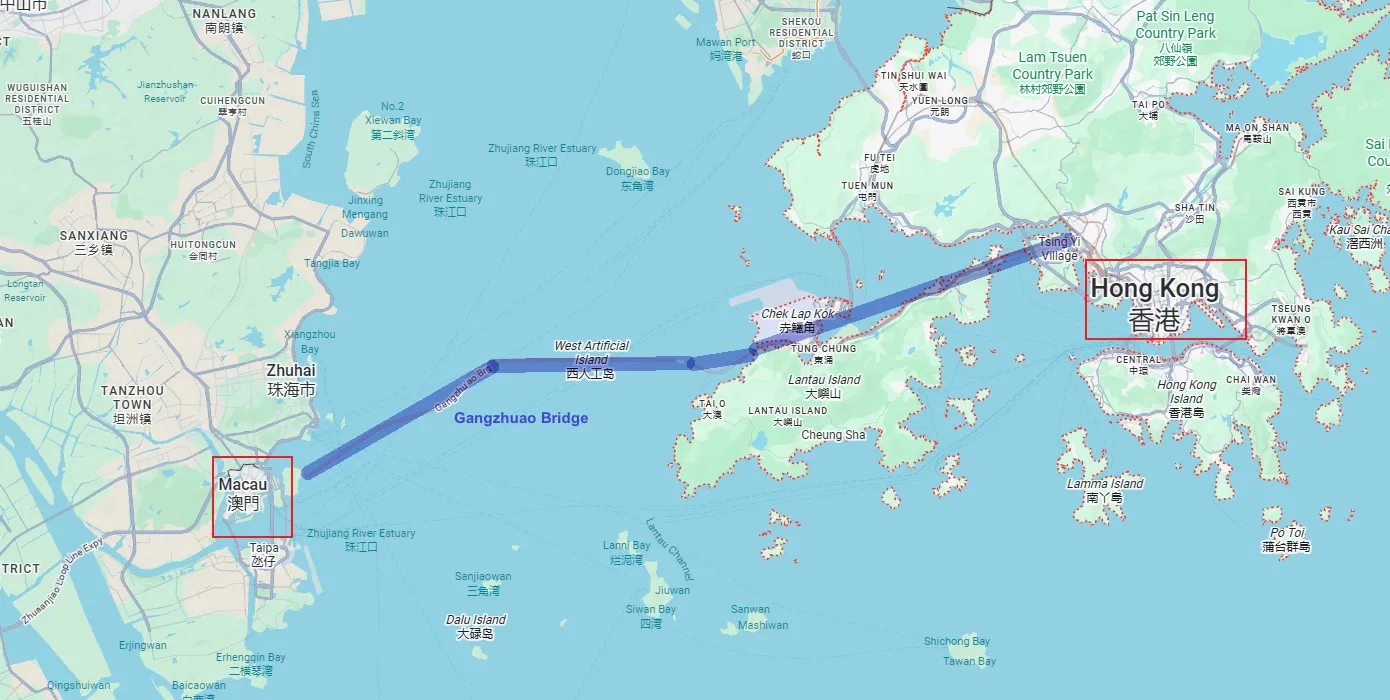
In the following sections, we will compare the efficiency of high-speed ferries, the stability of the Hong Kong-Zhuhai-Macau Bridge (HZMB) services, and the exclusivity of private charters and helicopters.
1. Hong Kong to Macau Travel Guide: Quick Comparison of Options
To help you make an informed decision at a glance, the table below compares the primary methods for traveling from Hong Kong to Macau. If you are looking for the absolute cheapest way, take the Bridge Shuttle; if you want the most central and iconic experience, the Ferry is still king.
|
Mode of Transport |
Typical Travel Time |
Approx. Cost (One-way) |
Frequency |
Departure → Arrival |
Comfort / Stability |
Late-night Availability |
Best For |
|---|---|---|---|---|---|---|---|
|
Ferry |
55–70 mins |
HKD 175–200 |
Every 15–30 mins |
City Center to City Center |
Moderate |
Limited |
Central HK/Macau visitors |
|
Bridge Shuttle |
45–60 mins |
HKD 65–70 |
Every 5–15 mins |
Port to Port (Outskirts) |
Very High |
24 Hours |
Budget/Sickness-prone |
|
Cross-border Coach |
1.5–2 hours |
HKD 160–190 |
Every 30–60 mins |
Selected Hotels/Points |
High |
Limited |
Families/Direct Hotel access |
|
Private Car |
1.5 hours |
HKD 2,000+ |
By Booking |
Door-to-Door |
Maximum |
24 Hours |
Luxury/Groups/Privacy |
|
Helicopter |
15–20 mins |
HKD 4,300+ |
Scheduled |
Heliport to Heliport |
High |
None |
Business/Premium luxury |
2. Hong Kong to Macau by Ferry: Fast and Convenient
Overview
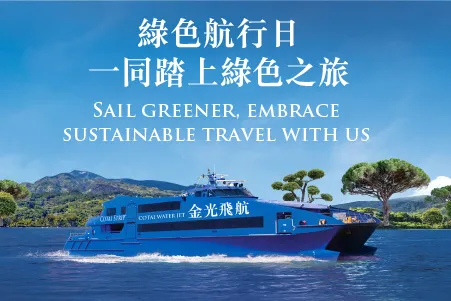
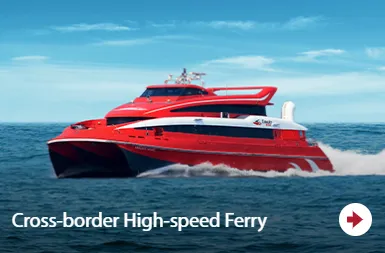
The ferry remains the most iconic and traditional way to travel between the two cities. Operated primarily by TurboJET and Cotai Water Jet, these high-speed catamarans offer a direct sea link between the urban hearts of Hong Kong and Macau.
Best for: First-time visitors and those staying in central districts like Central, Sheung Wan, or Tsim Sha Tsui who want to arrive directly in the heart of Macau without extra land transfers.
-
Typical Travel Time: 55–70 minutes of actual sailing time.
Immigration / border control: Customs and immigration procedures are conducted at the ferry terminals in both Hong Kong and Macau. You should arrive at least 30–45 minutes before departure to clear these formalities.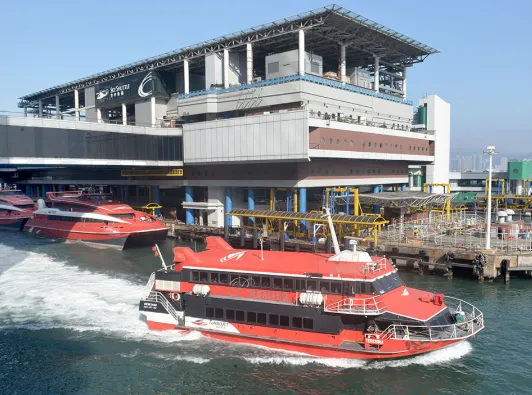
-
Ticket Price (Cost overview) & Where to buy:
-
Economy Class: Approximately HKD 175–190 (Daytime) and HKD 220 (Night/Holidays).
-
First Class/VIP: HKD 350 to over HKD 2,000 for private cabins.
-
Where to buy: Tickets can be purchased at terminal counters, official websites, or via travel apps like Klook/Trip.com.
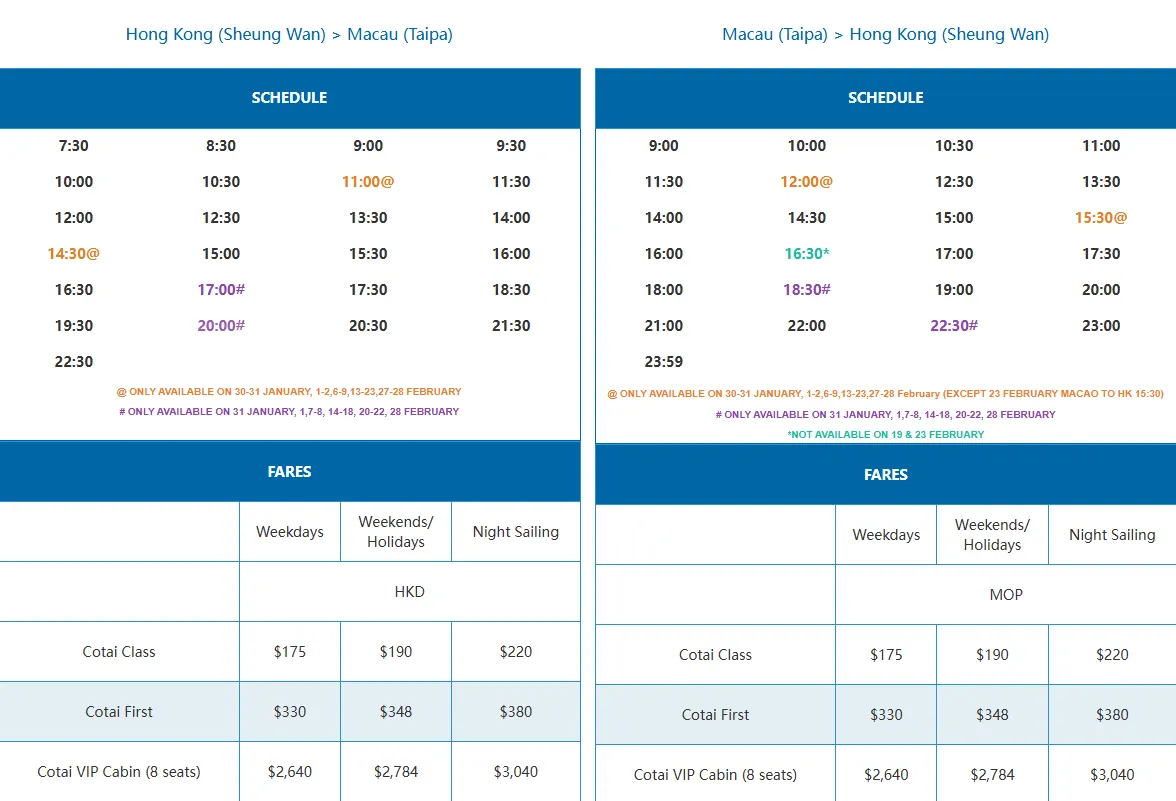 Image from Cotaiwaterjet, Copyright by original author👆Cotai Water Jet Hong Kong (Sheung Wan)↔ Macau (Taipa) schedule & fares
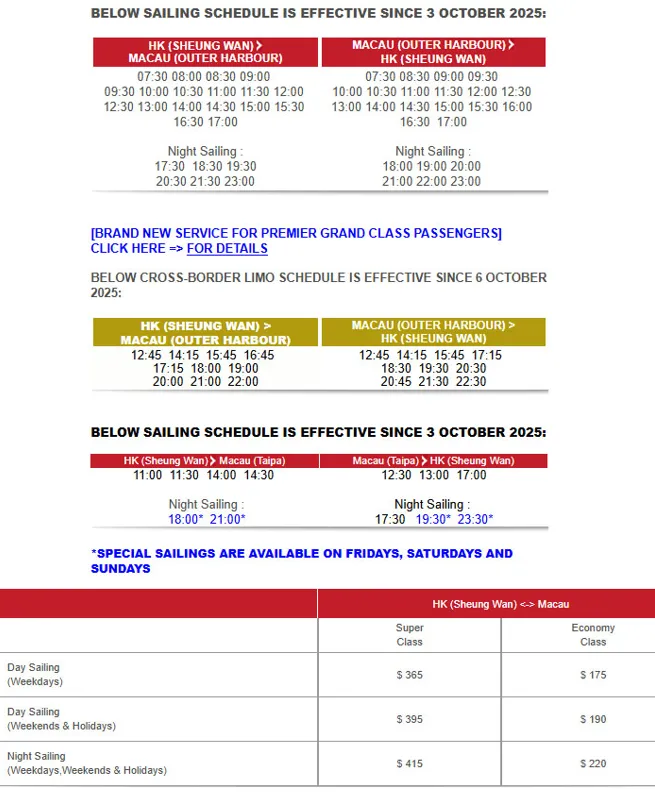 Image from Turbojet, Copyright by original author👆TurboJET Hong Kong (Sheung Wan)↔ Macau (Outer Harbour) schedule & fares
-
-
Departure & Arrival:
-
Departures from HK: Hong Kong-Macau Ferry Terminal (Sheung Wan) or China Ferry Terminal (Tsim Sha Tsui).
-
Arrivals in Macau: Macau Outer Harbour Ferry Terminal (Peninsula) or Taipa Ferry Terminal (near Cotai Strip).
-
-
How it works: Passengers purchase a ticket for a specific time, clear Hong Kong immigration at the terminal, board the high-speed vessel, and clear Macau immigration upon arrival at the destination terminal.
-
Pros: Very frequent departures (every 15-30 mins); direct city-center access; comfortable seating with luggage storage.
-
Cons: Highly weather-dependent (typhoons or heavy fog lead to cancellations); can be bumpy in rough seas, which may affect those prone to motion sickness.
-
Practical notes: Choose the Taipa Ferry Terminal if you are staying at major resorts like The Venetian or Parisian. Choose Outer Harbour for the historic city center.

3. Hong Kong to Macau via Bridge Bus: Stable and Reliable
Overview
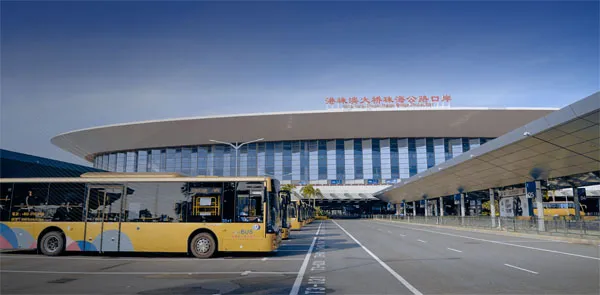
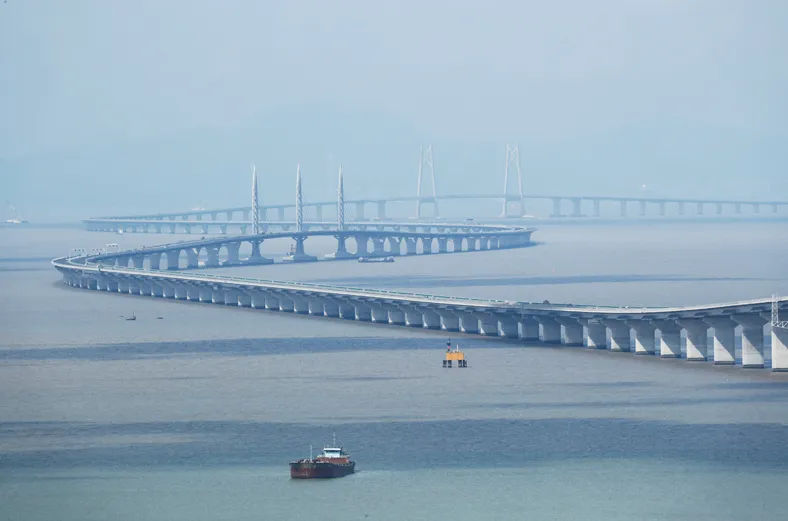
Since the opening of the Hong Kong-Zhuhai-Macau Bridge (HZMB), land travel has become the most stable way to cross. There are two distinct bus systems:
-
HZMB Shuttle Bus (Gold Bus): A 24-hour "port-to-port" shuttle running only on the bridge. Peak period headway at 5 minutes; non-peak period headway at 10-15 minutes; overnight period headway at 15-30 minutes.
-
Cross-border Coach (Direct Bus): A "point-to-point" service connecting Hong Kong city centers directly to Macau hotels. The main stopping points in urban areas of Hong Kong include Causeway Bay, Tsim Sha Tsui, Kowloon Station (Element), Mong Kok, Prince Edward, Kwun Tong, Tseung Kwan O, etc., The main destinations in Mainland via the HZMB include Zhongshan, Zhuhai, Jiangmen, Xinhui, Kaiping, Toishan, Yangjiang, etc., and the main destinations in Macao are some of the hotels located in Taipa District. [check officially certified operator]
Best for:
- Shuttle Bus: Budget travelers, backpackers, and late-night arrivals.
-
Direct Coach: Families, seniors, and those wanting to go directly to specific hotels (e.g., The Venetian, MGM).
- Typical Travel Time:
- Shuttle Bus: 40–45 mins (bridge only); approx. 1.5 hours total including local transit.
-
Direct Coach: 1.5–2 hours (total journey from city center to hotel).
-
Immigration / border control: Conducted at the HZMB Hong Kong Port and HZMB Macau Port. Note: All passengers must disembark with their luggage to clear customs manually at both ports before re-boarding.
-
Ticket Price (Cost overview) & Where to buy:
-
Shuttle Bus: HKD 65 (Day) / HKD 70 (Night). Buy via vending machines at the Port or official WeChat/Alipay accounts.
-
Direct Coach: HKD 160–190. Buy at ticket counters in Jordan/Prince Edward or via operator websites like "One Bus" or "HKMO Express."
-
-
Departure & Arrival:
-
Shuttle Bus: HZMB Hong Kong Port ↔ HZMB Macau Port.
-
Direct Coach: Pick-up in urban HK (Jordan, TST, Causeway Bay) ↔ Major Macau Hotels/Casinos.
-
-
How it works:
- Shuttle Bus: You take a local bus/taxi to the HK Port, clear immigration, buy a ticket, and board the "Gold Bus." Once in Macau, you clear customs and find local transport to your hotel.
-
Direct Coach: You board at a city-center stop. The bus takes you to the port; you get off with luggage for immigration, walk through the hall, and re-board the same coach on the other side.
-
Pros: * Both: High stability (no seasickness); unaffected by waves.
-
Shuttle: Cheapest price; 24/7 service.
-
Coach: More convenient "city-to-hotel" routing.
-
-
Cons: * Both: Requires physical effort to carry luggage through customs halls.
-
Shuttle: Involves multiple transfers (local bus → shuttle → local bus).
-
-
Critical Luggage & Immigration Procedures
One of the most common points of confusion for travelers is the luggage handling process during the bridge crossing. It is essential to understand the difference between the two bus types, especially for families or those with heavy bags:
-
HZMB Shuttle Bus (Gold Bus): You must carry all your luggage yourself at all times. This includes taking your bags on and off local transport to get to the HK Port, and manually wheeling them through the massive immigration halls.
-
Cross-border Coach (Direct Bus): While the coach waits for you, you are still required to completely disembark with all your luggage at both the Hong Kong and Macau border checkpoints. You must haul your bags through the customs hall and re-load them onto the bus on the other side.
-
Private Car: Even in a private vehicle, passengers are typically required to exit the car with their luggage to pass through the customs scan manually. Only a few exclusive "Business/VIP" vehicles allow passengers to stay inside, but these are rare and significantly more expensive.
Crucial Note: For families with strollers, wheelchairs, or oversized suitcases, the physical effort required to move luggage through the port halls can be significant. If mobility is an issue, a Private Car is the only way to minimize this stress.
-
-
Practical notes: For the Shuttle Bus, have your Octopus card or mobile payment ready for the "A" or "E" buses that take you to the HK Port.
4. Hong Kong to Macau by Private Car or Chartered Vehicle
Overview
Licensed cross-border private cars offer the most exclusive and seamless way to travel. These "dual-plate" vehicles are authorized to operate in both Hong Kong and Macau, providing a true premium experience.
Best for: Families with young children, elderly travelers, corporate groups, or anyone seeking maximum privacy and convenience.
-
Typical Travel Time: 1.5 hours on average (door-to-door), depending on traffic and pick-up location.
-
Immigration / border control: Conducted at the HZMB ports. While passengers typically still need to step out of the vehicle with their luggage to clear customs halls, the process is generally faster and more organized for private passengers.
-
Ticket Price (Cost overview) & Where to buy:
- Cost: Typically starts from HKD 2,000–3,000 per trip (one-way).
-
Where to buy:
- OTAs: Platforms like Klook, Trip.com, or KKday.
-
Hotels: Limousine services arranged via concierge at major hotels (e.g., The Peninsula, Ritz-Carlton).
-
Direct Operators: Professional companies like Trans-Island Limos or SkyLimo.
-
Departure & Arrival: Any specified location in Hong Kong (Home/Hotel/Airport) ↔ Any specified location in Macau.
-
Pros: 100% door-to-door convenience; no need to navigate public transport with heavy luggage; highly flexible schedule.
-
Cons: Most expensive option; availability can be limited during peak holiday seasons.
-
Practical notes: Always confirm if the vehicle has the necessary dual-region licenses to avoid legal issues at the border.
5. Hong Kong to Macau by Air: Helicopter and Flight Options
Overview
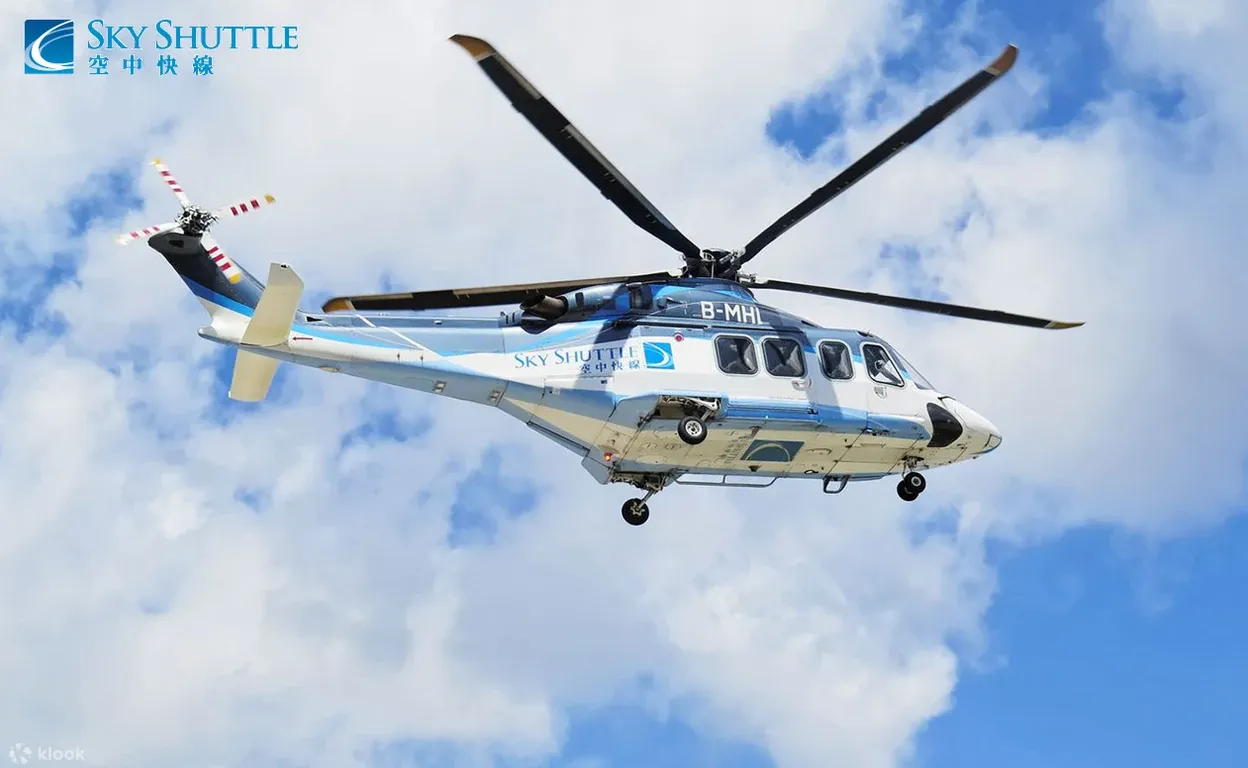
Air travel between the two cities is the most prestigious but least common method. Sky Shuttle provides the only direct link via helicopter, while commercial flights remain a theoretical possibility but a practical rarity.
Best for: Business travelers on a tight schedule, high-net-worth individuals, or those seeking a luxury experience for a special occasion.
Typical Travel Time: 15–20 minutes of flight time.
-
Immigration / border control: Dedicated, expedited customs and immigration facilities are available at the heliports in both Sheung Wan (HK) and the Outer Harbour (Macau), significantly reducing wait times.
-
Ticket Price (Cost overview) & Where to buy: * Cost: Approx. HKD 4,300 per person per flight (one-way).
-
Where to buy: Directly through the Sky Shuttle official website, at the ticketing counters located in the ferry terminals or via travel apps like Klook/Trip.com.
-
-
Departure & Arrival: Sky Shuttle Heliport (Sheung Wan, HK) ↔ Macau Outer Harbour Heliport.
-
How it works: Passengers check in at the dedicated heliport lounge at least 20 minutes before departure, pass through private immigration, and board the helicopter for a short cross-sea flight.
-
Pros: The absolute fastest way to cross; incredible panoramic views of the cities and bridge; skips public immigration queues.
-
Cons: Extremely high price point; strict luggage weight limits (7kg per person); flight cancellations occur during heavy rain, fog, or strong winds.
-
Practical notes: Commercial flights between HKG and MFM airports do not exist as direct routes; any "flight" would involve a transfer in another city, making it an impractical choice for travelers.
6. How to Choose the Best Option for You
Selecting the right transportation mode depends on your priorities—whether they are speed, cost, convenience, or physical comfort. Use the following scenarios to find your perfect match:
6.1 "I want the most cost-effective way"
Top Pick: HZMB Shuttle Bus (Gold Bus) If you are a budget-conscious traveler or backpacker looking for the cheapest way to get to Macau from Hong Kong, the HZMB Gold Bus is unbeatable. At approximately HKD 65–70, it is the most cost-effective option.
-
Why: 24/7 service and high frequency.
-
Trade-off: You must handle your own transfers to and from the HZMB ports using local buses or MTR.
6.2 "I am traveling with a family or large suitcases"
Top Pick: Cross-border Coach (Direct Bus) or Private Car Navigating ferry terminals or shuttle ports with children and multiple bags can be exhausting.
-
Direct Coach: Ideal for medium budgets. It picks you up at a city-center landmark and drops you at your Macau hotel door.
-
Private Car: The ultimate choice for convenience. You get door-to-door service without sharing space with strangers, and the chauffeur assists with luggage at the port.
6.3 "I am prone to seasickness"
Top Pick: Any Bridge-based option (Bus, Coach, or Car) The ferry crossing can be quite rough, especially during monsoon season or typhoons.
-
Why: The Hong Kong-Zhuhai-Macau Bridge is a stable, high-speed road surface. Even in windy conditions, the movement inside a vehicle is negligible compared to the swaying of a catamaran.
6.4 "I am staying in Central/Tsim Sha Tsui and want speed"
Top Pick: High-Speed Ferry For those already in Hong Kong’s main urban hubs, the ferry terminals are just a short walk or MTR ride away.
-
Why: The ferry drops you right in the Outer Harbour (near the historic center) or Taipa (near the Cotai Strip), bypassing the outskirts where the Bridge ports are located. It saves you nearly 45 minutes of urban transit time.
6.5 "I have a late-night flight arrival at HKG Airport"
Top Pick: HZMB Shuttle Bus (Gold Bus) If you land at Hong Kong International Airport after 10 PM, ferry services are extremely limited or non-existent.
-
Why: The HZMB Hong Kong Port is located right next to the airport. A quick 10-minute bus or taxi ride from the terminal gets you to the bridge, where shuttle buses run 24 hours a day to Macau.
6.6 "Money is no object, but time is everything"
Top Pick: Helicopter (Sky Shuttle) If you need to move between the two financial hubs for a meeting or a luxury event.
-
Why: A 15-minute flight is significantly faster than any other method, and the VIP immigration channels ensure you are in a taxi within minutes of landing.
7. Practical Tips & Common Mistakes
Navigating a cross-border trip requires more than just picking a vehicle. To ensure a smooth journey, keep these practical tips in mind and avoid common pitfalls:
7.1 Timing and Peak Hours
-
Immigration Queues: The "travel time" advertised by transport operators only accounts for the journey itself. During weekends, public holidays, or the "Golden Week" periods, immigration queues at both the Ferry Terminals and the HZMB Ports can add 60 to 120 minutes to your total travel time.
-
Avoid the Rush: If possible, try to avoid traveling on Friday evenings (HK to Macau) and Sunday evenings (Macau to HK) when locals commute for weekend trips.
7.2 Documentation and Entry Requirements
-
Passport & Visas: This is an international-style border crossing. Ensure your passport has at least 6 months' validity. While many nationalities enjoy visa-free entry to both SARs, check the latest requirements for your specific citizenship.
7.3 Ticket Price (Cost overview) & Where to buy
-
Advance Booking: For ferries and cross-border coaches, it is highly recommended to book tickets at least 24–48 hours in advance, especially if you have a tight schedule.
-
Standby Strategy: For ferries, if you arrive early for your scheduled departure, you can often join the "Standby" line. If there are empty seats on an earlier sailing, staff will let you board at no extra cost.
7.4 Currency and Payments
While cash was once king, the payment landscape in both regions has evolved rapidly:
-
Digital Wallets: Alipay and WeChat Pay are universally accepted in both Hong Kong and Macau. MPay is the dominant local wallet in Macau and is highly recommended if you plan an extended stay.
-
Transit Cards: The Octopus Card is essential for Hong Kong. In Macau, the Macau Pass is the equivalent. Note that Octopus cards are generally not used for local Macau buses (with very few exceptions).
-
The Taxi Trap: Most Macau taxis still prefer Cash (HKD or MOP). While they accept HKD at a 1:1 rate, they will almost always give you change in MOP. If you don't plan to return to Macau soon, try to have exact change or use digital payments where available to avoid carrying unusable small coins back to Hong Kong.
7.5 Luggage Restrictions
-
Size Matters: High-speed ferries and shuttle buses have strict luggage limits (typically one piece of "check-in" size luggage per person). If you are carrying multiple large suitcases, you may be charged an "Excess Luggage Fee" or, in the case of some buses, be refused boarding.
-
Stowage: On ferries, large bags must be left in the designated racks at the entrance of the cabin. Keep your valuables in a smaller carry-on bag at your seat.
8. Quick FAQ: Common Concerns
-
Q: Do I need a separate visa for Macau?
-
A: It depends on your nationality. Many countries that have visa-free access to Hong Kong also have it for Macau, but the lists are not identical. Always check the Macau SAR Public Security Police Force website.
-
Q: Can I use my Hong Kong Octopus card in Macau?
-
A: Generally, no. While a few specific retail chains (like 7-Eleven) might accept it, you cannot use it for Macau’s local buses or the Light Rapid Transit (LRT).
-
Q: Is it possible to visit Macau and return to Hong Kong on the same day?
-
A: Yes, it is very common. With ferries and 24-hour bridge buses, a day trip is easy. Just be mindful of immigration times during peak hours.
-
Q: HZMB Bus vs. Ferry: Which one is better?
- A: It depends on your starting point and budget. The ferry drops you directly in the city center (Macau Peninsula or Taipa) without needing extra transit, making it faster for tourists. The HZMB bus is much cheaper and more stable (no seasickness) , but requires taking local transport to reach the port on the outskirts.
By being aware of these logistical details, you can focus on enjoying the unique blend of Portuguese and Chinese culture that Macau has to offer. Safe travels!
When you plan to travel to HK, here are some guides will help you: HK West Kowloon Station Guide; Shenzhen to Hong Kong Border Crossing: Ports & Visas