Traveling from Beijing to Xi'an is not just a journey between two cities; it is a passage through three millennia of Chinese history. Beijing, the imperial heart of the Ming and Qing dynasties, and Xi'an, the ancient capital of 13 dynasties and the eastern terminus of the Silk Road, are the two most essential pillars of any historical tour of China.
As we move into 2026, China’s transport infrastructure has reached a new peak of efficiency. For history enthusiasts, the journey itself can be part of the narrative.
Planning a trip from Beijing to Xi'an? Discover the best high-speed bullet trains, overnight sleepers, and flights, plus a 7-day historical itinerary.
📌The Quick Verdict on Beijing to Xi'an
-
The Best Overall Way: Take the G-Series High-Speed Bullet Train. It takes about 4.5 to 5.5 hours, costs roughly $72 USD (Second Class), and takes you from city center to city center.
-
The Most Romantic Way: Take the Overnight Sleeper Train (Z-Series). It saves you a night of hotel costs and drops you off right at the ancient Xi'an City Wall at dawn.
-
Should I Fly? Generally, no. While the flight is only 2.2 hours, airport security, travel to remote airports (like Daxing), and frequent weather delays make the total "door-to-door" time longer and more stressful than the bullet train.

Why Travel from Beijing to Xi’an as a History Buff?
Traveling from Beijing to Xi’an is not just a change of scenery—it’s a journey through the very timeline of Chinese civilization. Few routes in the world allow travelers to experience the rise, peak, and consolidation of an empire so clearly through geography.
1. A Tale of Two Empires
The move from Beijing to Xi’an represents a 2,000-year leap in political philosophy.
-
Xi’an (The Ancient Power): This was the capital of the Han and Tang Dynasties. It represents the "Golden Age" when China first unified and reached out to the world via the Silk Road. It is rugged, subterranean, and ancient.
-
Beijing (The Imperial Apex): Beijing became the heart of China during the Ming and Qing Dynasties. It represents the pinnacle of centralized imperial power. The history here is vertical and grand—massive palaces and walls built to showcase the absolute authority of the Emperor.
2. Comparing the "Great Walls"
A history buff can experience two vastly different philosophies of defense:
-
The Mountain Shield (Beijing): The Great Wall near Beijing (like Mutianyu or Jiankou) is a wild, winding fortification built into the ridges to keep the world out.
-
The Urban Fortress (Xi’an): The Xi’an City Wall is the most complete ancient city wall in the world. It was designed to keep the city in, creating a protected, rectangular sanctuary for its citizens. Cycling its 14km perimeter gives you a literal "top-down" view of ancient urban planning.
3. Above Ground vs. Below Ground
The way you "consume" history in these two cities is fundamentally different:
-
Beijing is a Living Museum: Most of the history is right in front of you—the Forbidden City, the Temple of Heaven, and the Summer Palace. It is preserved, colorful, and majestic.
-
Xi’an is an Archaeological Treasure: Much of its best history is still being unearthed. The Terracotta Army is a literal excavation site where you stand on the edge of a pit and watch history being discovered. It feels raw, mysterious, and monumental.
If you’re passionate about ancient civilizations, imperial politics, and cultural continuity, the journey from Beijing to Xi’an is one of the most rewarding historical travels you can make in China.
Best Transport Options from Beijing to Xi’an (2026 Updated)
Travelers today have several reliable ways to go from Beijing to Xi’an—from ultra‑fast rail to overnight classics. Below is an updated overview of the most popular transport choices in 2026, balancing speed, comfort, cost, and overall travel experience for history lovers on the move.
Option 1: High-Speed Train — The Best Choice for Most Travelers
In 2026, the G-Series High-Speed Train remains the undisputed "King of the Rails" for this route. It is the most practical choice for nearly all travelers, striking the perfect balance between futuristic efficiency and cultural immersion.
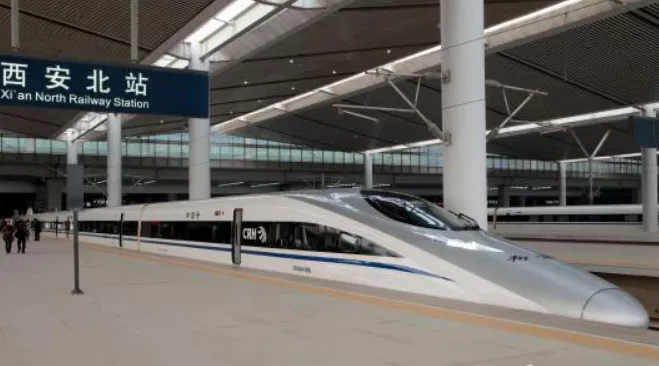
Why It’s the Best Choice
-
Time Efficiency: With a journey time of 4.5 to 5.5 hours, you save a full day compared to the bus or older trains. Even when compared to flying, the train is often faster "door-to-door" because you avoid the two-hour pre-flight check-in and the long commutes to remote airports.
-
Extreme Punctuality: Unlike domestic flights, which can be grounded by weather or air traffic control, the high-speed rail boasts a near 99% punctuality rate.
-
Comfort & Connectivity: Unlike the cramped quarters of an airplane, you have ample legroom, a stable 5G/Wi-Fi signal (though it can dip in tunnels), and power outlets at every seat.
- Book tickets on 12306, or by 12306 APP. Read 12306 App English Guide: How to Buy China Train Tickets, and buy a train ticket now.
Class Comparison for 2026
| Class | Layout | Why Choose This? | Approx. Price |
| Business Class | 1-2 | The Ultimate Luxury. Fully reclining "shell" seats that turn into beds. Includes lounge access and a hot meal. | ¥1,627 ($225) |
| First Class | 2-2 | The Sweet Spot. Wider seats and a significantly quieter cabin. Best for travelers who want to read or work in peace. | ¥825 ($114) |
| Second Class | 3-2 | The Best Value. Perfectly comfortable for 4 hours. You’ll be surrounded by locals, making it a great "people-watching" experience. | ¥515 ($72) |
Key Logistics for 2026
-
The "Lightning" Trains: For the fastest experience, look for G91, G55, or G87. These have the fewest stops and can clock in at exactly 4 hours and 11 minutes.
-
Departure/Arrival: You will leave from Beijing West (Beijingxi) and arrive at Xi'an North (Xi'anbei).
-
Digital Boarding: Paper tickets are a thing of the past. In 2026, your passport is your ticket. Simply scan your physical passport at the automated gates to enter the platform.
-
Booking Tip: Tickets sell out fast, especially on Friday afternoons and Sundays. Set a reminder for the 15-day booking window on the 12306 app or Trip.com. Tickets open 15 days in advance.
Pro-Tip for History Lovers: If you can, snag a window seat on the right side of the train (Seats A or F) when heading to Xi'an. As you pass through the Henan province, you are crossing the literal "Central Plain"—the heart of ancient Chinese civilization.
🧳 Pro Tip: Handling Luggage on the Bullet Train If you are traveling with large 24" to 28" suitcases, do not worry! Chinese high-speed trains have dedicated luggage closets located at the front and back of each carriage. Space is on a first-come, first-served basis, so try to queue early at the Beijing West boarding gate to secure a spot for your oversized bags. Smaller carry-ons can easily fit on the overhead racks above your seat.
For more information about baggage carrying, please refer to this guide: China Train Luggage Policy: Allowance & Prohibited Items
Option 2: Overnight Sleeper Train — A Cultural Experience
While the high-speed train is a marvel of the future, the Overnight Sleeper (Z and T-class trains) is a love letter to the past. For a history buff, this is the most atmospheric way to travel—mimicking the slower, rhythmic journey of the old explorers.
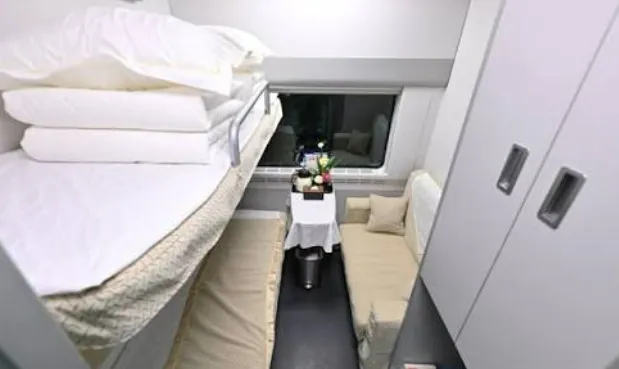
Why Choose the Sleeper Train?
-
Arrival at the Heart of History: Unlike the high-speed trains that arrive at the suburban North Station, overnight trains pull into the Xi'an Railway Station. When you step off the train, you are standing directly in front of the Ming Dynasty City Walls.
-
A "Time Machine" Atmosphere: There is a specific romance to watching the lights of Beijing fade away and waking up to the mist-covered plains of central China. It feels less like a commute and more like an expedition.
-
Saves Time & Money: You combine your transport and accommodation costs into one ticket, effectively "gaining" a full day of sightseeing in Xi'an.
2026 Cabin Options & Pricing
| Class | Layout | Experience | Approx. Price |
| Soft Sleeper | 4-berth (Closed door) | The Historian’s Choice. Lockable door, more privacy, and a quiet environment to read up on the Terracotta Army. | ¥415 ($58) |
| Deluxe Soft Sleeper | 2-berth (Closed door) | The Emperor’s Choice. Only available on select Z-trains. Includes a private sofa and sometimes a private sink/toilet. | ¥800+ ($110+) |
| Hard Sleeper | 6-berth (Open alcove) | The Local Experience. No door and less privacy, but great for "people-watching" and seeing how modern Chinese families travel. | ¥270 ($38) |
Top Train Recommendations for 2026
For the best schedule, look for the Z-Series (Direct Express) trains. They are the fastest of the "slow" trains and generally have better facilities.
-
Train Z19:
-
Departure: ~20:40 (Beijing West)
-
Arrival: ~08:30 (Xi'an Station)
-
Why: This is the "Classic" route. It gives you a full evening in Beijing and lands you in Xi'an just in time for a traditional breakfast of Yangrou Paomo.
-
-
Train Z151:
-
Departure: ~16:00 (Beijing West)
-
Arrival: ~03:45 (Xi'an Station)
-
Note: Only choose this if you have a hotel that allows early check-in, as arriving at 4 AM can be tricky!
-
Pro-Tips for a Better Sleeper Experience
-
Lower Berth is King: When booking, try to snag a Lower Berth. It gives you a window seat and more "headroom" so you don't have to climb a ladder.
-
Pack a "Train Kit": Even in 2026, trains can be chilly. Bring a lightweight hoodie, earplugs, an eye mask, and a portable power bank (though Soft Sleepers usually have one outlet per cabin).
-
Dining: Most Z-trains have a dining car serving simple Chinese meals like Kung Pao Chicken or fried rice. It’s a great place to sit with a tea and watch the world go by.
Warning: These tickets are incredibly popular with both locals and tour groups. In 2026, you should book exactly 15 days in advance via the 12306 app or Trip.com.
Our China Sleeper Trains: Hard, Soft & First Class Guide will help you learn more about sleeper trains when travel in China.
Option 3: Flying — Fast but Often Inconvenient
While flying is the fastest way to physically cover the distance between Beijing and Xi'an, for a history buff, it often feels like the most "sterile" and logistically taxing option. In 2026, it is primarily recommended for those connecting directly from an international flight.
Here is why flying is often considered the "inconvenient" choice compared to the rail:
1. The "Total Travel Time" Trap
On paper, the flight is only 2 hours and 15 minutes. However, the math changes when you factor in the "door-to-door" reality:
-
Transit to Airport: 1–1.5 hours (Beijing airports are far from the city center).
-
Security & Check-in: 2 hours (Strict requirements for domestic flights).
-
The Flight: 2.25 hours.
-
Arrival at Xi'an: 1 hour (Xi'an Xianyang Airport is 47km from the City Wall).
-
Total: ~6.5 hours.
Compare this to the high-speed train, which takes ~4.5 hours and departs from the more central Beijing West station.
2. Punctuality & Weather
In 2026, China’s airspace remains some of the busiest in the world.
-
Flight Delays: Common due to air traffic control and summer thunderstorms.
-
The Train Advantage: High-speed rail operates on an elevated, dedicated track and is virtually immune to weather, boasting a 99% on-time rate.
3. The "View from 30,000 Feet"
For a history lover, the journey is about the landscape.
-
Flying: You see clouds and a hazy grid of cities.
-
Train: You witness the transition from the North China Plain to the loess plateau of Shaanxi—the literal heartland of ancient Chinese agriculture and warfare.
2026 Flight Quick Facts
| Feature | Details |
| Airports | Beijing Capital (PEK) or Daxing (PKX) → Xi'an Xianyang (XIY) |
| Daily Flights | Over 70 departures per day (highly frequent). |
| Key Airlines | Air China, China Eastern, Hainan Airlines. |
| Typical Cost | ¥600–¥1,200 ($85–$170), though deep discounts exist off-season. |
When Should You Actually Fly?
Despite the inconveniences, flying is the right choice if:
-
Direct Connection: You are arriving at Beijing Capital or Daxing from an international flight and want to transfer immediately without going into the city.
-
Point Loyalty: You are a frequent flyer with Air China or China Eastern and want to use/earn miles.
-
Last-Minute Travel: During peak holidays (like Golden Week), high-speed train tickets sell out in minutes. Flights are often available longer (though at a higher price).
Option 4: Long‑Distance Bus / Coach — The "Old School" Adventure
In 2026, taking a bus from Beijing to Xi’an is the ultimate "off-the-beaten-path" choice. While the high-speed rail has made this mode of transport nearly obsolete for the average tourist, it remains a gritty, authentic option for those who want to see the "unfiltered" side of China.
Why Choose the Bus?
-
Spontaneity: Unlike trains, which can sell out weeks in advance, you can almost always walk into a bus station and find a seat for the same day.
-
The "Gritty" Experience: You’ll be traveling with local migrant workers, small-town traders, and students. It’s a sensory experience—complete with roadside rest stops and classic Chinese ballads playing over the speakers.
-
Cost: It is often the cheapest possible way to make the trip, sometimes costing as little as ¥150–¥200 ($21–$28).
The Reality of the Journey
-
Duration: Expect a grueling 13 to 17 hours. While the distance is $1,100\text{ km}$, buses are subject to highway traffic, weather, and mandatory rest stops for the drivers.
-
The Sleeper Bus: These buses feature three rows of narrow, stacked bunks.
Warning for History Buffs: If you are over $180\text{ cm}$ (6 feet) tall, these bunks will be a tight squeeze. You’ll spend the night with your knees bent!
-
Amenities: Don't expect onboard Wi-Fi or modern toilets. Restrooms are usually at highway service stations (which are a "historical experience" in their own right—bring your own tissues).
Logistics for 2026
-
Departure: Most long-distance buses leave from the Liuliqiao Passenger Transport Terminal (六里桥客运主枢纽) in southwest Beijing.
-
Booking: Foreigners often cannot book bus tickets online easily through English apps. Your best bet is to go to the station with your passport or ask your hotel concierge to help you book via a Chinese app like Ctrip or Qunar.
-
Language: A translation app is essential. Bus station staff rarely speak English, and signs are predominantly in Mandarin. (Read related guide: Best Translation Apps for China)
Comparison: Bus vs. Train (2026)
| Feature | Long-Distance Bus | Overnight Train (Z/T) |
| Comfort | Low (Cramped bunks) | Moderate (Standard beds) |
| Reliability | Variable (Traffic/Weather) | High (On-time) |
| Ease of Booking | Walk-in availability | Must book 15 days ahead |
| Social Factor | Very Local | Mix of tourists & locals |
Final Verdict for History Lovers
-
Take the Bus if: You are an extreme budget traveler, you missed out on all train tickets during a public holiday, or you want a "story to tell" about the rawest form of Chinese travel.
-
Avoid the Bus if: You value sleep, have a tight schedule, or prefer the dignity of a train seat.
Option 5: Private Car or Rental — The "Historical Road Trip"
For a true history buff, the 1,100km between Beijing and Xi'an isn't just empty space—it’s the cradle of Chinese civilization. While a train whisks you past these sites in hours, a private car or rental allows you to turn the journey into a 3-to-4-day expedition through China's "Ancient Heartland."
1. Hiring a Private Driver (The Chauffeur Experience)
In 2026, this is the ultimate luxury for history enthusiasts who want to avoid the stress of Chinese traffic while maintaining total flexibility.
-
The Cost: Expect to pay between ¥3,500–¥5,000 ($480–$690) for a one-way multi-day trip, including fuel and tolls.
-
The Logistics: You can find reliable drivers through platforms like The Beijinger, DelightCar, or specialized travel agencies.
-
Why it Works: Most drivers are happy to wait while you spend four hours exploring a remote temple. They handle the "aggressive" highway driving while you focus on your history books.
2. Self-Driving (The Explorer’s Path)
Thanks to updated 2026 regulations, it is easier than ever for short-term visitors to drive in China.
-
Temporary License: You can now apply for a Provisional Driving Permit (valid for 3 months) at major airports like Beijing Daxing (PKX) or Capital (PEK) by presenting your passport and home country's license with a certified translation.
-
Rental Cost: A standard sedan typically costs ¥250–¥450 ($35–$62) per day via the Trip.com app or Zuzuche. (Rent a Car in China: Foreigner Guide & Temporary License, read this and learn to rent a car now.)
-
The Drive: The G5 (Beijing-Kunming Expressway) is world-class, but be prepared for heavy truck traffic and complex interchanges.
The "Must-Stop" Historical Itinerary
If you choose the road, do not drive straight through. Break the trip into these legendary stops:
| Stop | Historical Significance | Suggested Time |
| Datong | Home to the Yungang Grottoes (UNESCO) and the "Hanging Temple" built into a cliffside. | 1 Day |
| Pingyao | The best-preserved Ming-dynasty walled city in China; the birthplace of Chinese banking. | 1.5 Days |
| Wang Family Courtyard | A massive "folk Forbidden City" that showcases the wealth of Shanxi merchants. | 3 Hours |
| Hukou Waterfall | The yellow, roaring heart of the Yellow River, central to Chinese identity. | 2 Hours |
Pro-Tips for the Road
-
One-Way Drop-off Fees: Most rental companies charge a significant "return fee" (up to ¥2,000) if you pick up in Beijing and drop off in Xi'an. Check this before booking.
-
Navigation: Google Maps is unreliable. Use Apple Maps (which uses AutoNavi data) or Amap (Gaode) for the most accurate lane guidance and speed camera alerts.
-
The "Service Area" Culture: China’s highway service areas in 2026 are surprisingly modern. They often have decent local food, clean restrooms, and even small museums dedicated to the local region.
Side-by-Side Comparison Table
| Transport Option | Duration (Approx.) | Est. Cost (one-way) | Main Hubs | The "History Buff" Perspective |
| High-Speed Train (G-Series) | 4.5 - 5.5 Hours | $72 - $225 (¥515 - ¥1,627) | Beijing West → Xi'an North | The "Time Machine": Slices through the North China Plain at 350km/h. Perfect for those who want to maximize their time at the historical sites rather than on the road. |
| Overnight Sleeper (Z/T/D Series) | 11 - 13 Hours | $38 - $75 (¥270 - ¥540) | Beijing West → Xi'an Station | The Nostalgic Classic: Arrives at the station located directly in front of the Ancient City Wall. Waking up to the sight of 14th-century fortifications is a bucket-list experience. |
| Flight | 2.2 Hours (Air only) | $85 - $250 (¥600 - ¥1,800) | PKX/PEK → XIY | The Modern Shortcut: Quick in the air, but airport transit and security often make total time equal to high-speed rail. Recommended only for direct international transfers. |
| Long-Distance Bus | 13 - 16 Hours | $25 - $40 (¥180 - ¥280) | Liuliqiao → Xi'an | The Gritty Local: A raw, unfiltered view of the highway landscape. Rare for tourists in 2026; only for extreme budget travel or peak holiday emergencies. |
| Private Car or Rental | 10 - 12 Hours (Direct) | $400+ (Total car/tolls) | Door-to-Door | The Grand Expedition: The only way to stop at Pingyao Ancient City or Yungang Grottoes en route. Turns a commute into a 3-day civilization tour through Shanxi province. |
Final Verdict: Which one to book?
-
Choose the High-Speed Train if you want to see the Terracotta Warriors on the same day you leave Beijing. It is the gold standard for efficiency and comfort in 2026.
-
Choose the Overnight Sleeper if you want to save on a hotel night and enjoy a romantic, "slow-travel" entry into the old capital at dawn.
-
Choose a Private Car/Rental if you have 2–3 extra days to explore the UNESCO sites of Shanxi province (like the Qiao Family Compound or Pingyao) along the way.
7-Day "Two Capitals" Historical Pilgrimage
To truly appreciate the transition from the Imperial Grandeur of Beijing to the Ancient Foundations of Xi'an, a 7-day itinerary allows you to breathe in the history rather than just checking off landmarks.
Here is a sample "Chronicles of Power" itinerary designed specifically for history buffs.
Phase 1: The Imperial Apex (Beijing)
-
Day 1: Arrival & The Spirit of Old Beijing
-
Arrive in Beijing and settle into a traditional Hutong Boutique Hotel (like those in the Shichahai area).
-
Evening: Walk through the Nanluoguxiang Hutongs to see the 800-year-old urban layout of the Yuan Dynasty.
-
-
Day 2: The Forbidden Heart
-
Morning: Tiananmen Square followed by the Forbidden City. Focus on the Treasure Gallery to see the actual artifacts of the Qing emperors.
-
Afternoon: Climb Jingshan Park for the iconic "birds-eye" view of the palace's golden roofs.
-

-
Day 3: The Celestial & The Strategic
-
Morning: Temple of Heaven. Arrive early (7:30 AM) to see retirees practicing Tai Chi, much like the ancient communal rites.
-
Afternoon: Mutianyu Great Wall. Hike the watchtowers to see the Ming-era military engineering designed to protect the capital from the north.
-
-
Day 4: The Summer Retreat & The Leap
-
Morning: Summer Palace. Explore the Long Corridor and take a dragon boat across Kunming Lake.
-
Afternoon: Take the High-Speed Train (G-Series) from Beijing West. Watch the landscape change as you head toward the Yellow River basin.
-
Phase 2: The Ancient Cradle (Xi'an)
-
Day 5: The Silent Army
-
Morning: The Terracotta Army. Spend at least 3 hours here. Don't miss Pit 2 for the specialized military units.
-
Afternoon: Huaqing Hot Springs. This is the site of Tang Dynasty imperial baths and the famous "Xi'an Incident" of 1936.
-
-
Day 6: The Golden Age of Tang
-
Morning: Shaanxi History Museum. This is arguably the best museum in China for ancient history (Han and Tang gold/silverware).
-
Afternoon: Big Wild Goose Pagoda. Learn about the monk Xuanzang’s journey to India that inspired Journey to the West.
-
Evening: Grand Tang Everbright City. A vibrant, neon-lit pedestrian street that recreates the cosmopolitan "Vibe" of the Tang Dynasty.
-
-
Day 7: The Fortress & The Silk Road
-
Morning: Xi’an Ancient City Wall. Rent a bicycle and cycle the full 14km loop for a perspective on Ming-era urban defense.
-
Afternoon: Muslim Quarter & Great Mosque. Explore the 1,300-year-old intersection of Islamic culture and Chinese architecture, the literal end-point of the Silk Road.
-
Evening: Final flight or train departure.
-
- How to Get to the Terracotta Warriors from Xi'an will help you a lot when you plan to visit Terracotta Warriors

Summary Table of Historical Epochs
| Location | Primary Era | Key Insight |
| Beijing | Ming & Qing (1368–1912) | Centralized power, absolute imperial authority, and vertical majesty. |
| Xi'an | Qin, Han & Tang (221 BC–907 AD) | Formative unification, Silk Road trade, and international cosmopolitanism. |
Practical 2026 Travel Tips for International Visitors
To ensure your journey from the Ming/Qing grandeur of Beijing to the ancient Han/Tang roots of Xi’an is seamless in 2026, here is the essential "Survival Kit" for international visitors.
1. Visa-Free Entry (2026 Policy)
As of early 2026, China has extended its unilateral visa-free policy through the end of the year.
-
The "Golden Ticket" (15–30 Days): Citizens of over 40 countries (including Germany, France, Italy, Spain, Australia, and Sweden) can enter visa-free for up to 15 or 30 days for tourism.
-
144-Hour Transit: If your country isn't on the unilateral list, you can still visit Beijing and Xi’an visa-free if you are transiting to a third country (e.g., London → Beijing → Tokyo) and stay within the designated region for 6 days.
- China Tourist Visa (L-Visa) Guide: Requirements, Application Steps, and the 240-Hour Transit Rule, all you need to know before travel to China are here.
2. The Digital Wallet (Non-Negotiable)
Cash is rare and foreign credit cards are seldom accepted at small shops. You must set these up before you land:
-
Alipay & WeChat Pay: Download both. You can now link your Visa or Mastercard directly to these apps.
-
Pro Tip: Alipay is generally easier for foreigners to verify with a passport.
-
The 3% Rule: Transactions under ¥200 (~$28) are usually fee-free; above that, a 3% fee typically applies.
3. Connectivity & The "Great Firewall"
Google, Maps, Instagram, and WhatsApp are blocked on local Wi-Fi.
-
eSIM (Recommended): Use a provider like Holafly or Nomad. Because these route data through foreign servers, they often bypass the firewall automatically, giving you access to Google and WhatsApp without a separate VPN.
-
VPN: If you use a local SIM, install a reputable VPN (like Astrill or Let's VPN) before you enter China. You cannot download them once you are inside the firewall.
4. Essential Navigation Apps
-
Apple Maps: If you have an iPhone, this is your best friend. It is the only Western map app that works accurately and in English in China.
-
Amap (Gaode): The local gold standard. Even if you don't speak Chinese, it’s great for showing a taxi driver exactly where you want to go.
-
DiDi: Found inside the Alipay app. It’s China’s Uber. You can type destinations in English, and the app translates your messages to the driver.
5. Booking Trains like a Local
-
12306 App: The official China Railway app now has a robust English version. You can register with your passport and pay with your linked International Card/Alipay.
-
Passport = Ticket: In 2026, there are no paper tickets. Your booking is tied to your passport. Simply scan your physical passport at the "Manual Lane" or the digital gates to board.
Frequently Asked Questions (FAQ)
Q1: Is the high-speed train better than flying from Beijing to Xi’an?
A: For most travelers, yes. While flights are shorter in the air, the G-series high-speed train often wins in total door-to-door time, comfort, and reliability. Trains depart from and arrive closer to city centers, have fewer delays, and offer a much smoother travel experience.
Q2: How long does the high-speed train take?
A: Most G-series trains take 4.5 to 6 hours, depending on the number of stops. This makes it the most efficient and stress-free option for travelers with limited time.
Q3: Do I need a Chinese ID to buy train tickets?
A: No. Foreign travelers can book tickets using a passport.
Q4: How do I handle my luggage if I take the overnight train?
A: Overnight trains have dedicated luggage racks at the end of each car and space under the lower berths. However, if you have very large suitcases (over 28 inches), the High-Speed Train is much easier, as it has more modern, spacious overhead bins and dedicated luggage closets.
Q5: Is the high-speed train scenery worth a window seat?
A: Yes. While much of the route is flat farmland, the transition into Henan and Shaanxi provinces offers views of the Loess Plateau and the Yellow River basin—the literal "Cradle of Chinese Civilization." Request Seat A or F for a window view.
Q6: Do I need to book Shaanxi History Museum tickets in advance?
A: Absolutely. As of 2026, the Shaanxi History Museum is one of the hardest tickets to get in China. They are released 3 to 7 days in advance on their official WeChat mini-program and often sell out within minutes.
For the ultimate history-focused trip in 2026, we recommend the High-Speed Train (G-Series) for its balance of comfort and views of the Central Plains. However, if you have the time, the "Heritage Detour" via Datong and Pingyao is the most rewarding way to see the depth of China's cultural evolution.
No matter how you get there, the moment you see the sunset over the Xi'an City Walls, you'll know the journey was worth every mile.