Planning to drive in China? A complete 2026 guide for foreigners on how to rent a car, get a Temporary Driving Permit (TDP), and pay the security deposit.
However, let’s start with a crucial reality check: Self-driving in China is challenging.
-
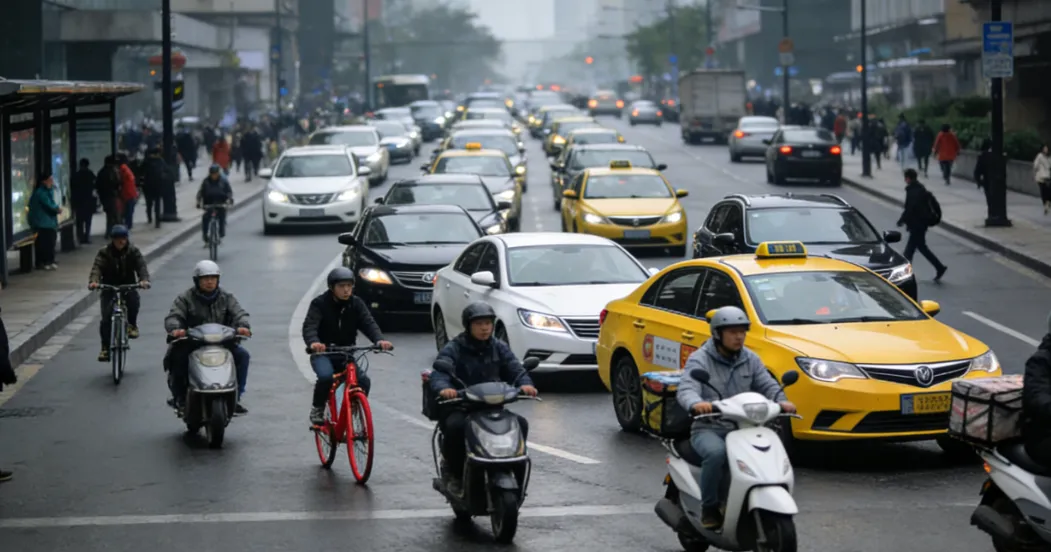
The Traffic Chaos: Traffic flow can be aggressive, unpredictable, and often ignores traditional right-of-way rules. Pedestrians, cyclists, and electric scooters dart out unexpectedly.
-
The Licensing Hurdle: China has a notoriously strict and non-reciprocal licensing system. Your license from home, even with an International Driving Permit (IDP), is ILLEGAL for use here.
-
The High-Tech Surveillance: China is covered in high-definition traffic cameras that monitor every lane change, speed infraction, and illegal turn.
🚨 Mandatory Warning: Do not attempt to drive or rent a car in China without a legally recognized Chinese Temporary Driving Permit (TDP) or full license. Doing so is not only illegal but may void your insurance and lead to serious consequences.
📌Can You Rent a Car in China?
-
The Short Answer: Yes, but not with an International Driving Permit (IDP) or your home license alone.
-
The Requirement: You must first obtain a Temporary Driving Permit (TDP) upon arrival at a Vehicle Management Bureau or major airport.
-
The Deposit Hurdle: Most local Chinese rental companies require a massive deposit (up to $4,000 USD) and often do not accept foreign Visa or Mastercards for the hold. You will likely need a UnionPay card or use an international agency like Hertz/Avis.
-
Navigation: Google Maps does not work well. You must use Chinese apps like Amap (Gaode) or Baidu Maps.
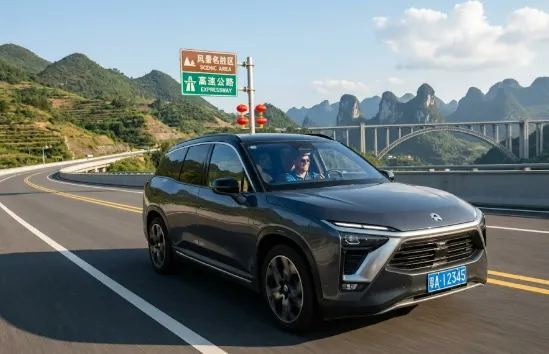
1. The Legal Foundation: Obtaining Your License to Drive in China
Before you even look at a rental company website, you must secure the proper legal authorization to drive.
Why Your Home License and IDP Are Useless
China does not recognize the International Driving Permit (IDP) or any driving license issued outside its borders. The IDP is merely a translation document; since China is not a signatory to the relevant UN conventions, the document has no legal standing here.
Your Two Legal Options for Driving in China
|
Option |
Who It's For |
Validity |
Key Requirements |
|---|---|---|---|
|
Temporary Driving Permit (TDP) |
Short-term visitors and new residents. |
Up to 1 year, tied to visa/permit validity. |
Foreign license, Chinese translation/notarization, medical certificate. |
|
Full Chinese Driver’s License |
Long-term residents (holders of a residence permit). |
6 years (initial validity). |
Foreign license, medical exam, written theory test (must pass). |
For the vast majority of short-term car renters, the TDP is the correct and only path.
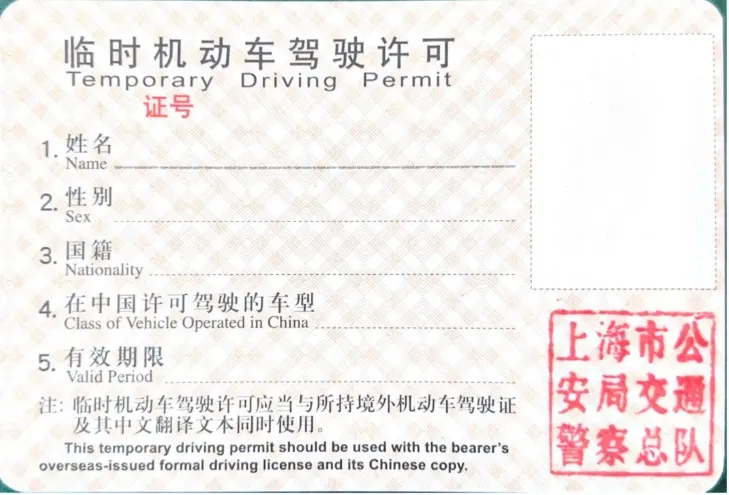
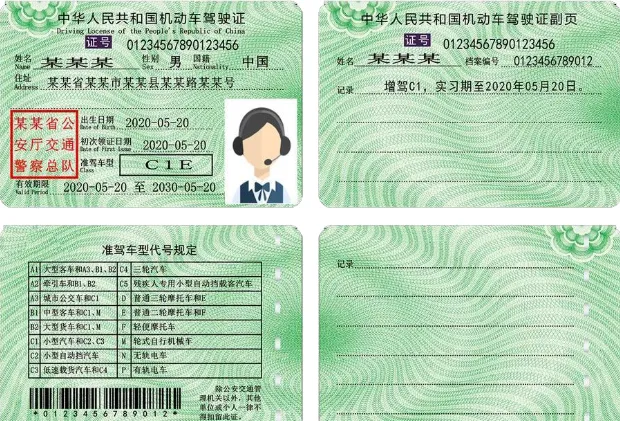
related guide - How to Get a China Driver's License
2. Temporary Driving Permit Acquisition: The 3-Step Legal Process
This section covers the sequential steps required to legally obtain your Temporary Driving Permit (TDP), which grants you the authorization to drive in mainland China.
The Temporary Driving Permit (TDP) is the golden ticket for foreigners who want to drive legally.
2.1. Eligibility and Scope
-
Applicable Visas/Permits: TDPs are issued to individuals holding a valid foreign license and a valid Chinese entry document, including: Tourist Visa (L), Business Visa (M), or Work/Residence Permit (Z/R).
-
Permitted Vehicle Class: The permit is typically restricted to Class C1 (Small Passenger Vehicles), which covers both automatic and manual small cars.
2.2. Validity and Restrictions
-
Validity Period: The TDP is issued for a specific duration (typically 3, 6, or 12 months), but can never exceed the validity period of your current Chinese visa or residence permit.
-
Cross-Province Driving: The TDP allows you to drive across provincial borders (✔ permitted). However, some rental companies may impose their own contractual restrictions.
-
Application Location: Vehicle Management Bureau (VMB) / Vehicle Administration Office (VAO) (Chēguǎnsuǒ) or selected major international airports.
2.3. Required Documents (The Crucial Checklist)
-
Valid Passport and Chinese Visa (Originals and copies).
-
Valid Foreign Driver’s License (Originals and copies).
-
Mandatory Chinese Translation/Notarization: Your foreign license must be officially translated and stamped.
-
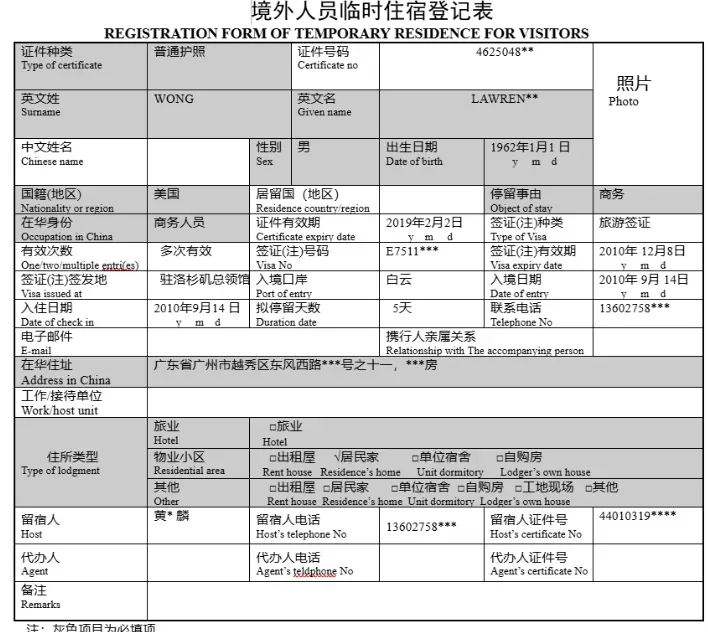
Temporary Residence Registration Form: A temporary residence permit from your hotel or local police station.
-
Physical/Medical Examination: A quick sight test.
2.4. Crucial Step: The Official Translation Requirement
The translation of your foreign license is not a simple DIY job. For your translation to be accepted by the Vehicle Management Bureau (VMB), it must meet specific official standards:
-
Authorized Translation Sources: The VMB typically only accepts translations done by agencies recognized by the government, including:
-
Notarial Offices (公证处): This is the most common and safest route. A notarized translation guarantees acceptance.
-
VMB-Affiliated Translation Centers: Many major VMB locations have an in-house or authorized partner office nearby (ask the VMB staff for their recommended agency). Using them ensures the translation meets their exact format requirements. Tip: Many major international airports (e.g., Shanghai Pudong and Beijing Daxing) now offer express TDP services where the translation can be done on-site, making this the fastest option for short visits.
-
Approved Translation Companies: Certain official foreign affairs or accredited translation agencies are sometimes recognized, but this varies by city.
-
-
What to Avoid: Do not use independent translators, embassies/consulates, or simple online translation services. The document requires a specific Official Stamp (公章, gōngzhāng) and certification to be considered valid for the TDP application.
If you are planning a trip to Shanghai and need to rent a car, you can click here to check the TDP translators and application process.
Check the step-by-step tutorial below to exchange your license for a Temporary Driving Permit (TDP) or obtain a formal Chinese driver's license
3. The Rental Process: Deposit, Booking, and Pickup
This section focuses on the steps required to successfully complete the car rental transaction, including financial requirements and vehicle inspection.
3.1. Step 1: Meeting Chines e Car Rental Requirements (The Essentials)
This step focuses on the documents and financial guarantees required by the rental agency.
Essential Checklist for Pickup
You must present all three of the following at the counter:
-
Original Valid Passport.
-
Original TDP (or Full Chinese License).
-
Payment Method (See crucial note below).
Vehicle Availability and Transmission
-
Location Matters: Car rental services are primarily available in major cities, provincial capitals, and key international airports. Services are scarce or non-existent in rural areas.
-
Transmission Type: The vast majority of vehicles in rental fleets are automatic transmission. Foreign renters will find it significantly easier to secure an automatic car. Manual transmission vehicles have low availability, especially in Tier 1 cities, and require specific searching.
💰 Crucial Financial Requirement: Deposits and Payment
-
Deposit Amount & Pre-Authorization Hold: Deposits are typically very high, ranging from ¥5,000 to ¥30,000 RMB (approx. $700 to $4,200 USD), depending on the vehicle class and rental duration. This amount is usually secured via a credit card pre-authorization hold (freezing the funds), rather than an immediate charge. Note: This high deposit is designed to cover potential traffic fines, toll fees, and insurance deductibles that are processed after the car is returned.
-
Warning on Debit Cards: Many foreign debit cards or non-major foreign credit cards are unsuitable for this pre-authorization, as foreign banks may decline the cross-border deposit hold, preventing the rental.
-
-
Credit Card Acceptance (The Deposit Hurdle):
-
Domestic Companies (e.g., Shenzhou, eHi): Most major Chinese rental companies DO NOT ACCEPT foreign-issued Visa or MasterCard for the mandatory security deposit. UnionPay (银联) credit cards are far more commonly accepted by these domestic providers.
-
Visa/Mastercard Offline Acceptance: Even where acceptance is theoretically available (e.g., on some POS machines), the actual transaction success rate for Visa/Mastercard at general offline merchants in China is significantly lower than UnionPay, especially outside major Tier 1 cities. This applies to deposit transactions as well.
-
International Companies (e.g., Hertz, Avis, Europcar): International brands often DO ACCEPT foreign-issued credit cards (Visa, MasterCard, American Express, etc.) for the security deposit using the pre-authorization method. Always confirm the required card type and pre-authorization amount when booking.
-
-
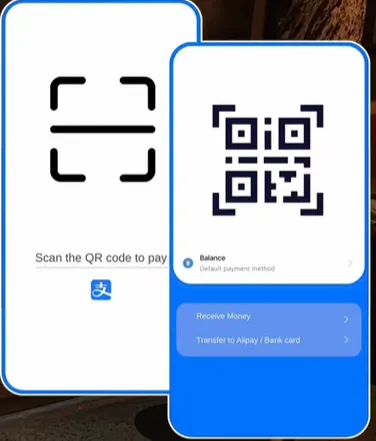
Mobile & Online Payment: Alipay (支付宝) and WeChat Pay (微信支付) are increasingly supported for rental fees and deposits, but they must be linked to a verified account (real-name authentication). For online booking via a rental App or website, the final payment or deposit linkage often requires a China mainland-issued bank card if mobile payment is not used.

-
Accepted Payment Methods for Deposit: Cash (RMB), China-issued bank card (debit or credit), UnionPay card, or Verified Mobile Payment Apps (Alipay/WeChat Pay).
-
Deposit Refund Time: Security deposits are typically refunded 30 days after the vehicle is returned, as this period allows for processing traffic violation penalties.
3.2. Step 2: The Car Rental Process (Booking to Return)
This final step involves the physical transaction, inspection, and return logistics.
-
Booking Platforms: Booking should be done well in advance, especially during Chinese holidays. You have two main options:
-
-
Local Mobile Apps: Use apps like Shenzhou (神州租车) and eHi (一嗨租车). These often offer the best prices and largest local fleets, but the app interfaces and customer support are predominantly in Chinese.
-
International Brands (Avis, Hertz, Sixt, etc.): Companies like Avis, Hertz, Budget, Enterprise, and Sixt often operate in China via local joint ventures or franchise partners. They usually offer English-language booking interfaces and are the best bet for accepting foreign-issued credit cards for the security deposit. Trade-off: They may have higher rental prices and fewer branch locations compared to large domestic rivals.
-
Aggregator Platforms: Use platforms like Ctrip (Trip.com). These platforms aggregate different local providers, simplifying the search, but the final rental agreement is still often with a local Chinese entity or partner.
-
-
-
Inspection: Critically important. Take photos and videos of every pre-existing scratch or dent upon pickup.
-
Refueling Policy (Full Tank Return): Rental agreements almost universally require the vehicle to be returned with a full tank of fuel (same level as pickup). Failing to refuel will result in charges for the missing fuel plus a significant service fee deducted from your deposit.
-
Post-Return Fines: Traffic fines (wéizhāng) are deducted from your security deposit after the vehicle is returned.
-
Mileage and Late Return Fees: Always check the daily mileage limit (e.g., 200-300km/day). Exceeding this limit incurs high charges per extra kilometer. Furthermore, returning the car even a few hours late may result in a full day's rental fee penalty.
-
Vehicle Condition Upon Return: The car must be returned in a reasonably clean condition. Excessively dirty interiors or severe exterior mud/dirt may result in a mandatory cleaning fee deducted from the deposit.
4. Driving in China: Key Traffic Rules and Safety Guidelines
A. Fundamental Rules
-
Side of the Road: Drive on the right side of the road.
-
Speed Limits: Strictly enforced by cameras everywhere!
-
Drinking and Driving: Zero tolerance.
-
Mobile Phone: Illegal to hold or use while driving.
B. Understanding Local Driving Habits
-
Vulnerable Road Users: Be highly aware of electric scooters and pedestrians; drive defensively.
-
Right Turn on Red: Permitted in many places unless prohibited by a sign. Look for a circular red sign with a right-turning arrow and a diagonal red slash (禁止右转), which explicitly prohibits the turn. Must yield to pedestrians and oncoming traffic.

- related guide - Chinese Traffic Rules
C. Insurance Coverage, Accidents, and Fines
-
Basic Insurance (Mandatory): Rental contracts include Third-Party Liability (TPL) insurance, which is legally required and covers damages/injuries to others.
-
Recommended Coverage: It is highly recommended to purchase additional insurance, specifically a Collision Damage Waiver (CDW) or Super CDW (Zero Deductible), to cover damage to the rental vehicle itself.
-
Accident Procedure: Police Report is Mandatory: In the event of an accident, calling the police immediately (122 or 110) for an official report is mandatory. Failing to obtain a police report will likely invalidate your rental insurance coverage.
-
Traffic Fine Handling: Traffic tickets (wéizhāng) are recorded electronically. Most rental companies will automatically deduct the fine plus an administrative fee from your security deposit after the rental period. This process can take a long time (several weeks) as the fines must be processed by local authorities.
D. Urban and Vehicle Restrictions
You must be aware of vehicle-specific and city-specific restrictions:
-
Highways: Access to expressways and national highways is generally permitted (✔), provided you pay the necessary tolls.
-
License Plate-Based Restrictions (限行, xiànxíng): Major cities (like Beijing and Shanghai) implement time-of-day or day-of-week restrictions based on the car's license plate number. Always check the local "xiànxíng" policy before entering core urban areas.
-
Fuel Type Restrictions: Different license plates are issued for traditional gasoline cars and New Energy Vehicles (NEV). In some cities, gasoline-fueled vehicles face tighter restrictions than NEVs. Check your rental vehicle's plate type.
-
Core City Access: Entering a city's core business district or downtown area (⚠️) is subject to the local xiànxíng rules and the license plate of the rental car. Do not assume free access.
5. Special Notes for Drivers from Certain Countries
While the Temporary Driving Permit (TDP) application process is standardized, drivers from different regions should be aware of specific implications related to their original license and driving background.
Drivers from the United States (US), Canada, and the European Union (EU)
|
Aspect |
US/Canada (English) |
EU (Varied Language) |
|---|---|---|
|
License Language |
English (Official) |
Varies (e.g., German, French, Spanish) |
|
Translation Requirement |
Official Chinese translation and notarization is mandatory for the TDP, even if the license is in English. |
Official Chinese translation and notarization is mandatory for the TDP. |
|
Driving Side |
Right-hand traffic (Same as China) |
Mostly Right-hand traffic (Same as China) |
|
Habit Adjustment |
Minimal adjustment regarding road orientation. Focus on defensive driving due to aggressive local habits. |
Minimal adjustment regarding road orientation for most countries. Focus on defensive driving. |
Drivers from Japan and South Korea
|
Aspect |
Japan / South Korea |
|---|---|
|
License Language |
Non-English (Japanese/Korean) |
|
Translation Requirement |
Official Chinese translation and notarization is mandatory. This step is critical. |
|
Driving Side |
Japan: Left-hand traffic (Opposite of China) / South Korea: Right-hand traffic (Same as China) |
|
Habit Adjustment |
Japanese drivers must consciously adapt to driving on the right side of the road and using a left-hand drive car. South Korean drivers face less orientation change. All drivers need to adjust to high traffic density and complex intersections. |
Crucial Note: Right-Hand vs. Left-Hand Drive (RHD vs. LHD)
Mainland China operates on Right-Hand Traffic (RHT), meaning you drive on the right side of the road, and all rental cars are Left-Hand Drive (LHD).
Drivers accustomed to Left-Hand Traffic (LHT) and Right-Hand Drive (RHD) vehicles (e.g., UK, Australia, Japan, India) must exercise extreme caution, particularly when making turns, judging passing distances, and navigating roundabouts. This is the single biggest driving habit adjustment for these drivers.
6. Practicalities and Pitfalls (Tips, Navigation & Logistics)
This section covers essential day-to-day tips, operational logistics, and critical misconceptions to ensure a smooth and legal driving experience in China.
A. Dispelling Common Misunderstandings (Myths)
Before you hit the road, ensure you dispel these common misconceptions about driving in China:
|
Myth |
Reality |
|---|---|
|
1. The IDP (International Driving Permit) is a Valid License. |
The IDP is strictly a multilingual translation document and is not recognized as a legal driving authorization in mainland China. You must obtain a Temporary Driving Permit (TDP) or a Full Chinese License to drive legally. |
|
2. A simple, self-translated license is enough for the TDP application. |
While your license may be in English, the Vehicle Management Bureau (VMB) requires an official translation and notary stamp from a certified Chinese agency. Do not rely on personal translations or online translation services. This is a mandatory step for the TDP. |
|
3. Traffic cameras only enforce speed limits. |
China’s comprehensive surveillance network actively monitors all traffic violations, including illegal lane changes, unauthorized turns, driving in bus lanes, and running red lights. Tickets are frequent and automatically deducted from the deposit. |
|
4. Foreign credit cards are widely accepted for deposits. |
While major international cards (Visa/MasterCard) can often be used for the rental fee, they are rarely accepted for the security deposit (¥5,000–30,000). You must prepare a local payment method (UnionPay, Alipay, or WeChat Pay) for the deposit. |
B. On-the-Road Logistics
-
Navigation: Forget Google Maps
-
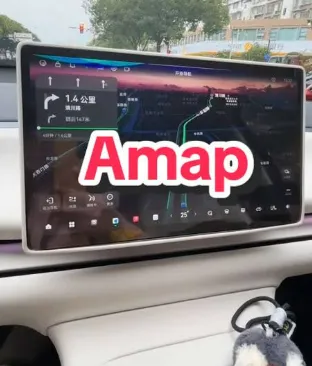
The Essential Tool: Download and use Amap (高德地图) or Baidu Maps (百度地图) for accurate, real-time navigation. These apps include real-time traffic information and camera alerts. Crucial Tip: Download the relevant city or provincial map data before you leave a stable Wi-Fi connection, as mobile signal can be unreliable on mountain roads or long stretches of highway. (How to Use Amap (Gaode Map) in English)
-
💡 Pro Tip for iPhone Users: Apple Maps If the Chinese interfaces of Amap or Baidu Maps are too difficult, your best alternative is the native Apple Maps app on your iPhone. Unlike Google Maps, Apple Maps works legally in China, functions without a VPN, and displays street names and directions in English. It is generally very accurate for major cities and highways, though Amap remains superior for highly detailed local traffic alerts.
-
-
Highway Toll Payment (ETC vs. Manual)
-
ETC (电子不停车收费): Most modern rental cars come equipped with an ETC transponder, allowing you to pass through ETC lanes quickly. The tolls are automatically recorded and usually deducted later by the rental company from your security deposit.
-
Manual Payment (人工收费): If you use a cash/manual lane, you can typically pay with cash (RMB), Alipay, or WeChat Pay. Be prepared for longer queues in these lanes, especially during holidays. Always keep a few small bills (RMB 10/20) handy as a backup.
-
-
Refueling (Gassing Up)
-
Staff Service: Gas stations are almost always full-service (staff pump the gas). Self-service is rare.
-
-
Parking in the Big City
-
The Struggle: Street parking is severely limited. Look for official underground garages (地下停车场).
-
Payment: Usually via automated machines or App/QR Code scan.
-
⚠️ Navigation Warning: Download Offline Maps!
Do not assume you will have a perfect 5G connection everywhere, especially if driving through mountainous regions, rural villages, or long stretches of highway. While still on stable hotel Wi-Fi, you must use the "Offline Maps" (离线地图) feature in Amap or Baidu Maps to download the specific city or provincial data you will be driving through. Without this, losing your signal means losing your map entirely!
C. 🆘 Accident and Emergency Procedures
In case of an emergency, follow these steps precisely:
-
Do Not Move the Vehicle: Do not move your car from its final position unless absolutely necessary (e.g., severe danger). Moving the car can complicate the police report and liability assessment.
-
Call the Authorities Immediately: 110 (Police) or 122 (Traffic Police). (Refer back to Section 5.C for critical reporting details—Police Report is Mandatory). (related guide - China Emergency Numbers)
-
Document Everything: Take comprehensive photos/videos of the scene, including license plates, damage, traffic signs, and overall position.
-
Contact the Rental Company.
7. Alternatives: Recommended Transportation Options for Most Travelers
-
High-Speed Rail (G-Trains): Fastest way to cover long distances.
-
Didi (Ride-hailing): Uber-like convenience; affordable within cities.
-
Private Driver/Car Charter: Offers total itinerary freedom without the driving stress.
8. Frequently Asked Questions (FAQ)
Q: Can I drive in Hong Kong or Macau with my TDP?
A: No. Hong Kong and Macau require separate permits.
Q: How long does it takes to get a TDP?
A: If all documents are prepared, actual processing time at the VMB can be as fast as one to three hours. Tip: Applying at a major international airport that offers express services is often the fastest route.
Q: What happens if I drive without a valid license/TDP?
A: You will face hefty fines, vehicle detention, and potentially administrative detention. Do not risk it.
Q: Can I drive in China with an international driving permit (IDP)?
A: No. International Driving Permits are not recognized in China. Even if your IDP is valid in other countries, it cannot be used to drive legally in mainland China.
Q: Do rental cars have GPS or only Chinese navigation?
A: Most rental cars have built-in screens, but the navigation software will be Chinese-only (Baidu/Amap).
Q: Can I use my foreign credit card (Visa/MasterCard) for the rental car deposit?
A: Generally, no. Most major domestic rental companies in China (like Shenzhou and eHi) do not accept foreign-issued Visa or MasterCard for the large security deposit (usually ¥5,000–30,000 RMB). You must be prepared to use a Chinese-issued bank card, UnionPay card, or a verified mobile payment app (Alipay/WeChat Pay).
Q: Do they drive on the left or right side of the road in Mainland China?
A: China operates under Right-Hand Traffic (RHT) rules. This means you drive on the right side of the road, and all vehicles (including rentals) are Left-Hand Drive (LHD). Drivers from countries with Left-Hand Traffic (e.g., UK, Australia, Japan) must be cautious during the transition.
Q: How do I pay highway tolls (ETC) in a rental car in China?
A: Most modern rental cars come equipped with an ETC (Electronic Toll Collection) transponder. You can use the dedicated ETC lanes. The toll fees are automatically recorded and will typically be deducted from your security deposit by the rental company after your rental period is complete. Manual lanes accept cash or mobile payments.
Q: What happens if I get a traffic ticket or speeding fine in my rental car?
A: All fines are captured by the traffic camera network. The rental company receives the electronic violation notice. They will process the fine and automatically deduct the penalty amount plus an administrative service fee from your security deposit. This deduction process usually happens 30 days after you return the vehicle.
Q: Do I need a Chinese mobile phone number to rent a car?
A: Yes, a local Chinese mobile number is highly recommended (if not mandatory). Rental companies need a local contact number for verification and communication. More importantly, you need a Chinese number to set up and use the essential navigation apps (Amap/Baidu Maps) and mobile payment methods (Alipay/WeChat Pay), which are critical for paying tolls and parking.