The Quick Verdict on China Sleeper Trains
-
Hard Sleeper (硬卧): The budget option. Open cabins with 6 beds (3 tiers). No doors, less privacy, but great for socializing.
-
Soft Sleeper (软卧): The standard tourist choice. Private, lockable cabins with 4 beds (2 tiers). More luggage space and thicker mattresses. Highly recommended.
-
First-Class / Deluxe Sleeper (高级软卧): The luxury option (rare). Private, lockable cabins for 2 people. Features an in-room sink, sometimes a private toilet, and a sofa chair.
China's vast geography makes train travel an indispensable part of exploring the country. For journeys lasting more than six hours, an overnight sleeper train transforms a tedious transit into an efficient, comfortable experience, saving you both time and a hotel bill. But with three main classes—the Hard Sleeper, the Soft Sleeper, and the Deluxe/First-Class Sleeper—choosing the right berth can be confusing.
This comprehensive guide breaks down the differences between the three main sleeper classes in China, helping you select the perfect cabin for your budget and travel style.
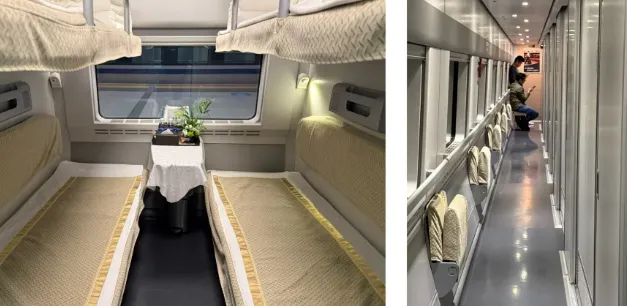
Overview of China Train Sleeper Types
China train sleeper is primarily divided into two major categories: Ordinary Trains (Slower, Z/T/K trains) and High-Speed Trains (Faster, D-category trains), with different classes available under each.
1. 🚂 Sleeper Classes on Ordinary Trains (Z, T, K)
These trains are older, slower, and usually travel long distances overnight. They are the most common for international travelers looking for a budget or classic Chinese train experience.
| Class | Chinese Name (Pinyin) | Layout | Privacy Level | Key Features |
| Hard Sleeper | Yìng Wò (硬卧) | 6 berths per compartment (2 upper, 2 middle, 2 lower). | Low (Open corridor, no door). | The most economical sleeper. Basic bedding and shared squat toilets. Can be noisy. |
| Soft Sleeper | Ruǎn Wò (软卧) | 4 berths per compartment (2 upper, 2 lower). | High (Private, lockable door). | More spacious, wider bunks, and generally quieter. Includes a small table, individual reading lamps, and power sockets in the cabin. |
| First-Class Sleeper or Deluxe Soft Sleeper | Gāojí Ruǎn Wò (高级软卧) | 2 berths per compartment (usually two lower). | Very High (Private room). | The most comfortable option on ordinary trains. Often includes a small sofa and, crucially, a private toilet and sink. Only available on select major routes. |
2. 🚄 Sleeper Classes on High-Speed Trains (D)
These are modern trains running overnight on certain high-speed lines (e.g., Beijing to Shanghai/Guangzhou). They are faster, newer, and generally offer a higher standard of comfort.
| Class | Chinese Name (Pinyin) | Layout | Privacy Level | Key Features |
| HSR Soft Sleeper (or First Class Sleeper) |
Dòng Wò (动卧) or Yī Děng Wò(一等卧) |
4 berths per compartment (2 upper, 2 lower). |
High (Private, lockable door). |
Similar to the Soft Sleeper on ordinary trains but with modern, spacious cabins, smoother ride, and usually complimentary amenities. |
| HSR Second Class Sleeper | Èr Děng Wò (二等卧) | 6 berths per semi-private compartment. | Medium (May have curtains, but typically no lockable door). | An affordable option for high-speed overnight travel. Modern facilities and individual USB ports/lights. |
| New Type HSR Sleeper | N/A | Berths arranged lengthwise along the aisle (like a capsule or pod). | Medium (Each bunk has a privacy curtain). | An innovative, modern design providing more comfortable orientation (sleeping parallel to the train's direction) and individual private space. |
| HSR Deluxe Sleeper | Gāojí Dòng Wò(高级动卧) | 2 berths per compartment. | Very High (Private room). | The highest level of luxury, often featuring a private bathroom and premium services, available only on the newest D-train models on key routes. |
🛌 Hard Sleeper (Yìng Wò - 硬卧)
The Hard Sleeper (Chinese: 硬卧; pinyin: Yìng wò, abbreviated YW) is the most popular and economical sleeper class for overnight and long-distance travel on China's ordinary speed trains (Z, T, and K series).
It offers a balance of affordability and comfort, making it a favorite among budget travelers, backpackers, and those seeking a more authentic local experience.
Here is a breakdown of the key features of the Hard Sleeper class:
1. Layout and Privacy
-
Berths per "Compartment": 6 berths stacked vertically (two sets of Upper, Middle, and Lower bunks).
-
Structure: The area is semi-open to the communal aisle. There is no door to close off the section from the rest of the carriage, leading to a much lower level of privacy compared to a Soft Sleeper.
-
Atmosphere: It is often more social and can be quite noisy, as people move through the aisle, chat, or eat at the small tables near the windows. Lights are typically dimmed around 9:30 PM or 10:00 PM.
2. Choosing Your Berth
The cost and convenience vary significantly by level:
| Berth | Price | Convenience | Headroom / Space |
| Lower Bunk (下铺) | Most Expensive | Most Convenient (Easy access, can sit up straight, best view, has a small table). | Good, you can sit up comfortably. |
| Middle Bunk (中铺) | Mid-Priced | Requires climbing. Less privacy than the top. Can often sit up slightly bent over. | Limited. You cannot sit up straight. |
| Upper Bunk (上铺) | Cheapest | Most Difficult to access (requires agility). Best for quiet/privacy while sleeping. | Very Limited. You must lie down. |
Note: Lower bunks are often used as communal seating by other passengers during the day, which can limit your privacy even further.
3. Onboard Facilities
-
Bedding: Basic clean bedding is provided for each berth, including a pillow, sheet, and quilt/blanket.
-
Toilets: Shared squat-style toilets are standard at the end of the carriage. Some newer trains may also have a Western-style seated toilet, but this is not guaranteed.
-
Water: There is a hot water dispenser (boiler) available in the carriage aisle for making instant noodles, tea, or coffee.
-
Charging: Power sockets are limited (usually only 2–4 per carriage, often near the washrooms or aisle tables), meaning you may need to wait your turn to charge devices. Bringing a power bank is highly recommended.
-
Luggage: Large luggage is usually stored on racks above the aisle seats or tucked underneath the lower bunks.
4. Pros and Cons
| Pros | Cons |
| Affordability: The cheapest sleeper option. | Low Privacy: Open to the aisle, no lockable door. |
| Authenticity: Great opportunity to observe local life and interact with Chinese travelers. | Noise: Can be loud due to foot traffic, chatter, and public announcements. |
| Save on Hotel: Combines transportation and accommodation cost. | Limited Comfort/Space: Berths are narrower than Soft Sleepers; headroom is minimal on middle/upper bunks. |
| Basic Comfort: You get a bed, which is vastly better than the Hard Seat class. | Toilets: Generally shared squat toilets, and cleanliness can vary. |
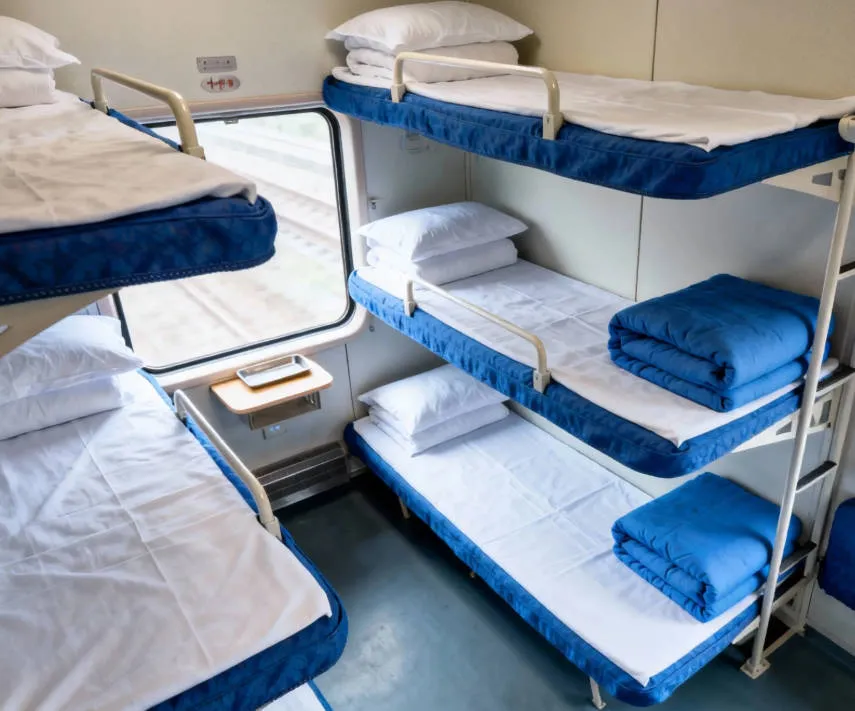
🛋️ Soft Sleeper (Ruǎn Wò - 软卧)
The Soft Sleeper (Chinese: 软卧; pinyin: Ruǎn wò, abbreviated RW on ordinary trains or sometimes WR on high-speed trains) is the middle-tier and most popular choice for travelers prioritizing comfort, security, and privacy on overnight rail journeys in China.
It offers a significant upgrade over the Hard Sleeper class and is highly recommended for international visitors, families, and those who are light sleepers.
Here is a detailed overview of the Soft Sleeper class:
1. Layout and Privacy
-
Berths per Compartment: 4 berths arranged in two sets of Upper and Lower bunks (two on each side).
-
Structure: The cabin is a fully enclosed, private room with a sliding door that can be locked from the inside. This is the biggest advantage over the Hard Sleeper, as it completely separates you from the communal aisle.
-
Privacy: High. The lockable door provides security and isolation, making the environment much quieter and allowing passengers to control the room's main light.
-
Berth Size: Berths are generally wider and longer than those in the Hard Sleeper (approx. $75\text{ cm}$ wide and $190\text{ cm}$ long), and the bedding is usually of higher quality.
-
Headroom: The vertical space between the bunks is higher (approx. $95\text{ cm}$), allowing passengers on both the upper and lower bunks to sit up straight comfortably.
2. Cabin Facilities
-
Amenities: Inside the compartment, you will find:
-
A small table between the two lower berths.
-
A thermos for hot water (which can be refilled at the carriage end).
-
A waste bin.
-
An individual reading lamp for each berth.
-
A control panel for the air-conditioning vent and sometimes the broadcast volume.
-
-
Charging: There is typically at least one electrical socket (outlet) per compartment, usually located near the small table. Newer trains may also offer individual USB ports per berth.
-
Luggage Storage: Luggage space is more secure and convenient. You can store suitcases:
-
Under the lower berth.
-
In a dedicated luggage closet (often above the door).
-
3. Carriage and Toilets
-
Toilets: Soft Sleeper carriages usually offer both Western-style seated toilets and squat toilets at the ends of the carriage, providing a more comfortable option for many travelers.
-
Wash Area: Shared wash basins (sinks) with running water (hot and cold on some trains) are available outside the toilets.
-
Location: The Soft Sleeper carriages are often positioned in the middle section of the train, closer to the restaurant car and often more conveniently located near the platform's main entrance at stations.
4. Which Trains Have Soft Sleepers?
The Soft Sleeper class is available on:
-
Ordinary Speed Trains (Z, T, K Series): These are the standard overnight trains and are the most common place to find the Ruanwo class.
-
Overnight High-Speed Trains (D Series): Modern HSR sleepers offer an updated version, sometimes called "First Class Sleeper" or "HSR Soft Sleeper," which are faster, cleaner, and may offer more modern charging options (USB ports).
5. Pros and Cons
| Pros | Cons |
| High Privacy/Security: Lockable door separates you from the aisle. | Higher Cost: Usually 1.3x to 1.5x the price of a Hard Sleeper. |
| Spacious Berths: Wider, longer, and enough headroom to sit up on all bunks. | Need a Group of Four: To guarantee a private cabin, you need to book all four berths. If you don't, you will share with strangers. |
| Quieter Environment: The closed door reduces noise from the corridor. | Lower Bunks More Expensive: Tickets for the lower berth are slightly higher priced than the upper. |
| Western Toilets: Shared Western-style toilets are often available. |
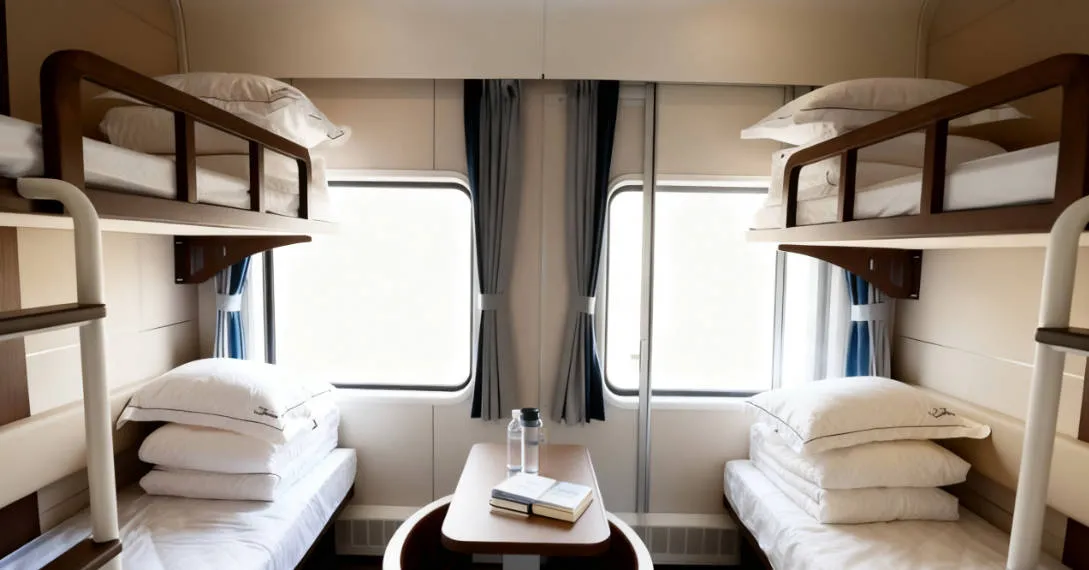
💎 First-Class / Deluxe Soft Sleeper (Gāojí Ruǎn Wò - 高级软卧)
The First-Class / Deluxe Soft Sleeper (Chinese: 高级软卧; pinyin: Gāojí Ruǎn Wò, often abbreviated GRW or SRW) is the most luxurious and expensive accommodation option on China's ordinary (Z, T, K) and some overnight High-Speed (D) trains.
It is essentially a private hotel room on rails, offering the highest degree of comfort, space, and privacy, though it is only available on a select number of long-distance routes (e.g., Beijing-Shanghai, Beijing-Lhasa).
Here is a detailed breakdown of the Deluxe Soft Sleeper experience:
1. Private Cabin and Layout
-
Berths per Cabin: 2 berths (usually one upper and one lower bunk). In some rare or newer HSR models, the cabin may only have two lower berths or a sofa and one lower berth, eliminating the need to climb entirely.
-
Privacy: Maximum. The cabin is a spacious, private, lockable room, making it ideal for couples, families with a small child, or business travelers who need a quiet, secure workspace.
-
Space and Furnishings: The cabin is significantly larger than a standard Soft Sleeper. It includes:
-
One upper and one lower berth, often wider than those in a standard Soft Sleeper (up to 85cm wide).
-
A small sofa or leisure seat.
-
A small table.
-
A closet/wardrobe for hanging clothes.
-
Luggage storage is ample, with space under the lower berth and sometimes above the door.
-
2. Exclusive Facilities (The Major Upgrade)
The defining feature of the Deluxe Soft Sleeper is the inclusion of private in-room amenities:
-
Private Toilet: Most Deluxe Soft Sleeper cabins feature a private en-suite Western-style toilet and washbasin. This is a major convenience, eliminating the need to use shared facilities.
-
Shower (on select trains): Some newer or premium routes may even offer a small shower with 24-hour hot water, providing a true luxury travel experience.
-
Electronics & Comfort:
-
Multiple Power Sockets: Plenty of outlets (220V) are available for charging devices.
-
Personal TV: A small LCD screen is often provided for entertainment.
-
Adjustable Climate Control: Passengers may have the ability to adjust the temperature within their own cabin.
-
-
Premium Bedding and Service: Bedding is usually of higher quality than the standard Soft Sleeper, and complimentary amenities like bottled water, disposable slippers, and sometimes a simple toiletry kit are provided.
3. Price and Availability
-
Cost: The Deluxe Soft Sleeper is the most expensive sleeper class, typically costing about double the price of a standard Soft Sleeper ticket.
-
Availability: This class is rare and only runs on a limited number of popular or special long-distance routes. Tickets are highly sought after and can be difficult to book, especially around peak travel periods.
4. Who Should Choose the Deluxe Soft Sleeper?
-
Couples: It offers the perfect private space for two people.
-
Business Travelers: The quiet cabin, table, and private facilities allow for work and uninterrupted rest.
-
Luxury Seekers: Those who prioritize maximum comfort, security, and the convenience of an in-room bathroom.
5. Pros and Cons
| Category | Pros | Cons |
| Comfort & Amenities | Maximum comfort and privacy. | Overkill for short journeys. |
| Large berths with high-quality bedding. | ||
| En-suite facilities. | ||
| Premium amenities. | ||
| Quiet and exclusive environment. | ||
| Attentive service. | ||
| Cost & Availability | Highest price (2-3x more than Hard Sleeper). | |
| Limited availability (only on select high-speed and long-haul trains). |
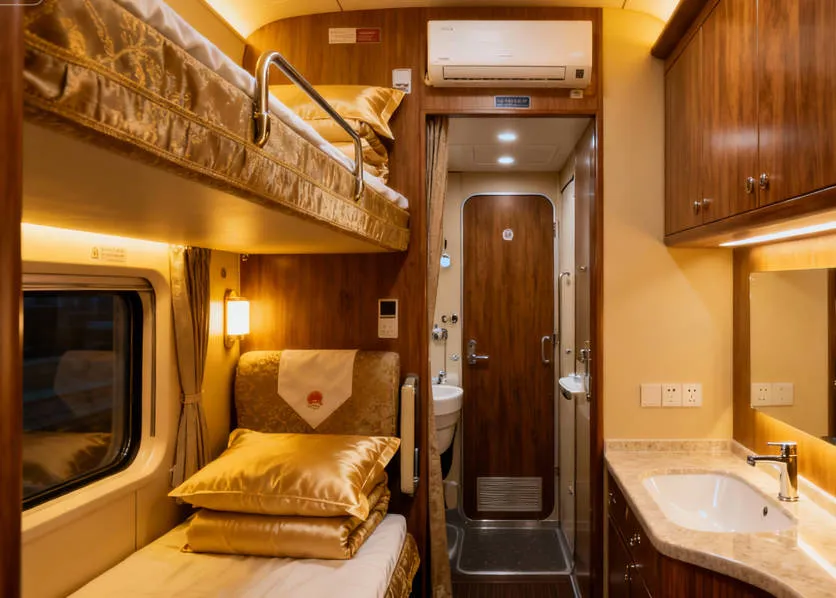
🚄 HSR Soft Sleeper (Dòng Wò - 动卧)
The HSR Soft Sleeper, or 动卧 (Dòng Wò) (literally "Moving Sleeper" or "Dynamic Sleeper," referring to the D-series trains), is the standard sleeper class on China's overnight high-speed services (D trains). It combines the speed of the HSR network with the comfort of a private compartment.
Here is a detailed breakdown of the HSR Soft Sleeper, focusing on what differentiates it from the Soft Sleeper on a normal (Z/T/K) train:
1. Key Differentiating Features (HSR vs. Ordinary)
| Feature | HSR Soft Sleeper (D-Train) | Ordinary Soft Sleeper (Z/T/K-Train) |
| Speed | Faster (runs at 200–250 km/h). | Slower (runs at 80–120 km/h). |
| Train Type | Modern CRH/EMU (Electric Multiple Unit) or Fuxinghao trains. | Older locomotive-hauled trains. |
| Noise/Vibration | Quieter and Smoother ride due to the high-speed track and modern rolling stock design. | Can be bumpier and noisier. |
| Charging | USB charging ports are often provided for each individual berth in addition to a socket for the compartment. | Typically only one socket shared per compartment. |
| Amenities | Often includes an LCD TV (with headphone jack) for each berth and better cushions/mattresses. | Usually just basic bedding and a reading light. |
2. Standard Layout and Comfort
-
Berths per Compartment: 4 berths (two upper and two lower).
-
Privacy: High. Each compartment has a lockable sliding door, ensuring privacy and a quiet environment away from the corridor.
-
Space: Berths are comfortable, typically 75 cm wide and 190 cm long. Importantly, the vertical space is ample enough for passengers to sit up straight on both the upper and lower bunks.
-
Luggage: Luggage can be stored under the lower berth, on a small rack, or in a luggage closet above the door.
-
Toilets: The HSR Soft Sleeper carriages generally provide both Western-style (seated) and squat toilets.
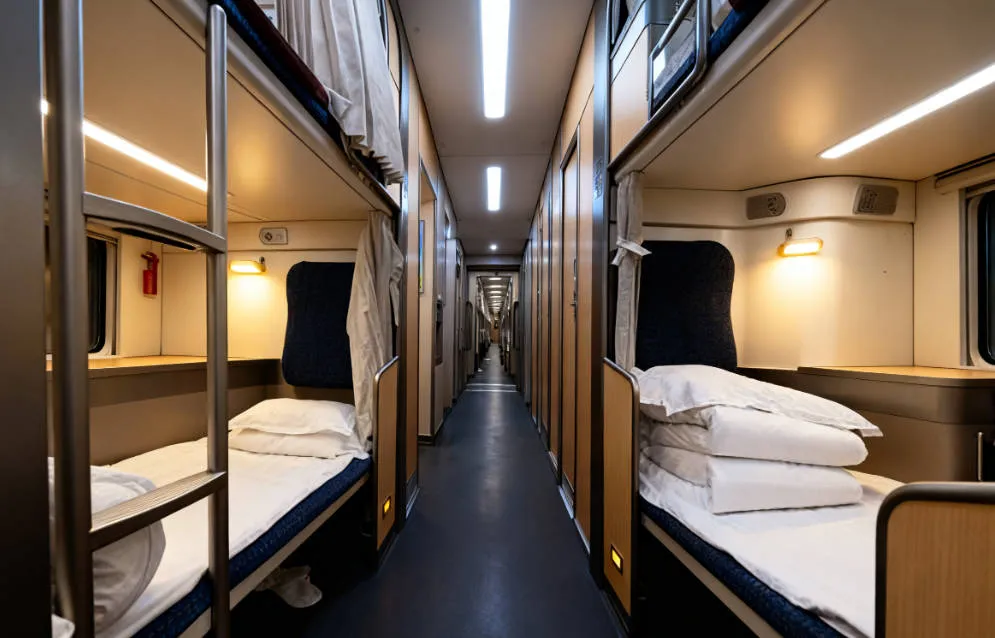
💎 HSR Deluxe Soft Sleeper (Gāojí Dòng Wò - 高级动卧)
The HSR Deluxe Soft Sleeper (Chinese: 高级动卧; pinyin: Gāojí Dòng Wò; sometimes referred to as EMU Deluxe Sleeper) is the most luxurious class available on China's overnight high-speed trains (D series).
It takes the premium features of the standard Deluxe Soft Sleeper and places them on a modern, fast, and smooth high-speed train platform, representing the pinnacle of rail luxury in China.
Here is a breakdown of its features and why it stands out:
1. Superior Cabin Layout and Comfort
-
Berths per Cabin: 2 berths (usually one upper and one lower berth). Some modern variants may even feature two lower berths only, eliminating the need for climbing.
-
Privacy & Space: Very High. It is a spacious, lockable private cabin, ideal for couples, business travelers, or anyone seeking maximum comfort and security.
-
Amenities: The cabin is well-furnished, often including:
-
A comfortable sofa or leisure seat.
-
A large wardrobe or closet for storage.
-
A small folding desk or table.
-
Premium bedding and mattresses (wider than standard berths, up to 85 cm).
-
2. Exclusive High-End Facilities
The key feature distinguishing this class is the private in-room facilities, similar to a suite:
-
Private Restroom: The cabin typically includes an en-suite Western-style toilet and a washbasin.
-
Shower: On newer HSR Deluxe Sleeper models (e.g., EMU Deluxe Sleeper), the private washroom may even include a shower with 24/7 hot water.
-
Technology: Features often include:
-
LCD TV.
-
Multiple power sockets and sometimes wireless charging pads.
-
Electric kettle for personal use.
-
Full climate control.
-
-
Service: Passengers often receive premium services and complimentary items like disposable slippers, toiletries, and sometimes a welcome snack.
3. Availability and Cost
-
Cost: This is the most expensive option on the Chinese railway network, often double the price of a standard Soft Sleeper.
-
Availability: Tickets are very limited and are only offered on select high-demand, long-haul overnight routes (e.g., Beijing-Shanghai, Shanghai-Hong Kong).
5. Why Choose HSR Deluxe Soft Sleeper?
| Reason | Detail |
| Private Bathroom | You have your own toilet and sink (and possibly a shower), which is a significant comfort advantage over all other classes. |
| Speed and Stability | You benefit from the smooth, quiet, and fast ride of the High-Speed Rail network, ensuring a better quality of rest. |
| Maximum Security | The fully enclosed, lockable cabin is the most secure and private travel option. |
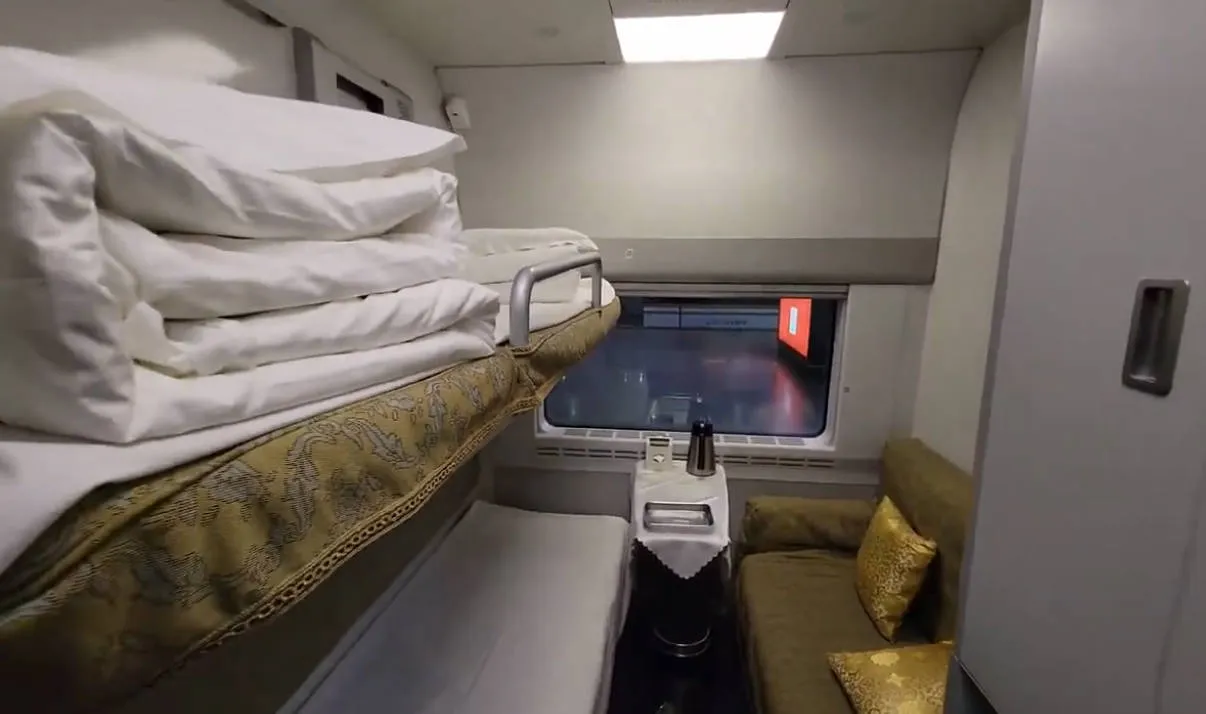
🚄 HSR First Class Sleeper (Yī Děng Wò - 一等卧)
The term "First Class Sleeper" (or 一等卧 - Yī Děng Wò) can be confusing because it is sometimes used interchangeably with or similar to the existing sleeper classes on High-Speed Rail (HSR) or Fuxing trains.
Based on Chinese rail classification and modern train services, the term "HSR First Class Sleeper" generally refers to the standard HSR Soft Sleeper (动卧 - Dòng Wò), especially when found on the newest generation of Fuxing Hao (复兴号) trains.
Here is a breakdown of why this term is used and how it relates to other classes:
1. The Common Classification (4-Berth Cabin)
The HSR First Class Sleeper is essentially the standard, comfortable, private sleeper on high-speed lines:
-
Official Equivalent: This is most frequently synonymous with the HSR Soft Sleeper (动卧 - Dòng Wò).
-
Layout: A private, lockable compartment with 4 berths (two upper and two lower bunks).
-
Key Features:
-
High Privacy: Lockable door separates the cabin from the aisle.
-
Modern Amenities: Typically includes USB charging ports and a reading light for each berth, along with a shared power socket.
-
Smooth Ride: Benefits from the high-speed rail's smooth and quiet operation.
-
Comfort: Sufficient headroom for passengers to sit up on all bunks.
-
In the newest Fuxing trains, this 4-berth, private compartment is sometimes explicitly labeled as "First Class Sleeper" to distinguish it from the "Second Class Sleeper" (which is the HSR version of the Hard Sleeper—a 6-berth, open-plan compartment).
2. The Premium Classification (2-Berth Cabin)
It is crucial to distinguish the 4-berth First Class Sleeper from the most luxurious option:
-
The Highest Tier: The true luxury cabin is the HSR Deluxe Soft Sleeper or EMU Deluxe Sleeper (高级软卧 - Gāojí Ruǎn Wò).
-
Layout: A private cabin with only 2 berths (sometimes only lower berths).
-
Premium Feature: The defining feature is the private, en-suite Western-style toilet (and sometimes a shower).
🚄 HSR Second Class Sleeper (Èr Děng Wò - 二等卧)
The HSR Second Class Sleeper (Chinese: 二等卧; pinyin: Èr Děng Wò) is the most budget-friendly option available for overnight travel on China's high-speed rail network (D-series trains).
It is essentially the modern, high-speed equivalent of the traditional Hard Sleeper (硬卧), offering HSR speed and modern facilities without the premium price of the Soft Sleeper.
Here is a detailed breakdown of what to expect in an HSR Second Class Sleeper:
1. Layout and Privacy (The Key Trade-off)
-
Layout: The carriage is divided into semi-open compartments, each containing 6 berths stacked in three tiers: Upper, Middle, and Lower.
-
Privacy: Low. Similar to the traditional Hard Sleeper, the compartments are open to the aisle and do not have a sliding door to close for privacy or sound reduction.
-
Atmosphere: It is the liveliest and potentially noisiest of the HSR sleeper options, as people walk through the aisle and socialize.
2. Comfort and Modern Amenities
While the layout is similar to the traditional Hard Sleeper, the HSR version benefits greatly from modern design:
-
Ride Quality: The ride is significantly smoother and quieter than on older trains, thanks to the high-speed track quality and the modern design of the train cars.
-
Berth Size: Berths are often slightly wider (around 60 cm) than those on ordinary trains.
-
Charging: A major improvement is the provision of individual USB charging ports and a reading lamp for each berth. This eliminates the need to fight for limited power sockets in the aisle.
-
Bedding: Basic but functional bedding (pillow and blanket) is provided.
3. Carriage Facilities
-
Toilets: Shared facilities are available at the end of the carriage. They are generally much cleaner than those on older trains and often include both Western-style (seated) and squat toilets.
-
Sinks: Shared wash basins with hot/cold running water are available outside the toilets.
-
Luggage: Luggage racks are available overhead in the aisle, and larger items can be stored under the lower bunks.
4. Pros and Cons
| Pros | Cons |
| Budget-Friendly HSR: Most affordable way to travel overnight on a high-speed train. | Low Privacy: Open compartment (6 berths) with no door. |
| Individual Charging: Each berth has its own USB port and reading light. | Limited Headroom: Especially on the middle and upper bunks, you cannot sit up straight. |
| Speed and Stability: Benefits from the fast, quiet, and smooth ride of the HSR line. | Noise Level: Can be noisy due to constant foot traffic and conversations in the open area. |
| Clean Facilities: Toilets and common areas are generally much cleaner than on ordinary Hard Sleeper trains. | Climbing: Middle and upper berths require climbing a small ladder. |
🚄 HSR New Type Sleeper (Xīnxíng Ruǎn Wò - 新型软卧)
The HSR New Type Sleeper (often simply called New Sleeper or 新型软卧 - Xīnxíng Ruǎn Wò) is a relatively new and highly innovative sleeper configuration specifically designed for certain overnight high-speed rail services (D-series trains), particularly those operating on key routes like Beijing-Shenzhen (e.g., D902/D901).
It represents a significant departure from the traditional compartment design, prioritizing individual privacy and passenger comfort during the high-speed journey.
Here is a breakdown of its unique features and benefits:
1. Unique Layout (The Defining Feature)
The most striking difference is the configuration of the berths:
-
Directional Berths: Unlike traditional sleepers where berths are perpendicular to the aisle (and thus perpendicular to the train's direction), the New Type Sleeper berths are arranged lengthwise, parallel to the aisle (and the train's running direction).
-
Individual Pods: This longitudinal arrangement effectively creates individual sleeping "pods" along the side of the carriage.
-
Privacy Curtain: Each berth is equipped with a shade curtain that passengers can draw to create a private, enclosed space, similar to a high-end hostel pod.
-
Window Access: A major advantage is that each berth, both upper and lower, is located by its own independent exterior window, giving every passenger a view.
2. Comfort and Facilities
-
Berth Dimensions: Berths are spacious, typically around 195 cm long and 75 cm wide.
-
Motion Comfort: Passengers no longer lie transverse (sideways) to the running direction of the train. Lying parallel to the direction of motion is often cited as significantly reducing the potential for motion sickness or nausea.
-
In-Berth Amenities: Each berth is a self-contained unit, equipped with:
-
A small table or shelf.
-
An independent reading lamp (often with warm and cold light options).
-
Power socket and/or USB charging port.
-
A small rack for luggage or a hanger.
-
-
Luggage Storage: Large luggage is stored underneath the lower berths, as there are no traditional overhead racks in the aisle.
3. Comparison to Standard HSR Soft Sleeper
| Feature | HSR New Type Sleeper | HSR Soft Sleeper (Dòng Wò) |
| Layout | Longitudinal (Parallel to train) with individual pods. | Transverse (Perpendicular to train) in 4-berth cabins. |
| Privacy | High (Individual curtain for each berth/pod). | High (Lockable door for the 4-berth cabin). |
| Window | Independent window for every berth (Upper & Lower). | Windows are shared by the 4-berth compartment. |
| Motion | Preferred for maximum motion comfort (reduces side-to-side rocking effect). | Standard sleeper direction (transverse). |
Availability and Booking
The New Type Sleeper is a premium, specialized product:
-
Limited Availability: This type of sleeper is only available on a few specific overnight high-speed routes.
-
Booking: When booking a ticket for a train that features both the standard Soft Sleeper (4-berth) and the New Type Sleeper, you often cannot choose the specific layout, as it is determined by the railway operator. However, the New Type Sleeper tickets are usually sold under the standard "Soft Sleeper" category.
How to Book China Train Sleeper Tickets
Tickets are typically released for sale 15 days before the date of travel. For popular routes or peak travel seasons (like Chinese New Year or National Day), you must book immediately when tickets are released.
1. Online Booking (Recommended Method)
The most convenient way for foreigners to book train tickets is through either the official channel or a trusted third-party agent.
Option A: Official Channel (12306)
-
Platform: 12306 China Railway (official website: www.12306.cn/en/ or the official mobile app).
-
Pros: Sells tickets at the official price (no service fee) and has the latest cut-off time for purchasing (30 minutes before departure).
-
Cons for Foreigners: Requires a mandatory identity verification process (which can take 3–5 days online or can be done instantly in person at a station ticket window). International credit cards do not always work, and the English interface can be clunky.
-
Best For: Travelers who have successfully verified their identity and have access to reliable payment methods (WeChat Pay/Alipay).
Option B: Third-Party Agencies (Most User-Friendly)
-
Platforms: Trip.com, Klook, Travel China Guide, or China Highlights.
-
Pros: English interface is seamless, accepts international credit cards (Visa/Mastercard), and often offers 24/7 customer support in English. They handle the booking complexity with the 12306 system for you.
-
Cons: Charges a small service fee per ticket. They may cut off booking requests earlier than the 12306 app (sometimes 1 hour before departure).
-
Best For: First-time travelers and those who want a simple, hassle-free booking experience in English. Trip.com is generally the most popular and reliable choice among foreigners.
2. Required Booking Information
Whether you use 12306 or a third-party agent, you must provide the following information exactly as it appears on your passport (due to the real-name ticketing system):
-
Full Name (Surname and Given Name(s)).
-
Passport Number.
-
Passport Expiration Date.
⚠️ Crucial Tip: Any discrepancy between the name on the ticket and your passport (even a missing middle name or typo) can result in being denied boarding. Double-check all details.
3. Selecting Your Sleeper Type
When searching for an overnight train, pay close attention to the available options:
| Train Type (Letter) | Sleeper Classes Available |
| D (Overnight High-Speed) | HSR Soft Sleeper (4-berth, standard) or HSR Second Class Sleeper (6-berth, open). |
| Z, T, K (Ordinary Trains) | Soft Sleeper (4-berth, private) or Hard Sleeper (6-berth, open). |
To book a sleeper: Simply select the desired sleeper class (e.g., "Soft Sleeper" or "Hard Sleeper") during the booking process. The system will then ask you to select your preferred bunk (Upper, Middle, or Lower), which affects the price.
4. Boarding the Train (E-Tickets)
The Chinese rail system uses electronic tickets (E-Tickets), meaning you do not typically need to pick up a paper ticket.
-
Arrive Early: Arrive at the station at least 60–90 minutes before departure for security and finding your gate.
-
Boarding: Simply proceed to the station entrance gate and then the boarding gate.
-
Use Your Passport: At the automated gates, you will scan your original, valid passport (or a combination of your passport and the QR code from the booking app) to pass through and board the train.
Essential Packing List for Sleeper Trains
Knowing what to pack for a Chinese sleeper train journey, especially the little essentials, can significantly improve your comfort, privacy, and overall experience, particularly if you are on a Hard Sleeper or an older train.
1. Documents & Safety
These items should be kept in a small, secure day bag that stays with you at your berth at all times (not in the overhead rack).
-
Passport: Essential for boarding the train (E-tickets are linked to your passport). You will need to show it several times.
-
Ticket Confirmation: A printout or digital copy of your ticket confirmation/reservation number (in case of manual checks).
-
Cash (Yuan): Essential for purchasing snacks, drinks, or instant noodles from the trolley or dining car, as mobile payment (WeChat Pay/Alipay) can be unreliable in some areas or not accepted by some vendors.
-
Small Lock: Useful if you are in a Soft Sleeper cabin and want to secure the door when sleeping, or if you want to secure your day bag to the bed frame or luggage rack (especially in a Hard Sleeper).
2. Power & Entertainment
While modern HSR trains offer charging per berth, older trains and Hard Sleepers have limited sockets.
-
Power Bank/Portable Charger: The single most important tech item. It is a vital backup as charging ports are limited or may be located far from your bunk.
-
Charging Cables & Adapter: Ensure you have the right plugs for China's standard outlet (Type A/C/I).
-
Headphones/Earphones: Absolutely essential. Use them for music, movies, or games to respect other passengers, and use noise-canceling headphones to block out carriage noise.
-
Entertainment: Books, e-reader (like a Kindle), or fully downloaded movies/TV shows on your phone/tablet. Wi-Fi can be spotty.
3. Food & Drink
Food on the train is limited (mostly Chinese) and can be expensive.
-
Water Bottle/Flask: A reusable bottle or thermal flask is vital. Trains provide free, unlimited boiling hot water at the end of the carriage for drinks and instant food.
-
Instant Noodles/Cup Soups: The classic Chinese train snack. The free hot water makes these easy and cheap to prepare.
-
Snacks: Pack your favorite crackers, nuts, dried fruit, chocolate, or a ready-to-eat meal.
-
Tea Bags/Instant Coffee: Better than the options usually sold on the train.
4. Hygiene & Comfort
Public restrooms in China generally do not provide toilet paper or hand soap, and train cleanliness can vary.
-
Toilet Paper/Travel Tissues: Must-have. Toilet paper is rarely provided on ordinary trains and may run out on HSR.
-
Wet Wipes/Hand Sanitizer: Essential for cleaning your hands and personal space, especially after using the shared restroom.
-
Small Towel/Washcloth: For washing your face at the shared sink.
-
Slippers: Bring a lightweight pair of flip-flops or comfortable slippers (disposable hotel slippers are perfect) to wear when walking to the restroom or dining car, and to avoid putting your shoes on your bunk.
-
Toothbrush, Toothpaste, Basic Toiletries: For your overnight routine.
5. Sleep Essentials
-
Eye Mask & Earplugs: Highly recommended, especially if you are in a Hard Sleeper (open carriage) or sensitive to light/noise. Lights are typically dimmed around 10 PM, but aisle lights and station lights can still be bright.
-
Comfortable Clothing/Pajamas: Change into loose, soft clothes or pajamas as soon as you settle in.
-
Lightweight Cardigan/Jacket: Sleeper carriages are air-conditioned and can sometimes get cold.
Luggage Tip: Separate Your Essentials
Since your large suitcase will likely be stored under the lower bunk or on an overhead rack, pack your overnight essentials (toiletries, pajamas, snacks, power bank) into a small backpack or day bag. Keep this small bag with you at your bunk for easy access throughout the night.
🔌 Power Outlet Survival Guide Keeping your phone charged on a 15-hour train ride is crucial!
-
Hard Sleepers: Outlets are scarce. You will usually only find one or two shared outlets in the public hallway corridor, not by your bed. Bring a high-capacity power bank (under 100Wh)!
-
Soft Sleepers: You are in luck! Every Soft Sleeper cabin typically has at least one dedicated power outlet under the small table by the window.
-
Deluxe Sleepers: These cabins feature multiple private outlets for your convenience.
Etiquette Tips for Sleeper Trains
-
Keep noise to a minimum – especially after 10 PM and before 6 AM. Avoid talking loudly or playing music without headphones.
-
Respect others’ space – don’t put your luggage on someone else’s berth. Use the overhead racks or the space under the lower berths.
-
Be mindful of the ladder – if you’re in an upper berth, avoid climbing up/down repeatedly when others are sleeping.
-
Clean up after yourself – throw away trash in the bins provided, not on the floor.
- Be friendly – a simple “ni hao” (hello) goes a long way with local passengers. Many will be curious about you and may offer snacks or chat.
Conclusion: Which Sleeper Class Is Right for You?
Choosing your train berth is a personal decision that balances budget, comfort, and the kind of experience you want.
- Go for Hard Sleeper if you’re on a tight budget and crave an authentic, social adventure.
- Choose Soft Sleeper for the perfect balance of cost, privacy, and comfort—it’s the reliable choice for most travelers.
- Indulge in First-Class Sleeper if you want a luxurious, private, and restful journey that rivals a hotel room.
No matter which you choose, an overnight train journey is a fantastic way to cover large distances in China. Pack your essentials, embrace the gentle rhythm of the rails, and enjoy the journey itself. Safe travels.
Frequently Asked Questions (FAQ)
Q: Is it safe for solo female travelers?
A: Yes, generally very safe. Thousands of people, including families and women, travel on Chinese trains every day. Soft Sleeper offers more privacy and peace of mind, but even in Hard Sleeper, the environment is public and well-patrolled by staff.
Q: Are there showers on the train?
A: No, conventional trains (with Hard/Soft Sleepers) do not have showers. Only the luxury First-Class Sleeper cabins on select D-trains have a private washbasin. Plan for a sponge bath or wait until you arrive at your hotel.
Q: Can I buy food on board?
A: Yes. There is usually a dining car (offering set meals) and attendants who push carts selling snacks, drinks, instant noodles, and boxed meals throughout the journey.
Q: How do I know which berth is mine (top, middle, bottom)?
A: Your ticket will have the berth type in Chinese: 下铺 (xià pù) for lower, 中铺 (zhōng pù) for middle, and 上铺 (shàng pù) for upper. The lower berth is the most expensive and spacious, while the upper is the cheapest and most cramped.
Q: Is the air conditioning on all night?
A: Yes, it is. It can get quite cold, so it’s wise to have a warm layer or use the provided duvet.
Related guide: China Train Luggage Policy; China Train Guide: High-Speed & Conventional Rail; 12306 App English Guide