Eating out in China can feel exciting—until you open a menu with no pictures, face a QR code you can’t read, Struggling to book a table without a local number? Anxious about navigating cashless payments? Or wondering how to find authentic spots beyond the hotel concierge's list? For many international travelers and expats, something as simple as ordering food quickly turns into a stressful guessing game. In facet, dining in China doesn’t have to be this confusing. Whether you’re visiting for the first time or living in China long-term, this guide breaks down everything you need to know—from finding reliable places to eat and booking tables online, to paying smoothly and saving money without sacrificing quality. With the right tips, eating out in China can be simple, affordable, and genuinely enjoyable.
📌 The Quick Survival Guide for Dining in China
-
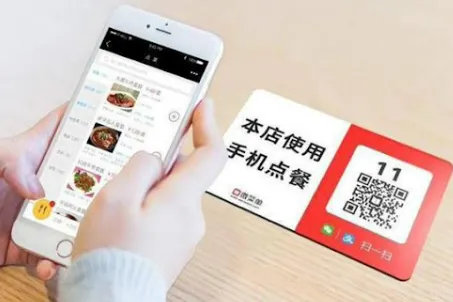
The Golden Rule: Do not wait for a waiter to bring a menu. Sit down and scan the QR code on the corner of your table using WeChat or Alipay. You will view the menu, order, and pay entirely through your phone.
-
The Must-Have App: Download Dianping (大众点评) via WeChat Mini-Programs. It is the "Yelp of China" and essential for finding good food, booking tables, and getting discounts.
-
Tipping: Do NOT tip. Tipping is not part of Chinese culture, and leaving cash on the table will only confuse the staff.
-
Payment: Ensure your foreign Visa or Mastercard is linked to Alipay or WeChat Pay before you arrive. Cash is rarely accepted at smaller, authentic eateries.
Part 1.Your Digital Toolkit: Must-Have Apps and Setups
Unlike Google Maps or Yelp, most Chinese diners rely on local apps for restaurant discovery. These platforms focus heavily on real photos, recent reviews, and discounts—making them far more useful once you know how to read them.
Before you can feast, you need the right tools. Here’s your pre-arrival checklist.
✴️The Indispensable App: Dianping
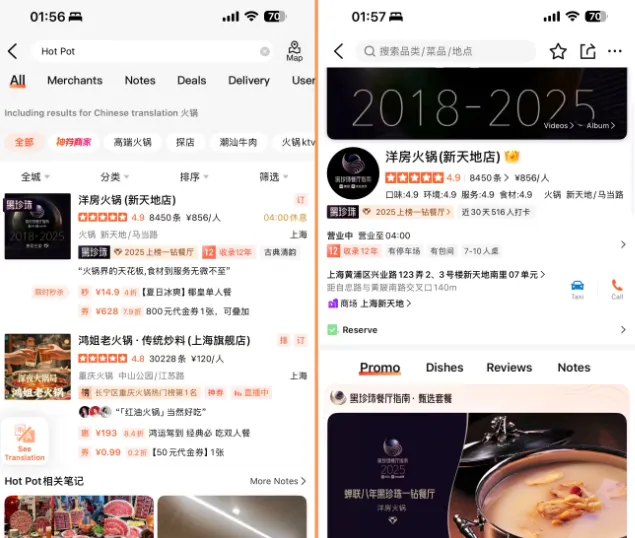
Think of Dianping (大众点评) ( iOS & Android)as a fusion of Yelp, OpenTable, and Groupon. It's the number-one platform for finding restaurants, checking reviews with real photos, and, crucially, making reservations and purchasing discounted meal deals. It’s your ultimate dining companion.
The Big Hurdle & The Solution: As many travellers note, registering for Dianping often requires a Chinese mobile number for SMS verification, which can be a barrier. The most effective workaround is to use its functionality within WeChat.
How to Access Dianping via WeChat:
-
Open WeChat and go to the "Discover" page.
-
Click "Mini Programs" and search for "大众点评" or "Dianping."
-
Access most of its core features—searching, viewing reviews, and buying deals—often with a built-in translation tool.
💡 Hack: How to Use Dianping in English Dianping does not have a native English interface. To navigate it like a pro, you must use a "Screen Translation" workaround:
-
WeChat Translation (Easiest): If you open Dianping as a Mini-Program inside WeChat, you can often take a screenshot, send it to yourself in a WeChat chat, and use WeChat's built-in "Translate text in image" feature.
-
Third-Party Screen Translators: Download an app like Baidu Translate or Microsoft Translator. Many of these apps have a "Screen Translate" widget that floats over your screen and instantly translates the Chinese app interface into English in real-time.
- Best Translation Apps for China will help you when need translate
✴️The Super-App Essentials: WeChat & Alipay
These are non-negotiable. Beyond messaging, WeChat is a portal to countless restaurant "mini-programs" for direct booking and ordering. Alipay is your primary payment tool. Before your trip:
- Download both apps .(WeChat: iOS & Android;Alipay: iOS & Android )and link your international credit/debit card. In Alipay, use the "Tour Pass" feature for a seamless setup
- Set them up before you lose access to common international services like Google Play upon arrival in China.
✴️The Practical Helpers: Translation & Maps
-
Translation Apps: Download Microsoft Translator (works reliably in China) or a reliable "screen translate" app to decipher Chinese-only menus and interfaces.
-
Map Apps: Replace Google Maps with Gaode Maps (Amap) or Baidu Maps. They show restaurant locations and often have integrated reviews. You can often switch Gaode Maps to English in its settings.
Part 2.Booking a Table: The Digital Hurdle
1.Common Reservation Methods
In China, the "phone call" reservation is becoming a relic of the past. By 2026, the ecosystem is almost entirely integrated into Super Apps. For a foreigner, understanding these four digital pathways is the key to securing a table at the city’s hottest spots.
Method 1: WeChat Mini-Programs (The "Official" Way)
Almost every reputable restaurant brand has its own "Mini-App" inside WeChat. This is usually the most accurate way to see real-time availability.
-
How to find it: Open WeChat, swipe down to reveal the search bar, and type the restaurant's name (in English or Chinese). Look for the Mini-Program (小程序) icon.
-
The Process: Look for the "Book a Table" (订座 - Dìngzuò) icon. You will select the date, time, and number of people.
-
The Catch: These often trigger a request to use your WeChat-linked phone number. If you have an international SIM, it may occasionally fail to send the SMS code.
Method 2: Dazhong Dianping (The "Yelp" of China)
Dianping is the most powerful tool for foodies. It allows you to discover, book, and even "pre-order" your signature dishes.
-
Booking Method: On a restaurant's profile page, look for the "Book" (订座) button.
-
Direct Messaging: If the "Book" button isn't available, many restaurants have a "Contact" (联系) button that opens a chat window. You can type (or paste) your request here: "Book for 2 people at 7 PM" (今晚7点两位).
-
Pro Tip: Look for the "Get a Number" (排队) button if the restaurant doesn't allow reservations. You can join the line virtually before you even leave your hotel.
Method 3: Alipay "Dining" Services
For tourists, Alipay is often more "international-friendly" than WeChat.
-
How to use: Open Alipay and search for "Koubei" (口碑) or simply "Dining".
-
Interface: Alipay has been aggressively updating its English interface. You can often find a "Restaurants" section that allows you to filter by cuisine and book tables using your linked international credit card (Visa/Mastercard).
Method 4:Third-Party English Concierge Apps
If the Chinese-only interfaces are too overwhelming, these platforms act as a bridge:
-
Trip.com (Gourmet Section): Ideal for high-end dining and hotel restaurants. It provides an English interface and handles the communication with the restaurant for you.
-
SmartShanghai / Chope / Bon App: Specifically in international hubs like Shanghai or Beijing, these apps cater specifically to expats and tourists, offering English-language booking for top-tier restaurants.
💡 Summary Table: Which Method Should You Use?
|
Method |
Best For... |
Difficulty |
|
WeChat Mini-Program |
Chain restaurants & popular brands |
⭐⭐⭐ (Needs some Chinese) |
|
Dianping App |
Local "hidden gems" & foodies |
⭐⭐⭐⭐ (High reward, all Chinese) |
|
Hotel Concierge |
Michelin-starred or high-end spots |
⭐ (Easiest / No tech needed) |
|
Alipay |
Tourists with international cards |
⭐⭐ (User-friendly) |
2.How to Choose Restaurants in China: From Street Eats to Fine Dining
⏩Types of Restaurants & Reference Cost per Person (Including International Cuisine)
|
Type |
Features |
Reference Cost per Person (RMB) |
Best For |
|
Street Food / Night Market Stalls |
Local, authentic, lively atmosphere |
¥30 – ¥80 |
Breakfast, snacks, late-night bites |
|
Local Home-Style Restaurants |
Daily dining for locals; high value and authentic flavors |
¥50 – ¥150 |
Trying regional home-style dishes |
|
Time-Honored / Famous Restaurants |
Long history, signature dishes, may require queuing |
¥80 – ¥250 |
Classic dishes & cultural experience |
|
Mall Chain Restaurants |
Standardized environment, many choices, reliable flavors |
¥80 – ¥200 |
Family dining, convenient meals |
|
High-End / Black Pearl Restaurants |
Top-tier service, premium ingredients, traditional or modern cuisine |
¥300+ |
Celebrations & premium dining |
|
Casual International Dining / Pizza Cafés |
Relaxed atmosphere; pasta, pizza, salads, sandwiches |
¥80 – ¥150 |
Quick and easy international meals |
|
Standard Western Restaurants / Japanese Restaurants |
Good-quality steak, pasta, sushi, ramen; consistent international flavors |
¥150 – ¥350 |
Reliable sit-down meal, comfort international food |
|
Fine Dining / Michelin-Level Western Restaurants |
Luxury experience, world-class chefs, gourmet tasting menus |
¥500 – ¥1500+ |
Special occasions, high-end dining |
⏩Golden Rules for Choosing Well
-
Look at the crowd, not the décor: A small restaurant filled with locals is usually more reliable than an empty, fancy-looking one.
-
Avoid dining right inside scenic spots: Walk 10–15 minutes into residential streets or alleys to find hidden gems.
-
Use local apps: Dianping (China's Yelp) is extremely helpful. Even if you can't read Chinese, ratings (4.0+ is usually good) and photo reviews give clear guidance. Hotel staff can help you check too.
-
Follow the queues: If locals are lining up at a stall or restaurant, join them! Long lines are the best quality indicator.
-
Menu tricks: Photo menus are very common. When language is a barrier, simply point to the pictures or say "signature dish" (zhāo pái cài). Many restaurants also offer photo-based set menus.
3.The Step-by-Step Dining Playbook
Many popular restaurants do not accept walk-ins, especially on weekends or holidays. Booking in advance is strongly recommended.
Step 1: Finding the Perfect Restaurant
⏩Use Dianping in WeChat: Search by location, cuisine, or buzzwords like "hot pot." Rely on user-uploaded photos and reviews more than just the star rating.
⏩Use Maps for Discovery: Open Gaode Maps, zoom into an area you're exploring, and look for clusters of dining icons. It's a great way to find popular local spots visually.
⏩The Strategy: Look for the "Must-Eat List" (必吃榜 - Bìchī Bǎng). These are curated lists of restaurants that have passed rigorous taste and popularity tests.
📌Pro Tip: If you can't read Chinese, use the "Screen Translate" feature on your phone to navigate the menus.
Step 2: Booking a Table (Without a Chinese Number)
If you are hit with a "+86" phone number requirement that your home number can't bypass, use these "Pro-Traveler" hacks:
|
Method |
How It Works |
Best For |
|---|---|---|
|
Dianping Mini-Program |
Find a restaurant and look for a “预订” (book) or “排号” (queue) button within its page. |
Planning ahead for popular, mid-to-high-range restaurants. |
|
WeChat Mini-Program |
Many chains have their own booking mini-programs. Scan the restaurant's QR code or search its name in Mini Programs. |
Booking at larger chain restaurants or cafes. |
|
Direct Call (with Help) |
Use the phone number listed on Dianping. Prepare your request in simple Chinese or use a translation app to speak. |
When apps fail, or for smaller, traditional establishments. |
|
Hotel Concierge |
A classic and reliable service. They can call and book on your behalf. |
Special occasions, high-end dining, or if you prefer full-service help. |
|
Trip.com (English) |
Discover dining spots, secure bookings, and access deals directly within the Trip.com app or website |
Booking popular restaurants with English |
|
Virtual Phone Number |
For full app independence, services like Sonetel or Global Call Forwarding provide a usable number for SMS verification. |
Long-term stays or frequent travellers who want full app functionality. |
|
Walk-in "Early Bird" Strategy |
In China, "Early Bird" dining (5:30 PM) often allows you to snag a table as a walk-in before the digital rush begins at 7:00 PM. |
Anyone who want to wants to dine in at the restaurant. |
📌Essential Booking Vocabulary
If you call or message a restaurant, these phrases are your "Digital Survival Kit":
-
"I want to book a table." — 我想订位 (Wǒ xiǎng dìngwèi).
-
"For [Number] people." — [Number] 位 (Wèi).
-
"At [Time] tonight." — 今晚 [Time] 点 (Jīnwǎn [Time] diǎn).
-
"I don't have a Chinese phone number." — 我没有中国手机号 (Wǒ méiyǒu Zhōngguó shǒujī hào).
Step 3: Avoiding the Queue (Remote Lining Up)
Standing in a physical line is a thing of the past. Locals use apps to queue while they are still at home or shopping. For notoriously busy restaurants, look for the “排号” (pái hào) or "Queue" function on Dianping or the restaurant's own mini-program.
This allows you to:
-
Get a virtual queue number remotely.
-
See real-time updates on your waiting time.
-
Arrive just before your table is ready.
⏩How it works: Search for the restaurant, and if it's busy, you’ll see "Get a Number" (排队 - Páiduì).
⏩The "Local" Trick: You can see how many tables are ahead of you in real-time. If there are 30 tables, you have about 45–60 minutes to kill.
📌Pro Tip: Apps like “美味不用等” (Delicious No Wait) specialize in this, though they may require a Chinese number. Always double-check the queue status and don't cut your arrival time too close.
Step 4: Ordering & Paying Like a Pro
⏩At the Table: Many restaurants use QR code menus. Scan the code with WeChat to view the menu (use your screen translator), order, and pay—all without speaking to a server.
⏩Using Alipay/WeChat Pay: At checkout, open the app, select "Pay" or "Scan," and either scan the merchant's QR code or present your own payment code for them to scan. It's fast and universal.
⏩For Dietary Needs: Have a phrase saved in your translation app or notes: “我对花生过敏” (I'm allergic to peanuts) or “我是素食者” (I am vegetarian). Showing this text to staff is clear and effective.
Part 3.Popular Queue Apps & Systems for Dining in China
In 2026, the concept of "standing in a physical line" is virtually non-existent in China's major cities. Instead, the country uses a sophisticated Remote Queuing Ecosystem that allows you to secure your spot while you're still at your hotel, in a taxi, or shopping at a nearby mall.
Here are the primary apps and systems you will encounter:
✴️Dazhong Dianping (大众点评) — The "Universal" Queue
Dianping is the most powerful tool for foreigners because it aggregates almost all restaurant queue systems into one interface.
⏩Key Feature: The app shows you exactly how many "small tables," "medium tables," and "large tables" are ahead of you in real-time.
How it works
-
Open the restaurant page on Dianping
-
Tap “Queue / Take a Number”
-
Select party size
-
Get a digital queue number + estimated wait time
⏩What you’ll see
-
Your position in line
-
How many tables are ahead of you
-
Notifications when your table is close
⏩Pain point for foreigners:
-
Usually requires a Chinese phone number for verification
-
Interface mainly in Chinese
📌 Pro Tip:
-
Many restaurants can manually issue you a queue number if you show them the Dianping page
-
If the button is grayed out, it usually means the restaurant hasn't opened its digital queue yet or is so full they have stopped taking new numbers for the shift.
✴️WeChat Mini-Programs — The "Official" Brand System
Most major chains (like Haidilao, HeyTea, or Tai Er) have their own dedicated queue systems built into WeChat.
⏩Key Feature:These are often more accurate than third-party apps and allow you to pre-order your food while you wait, so your meal starts as soon as you sit down.
⏩The "Jump" Feature: Some systems allow you to "Check-in" when you are within 500 meters of the restaurant to confirm you are actually coming.
⏩How it works
-
Scan a QR code at the restaurant
-
Opens a mini-program inside WeChat
-
Take a queue number digitally
✴️In-Store Tablet Queue Systems (Very Common)
You’ll often see a tablet or touchscreen at the restaurant entrance.
⏩How it works
-
Tap your party size on the screen
-
Get a printed ticket with a queue number
-
Wait until your number is called or displayed
⏩Where it’s common
-
Hotpot restaurants
-
Busy local chains
-
Mall food courts
📌 Tip: Take a photo of your ticket—numbers can fade or get lost.
✴️Brand-Specific Queue Systems (Chain Restaurants)
Large chains often use their own internal systems.
⏩Common examples
-
Haidilao (hotpot)
-
Xibei
-
Din Tai Fung
-
Tai Er Sauerkraut Fish (太二酸菜鱼)
⏩Features:
-
Queue via app, mini-program, or in-store
-
Snacks, drinks, or games while waiting (very China-style 😄)
⏩Why they’re foreigner-friendly:
-
Staff are used to tourists
-
Manual queueing available
-
Clear displays showing numbers
✴️Shopping Mall Central Queue Systems
Some large malls integrate restaurants into a shared queue platform.
⏩How it works
-
Queue via mall app or WeChat mini-program
-
Track multiple restaurants at once
⏩Best for
-
Weekend dining
-
Popular mall-based restaurants
✴️Meituan (美团) — The Efficiency King
While very similar to Dianping (they are owned by the same company), Meituan is often used by locals for quick-service and casual dining queues.
⏩Best for: Finding "hidden gems" in malls where you can join multiple queues at once to see which one moves faster.
💡Quick Comparison Table
| System | App Needed | Phone Number | Foreigner Friendly |
|---|---|---|---|
| Dianping | Yes | Usually CN | ⭐⭐⭐ |
| In-store tablet | No | No | ⭐⭐⭐⭐⭐ |
| WeChat mini-program | Sometimes | ⭐⭐⭐⭐ | |
| Chain restaurant systems | Optional | Optional | ⭐⭐⭐⭐⭐ |
| Mall systems | Sometimes | Sometimes | ⭐⭐⭐ |
🛠️ Troubleshooting for Foreigners
| Problem | Solution |
| Phone Number Required | Most apps require a +86 (Chinese) number for SMS alerts. If you only have an international SIM, Dianping's WeChat Mini-Program often bypasses this by using your WeChat ID for notifications instead. |
| Missing the Call | You will receive a "Ping" or automated call when you are 2-3 tables away. Don't be late! If you miss your number, most restaurants will only let you "slide" back in after another 3 tables have passed. |
| App is only in Chinese | Use Alipay's "International Version" which has an increasingly robust English translation for its dining and queuing Mini-Programs. |
Part 4.Insider Tricks: Saving Money & Unlocking Perks
In China, the "menu price" is often just a suggestion. Locals rarely pay the full amount because they use a combination of pre-paid vouchers, group-buy deals, and membership perks. In 2026, these systems are more accessible to foreigners than ever.
Here are the insider tricks to slash your dining bill and unlock exclusive perks.
✅The "Dianping & Meituan" Hack (Save 20–50%)
Before you even look at the physical menu, open the Dazhong Dianping or Meituan app.
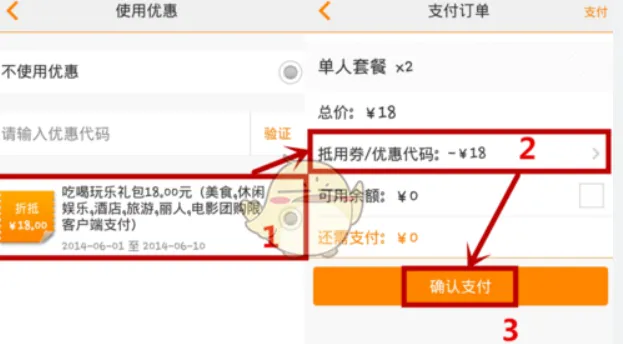
⏩Group Buy (团购 - Tuángòu): Look for "Set Meals" (套餐) for 2, 4, or 6 people. These are often discounted by 30% or more compared to ordering a la carte.
⏩Cash Vouchers (代金券): You can often buy a "100 RMB voucher for 88 RMB."
⏩How to use: Buy the voucher in the app first, then show the QR code to the waiter before you pay.
📌Pro Tip: If you don't have a Chinese phone number to register for these apps, access Meituan via the WeChat "Services" menu—it often allows you to bypass the standalone app registration.
✅The "Digital Check-in" Reward (Freebies)
Restaurants in China are obsessed with their Dianping ratings. You can easily get free drinks, desserts, or small appetizers by "checking in."
⏩How to do it: Look for a small sign on the table or ask the waiter: "Is there a check-in gift?" (有打卡礼吗? - Yǒu dǎkǎ lǐ ma?).
⏩The Task: Usually involves "Favoriting" the store on Dianping or posting a photo of your meal with a short comment.
✅Payment Perks (International Card Hacks)
⏩The 200 RMB Rule: When using an international card via Alipay/WeChat Pay, payments under 200 RMB usually have 0% transaction fees. For a bill of 380 RMB, ask the waiter if you can pay in two separate transactions to avoid the 3% surcharge.
⏩Bank-Specific Offers: In 2026, some international banks (like HSBC or Amex) have "Global Dining" partnerships in China. Check your banking app for "Statement Credits" or "Merchant Offers" specifically for Chinese cities.
✅Membership "Newbie" Coupons
When you scan the QR code on the table to order, you will often be prompted to "Join the Member Club" (加入会员).
⏩The Perk: Joining is almost always free and usually gives you an immediate coupon (e.g., "5 RMB off your first order" or "Buy one get one free" on drinks).
⏩The Privacy Tip: You can usually "Unfollow" the brand's WeChat account later to stop getting promotional messages.
✅Time-Based Discounts (Off-Peak Savings)
⏩Late Night/Afternoon Tea: Apps like Eatigo (in Shanghai/Beijing) or the "Flash Sale" section in Meituan offer up to 50% off if you dine at 2:00 PM or after 9:00 PM.
⏩Lunch Specials: Business districts have incredibly cheap "Work Lunch" (工作餐) sets between 11:30 AM and 1:30 PM that aren't advertised at dinner time.
Some restaurants quietly adjust pricing or deals based on demand.
⏩Best times for deals
-
Early dinner (before 6:00 pm)
-
Late lunch (after 1:30 pm)
-
Weekdays instead of weekends
Dianping often shows time-based discounts if you scroll down far enough.
✅Write a Review = Free Drinks, Desserts, or Sides
This is extremely common in China and feels almost “too easy” for foreigners.
⏩How it works
-
Finish your meal
-
Leave a short Dianping review (photos help)
-
Show it to the staff
⏩Typical rewards
-
Free soft drinks or tea
-
Dessert or side dish
-
Small discounts on your bill
📌 You don’t need a long review—locals often write just 1–2 sentences.
✅Eat Where Locals Eat (Not Where Tourists Cluster)
Restaurants near:
-
Office buildings
-
Residential areas
-
University campuses
tend to be cheaper, more authentic, and better reviewed.
🚫 Be cautious around:
-
Major tourist attractions
-
Restaurants with aggressive staff inviting you in
-
English-only menus with inflated prices
✅No Tipping = Automatic Savings
Unlike many countries:
-
Tipping is not expected
-
Service charges are rare
-
Prices are usually final
Trying to tip may even confuse staff. Your savings are already built in.
❎Common Mistakes That Cost Foreigners Money
❌ Ordering without checking Dianping
❌ Dining only in tourist areas
❌ Ignoring set menus
❌ Going during peak hours
❌ Over-ordering “just in case”
Avoid these, and you’ll instantly dine more like a local.
Part 5.Foreigner's Guide to Dining in China: Common Problems & Solutions
Now, China’s dining scene is highly integrated with "Super Apps" like WeChat and Alipay. For international visitors, most challenges stem from the digital-first environment.
Below is a comprehensive table summarizing the common issues foreigners face when booking, queuing, and dining in China, along with professional solutions.
| Common Question | Why It’s Confusing for Foreigners | Practical Solution |
|---|---|---|
| How can I book a restaurant in China? | Many restaurants don’t use email or phone bookings | Use Dianping or the restaurant’s WeChat mini-program to reserve tables |
| Can I make a reservation without a Chinese phone number? | Most apps require SMS verification | Ask your hotel front desk, a local friend, or visit during off-peak hours |
| Why do restaurants ask me to scan a QR code? | Ordering and queueing are digital-first | QR codes open menus, queue systems, or WeChat mini-programs |
| What is the Dianping queue system? | Queueing is rarely done verbally | Take a digital queue number via Dianping or in-store tablets |
| Do I need to download an app to queue? | Not always clear at the entrance | Many restaurants offer in-store tablet queue systems with printed tickets |
| How long are wait times at popular restaurants? | Peak hours can be unpredictable | Expect long waits between 6:30–8:00 pm; lunch is usually faster |
| Will staff call my name when my table is ready? | Names are rarely used | Queue numbers are displayed on screens or announced by number |
| Can I leave the restaurant while waiting? | Fear of missing your turn | Yes—most systems send app notifications or display queue progress |
| How do I read reviews if I don’t speak Chinese? | Reviews are mostly in Chinese | Check star ratings, recent photos, and repeated dish mentions |
| Are online reviews trustworthy in China? | Concern about fake reviews | Recent reviews with real photos are generally reliable |
| Do restaurants accept cash or credit cards? | Cash is rarely used in cities | Alipay and WeChat Pay are the most widely accepted |
| Can foreigners use Alipay in restaurants? | Payment setup feels unclear | Yes—Alipay supports foreign credit cards and has an English interface |
| Is tipping expected in Chinese restaurants? | Many countries require tipping | No—tipping is not expected or required |
| Why is hot water served instead of cold? | Cultural difference | Hot water is common and considered healthier |
| Is it okay to share dishes? | Different dining culture | Yes—sharing dishes is standard in China |
| Can I save money when dining out? | Prices vary widely | Use Dianping deals, lunch menus, and set meals |
| Can I get free items by writing a review? | Sounds unusual to foreigners | Some restaurants offer free drinks or desserts for reviews |
| Why are lunch prices cheaper than dinner? | Menu differences aren’t obvious | Lunch menus target office workers and are usually discounted |
| What’s the best way to avoid tourist traps? | Tourist areas inflate prices | Eat near office buildings, malls, or residential areas |
| What should I do if there’s no English menu? | Language barrier anxiety | Use photos, point at dishes, or show saved images from Dianping |
📌Quick Action Checklist Before You Dine
-
Download & Set Up: WeChat, Alipay (with linked card), a reliable translation app (with offline packs).
-
Explore: Open WeChat, discover "Mini-Programs," and search for "大众点评" to familiarize yourself with its interface.
-
Carry: A power bank (for phone translation/payment) and some cash (RMB) as a backup.
Ready to turn these tips into action? Start by downloading WeChat and Alipay today and linking your card. For your first meal in China, challenge yourself to find a highly-rated local restaurant on Dianping and secure a table using one of the methods above. The confidence you gain will transform your entire trip.