If you have ever seen a video of Chongqing on social media, you’ve likely seen the trains passing through apartment buildings or the elevators that take you from one street level to… another street level 20 stories up. Chongqing is a city that defies gravity, a concrete labyrinth built into the mountains where Google Maps goes to die.
But if there is one experience that captures the soul of this "8D City"—that perfectly blends its industrial history with its futuristic "Cyberpunk" present—it is the Yangtze River Cableway.
I’ve ridden this cable car dozens of times, in the sweltering heat of August and the misty gloom of January. I’ve squeezed in with grandmas carrying groceries and backpackers carrying selfie sticks. Here is everything you need to know to survive the queues, snag the best window spot, and understand why this rusty yellow box is the beating heart of Chongqing.
Planning to ride the Yangtze River Cableway in Chongqing? Learn how to book tickets, avoid the 3-hour queues, and get the best city views in 2026.
📌 The Quick Cableway Survival Guide
-
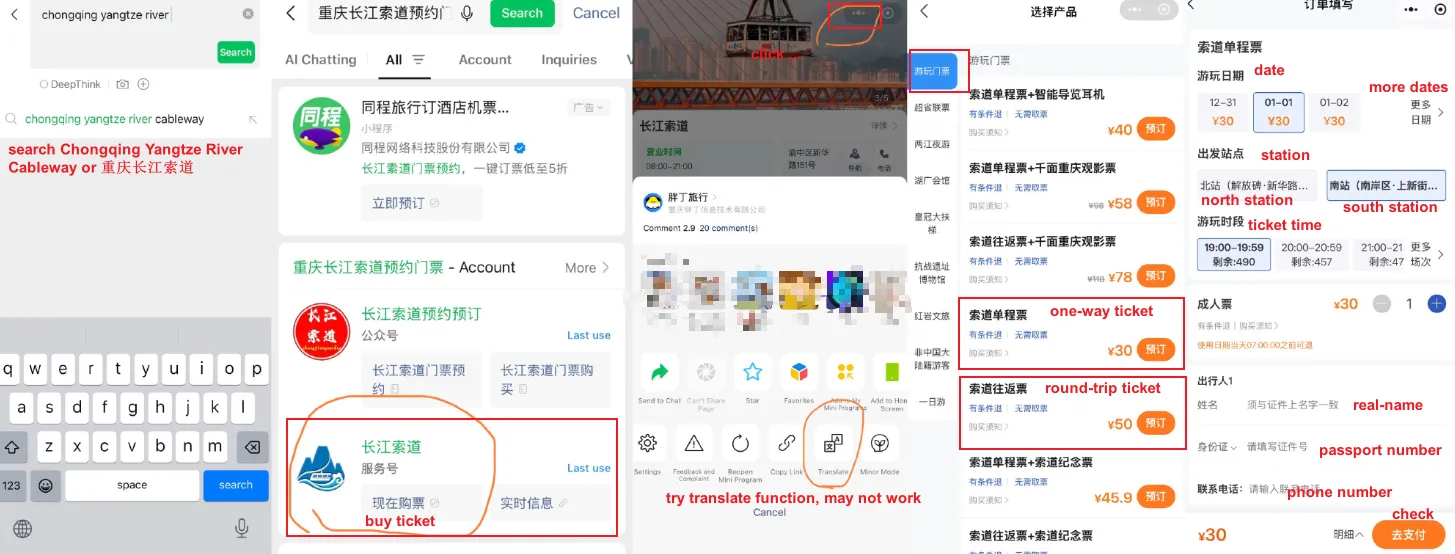
Ticket Price: 30 RMB (One-way) / 50 RMB (Round-trip). Buy a one-way ticket for the most efficient itinerary!
-
How to Book: Use the official "Chongqing Cableway" WeChat Mini-Program to get a virtual queue number. (How to Use WeChat)
-
The Golden Rule: NEVER start at the North Station (Xinhua Road) unless you want to wait 2-3 hours. Always start your ride from the South Station (Shangxinjie) for wait times as short as 15 minutes!
-
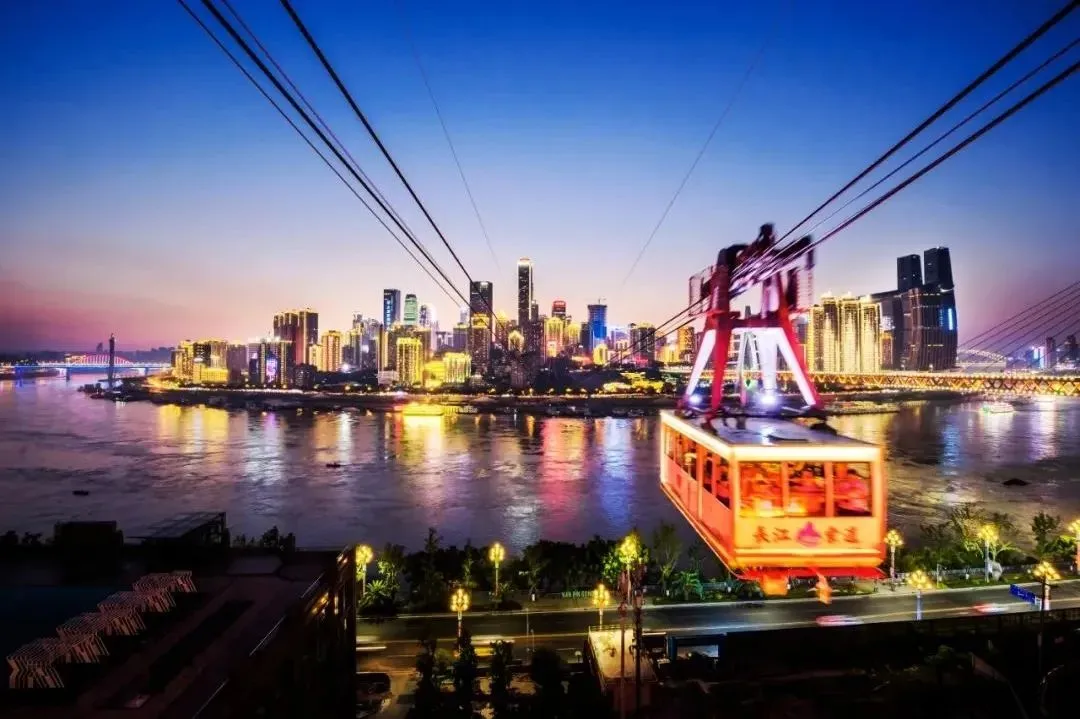
Best Time to Go: Arrive at the South Station just before sunset to experience the city transitioning into its neon "Cyberpunk" glow.
1. Introduction: Why the Chongqing Cable Car is a Must-Do
The 8D City Context
To understand the cableway, you have to understand the geography. Chongqing isn't just a city; it’s a mountain range that people decided to live on. Because the city is peninsular, surrounded by the Jialing and Yangtze Rivers, getting from Point B was historically a nightmare. Before bridges spanned every corner of the horizon, you either took a ferry (slow) or climbed thousands of stairs (exhausting).
If you want to travel Chongqing by Metro, click Chongqing Metro Guide to get detail.
More Than Just a Tourist Trap
When the Yangtze River Cableway opened in 1987, it wasn't built for Instagram. It was a lifeline. It was the "air bus" for factory workers living on the south bank (Nan’an) to get to work in the commercial hub on the north bank (Yuzhong).
Today, bridges and a hyper-efficient metro system handle the heavy lifting of commuters. The cableway has evolved into a strange hybrid: part nostalgic public transit, part blockbuster tourist attraction. It is one of the last surviving remnants of the city's old transportation network (the Jialing River cableway was demolished years ago).
Why You Should Ride It
Riding the cableway offers a perspective you can’t get from a taxi or the subway. You are suspended in a metal box, dangling above the brown, churning waters of the mighty Yangtze. To your left, you see the ancient, crumbling steps of the old wharves; to your right, the futuristic curve of the Raffles City "horizontal skyscraper."
It represents the chaos and energy of Chongqing perfectly. It’s noisy, it sways in the wind, and it’s utterly spectacular.
2. Essential Info: Opening Hours, Ticket Prices & Location
Before we get into the strategy of how to ride without losing your mind, here are the hard facts you need.
-
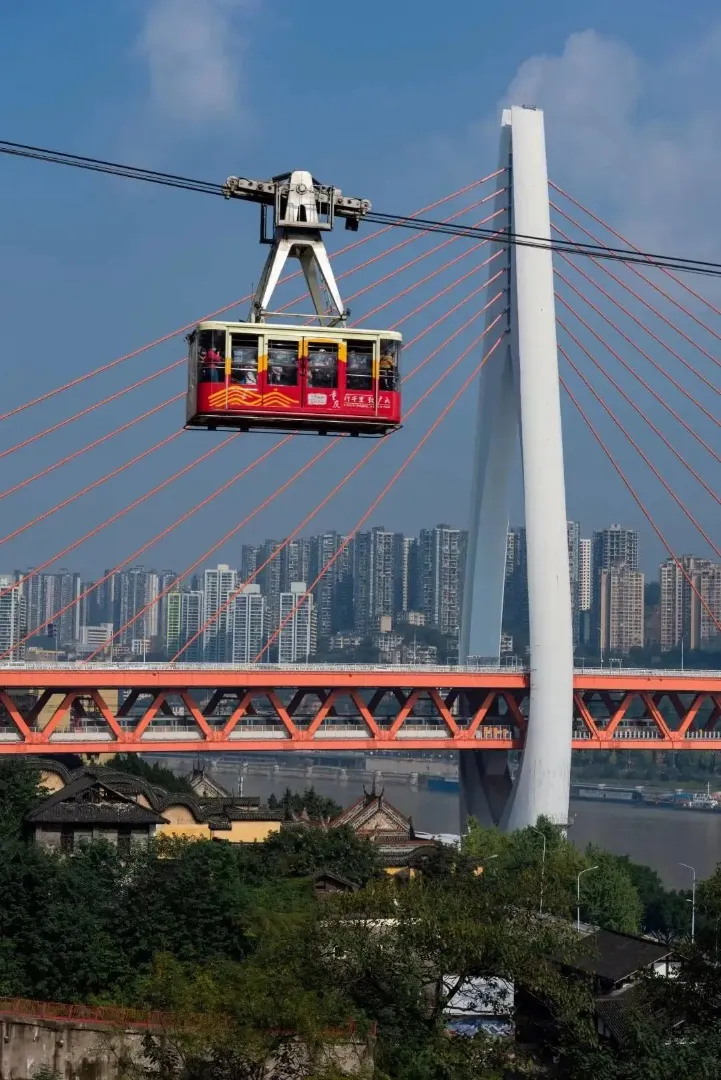
Location: The cableway spans the Yangtze River, connecting Yuzhong District (the central peninsula, North bank) and Nan’an District (the residential/scenic South bank), covering a distance that takes approximately four to five minutes to travel. While the ride itself is brief, the visual impact is significant, as passengers are suspended well above one of China’s longest and busiest rivers.
-
Ride Duration: It’s faster than you think. The crossing takes about 4 to 5 minutes.
-
Capacity: Each cabin holds about 50 people.
-
Opening Hours:
-
Summer (Mar 1 – Nov 30): 08:00 AM – 10:00 PM
-
Winter (Dec 1 – End of Feb): 08:00 AM – 09:00 PM
-
Public Holidays: 07:30 AM – 10:30 PM
-
-
Ticket Prices:
-
One-way: 30 RMB (approx. $4.50 USD)
-
Round-trip: 50 RMB (approx. $7.50 USD)
-
-
Best Time to Visit: Sunset or late night for the best light. During these hours, the city transitions from daylight to illuminated night views, offering a striking contrast between the river, bridges, and glowing skyline.
⚠️ Traveler's Tip: The cableway occasionally closes for a few days of routine maintenance (usually twice a year). Before heading out, ask your hotel concierge to check the latest "Chongqing Cableway" (重庆索道) official status on WeChat.
3. Planning Your Visit: North vs. South Station & How to Buy Tickets
This is the most important section of this guide. Most tourists make the mistake of just showing up at the most popular station and waiting in line for two hours. Don’t be that tourist.
Understanding the Virtual Queue
Chongqing uses a Virtual Queuing System. When you buy your ticket (online or at the window), you are assigned a number.
-
You don't have to stand in line immediately. You can check the current calling number on the screens or via the WeChat mini-program.
-
Wait Times: On a regular weekend, expect 60–90 minutes. During Golden Week (October) or Chinese New Year, wait times can soar to 3–5 hours.
💡 Insider Tip: If your number is far off, go grab a coffee or explore the nearby Longmenhao Old Street (if at South Station). Just make sure to return when your "range" is called.
The Two Stations: A Tale of Two Lines
The cableway has two ends:
-
North Station (Xinhua Road Station - 新华路站): Located in Jiefangbei, the busy downtown center.
-
South Station (Shangxinjie Station - 上新街站): Located in Nan’an district, the quieter side.
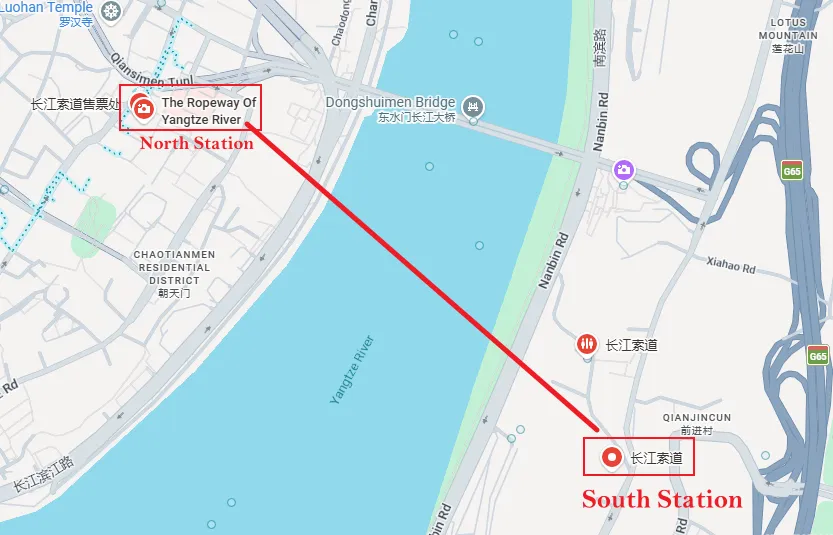
🚨 Ultimate Insider Hack: Avoid the 3-Hour Queue Because 90% of tourists stay in the downtown Yuzhong District, they naturally walk to the North Station (Xinhua Road). During peak seasons, the wait here can exceed 3 hours. Do this instead: Take Metro Line 6 across the river to Shangxinjie Station (South Station). The queue on this side is notoriously short (often 15–30 minutes). You can enjoy a coffee at nearby Longmenhao Old Street while you wait, then take the cable car back into the dazzling downtown skyline!
How to Get There
To the North Station (The Crowded One)
-
Metro: Take Line 1 or Line 6 to Xiaoshizi Station (小什字站). Look for Exit 5A or 5B.
-
Walking: It is easily walkable from Jiefangbei Pedestrian Street or Hongya Cave.
To the South Station (The Smart Choice)
-
Metro: Take Line 6 to Shangxinjie Station (上新街站). Take Exit 2.
-
Walking: From the metro exit, it’s about a 10-15 minute walk toward the river. Just follow the signs for "Yangtze River Cableway."
Buying Tickets & Language Tips
Gone are the days of paper tickets and cash.
-
WeChat: Search for the mini-program "Chongqing Cableway" (重庆索道). 👆 How to Use WeChat in China: 2026 Setup & Pay Guide for Foreigners
-
On-site Ticket Windows: If you prefer paying in person or don't have a Chinese payment app set up, both stations have physical ticket offices (Ticket Windows).
-
Payment: Most windows accept AliPay, WeChat Pay, and sometimes cash (though digital is preferred). How to Use Alipay in China as a Foreigner (2026 Setup Guide) Alipay vs WeChat Pay in China: 2026 Guide for Foreigners
-
Note for Foreigners: You may be asked to show your passport when purchasing tickets at the counter for identity verification.
-
-
Language Barrier: The booking interface is currently in Chinese. Use a translation app like Google Lens or Apple Translate to scan the QR codes on-site. If you get stuck, look for the "Foreigner Service" window or show a staff member your phone—they are very used to helping international travelers!
-
The Ticket Strategy: Buy a One-Way Ticket (South to North). Once you cross, explore the city center instead of queuing to return.
4. The Ride Experience: Views, Photography & What to Expect
The massive yellow carriage glides into the dock. The doors open. It’s go time.
The "Mad Dash" & Best Spots
-
Best Spot: The front right corner (facing the direction of travel) or the rear windows.
-
Reality Check: In high season, the cabin is packed. If you aren't one of the first 10 people inside, you might be stuck in the middle. Don't worry. The cabin is mostly glass.
-
The Strategy: Try to position yourself near the right-side windows (facing North) for the best view of the bridges and Raffles City.
The Sensory Experience
-
The Sound & Feel: You hear the hum of heavy machinery. On windy days, the cabin sways—it’s safe, but exciting!
-
The Heat: Note that these cabins are not luxury pods. In summer, it gets hot. Bring a portable fan.
The Views & Photography
-
Raffles City (Chaotianmen): To the east, look for the massive "horizontal skyscraper."
-
The Bridges: The gold-lit Dongshuimen Bridge runs parallel to you.
-
The Contrast: You literally glide past apartment windows—close enough to see inside living rooms!
📸 Photo Tip: Press your phone lens directly against the glass to eliminate internal cabin reflections, especially at night.
5. Nearby Attractions: Jiefangbei, Hongya Cave & Nanbin Road
Since you are taking my advice and doing a one-way trip, you need to know what to do at either end.
Starting Point: The South Bank (Shangxinjie)
If you start here, arrive an hour early to explore:
-
Longmenhao Old Street (龙门浩老街): Just a short walk from the cableway station. This is a beautifully restored historic area built into the cliffside. It features Western-style architecture from the treaty port era mixed with traditional Chinese bricks. It offers fantastic platforms for photographing the cable cars crossing the river from the outside.
-
Nanbin Road (南滨路): This is the "Bund" of Chongqing. It runs along the river and offers the absolute best panoramic view of the Yuzhong skyline. It’s lined with hotpot restaurants and bars.
Ending Point: The North Bank (Xinhua Road/Jiefangbei)
You land right in the thick of the action.
-
Jiefangbei Pedestrian Street: The spiritual center of the city. Look for the Liberation Monument, which used to be the tallest structure in the area and is now dwarfed by Gucci and Louis Vuitton stores.
-
Hongya Cave (Hongyadong):
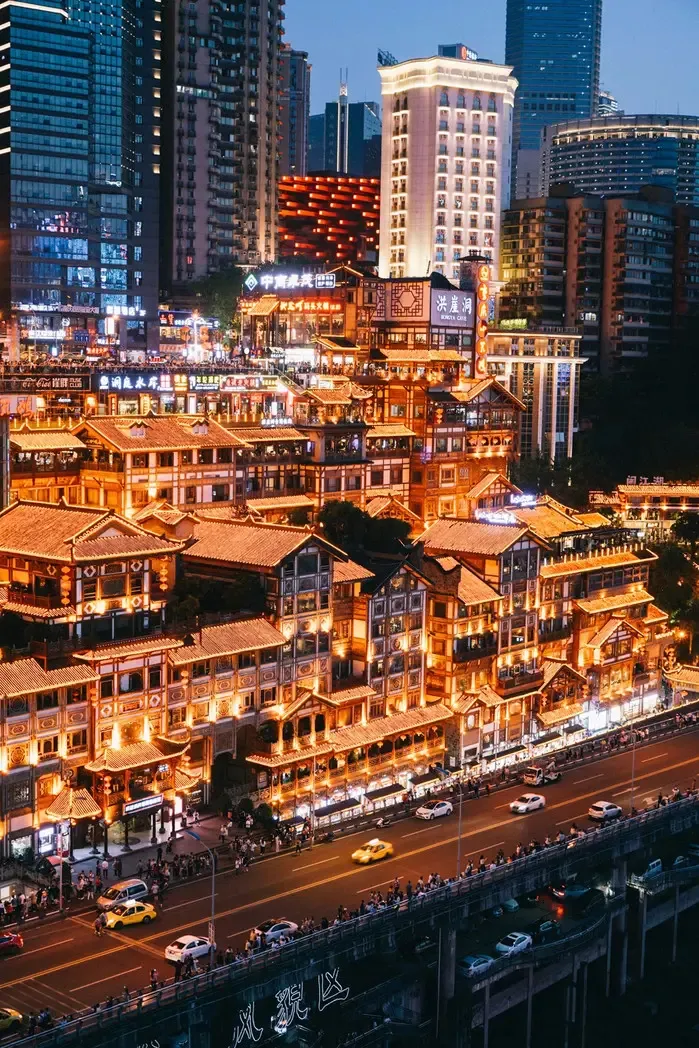 Image from cq.gov.cn, Copyright by original authorA 15-minute walk from the station. This is the famous stilt-house complex that looks like the bathhouse from Spirited Away.
-
Warning: It is incredibly crowded.
-
Tip: Do not go inside Hongya Cave for shopping (it’s cheap trinkets). Admire it from the outside (Qiansimen Bridge) or the street level across from it.
Baixiang Street (白象街): If you want something quieter, head to Baixiang Street near the cableway. It’s a historical district that feel
The Perfect Route Suggestion:
-
Afternoon: Explore Longmenhao Old Street (South Bank).
-
Sunset: Walk to Shangxinjie Station.
-
Ride the Cableway across to the North Bank as the lights come on.
-
Dinner: Walk to Jiefangbei for Chongqing Hotpot (try a place in a back alley, not the main mall).
- Nightcap: View Hongya Cave from the Qiansimen Bridge.
6. Is the Chongqing Cableway Worth It? Final Advice
I often get asked, "Is the cableway just a tourist trap?"
The Honest Verdict:
Yes, it is touristy. Yes, the lines can be soul-crushing. But yes, it is worth it.
There is no other city in the world where a public transit cable car flies between skyscrapers over a river this massive. It captures the sheer scale and verticality of Chongqing in a way that standing on a viewing platform cannot. On very foggy days, the view might be limited, but it adds to the mysterious 'Silent Hill' vibe of the city.
What if the line is too long? (The Emergency Plan)
If you arrive and find a 3-hour wait, don't waste your day.
-
Option A: Take Metro Line 6 between Shangxinjie and Xiaoshizi. It’s the same route, mostly underground, but incredibly fast and cheap.
-
Option B: Cross the Dongshuimen Bridge on foot. It’s a 15-minute walk with stunning open-air views that are arguably better for photography than the cableway itself.
Summary of the "Pro" Strategy
-
Go One-Way: South to North.
-
Go at Sunset: The "Blue Hour" is the most photogenic time.
-
Avoid Weekends: If you are visiting on a Saturday or during National Day (Golden Week), the wait can be 3 to 4 hours. In that case, buy a "Queue Jump" ticket if available (touts sometimes sell tour packages that include express entry, though these are pricier and vary in reliability), or just wake up and go at 7:30 AM sharp.
Final Recommendation for First-Timers
Chongqing is a city that overwhelms the senses. The heat (of the weather and the chili peppers), the noise, and the neon lights can be intense. The Yangtze River Cableway is the perfect introduction to this chaos.
My advice? Don’t experience the ride through your phone screen. Sure, take one photo and a quick video. But then, put the phone down. Press your forehead against the glass. Look down at the swirling river that has flowed for thousands of years, and look up at the neon towers of the 21st century. That contrast is the story of Chongqing.
Welcome to the Mountain City. Enjoy the ride.