If you are facing an overnight layover in China, you might be wondering about the logistics of sleeping at the terminal. For many international travelers, China is a major transit hub connecting the West to Southeast Asia, Oceania, and beyond. However, with massive terminals and strict regulations, spending a night at a Chinese airport can be intimidating. This guide will transform you from a confused traveler into a pro sleeper, covering everything from luxury transit hotels to hidden free rest zones.
⚡ Quick Summary for Overnight Layovers:
-
Airside vs. Landside: You need a 24/240-hour Transit Without Visa (TWOV) to exit security (Landside) for traditional hotels.
-
Free Rest Zones: Modern hubs like Daxing (PKX) and Tianfu (TFU) offer designated free rest areas with ergonomic recliners.
-
Paid Options: You can book sleeping pods, Aerotel transit hotels, or hourly lounges starting from budget-friendly rates.
-
Essentials: Always pack a light blanket and noise-canceling headphones to combat cold AC and 24/7 announcements.
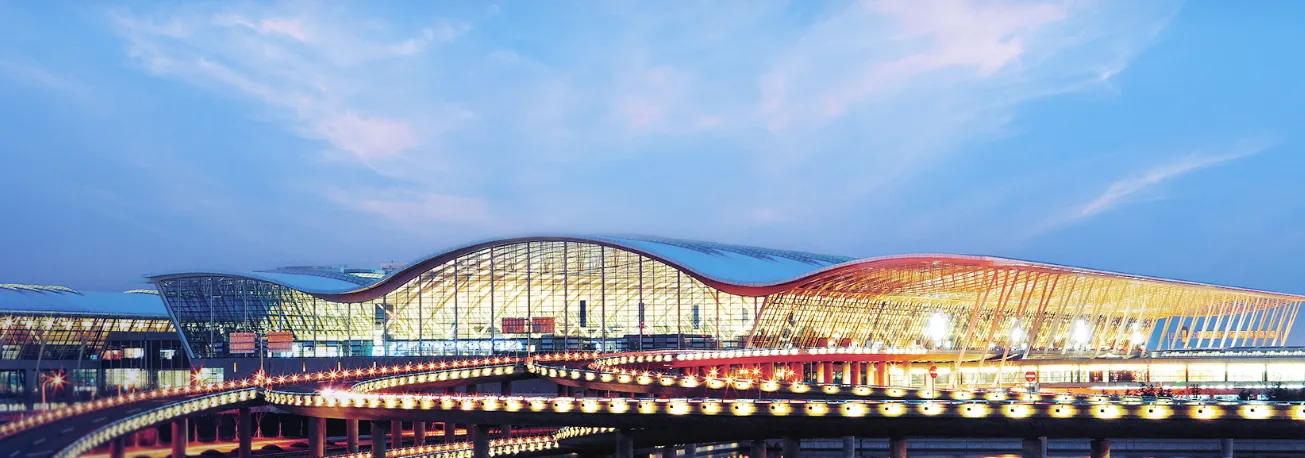
1. Introduction: Can You Actually Sleep at Chinese Airports?
The Reality Check: Yes, you can. Sleeping at airports is quite common in China due to the high volume of late-night arrivals and early-morning "red-eye" flights. Most major hubs are modern, clean, and safe.
The Challenge: The main hurdles are the language barrier, strict security protocols, and the crucial "Landside vs. Airside" distinction. Without a plan, you might find yourself wandering a cold, dim check-in hall at 3 AM.
Objective: This guide provides the strategic knowledge you need to secure a comfortable rest, regardless of your budget.
2. Essential Rules: Know Before You Go
24/7 Operations
While "mega-hubs" like Beijing Daxing or Shanghai Pudong are 24/7, smaller regional airports may "hibernate." In some terminals, lights are dimmed and air conditioning is reduced after midnight to save energy. Always check if your specific terminal stays open.
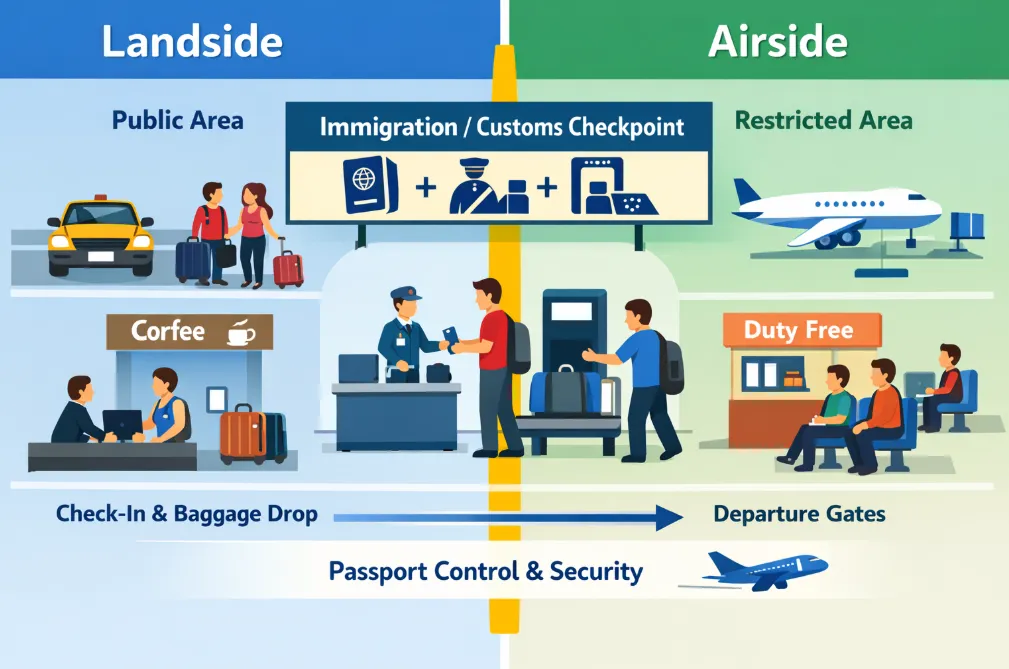
Airside vs. Landside & The TWOV Impact (The Decision Maker)
This is the most critical part of your plan. Your ability to leave the secure "Airside" zone depends on your visa status.
-
Airside (Inside Security): Where the gates are. You stay here if you are simply walking from one gate to another.
-
Landside (Outside Security): The public area (check-in/arrivals). You must pass through Immigration (Passport Control) to get here.
Can I go Landside to a hotel without a visa?
Thanks to the 24/240-hour Transit Without Visa (TWOV) policy, the answer is usually YES, but with conditions:
-
The Entry Permit: Upon arrival, look for the "24/240-hour Transit" desk before the main immigration lines. You must show a confirmed onward ticket to a third country.
-
The Decision: If granted, you get a sticker/stamp in your passport allowing you to enter the city. You can then access a China transit without visa hotel on the Landside (which are usually cheaper and more plentiful hourly options).
-
The Risk: If your layover is short (e.g., under 6-8 hours), immigration officers might deny your entry and tell you to stay Airside. In this case, you must have an Airside backup plan.
Comparison Table: Where should you sleep?
|
Feature |
Airside (Stay Inside) |
Landside (Go Outside) |
|---|---|---|
|
Visa Required? |
No |
Yes (or TWOV Permit) |
|
Hotel Options |
Very Limited (e.g., Aerotel in some hubs) |
Many (Hourly hotels, Pullman, Hilton) |
|
Cost |
Usually more expensive |
More competitive / Budget options |
|
Food |
Limited late-night options |
24h Convenience stores (FamilyMart, etc.) |
|
Best For... |
Short layovers (< 6h) or no visa |
Long overnight layovers (> 8h) |
Security Sweeps
Expect security guards to check your passport and boarding pass around 1:00 AM or 2:00 AM. This is a standard safety procedure—just show your documents, and they will usually let you be.
The Temperature & Sound Factor
Chinese airports are notorious for powerful air conditioning in the summer and being slightly chilly in the winter. Furthermore, automated safety announcements often loop 24/7. Essential Gear: A light blanket/thick hoodie and noise-canceling headphones.
3. Sleeping Options: From Zero to Hero
Whether you are looking for a complimentary spot to stretch out for a few hours or a private suite with a hot shower, Chinese airports offer a spectrum of comfort. The key is knowing what is available and where to find it. Below, we explore the four main tiers of airport rest—ranging from premium hotel experiences to the best "zero-cost" hidden gems favored by budget travelers.
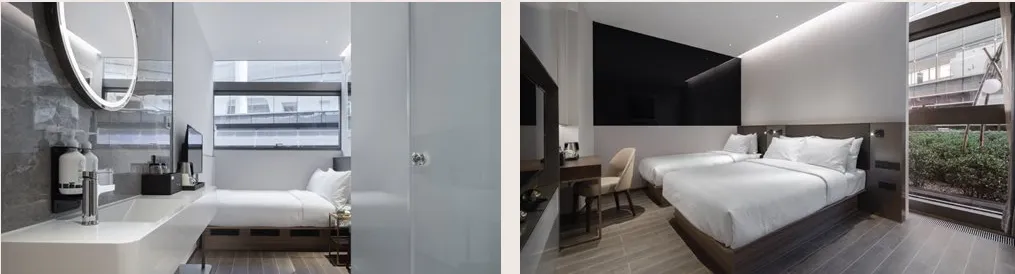
3.1 Luxury & Reliability: Hourly & Transit Hotels
Unlike traditional hotels, these allow you to book in 4, 6, or 8-hour blocks.
-
Location: Some are inside security (Airside), perfect for international transits. Others are in the public area (Landside) or connected to the terminal via a walkway.
-
Key Players: Look for Aerotel (highly recommended) or brand names like Hyatt Regency and Pullman directly attached to the hubs.
👇Aerotel @ Beijing Daxing International Airport
3.2 The Mid-Range: Airport Lounges
If you have Priority Pass or DragonPass, check for 24-hour lounges.
-
Amenities: Many offer hot food, showers, and dedicated "nap rooms" with reclining chairs.
-
Important Restrictions (The Fine Print):
-
Not Always 24/7: Many "premium" lounges in China close between 2:00 AM and 5:00 AM for deep cleaning. Always verify the closing time on your app before banking on a night there.
-
Time Limits: Most lounge entries (via Priority Pass or DragonPass) are restricted to 2 or 3 hours.
-
Overtime Charges: Staying beyond the allotted time may result in staff asking you to re-swipe your card (using another "visit" credit) or paying a walk-in fee for the additional hours.
-
-
Pro Tip: Even if you don't have a membership, many lounges allow "pay-at-the-door" access for a fee (usually $30-$50).
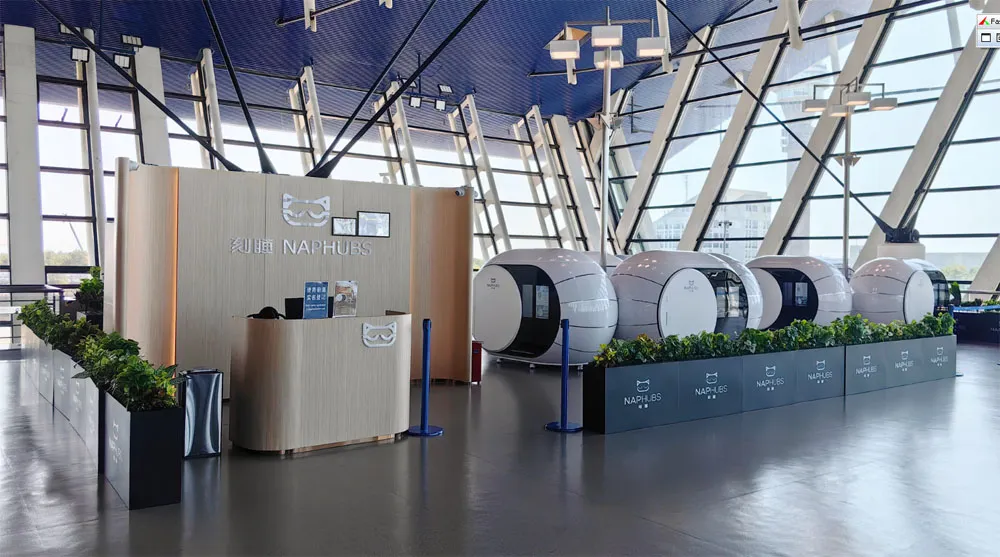
3.3 The Niche: Sleeping Pods & Capsules
Brands like "GoSleep" or "SleepBox" are becoming common. These are compact, private units that offer a bed and charging ports. They are usually cheaper than a hotel but more private than a lounge.
👇Sleeping capsules @ Shanghai Pudong International Airport
3.4 The Budget Route: Free Rest Areas
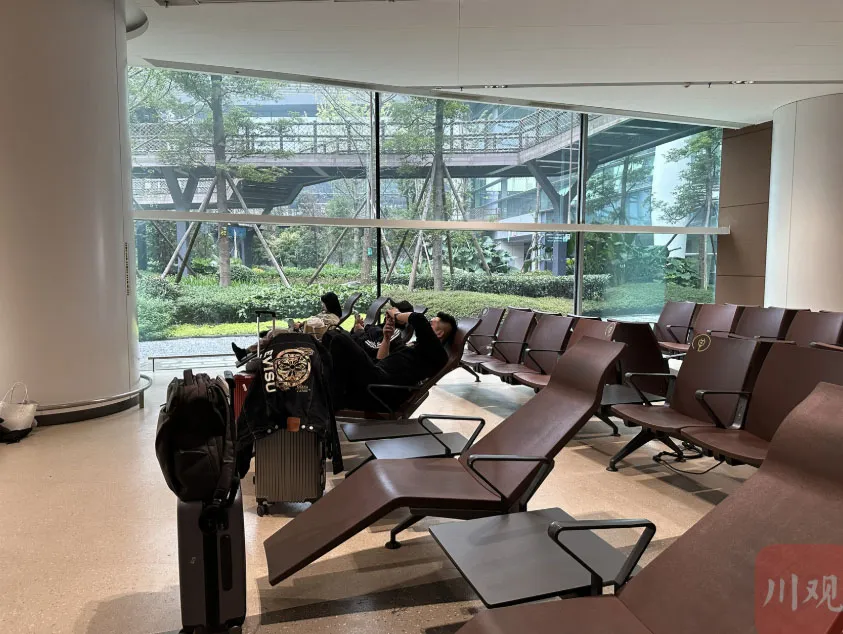
Most modern Chinese terminals have designated "Rest Zones" with ergonomic recliners.
-
Hidden Gems: Look for carpeted areas near remote gates or "massage chair" zones. You can usually sit in massage chairs for free if you don't activate the massage function.
👇Overnight rest zones @ Chengdu Tianfu International Airport
4. Top Airports Deep Dive (The Location-Specific Guide)
While general rules apply across the country, each of China’s major aviation hubs has its own unique layout, hidden corners, and specialized facilities. From the futuristic "starfish" design of Beijing Daxing to the sprawling twin-terminal complex of Shanghai Pudong, knowing the specific landscape of your transit point is the difference between a restless night and a solid nap. In this section, we break down the most traveler-friendly spots, paid accommodations, and insider tips for the nation's busiest airports.
4.1 Beijing Daxing (PKX)
-
Best Spot: The "Library" Rest Area on Level 2 (International Departures).
-
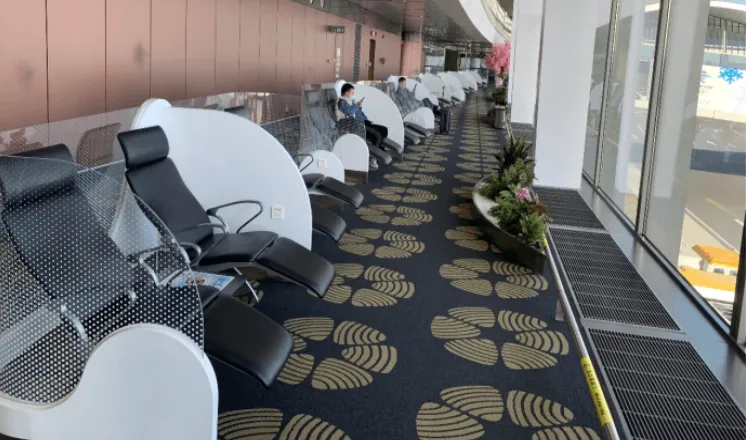
Free Zones: Level 2 and Level 3 have carpeted zones with ergonomic recliners near Gates B, C, and E.
-
Paid Pods: If you are looking for Beijing Daxing airport sleeping pods, the Quiet Sleep Pods (approx. $8-$12 per hour) are scattered near the international pier.
-
Hotels:
-
Aerotel (Airside): Level 2, Northeast Pier. Rates start around $80-$120 for a 6-hour block.
-
East-Pacific Passenger Lounge (Landside): Level 1. Prices start at approx. $60 for 4 hours.
-
-
Lounges:
-
BGS Premier Lounge (Airside): Open late; provides reclining chairs and showers. Access via Priority Pass or DragonPass.
-
China Southern Sky Pearl Lounge (Airside): High-end amenities including dedicated nap zones for eligible passengers.
-
-
Insider Tip: Daxing is incredibly spacious. The "petal" design means long walks.
4.2 Beijing Capital (PEK)
-
Best Spot: Terminal 3, Level 2 (Arrivals Hall) and the quiet corners of Terminal 2.
-
Free Zones: T3 has several rest areas with semi-reclining chairs. For a quieter experience, head to the far ends of the gate piers in T3-E (International).
-
Lounges:
-
Air China First/Business Class Lounge (T3-E Airside): Offers sleeping rooms and showers; check access for overnight transit.
-
BGS Premier Lounge (T2/T3 Airside): Usually open late and accepts Priority Pass.
-
-
Paid Pods: GoSleep Pods and SleepBox units are located in both T2 and T3 (Landside and Airside). Rates are approx. $10-$15 per hour.
-
Hotels:
-
Hilton Beijing Capital Airport (Landside): Connected to T3 via a 24-hour shuttle.
-
Cordis Beijing Capital Airport (Landside): Walking distance from T2.
-
Hourly Hotel (T3 Airside): Located in T3-E for international transit passengers.
-
-
Insider Tip: PEK is older than Daxing; T3 is massive and can be cold at night. Keep your hoodie ready.
First time travels to Beijing, read this [Capital International (PEK) vs Daxing International (PKX): Choosing the Right Beijing Airport for Your Trip]
4.3 Shanghai Pudong (PVG)
-
Best Spot: The Walkway connecting T1 and T2.
-
Free Zones:
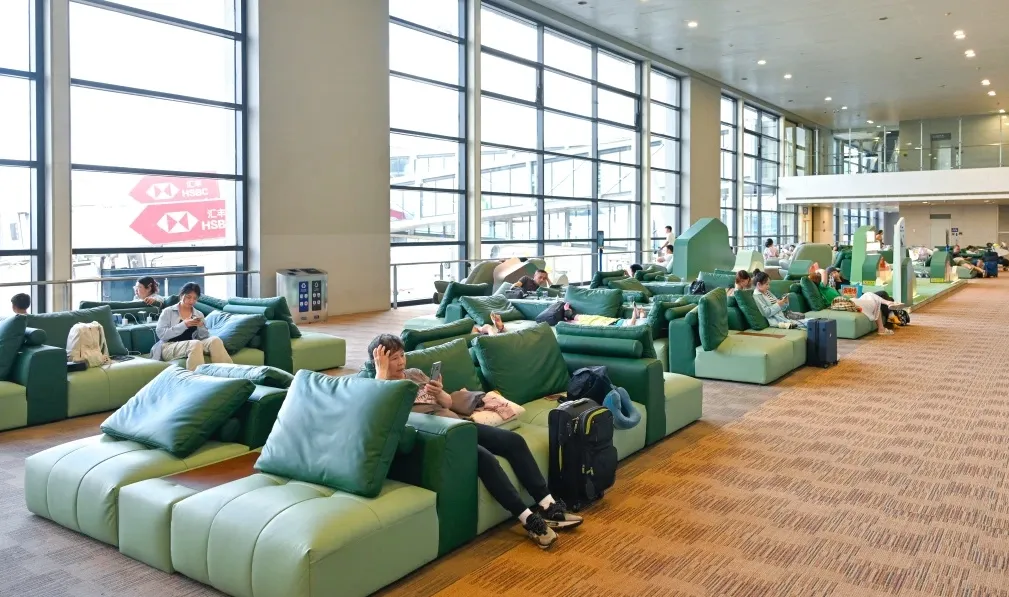 Image from shairport, Copyright by original author
-
Terminal 1: Near Arrival Hall Gate 2; near Domestic Departure Gates 6–7
-
Terminal 2: Near Domestic Mixed-flow Gate C71; Gates C91–C98; near Arrival Hall Gate 29
-
S1 Satellite Hall: Near Domestic Mixed-flow Gate H105; International Departure Gate G139
-
S2 Satellite Hall: Near Domestic Mixed-flow Gate H177; International Departure Gate G148
-
-
Paid Pods:
- GoSleep Pods in T2 (Airside) cost around $10-$15 per hour.
-
Near International Departure Gates 25–26
-
Near International Departure Gate D64
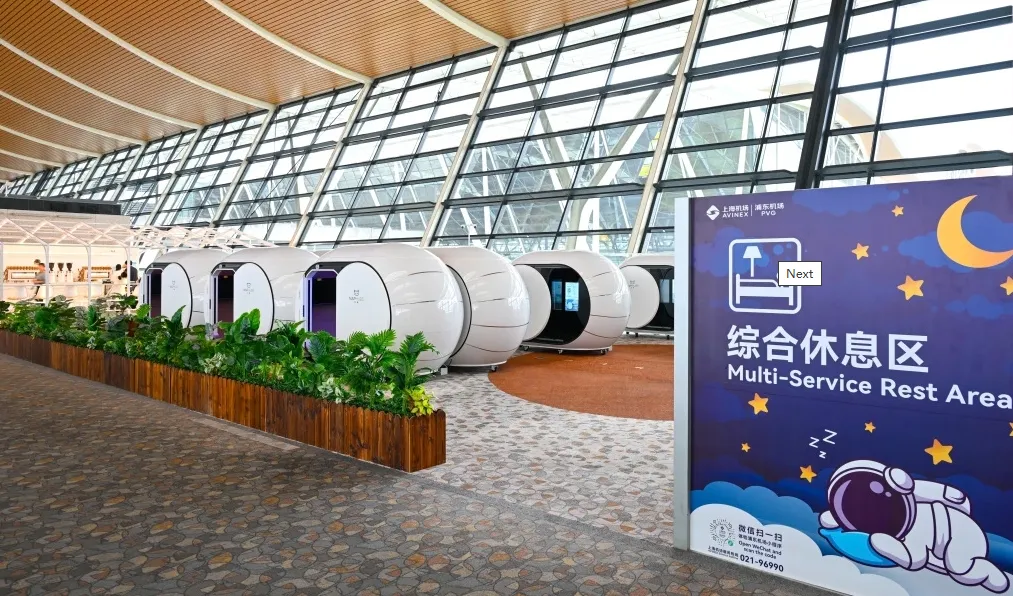 Image from shairport, Copyright by original author
-
Lounges:
-
First Class Lounge (No. 69) (T2 Airside): Often stays open 24h or very late; popular for Priority Pass holders.
-
Air China Lounge (T2 Airside): Offers comfortable seating and snacks; check seasonal opening hours for overnight stays.
-
-
Hotels:
-
Dazhong Airport Hotel (Landside): Between T1 and T2. Hourly rates are approx. $50-$70 for 4 hours.
-
-
Insider Tip: PVG T2 is significantly more "sleeper-friendly."
- Shanghai airport guide [PVG vs SHA: Which Shanghai Airport is Better for You?] is recommended for flights to Shanghai.
4.4 Guangzhou Baiyun (CAN)
-
Best Spot: T2 Level 4 Rest Zone.
-
Free Zones: T2 Level 4 has lounge-style couches. T1 overnight rest areas for passengers are located at Gates 23, 27, 33, and 36 on the first floor of the main building. Each area is divided into different functional zones, including a leisure area, a rest area, and a reading area.
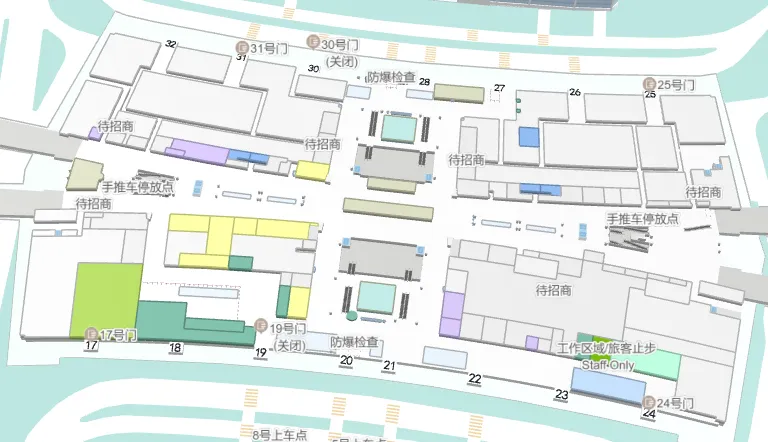 Image from gbiac, Copyright by original author
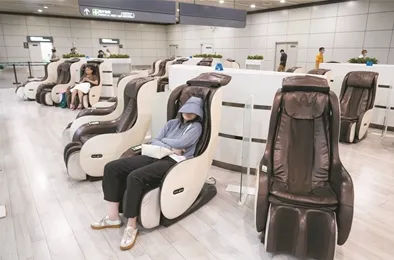 Image from gz.gov.cn, Copyright by original author
 -
Paid Pods: Cloud 12 Sleeping Pods (approx. $10 per hour) are at T1 Landside and T2 Airside.
-
Lounges:
-
Premium Traveller Lounge (T2 Airside): 24-hour access with showers and hot food. A top choice for overnight transit.
-
Air China / China Southern Lounges: Premium services, but check if they allow overnight stays based on your flight schedule.
-
-
Hotels:
-
Pullman Baiyun (Landside): Starts around $130/night.
-
Aerotel (T2 Airside): 6-hour blocks start at approx. $90.
-
4.4 Chengdu Tianfu (TFU)
-
Free Zones: High-tech rest areas with ergonomic benches and charging stations throughout Level 3.
-
Paid Pods: Capsule hotels in the GTC cost approx. $30-$45 for a 6-hour block.
- PriorityPass Lounge: Landside - Arrivals, 2nd Floor. Take a nap is located 100 metres to the left hand side of Exit B2 Arrivals. Cardholders can use their lounge visit entitlement to take advantage of a maximum 3 hour stay in a Single Cabin (maximum 1 adult plus 1 child under 6 years of age) or a Double Cabin (maximum 2 adults - not available for single use) between 8:00 - 22:00 daily. An extended stay over 3 hours or stay out of 8:00-22:00 usage will pay directly to Take a nap.
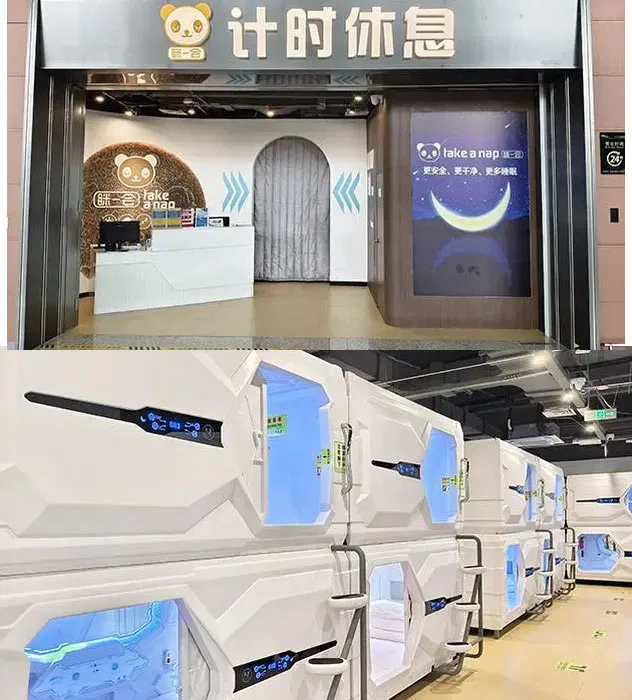 Image from prioritypass, Copyright by original author
 -
Hotels: Joyhub Air Hotel (International Airside) starts at approx. $100.
- Before you fly to Chengdu, read the [Chengdu Airport Guide: Shuangliu (CTU) vs Tianfu (TFU)] and choose the right airport.
4.5 Shenzhen Bao’an (SZX)
-
Free Zones: There is an overnight passenger rest area on the east side of the arrivals area on the second floor of Shenzhen Airport Terminal (walk past KFC).
-
Paid Pods: Sleeping cabins near international gates cost approx. $12-$18 per hour.
-
Lounges: Shenzhen Airlines King Lounge (Airside): Spacious with many sofas; check if Priority Pass access is available for your specific flight.
-
Hotels: Hyatt Regency (Landside) connected via walkway; standard rates around $140/night.
4.6 Hangzhou Xiaoshan (HGH)
-
Free Zones: located in the external corridor area on the north side of the T4 arrival level, along the free shuttle bus route between T3 and T4.
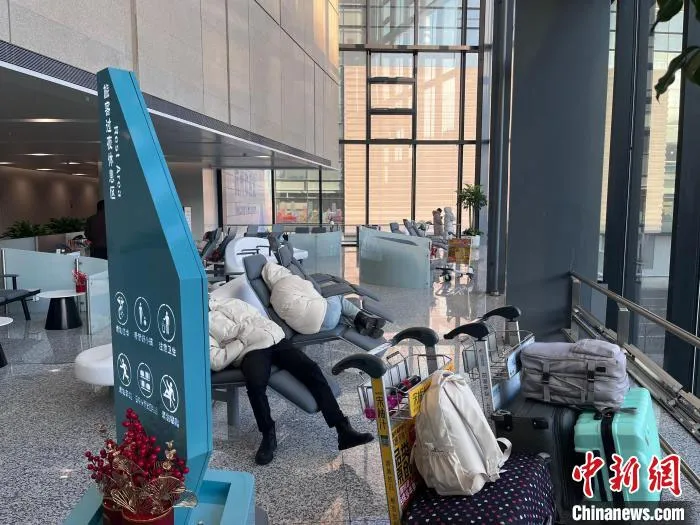 Image from zj87.jxt.zj.gov.cn, Copyright by original author
 -
Paid Pods: "Take a Nap" Capsule Hotel (T1 Landside) cost approx. $25-$40 for a 4-hour block.
-
Lounges: EasyGo VIP Lounge (T4 Airside): Modern facilities and often quieter than main terminal areas.
-
Hotels: Hyatt Regency (Landside) connected to T4; approx. $120/night.
4.7 Kunming Changshui (KMG)
-
Free Zones: Level B3 houses a 24-hour free rest area equipped with seating, hot water, and charging points. Nearby, camping beds are available for rent (approx. $1.50-$4.50 / RMB 10–30).
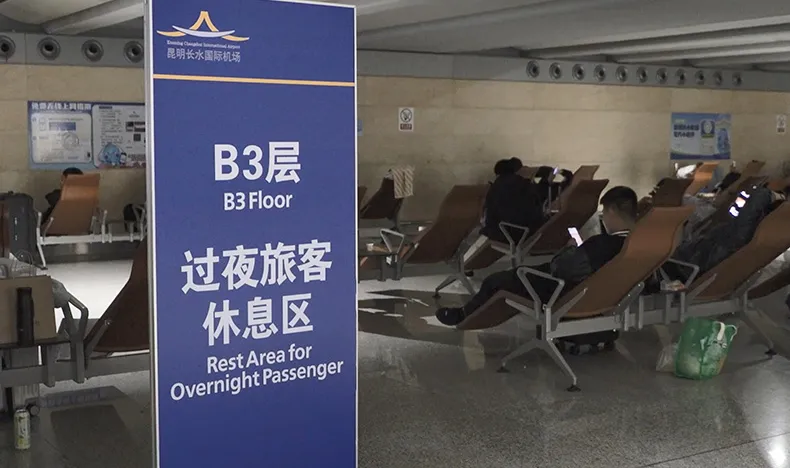 Image from yn.people.com.cn, Copyright by original author
 -
Paid Lounges: A paid transfer lounge is located on Level F1, offering a shared area with sofas and blankets (approx. $7-$11 / RMB 50–80).
-
Paid Pods: "Take a Nap" cabins (T1, Level B1) are very affordable at approx. $5-$8 per hour.
-
Lounges: Lucky Air Lounge (Airside): Good for domestic transfers; check if Priority Pass is accepted during overnight hours.
-
Hotels: Ji Hotel (全季酒店) is conveniently located on Level F2 for a more traditional stay.
-
Insider Tip: KMG is a massive 24h hub for SE Asia; while free spots on upper levels fill fast, the new B3 zone is a great fallback.
4.8 Chongqing Jiangbei (CKG)
-
Best Spot: Terminal 3, Level 4 (Departures) and Level 2 (Arrivals).
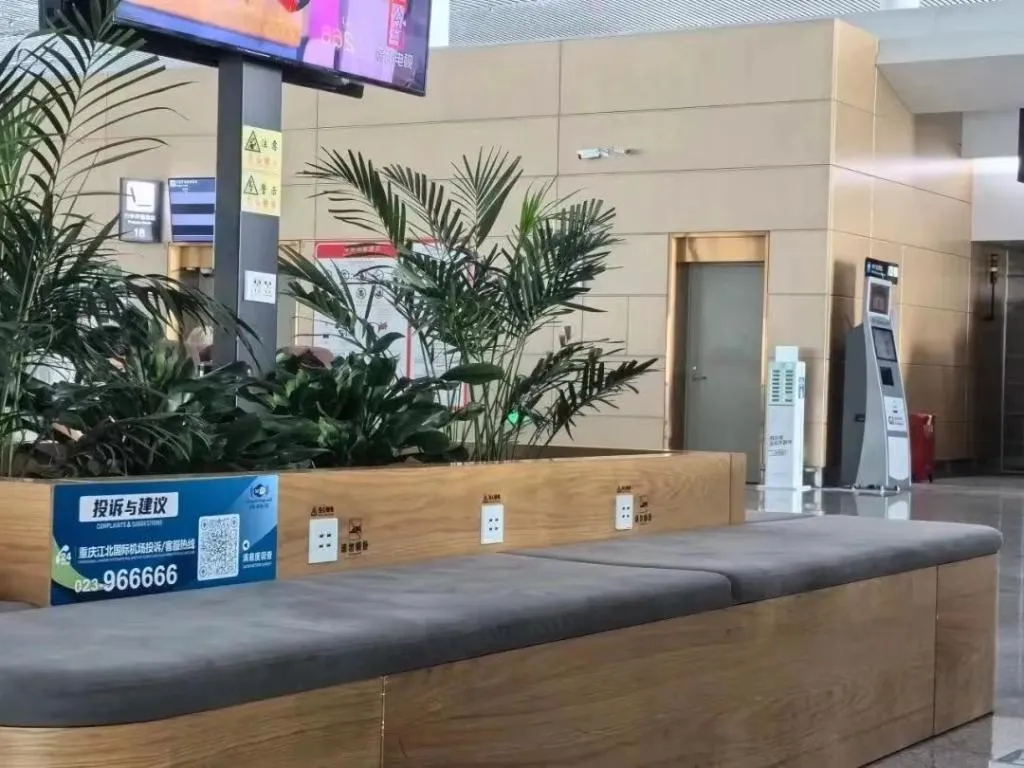 Image from cq.gov.cn, Copyright by original author
 -
Free Zones: T3 has dedicated "Rest Zones" with ergonomic loungers and power outlets near the gate piers.
-
Paid Pods: Sleeping Pods (approx. $6-$10 per hour) are located on Terminal 3, Level 2 Arrivals, next to Gate 7. These provide a private, quiet space with bedding and air circulation.
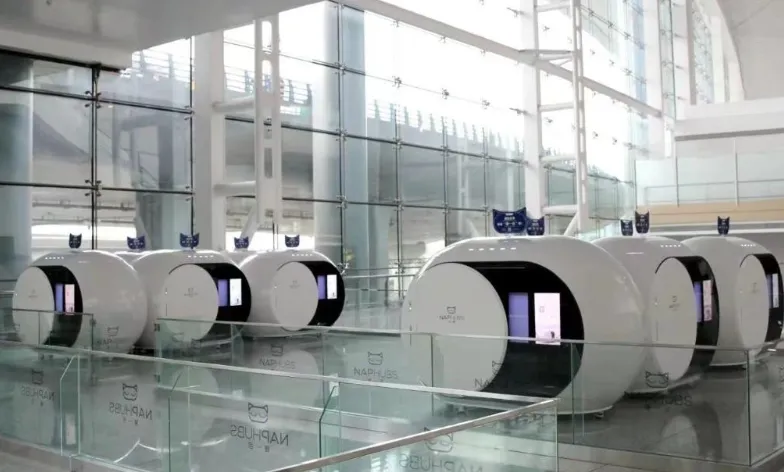 Image from cq.gov.cn, Copyright by original author
 -
Lounges: First Class Lounge (T3 Airside): Usually open late; check for Priority Pass or DragonPass availability.
-
Hotels:
-
Regal Airport Hotel (Landside): Located near T3, offering premium rooms for long layovers.
-
Hourly Transit Hotels: Several smaller hourly hotels are available within the T3 Landside area for 4-8 hour stays.
-
-
Insider Tip: Chongqing's T3 is one of the newest in China; the seating is much more comfortable than the older T2.
4.9 Xi'an Xianyang (XIY)
-
Free Zones: T3 upper floors near the dining plaza.
-
Paid Pods: SleepBox units (T3/T2 Landside) cost approx. $8-$12 per hour.
-
Hotels: Regal Airport Hotel (Landside) starts around $90/night.
5. Practical Logistics: The "China Survival" Checklist
5.1 The Internet Wall
-
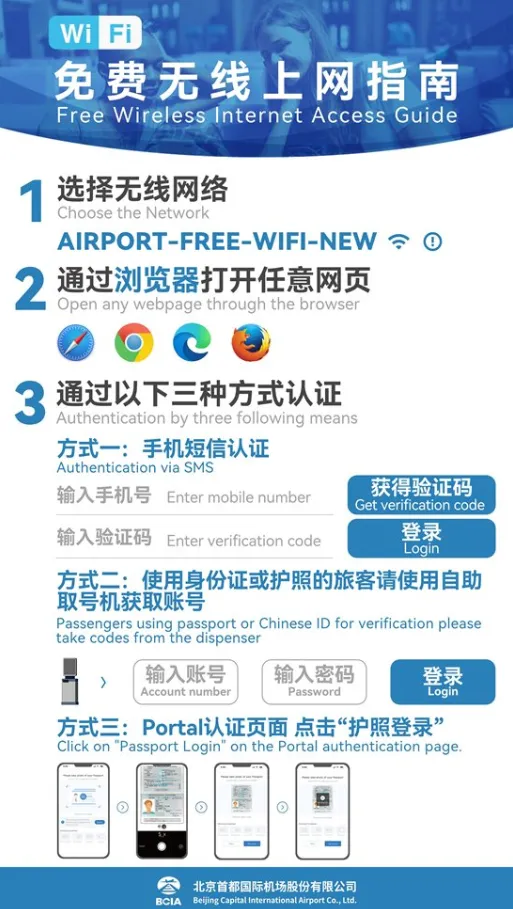
The SMS Trap: Most Wi-Fi portals require a Chinese phone number.
-
The Solution: Look for Wi-Fi Kiosks. You scan your passport, and the machine prints a code.
5.2 Payment & Booking
-
The Apps: Download Alipay or WeChat Pay.
-
Booking: While you can book hourly hotels via Trip.com, some smaller pods only accept walk-ins.
5.3 Water, Food, and Charging
-
Hydration: Every airport has free water dispensers.
-
Power: Look for shared power bank stations (Charge-and-Go)
5.4 Luggage & Storage
-
Left Luggage (Landside): Look for the 'Luggage Storage' (行李寄存) counters.
5.5 Hygiene: Showers & Restrooms
-
Public Showers: Available in some major hubs (approx. $10-$15).
-
Restrooms: Western-style toilets are usually available but look for the specific stall icons.
6. Planning Your Layover: Scenarios
Choosing the right strategy depends entirely on the length of your stay and your visa status. Here are three common scenarios to help you navigate your layover like a professional.
Scenario A: The 4-Hour Nap (Short Layover)
If your layover is under 6 hours, clearing immigration is rarely worth the time.
-
Strategy: Stay Airside.
-
Action Plan: Head immediately to the nearest 24-hour lounge (e.g., Priority Pass) or a dedicated "Rest Zone" near your next departure gate. If you need a shower, many lounges offer them for a small walk-in fee.
-
Budget Tip: Find the "massage chair" zones. They are often tucked away in quiet corners and provide better support than standard metal gate seating.
Scenario B: The 10-Hour Overnight (The Golden Window)
For stays between 8 and 14 hours, getting a proper bed is the best way to beat jet lag.
-
Strategy: Use the 24/144-hour TWOV to go Landside.
-
Action Plan: Clear immigration (look for the dedicated "Transit Without Visa" lane), collect any checked bags if required, and check into an attached hourly hotel (like Aerotel or Dazhong). Booking a 6-hour block is usually sufficient and significantly cheaper than a full night.
-
Key Benefit: You gain access to a wider variety of food options (often 24/7 convenience stores like FamilyMart or 7-Eleven) and a much quieter environment than the terminal floor.
Scenario C: The "Stuck in Airside" Crisis (No Visa / Denied Entry)
Sometimes, due to paperwork issues or airline policies, you cannot clear immigration and must remain in the transfer area.
-
Strategy: Pivot to Airside Luxury or Survival.
-
Action Plan:
-
Check for an Airside Transit Hotel: Locations like Daxing and Guangzhou have Aerotel or similar brands inside the security zone.
-
Lounge Hopping: If you have a premium credit card, check if you can use multiple lounges.
-
The "Remote Gate" Tactic: If everything is closed or full, head to the furthest remote gates (often the lower level gates used for bus boarding). These are usually deserted at night, allowing you to push several chairs together for a makeshift bed.
-
7. FAQ: Frequently Asked Questions
Q1: Is it safe to sleep in the open terminal?
A: Generally, yes. Chinese airports have high security with 24/7 CCTV and regular police patrols. However, always keep your valuables (passport, wallet, phone) in a small bag strapped to your body or used as a pillow.
Q2: Do I need a power adapter for my charger?
A: Most modern Chinese airports use "Universal Sockets" that accept Type A (US/Japan), Type C (Europe), and Type I (Australia/China). If your device uses a UK-style (Type G) plug, you will likely need an adapter.
Q3: What happens to my checked luggage during an overnight layover?
A:
-
If checked through to final destination: Your bags stay with the airline; you don't need to worry about them.
-
If you must re-check: You must go Landside, collect your bags, and either store them in 'Left Luggage' or keep them with you until check-in opens (usually 2-3 hours before the flight).
Q4: Can I get a 24-hour Transit Without Visa (TWOV) just to sleep in a hotel?
A: Usually, yes. If your layover is overnight and you have a confirmed flight departing within 24 hours, the immigration officers will typically grant you the entry permit so you can stay at a Landside hotel.
Q5: Are there any 24-hour food options?
A: While most restaurants close by 10:00 PM, 24-hour convenience stores (FamilyMart, 7-Eleven, Lawson) are common in Landside arrival halls. Airside options are more limited; look for 24-hour Starbucks or KFC in major hubs.
8. Conclusion: Is it Worth it?
Sleeping at a Chinese airport is a 4/5 experience if you are prepared. By choosing the right "Location" based on this guide, you can save money and arrive refreshed.
Appendix: Bilingual Cheat Sheet
|
English |
Chinese (Pinyin) |
Chinese (Characters) |
|---|---|---|
|
Hourly Hotel |
Zhongdiian Fang |
钟点房 / 计时酒店 |
|
Boarding Pass |
Dengji Pai |
登机牌 |
|
Water |
Shui |
水 |
|
Transit |
Zhongzhuan |
中转 |
|
Rest Area |
Xiuxi Qu |
休息区 |
|
Where is...? |
... zai nali? |
...在哪里? |
Related guide: Flying in China: 20 Rules for Flights, Security & Baggage