The Top 3 Reasons Tourists Get Stopped
-
Power Banks without Labels: If the capacity (Wh or mAh) is scratched off, faded, or not printed on the battery, it will be confiscated immediately. Max limit is 100Wh (~27,000 mAh).
-
Lighters and Matches: Absolutely zero tolerance. They are banned in both carry-on and checked luggage. Empty your pockets!
-
Power Banks in Checked Bags: You must carry all lithium batteries in your carry-on. If you check them, your bag will be held, and you may miss your flight.
The efficiency of China’s massive airport system is legendary, but its China airport security procedures are renowned for their strictness. If you’re traveling through a major hub like Shanghai Pudong, Beijing Capital, or Guangzhou Baiyun, knowing the precise steps and regulations is key to a stress-free journey.
This comprehensive guide will walk you through the entire China airport check-in process, covering essential documents, specific security rules (especially for power banks and liquids), and tips for both domestic flights China and international flights China.
I. Pre-Flight Preparation: Timing and Documents
Pre-flight preparation in China, especially for foreigners, has some distinct considerations regarding timing and documents compared to other countries due to the high volume of traffic and stringent security procedures. Good preparation is the number one secret to a smooth experience.
⏰ Pre-Flight Timing in China
The general recommendations are often longer in China due to potential crowds and a thorough security process. You should always aim to complete all necessary steps before the airline's hard cut-off deadlines.
| Flight Type | Recommended Arrival Time | Check-in / Bag Drop Cut-off |
| Domestic Flights | 2 hours before departure | Typically 30 to 45 minutes before departure. However, some busy airports can be as short as 30 minutes for carry-on only. |
| International Flights | 3 to 4 hours before departure | Typically 60 minutes before departure (some are 45 minutes, some are 90 minutes for specific long-haul routes). |
Key Timing Considerations
-
Long Security Lines: Chinese airports are known for highly thorough security checks, which can lead to long queues, especially during peak travel periods (holidays like Chinese New Year, Golden Week, and morning peak hours).
-
Check-in Counter Closes: The check-in and bag drop deadlines are strictly enforced. Missing the deadline, even by a minute, means you will be denied boarding, regardless of whether you checked in online.
-
Boarding Gate Closes: Gates typically close 15 to 20 minutes before the scheduled departure time. Pay close attention to announcements, as they may be primarily in Chinese.
📝 Pro-Tip: If you have checked in online, you must still be at the airport with enough time to drop your baggage and clear security before the deadlines.
🗂️ Essential Travel Documents for Flights in China
A successful airport experience begins long before you arrive at the terminal. Getting your documents and luggage right is the fastest way to save time. For foreigners/HK/Macau/Taiwan residents, the primary document is your Passport, which serves as your identity document for all steps of the process.
A. For Domestic Flights within Mainland China
Your passport is your required ID for domestic travel, even if you are a Chinese resident.
| Document | Notes |
| Chinese Resident Identity Card (ID Card) |
Required. This must be valid and original. |
| Passport (Original) | Required. This must be the same document used to book the ticket. |
| Valid Chinese Visa (If Applicable) | Your current, valid visa or residence permit in your passport. |
| Boarding Pass | Usually collected at the counter or printed from a kiosk upon presenting your passport. |
| E-Ticket Confirmation | A copy of your reservation code is always prudent, though often your passport is enough for counter check-in. |
B. For International Flights Departing China
The airline will rigorously check your documents to ensure you are legally able to enter your destination country, as they are responsible for flying you back if you are denied entry.
| Document | Notes |
| Passport (Original) | Required. Ensure it meets the 6-month validity rule for your destination country. |
| Destination Visa / Entry Permit | Crucial. You must have the correct visa, Electronic Travel Authorization (ETA), or proof of visa-free eligibility for your destination country. |
| Outbound Flight Itinerary | Have your flight information ready, as you may be asked for details during border checks. |
| Boarding Pass | Obtained at the airline check-in counter. |
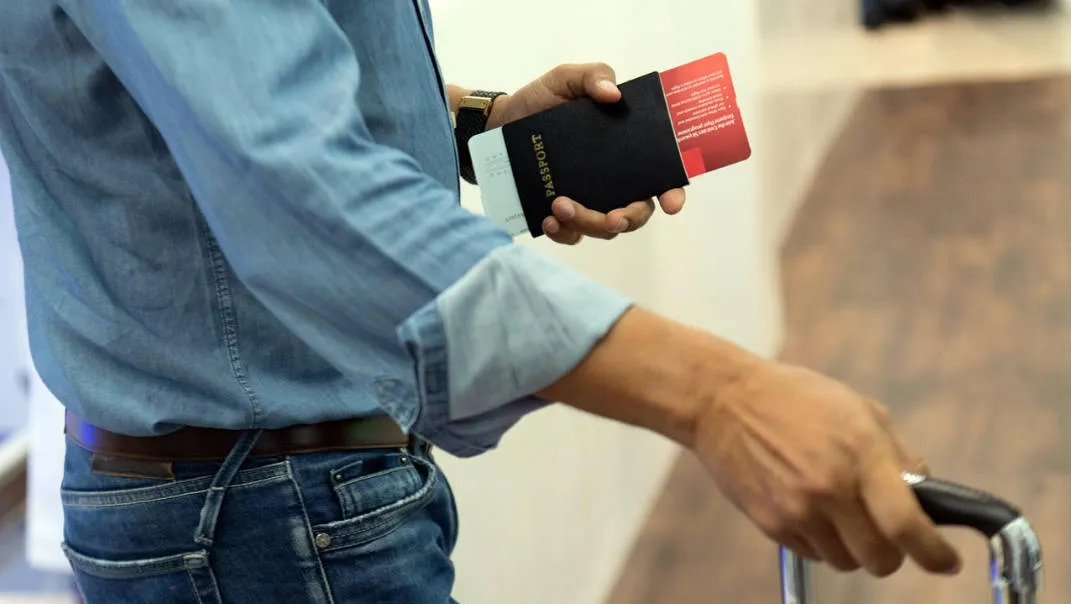
II. The Domestic Flight Security Check-In Flow
Traveling within mainland China is usually straightforward once you understand the steps. For a non-Chinese citizen, your original passport is your primary identity document for the entire process.
Phase 1: Airport Entry and Document Check
Unlike in many Western airports, you may encounter security personnel checking documents and tickets before you even reach the check-in counter or the main security checkpoint.
-
Ticket and ID Check: Present your Original Passport and E-Ticket Confirmation to the staff at the airport entrance or near the check-in area. They will verify your identity against your booking.
-
Check-in and Bag Drop: Proceed to your airline's counter.
-
Present your Original Passport to receive your Boarding Pass.
-
Check any luggage that contains liquids (other than small personal cosmetics), tools, or sharp items. This is critical—China's carry-on rules are very restrictive.
-
Phase 2: Security Screening (Anjian 安检)
This is the most time-consuming step and requires maximum preparation. You must strictly adhere to the rules on liquids and, especially, batteries.
1. Preparation (The Stricter Rules)
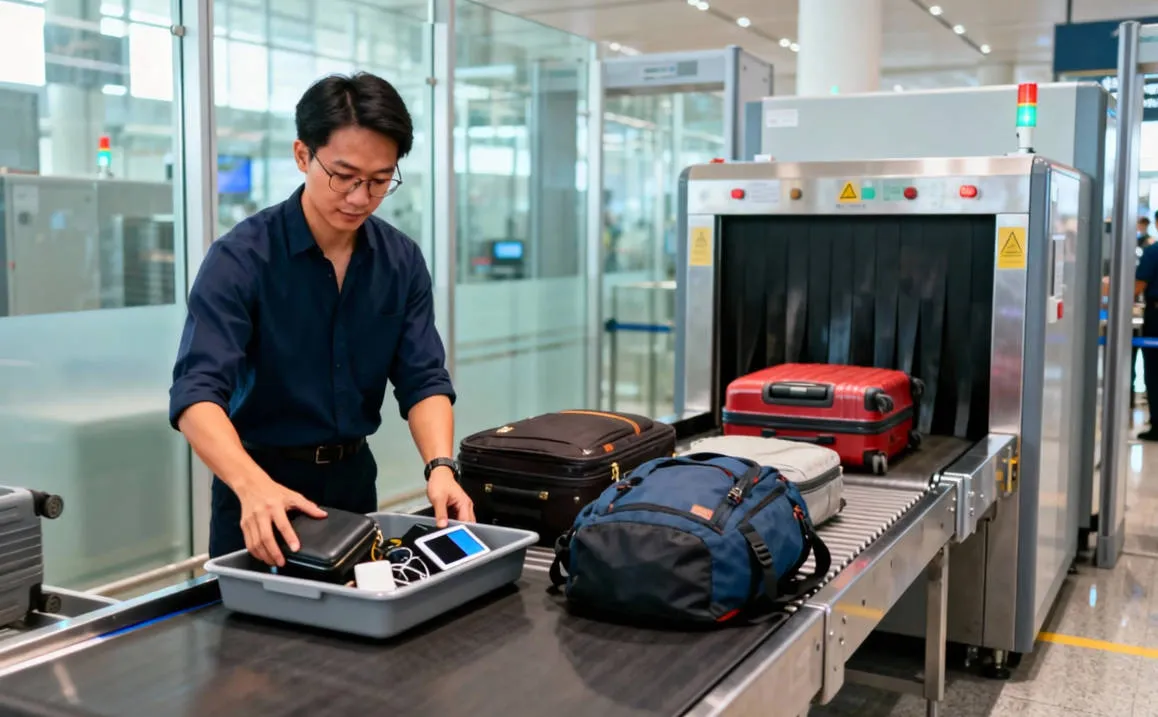
You must take all of the following out of your carry-on bag and place them in separate trays:
-
Laptop and Large Electronics: Laptops, tablets, and anything larger than a mobile phone.
-
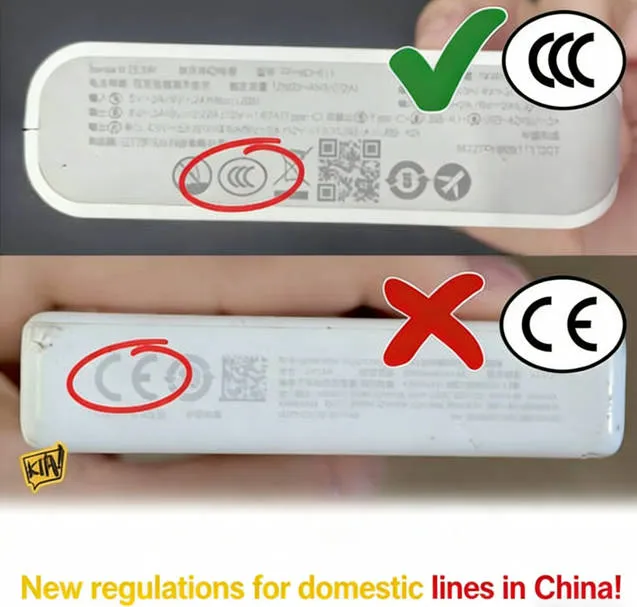
Power Banks / Spare Batteries: CRUCIAL. All power banks and spare lithium batteries must be taken out. They must be clearly marked with the Watt-Hour (Wh) rating, and many airports now strictly enforce the China Compulsory Certification (3C/CCC) Mark for domestic flights.
-
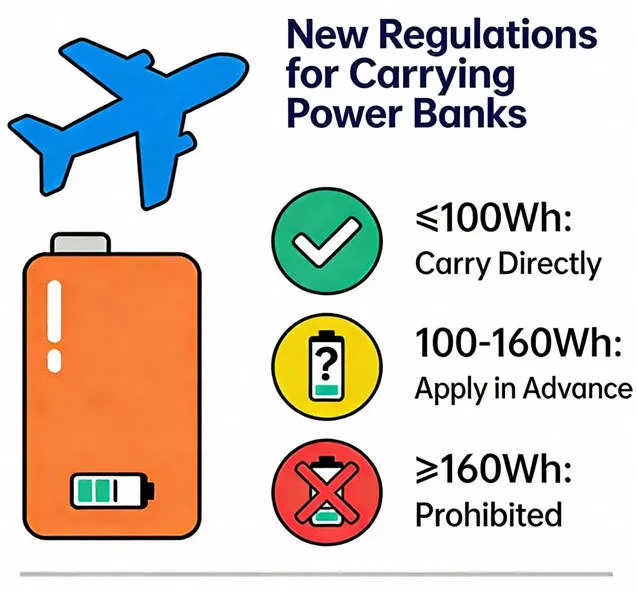
Capacity Limit: <100 Wh is allowed. 100 Wh to 160 Wh requires airline approval. 160 Wh is prohibited.
-
NEVER pack power banks or spare batteries in checked luggage.
-
-
Umbrella: This is often required to be separated and placed in a bin.
-
Liquids / Cosmetics: Liquids are generally prohibited in carry-on for domestic flights (drinking water, beverages, etc.).
-
Cosmetics Exception: A small amount of personal-use cosmetics (e.g., face cream, hand lotion, toothpaste) is allowed, limited to one container of each variety, and each container must be ≤ 100 mL. These may be subject to an open-bottle inspection.
-
💧 Domestic Flight Liquid Rules (Clarified) Unlike international flights where you get a 1-liter zip-top bag, China's domestic rules are stricter but nuanced:
-
Beverages: Absolutely no drinking water, coffee, or sodas allowed through security. You must drink them or throw them away.
-
Cosmetics: You are allowed one container of each type of cosmetic (e.g., one face wash, one lotion), and each must be under 100ml. You do not need to put them in a plastic bag, but security may ask you to open the bottle and smell it, or put a testing strip inside to verify it is not dangerous.
-
-
-
Remove Outerwear and Items from Pockets: Coats, jackets, belts, watches, keys, phones, and wallets must be placed in a bin.
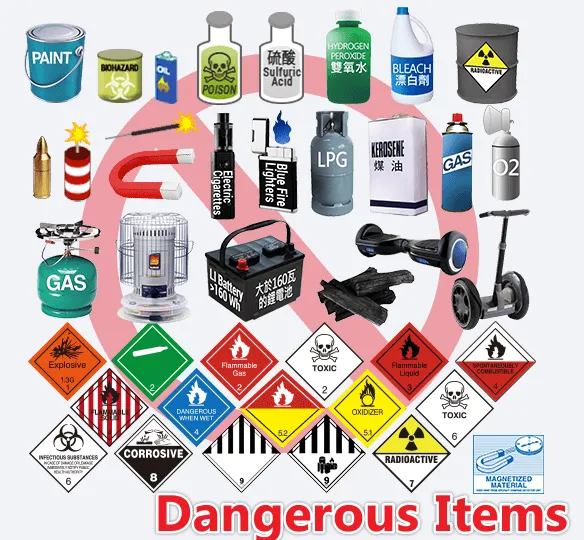
2. Prohibited Items (Strictly Enforced)
Security staff will rigorously check your carry-on bags for these items:
-
Lighters and Matches: Strictly BANNED in both carry-on and checked baggage. They will be confiscated without exception.
-
Knives/Sharp Objects: Even small pocket knives, multi-tools, large scissors, and professional knives must be in checked baggage.
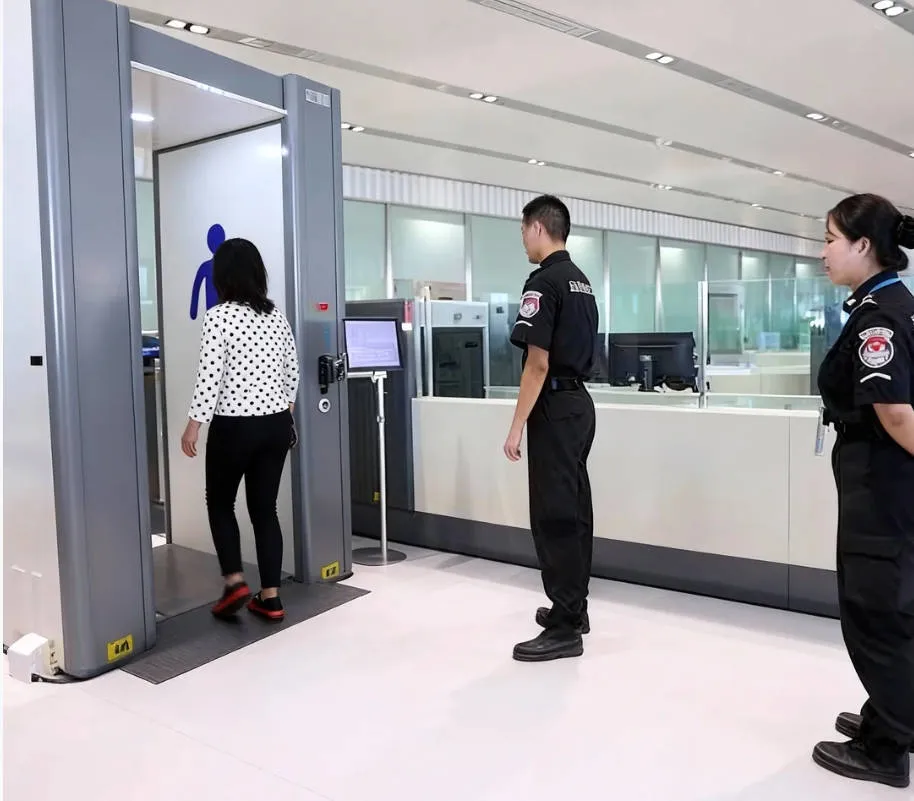
3. Body Scan and Bag Check
-
Walk-Through: You will pass through a metal detector or a body scanner. Be prepared for a quick, targeted physical pat-down, which is common if an alarm is triggered.
-
Intense Bag X-ray: Your carry-on will be thoroughly scanned. If the image is unclear or suspicious (especially for liquids, batteries, or metal objects), your bag will be pulled for a manual search.
Phase 3: Collection and Proceeding to Gate
-
Collect Items: Gather all your belongings, paying extra attention to your Passport, Boarding Pass, and your Power Banks/Batteries, as these are the items most likely to be separated and held for inspection.
-
Repack: Move quickly to the designated repacking area.
-
Gate: Proceed directly to your gate. The boarding process is typically quick and lines are very strictly controlled.
The two things foreign travelers struggle with most in China's domestic security flow are the strict no-tolerance policy on lighters/matches and the required removal and inspection of power banks (which must have legible Wh ratings and, ideally, the 3C mark).
III. The International Flight Security Check-In, Customs, and Immigration Flow
Departing China involves mandatory checks by three different Chinese government bodies: Airline Check-in (for document validity), Border Inspection (Immigration), and Security Screening. The procedures are typically more stringent and time-consuming than in many Western countries, particularly regarding security and documentation.
Timing: Arrive 3 to 4 Hours Early
Check-in deadlines for international flights are usually 60 minutes before departure and are strictly enforced. The queues for Border Inspection and Security can be long, especially during peak travel times.
Phase 1: Airline Check-in and Document Verification
-
Locate Your Airline Counter: Present your documents.
-
Required Documents:
-
Original Valid Passport: This must be the same one you used to enter China.
-
Boarding Pass: You will receive this from the agent.
-
Destination Entry Proof: The agent will rigorously verify that you have a valid passport and all necessary visas or electronic entry permits (like an ESTA for the US or eTA for Canada) for your destination country. They are checking to ensure you will not be denied entry upon arrival.
-
-
Baggage Check-in: Check your large luggage.
-
Critical Rule: All power banks (portable chargers) and spare lithium batteries must be removed from your checked luggage and kept in your carry-on (see Phase 3).
-
-
Keep Documents: Retain your Passport and Boarding Pass—you will need them for the next two checkpoints.
Phase 2: Exit Formalities (Customs and Immigration)
Once you have your boarding pass, you proceed to the government checks.
1. China Customs Declaration
-
Customs Declaration Form: You may need to fill out a China Customs Baggage Declaration for Outward Passengers form (though many common declarations are now integrated into the process).
-
Currency Declaration: You must declare if you are exiting with:
-
RMB 20,000 (or more).
-
Foreign currency in cash equivalent to USD 5,000 (or more).
-
-
Channels: Proceed through the Green Channel (Nothing to Declare) or Red Channel (Goods to Declare). Most tourists will use the Green Channel.
2. Exit Immigration (China Border Inspection)
This is the formal process of clearing out of China.
-
Required Documents: Original Passport and Boarding Pass.
-
Process: Present your documents to the Border Inspection Officer (Immigration Officer).
-
They will confirm your identity and verify your visa/stay status in China.
-
They will check the expiration date of your permitted stay to ensure you are not overstaying your Chinese visa.
-
The officer will stamp your passport with the Departure Stamp, formally marking your exit from the country.
-
⚠️ Overstay Warning: If you have overstayed your permitted duration on your visa or residence permit, you will be stopped here and may face fines, detention, or deportation proceedings.
Phase 3: Security Screening
China's security screening is known for being extremely thorough.
-
Preparation: Remove all items as instructed by security staff. You should remove:
-
All Electronics: Laptops, tablets, cameras, etc.
-
Power Banks/Spare Batteries: Must be taken out of your bag and placed in a separate tray. They must have the Watt-Hour (Wh) rating clearly visible and must not exceed 100 Wh (or 160 Wh with prior airline approval).
-
Liquids (Standard International Rule): Containers must be ≤ 100 mL and fit into one resealable, clear plastic bag (max 1L). Place this bag in a separate tray.
-
Outerwear, Belts, and Watches.
-
-
Prohibited Items:
-
Lighters and Matches: STRICTLY BANNED in both carry-on and checked luggage. They will be confiscated without exception.
-
Sharp Objects: Any restricted knives or tools must be checked.
-
-
Screening: Proceed through the body scanner. Be prepared for a full, targeted physical pat-down, which is a routine part of the process if any alarms are triggered.
After clearing security, you will be in the international departure lounge, ready to proceed to your gate.
IV. Crucial China Airport Security Rules You Must Know
That is one of the most important things to know when traveling through China, as the security regulations are highly specific and strictly enforced. Violating these rules—especially the ones regarding batteries and lighters—will result in confiscation of the items and significant delays.
1. Lithium Batteries & Power Banks (The Strictest Rule)
This is the most common reason for security delays and confiscation for international travelers.
| Item | Rule | Details |
| Location | Must be in Carry-on ONLY. | NEVER pack power banks or spare lithium batteries in your checked luggage. They must be with you in the cabin. |
| Power Rating | Capacity must be clearly labeled. | If the Watt-Hour (Wh) rating is faded, illegible, or missing, the item will be confiscated. You should be able to clearly read the Wh or mAh rating. |
| Capacity Limit | ≤ 100 Wh Allowed. | This is the standard limit (roughly ≤ 27,000 mAh). Most phones and small tablet batteries fall within this range. |
| High Capacity | 100 Wh to 160 Wh Requires Approval. | You must get permission from your airline in advance. You are typically limited to two such spare batteries. |
| Prohibited | > 160 Wh is BANNED. | No exceptions for carry-on or checked baggage (except for mobility aids). |
| CCC Certification | (HIGHLY RECOMMENDED) | For flights departing China, power banks without the China Compulsory Certification (CCC or 3C) mark are being strictly banned by some airlines/airports, even for international flights. To avoid potential confiscation, if your power bank lacks the clear CCC mark, consider leaving it behind or purchasing a certified one locally. |
| In-Flight Use | Must be turned OFF. | Power banks must be completely switched off during the entire flight and should not be used or charged. |
2. Lighters and Flammable Items
This is a non-negotiable, zero-tolerance rule in China.
-
Lighters and Matches are BANNED: You are prohibited from carrying lighters, matches, or any ignition devices in both your carry-on and checked luggage.
-
Confiscation: If found, they will be immediately confiscated, and you may face delays and questioning.
-
Self-Heating Food: Products like self-heating hot pots or self-heating rice meals are also generally prohibited in both checked and carry-on bags due to the risk of uncontrolled combustion.
3. Liquids, Gels, and Aerosols (LAGs)
The international rule applies, but screening is often more rigorous.
-
ontainers: All liquids must be in containers of ≤ 100 mL (or 3.4 oz).
-
Bag: All containers must fit into one transparent, resealable plastic bag (like a quart-sized Ziploc bag).
-
Removal: You must remove this plastic bag from your carry-on luggage and place it in a separate tray for screening.
-
Duty-Free: Duty-free liquids (like liquor or perfume) bought at the airport must be in a tamper-evident, sealed plastic bag (STEB) with the receipt visible. If the bag is opened before you reach your final destination, the contents may be confiscated at a connecting airport's security checkpoint.
4. Security Screening Process
Be prepared to fully divest your bags and be ready for pat-downs.
-
Full Divestiture: You must remove all large electronics (laptops, tablets, cameras, etc.) from your carry-on bag and place them in separate trays.
-
Thorough Inspection: Chinese security personnel are known for being very methodical. If an X-ray image is unclear, they will perform a manual inspection of your bag, which can be time-consuming.
-
Footwear/Belts: Be prepared to remove your shoes and belts, just as in the US/Europe, unless you are using a special channel (if available).
V. Pro Tips for a Smoothest Journey
Follow these tips to minimize time spent waiting and maximize efficiency during the China travel tips part of your journey:
-
Dress for Security: Wear easily removable shoes, and minimize accessories like belts and heavy jewelry to speed up the process.
-
Organize Your Carry-On: Place your power bank, laptop, and 100ml liquid bag (for international flights) at the very top or in easily accessible pockets so you can pull them out quickly.
-
Use E-Channels (If Eligible): If you are a frequent traveler or a Chinese national, using the automated border control channels will save significant time during immigration.
-
Stay Informed: Check your airline and the airport's official website a day before your flight for any last-minute regulatory changes, especially regarding health declarations or new China airport security protocols.
-
Allow Extra Time: Even with efficient processes, large airports mean long walks and potential queues. Always give yourself a comfortable buffer.
-
Be Polite: Chinese security staff are professional and simply enforcing strict national rules. Cooperation and politeness will always result in the fastest, smoothest experience.
VI. Frequently Asked Questions (FAQ)
Q: How early should I arrive for a domestic flight in China?
A: At least 2 hours, more during holidays.
Q: Do domestic flights in China have liquid limits?
A: No strict 100ml limit, but liquids must pass security screening.
Q: Do I need to print a boarding pass?
A: Digital boarding passes are accepted at most airports.
Q: What about power banks on international flights?
A: Allowed without 3C for foreigners, but check capacity limits.
Q: What if my flight is delayed?
A: Airlines provide meals/accommodations for long delays; check policies.
Q: Can I bring food?
A: Yes, but avoid liquids and strong odors.
Q: How long does airport security take?
A: Domestic: 10–25 minutes. International: 20–45 minutes (Varies by airport and season)
Mastering China's airport security and check-in process ensures stress-free travel, whether zipping between Shanghai and Beijing domestically or jetting off internationally from Guangzhou. Stay updated via CAAC or airline websites, as rules evolve. Safe travels—explore China's wonders with confidence! For more tips, check official airline resources or travel forums.
Related guide:
China Travel Guide 2026: Airport, VPN, Visa & Payment Survival