Want to experience slow travel in China? Discover the ultimate guide to taking a green train. Compare K, T, and Z trains, understand hard sleeper vs. soft sleeper, and book your tickets easily.
China today is synonymous with speed. If you travel here, your first instinct will likely be to book a ticket on the Fuxing or Hexie—the country’s cutting-edge bullet trains. Whispering across the landscape at a breathtaking 350 km/h (217 mph), these sleek white marvels are triumphs of modern engineering. They are quiet, sterile, incredibly efficient, and they will get you from Beijing to Shanghai before your laptop battery dies.
But in the rush to shave hours off our itineraries, we often shave the soul out of our journeys.
Running on parallel tracks, completely bypassed by the digital frenzy of modern China, is another railway network. These are the Lǜpíchē (绿皮车)—literally, the "Green-Skinned Trains." Designated by the letters K, T, or Z, these retro, dark-green carriages rumble along at a leisurely 60 to 120 km/h. They are loud, they are bumpy, and they are glorious.
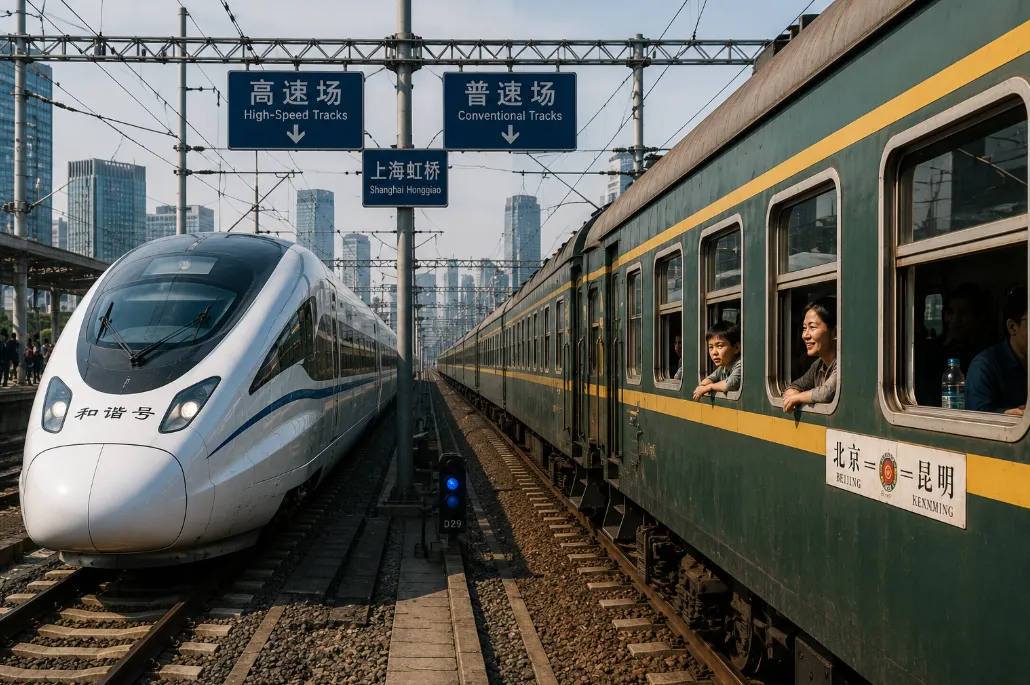
For the modern traveler, choosing a Chinese green train over a bullet train is not a compromise on budget; it is a conscious embrace of slow travel in China.
On a bullet train, you are merely cargo being efficiently transported from Point A to Point B, surrounded by passengers quietly staring at their smartphones. On a green train, the journey is the destination. It is a floating village, a 24-hour social club, and a living museum of Chinese society.
If you want to see where China is going, take the bullet train. But if you want to understand who the Chinese people are, you must board the green train. This is your guide to unlocking the most authentic overnight train in China experience on the rails.
⚡ Quick Guide to China's Slow Trains:
- The Trains: Z-trains are the fastest and most direct; T-trains are regional expresses; K-trains are the slowest and most cultural.
- The Beds: Hard Sleeper (open cabin, 6 beds) is best for socializing; Soft Sleeper (private cabin, 4 beds) is best for privacy and comfort.
- The Booking: Use the official 12306 app or Trip.com to book tickets easily using your passport.
Decoding the Alphabet Soup: What are K, T, and Z Trains?
To the uninitiated, booking a train ticket in China looks like a game of Scrabble. Aside from the high-speed G, D, and C trains, you will see a dizzying array of slow trains prefixed with K, T, or Z.
These letters aren't random; they represent a strict hierarchy of speed, stops, and onboard comfort. Understanding the difference is the key to choosing the right level of adventure for your journey.
This table is optimized to answer search queries like "difference between K T Z trains in China" instantly.
|
Train Prefix |
Chinese Name (Pinyin) |
Translation |
Average Speed |
Best For |
|---|---|---|---|---|
|
Z Train |
直达特快 (Zhídá Tèkuài) |
Direct Express |
120–160 km/h |
Overnight travelers who want comfort, air conditioning, and fewer stops. |
|
T Train |
特快 (Tèkuài) |
Express |
110–140 km/h |
Travelers seeking a balance of budget, speed, and local culture. |
|
K Train |
快速 (Kuàisù) |
"Fast" (But actually slow) |
90–120 km/h |
Hardcore cultural explorers wanting maximum social interaction. |
The Three Classes of Green Trains, Explained
1. The Z-Train (直达 - Zhida): The "Glamping" of Slow Trains
Don't let the "slow" label fool you. The Z-train is the pinnacle of classic Chinese rail comfort.
"Zhida" means direct. These trains are designed to connect major provincial capitals overnight, skipping almost all the minor stations along the way. They are fully air-conditioned, remarkably clean, and consist almost entirely of sleeper carriages (Soft Sleepers and Hard Sleepers).
-
The Vibe: Quiet, business-like, and highly efficient. If you want to fall asleep in Beijing and wake up in Xi'an without feeling exhausted, the Z-train is your best bet.
-
Popular Routes for Travelers:
-
Beijing to Xi'an (Z19 / Z43): The ultimate time-saver. Board at 8:00 PM in Beijing, enjoy a comfortable sleep in a soft sleeper, and step off at 8:30 AM the next morning right next to Xi'an's ancient city walls.
-
Beijing to Lhasa, Tibet (Z21): A legendary 40-hour journey across the roof of the world, equipped with oxygen outlets to help passengers adjust to the altitude.
-
Shanghai to Xi'an (Z92): Perfect for bridging China's futuristic financial capital with its ancient imperial heart.
-
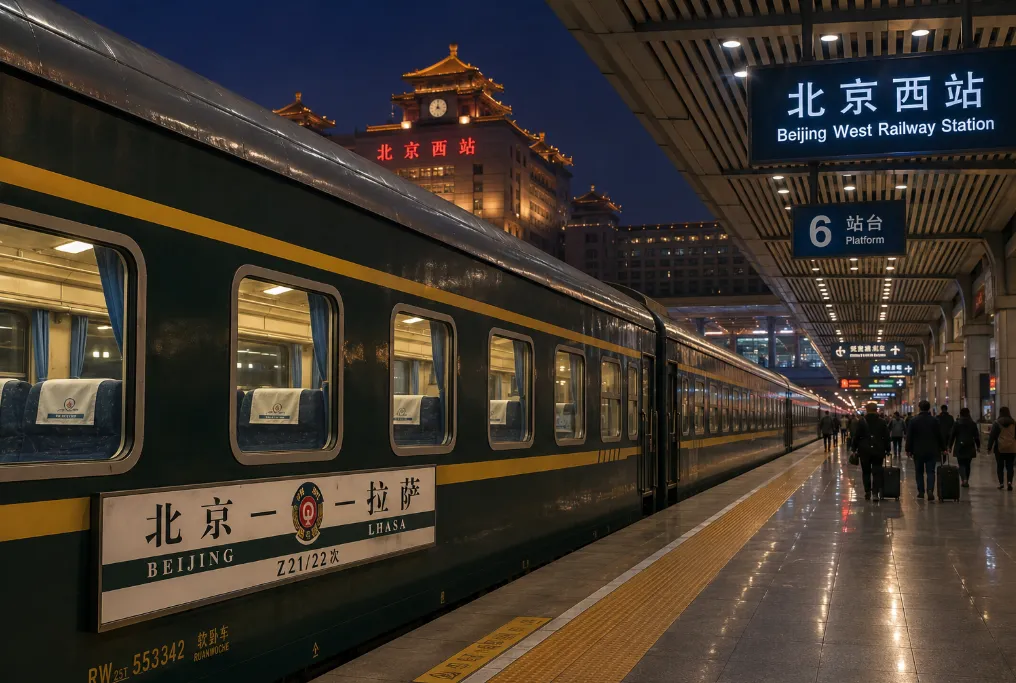
2. The T-Train (特快 - Tekuai): The Classic Regional Workhorse
The T-train is a step down in speed but a massive step up in local color.
While still air-conditioned and comfortable, T-trains stop at regional hubs and medium-sized cities. You will see a much wider demographic here: college students heading home, families visiting relatives, and local merchants.
-
The Vibe: Lively but orderly. It offers the perfect middle ground for travelers who want to experience the legendary train social life without committing to the organized chaos of the slower lines.
-
Popular Routes for Travelers:
-
Beijing to Guilin / Nanning (T289): Connects the bustling capital to the ethereal, mist-shrouded karst mountains of Guilin—a route packed with stunning countryside views as you head south.
-
Beijing to Urumqi, Xinjiang (T302): A massive, multi-day odyssey tracing the ancient Silk Road, moving from central plains to desert dunes and dramatic mountain ranges.
-
Shanghai to Guangzhou (T169): A classic regional run linking the Yangtze River Delta with the Pearl River Delta, passing through the green heart of southern China.
-
3. The K-Train (快速 - Kuaisu): The Ultimate Cultural Melting Pot
The K-train is the glorious iron paradox of China. Although "Kuaisu" translates to "fast," these are the slowest of the standard long-distance network.
K-trains stop at almost every town, village, and mountain pass along their route. Because they are the cheapest option, they attract China's working class, rural farmers, and adventurous backpackers.
-
The Vibe: A floating village. On a K-train, the air smells of instant noodles, tobacco (in the vestibules), and fresh fruit. People will stare at you with friendly curiosity, offer you sunflower seeds, and practice their English. It is loud, it is chaotic, and it is where the best travel stories are born.
-
Popular Routes for Travelers:
-
Harbin to Mohe (K7039 / K7041): Known as the "Arctic Express." It cuts through the snow-capped forests of the Greater Hinggan Mountains to China's northernmost outpost. It is incredibly cozy inside while it’s -30°C outside.
-
Guangzhou to Haikou, Hainan (K1167): A true bucket-list route. This train actually rolls onto a giant ferry (the Yuehai Ferry) to cross the ocean strait to Hainan Island. Passengers remain inside the train carriages while the entire train sails across the sea!
-
Chengdu to Xichang (K113): A slow wend through the spectacular, gravity-defying tunnels and spiraling bridges of the old Chengdu-Kunming railway line.
-
Real Talk: "Old Green" vs. "New Green"
Before you book, there is one crucial myth we need to bust: the open-window illusion.
Many Western travelers expect every green train to look like a 1970s steam-era movie, where you can hang your head out of the window to catch the mountain breeze.
In reality, China has modernized almost its entire fleet. Most K, T, and Z trains running today are "New Green" (新绿皮). They are painted the classic dark green on the outside, but inside they feature modern air conditioning, sealed windows, power outlets (in soft sleepers), and vacuum toilets.
If you want the ultra-retro, non-air-conditioned experience where the windows actually slide open (often called Puke 普客 or slow commuter trains), you have to seek out specific, remote regional routes—such as the famous mountain trains in Sichuan or Xinjiang. For 95% of travelers, the modernized K, T, or Z trains offer more than enough vintage charm without the dust and heat.
[China Train Guide: High-Speed & Conventional Rail] introduces the modern High-Speed Rail (HSR) and the enduring Conventional (Slower) Trains.
Hard sleeper vs soft sleeper China: Which Class Should You Choose for Your Overnight Train?
When booking a ticket on a K, T, or Z train, you will be faced with three main seating classes: Hard Seat (Yingzuo), Hard Sleeper (Yingwo), and Soft Sleeper (Ruanwo).
The names can be highly misleading. A "Hard Sleeper" is actually padded and quite comfortable, while a "Hard Seat" is indeed a test of physical and mental endurance. Choosing the right class is the difference between a memorable cultural adventure and a sleepless night of survival.
Here is what you need to know to make the right choice.
1. The Hard Sleeper (硬卧 - Yingwo): The Sweet Spot for Adventurers
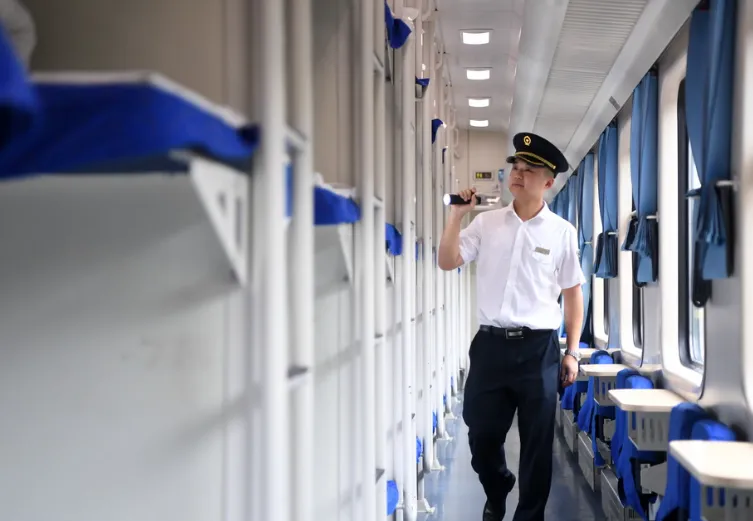
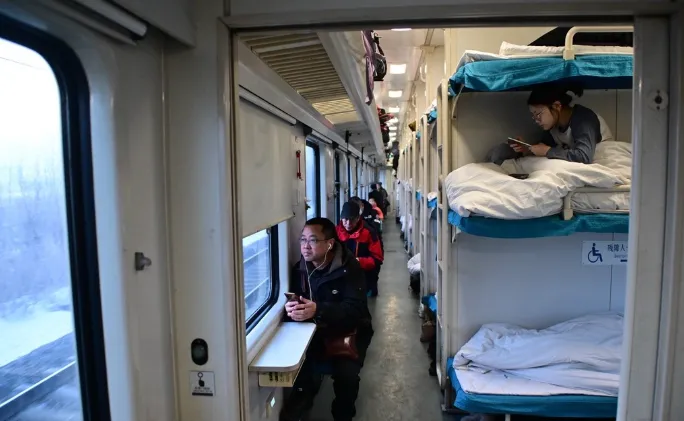
For 90% of travelers, the Hard Sleeper is the absolute best way to experience a Chinese green train. It offers a perfect balance of budget, comfort, and rich social interaction.
-
The Layout: A hard sleeper carriage consists of open compartments with no doors, lining one side of the aisle. Each compartment has six bunks stacked in columns of three: Lower (Xiapu), Middle (Zhongpu), and Upper (Shangpu).
-
The Vibe: Exceptionally communal. Because there are no doors, you will constantly see your neighbors, hear children playing, and watch people sharing food. It is highly safe, cozy, and vibrant.
The Unspoken Rules of the Bunks:
-
The Lower Berth (下铺 - Xiapu): The most expensive and most coveted. You don’t need to climb, you have the most headroom, and you have easy access to the small table. The Unspoken Rule: During the day, the lower bunk acts as a communal sofa. Passengers from the middle and upper bunks will sit on the edge of your bed to eat, read, and chat. If you value absolute personal space, this might bother you; if you want to socialize, it is perfect.
-
The Middle Berth (中铺 - Zhongpu): The balanced choice. It requires a short climb up a ladder, offers moderate headroom, and gives you a bit of elevation away from the aisle traffic. It's the perfect compromise.
-
The Upper Berth (上铺 - Shangpu): The cheapest and most private. Climbing up to the third tier requires some agility, and you cannot sit upright because the ceiling is close. However, once you are up there, nobody will disturb you. It is your own private nest, safe from the communal bustle below.
2. The Soft Sleeper (软卧 - Ruanwo): A Touch of Retro Luxury
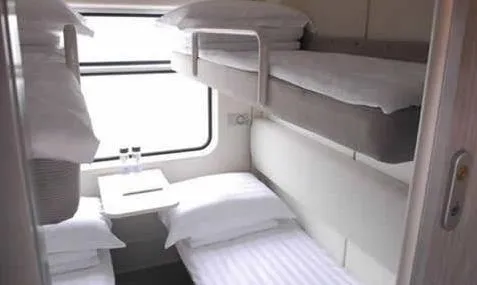
If you value privacy, quiet, and a good night’s sleep above all else, the Soft Sleeper is your best option.
-
The Layout: Instead of open bays, soft sleeper carriages feature fully enclosed compartments with a sliding, lockable door. Each cabin has only four bunks (two lower, two upper) which are wider and significantly softer than those in hard sleeper.
-
The Amenities: You will find individual reading lights, slipper sets, a sturdier table, and—crucially—individual power outlets (though these are sometimes located in the hallway on older trains).
-
The Vibe: Much quieter and more business-like. It is popular with families, older travelers, and professionals. While you will still meet people, the interactions are far more private.
3. The Hard Seat (硬座 - Yingzuo): The Ultimate Endurance Test
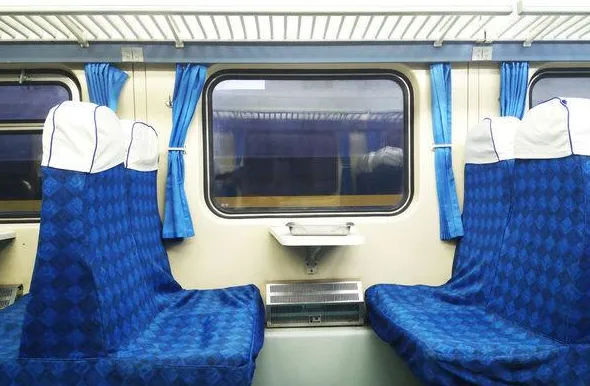
We must be honest here: do not book a Hard Seat for an overnight journey unless you are a battle-hardened backpacker seeking extreme cultural immersion.
-
The Layout: A hard seat carriage is configured in 3+2 bench rows facing each other across small tables. The seats are upright, have very little padding, and do not recline.
-
The Vibe: Beautiful chaos. These carriages are incredibly cheap, meaning they are packed to absolute capacity. During major holidays, the aisles will be filled with "standing ticket" (Wuzuo) passengers leaning against seats. The air is thick with the smell of instant noodles, sunflower seed shells cover the floor, and the noise of card games, crying babies, and loud phone speakers is constant.
-
The Silver Lining: If you are only traveling for 2 to 4 hours during the day, a hard seat is a fascinating, high-energy experience. You will make friends instantly, be offered countless snacks, and witness a slice of raw, unfiltered Chinese life. But for a 12-hour overnight haul? It is a recipe for sleep deprivation.
To learn more about sleeper trains in China, read this [China Sleeper Trains: Hard, Soft & First Class Guide], then you can make a right choice.
Quick Comparison: Which Class to Book?
Below is a direct comparison of classes, using the iconic Beijing to Xi'an overnight train (Z or T-class, ~12 hours) as a real-world price benchmark.
|
Feature |
Hard Seat (Yingzuo) |
Hard Sleeper (Yingwo) |
Soft Sleeper (Ruanwo) |
|---|---|---|---|
|
Comfort Level |
Low (Upright benches, no recline) |
Medium-High (Padded lie-flat bed) |
High (Wider bed, quiet cabin) |
|
Privacy |
None |
Low (Open-air compartment) |
High (Lockable door) |
|
Socialization |
Maximum (Can be overwhelming) |
Excellent (Warm and friendly) |
Low-Medium (Calm and private) |
|
Sample Price (Beijing ➔ Xi'an) |
~¥156 CNY (~$22 - $25 USD) |
~¥268 CNY (~$40 - $43 USD) |
~¥422 CNY (~$63 - $67 USD) |
|
Best For |
Day trips under 4 hours |
Overnight journeys (Solo or Group) |
Couples, families, and light sleepers |
Why the China Slow Train Experience is a Cultural Must
If modern high-speed rail is a testament to China’s breathtaking future, the green train is a living museum of its heart and soul.
On a 350 km/h bullet train, the atmosphere is whisper-quiet, sterile, and isolated. Passengers sit in forward-facing rows, eyes locked onto smartphone screens, noise-canceling headphones firmly in place. It is highly efficient, but it lacks friction—and friction is where culture happens.
Stepping onto a K, T, or Z train is like stepping into a parallel universe. Here, the hurry dissolves, and the collective spirit of old-school travel takes over.
1. The Microcosm of Chinese Society: Breaking Down Barriers
The layout of a green train—especially in the Hard Seat (Yingzuo) and Hard Sleeper (Yingwo) carriages—is designed for interaction. Instead of isolated airplane-style rows, seats face each other across small, shared tables.
On a green train, you cannot remain a stranger for long. Within an hour of departure, the barriers of language, culture, and nationality begin to melt away.
-
The Ritual of Sharing: The universal icebreaker on a Chinese train is food. Do not be surprised if your seatmate—perhaps a retired grandmother or a migrant worker returning home—thrusts a handful of roasted sunflower seeds (Guazi), a sweet mandarin orange, or a vacuum-packed chicken claw into your hands. Refusing is polite at first, but accepting with a warm "Xièxie" (thank you) instantly makes you part of the family.
-
The Unfiltered Conversations: Free from the rush of daily life, people want to talk. Uncles (Dashu) will ask you about your home country, marvel at your height, or try to decode your itinerary. College students will eagerly try out their English. You will hear stories about local village life, wedding traditions, and economic shifts that you would never find in a travel brochure.
2. The Midnight Dining Car: Wok-Hei at 100 km/h
One of the best-kept secrets of the Chinese slow train is the Dining Car (Canche), usually located in the middle of the train (typically Carriage 9).
Unlike the pre-packaged, microwaved plastic trays served on high-speed bullet trains, many traditional green trains still feature a fully functioning kitchen. Here, the train chef works with a live fire (or high-powered induction woks) to whip up fresh, classic Chinese stir-fries.
-
The Cinematic Vibe: Late at night, after the cabin lights in the sleeper carriages are dimmed, the dining car transforms. It becomes a moody, nostalgic salon. Lit by warm, slightly yellow lights, travelers sit with a cold bottle of Tsingtao beer, watching the pitch-black Chinese countryside slide past the window.
-
What to Order: Ask for classic comfort foods like Tusi Jidian (Scrambled Eggs with Tomatoes - 番茄炒蛋) or Yuxiang Rousi (Shredded Pork in Garlic Sauce - 鱼香肉丝). Eating fresh, steaming hot food with the gentle, rhythmic rocking of the carriage is an almost poetic experience that feels straight out of a Wong Kar-wai film.
3. The Symphony of Senses: Sounds, Smells, and Soul
To truly understand the green train, you have to appreciate its unique sensory ecosystem. It is loud, it is pungent, and it is incredibly vibrant.
The Soundtrack of the Rails
You will fall asleep and wake up to a highly specific set of sounds:
-
The rhythmic, nostalgic clack-clack, clack-clack of the steel wheels hitting the rail joints—a soothing white noise completely absent on the seamless tracks of high-speed rail.
-
The rhythmic, high-pitched chants of the carriage attendants pushing their heavy metal carts down the narrow aisles. The most famous slogan in Chinese railway history, which every local can recite by heart, is:
"Píjiǔ yǐnliào kuàngquánshuǐ, huāshēng guāzǐ bābǎozhōu! Lái, tǔi shōu yīxià!"
Translation: "Beer, sodas, mineral water, peanuts, melon seeds, eight-treasure congee! Alright, tuck your legs in!"
The Aroma of Comfort
If the green train had a signature scent, it would be a mix of hot steam, faint tobacco smoke from the carriage vestibules, and—above all—instant noodles (方便面 - Fangbianmian).
Every carriage is equipped with a roaring, coal-fired or electric boiler providing an endless stream of boiling water. Within minutes of boarding, half the passengers will have brewed a paper tub of Master Kong (Kangshifu) Braised Beef noodles. The rich, savory aroma of MSG, soy sauce, and scallions wafting through the cabin is the ultimate olfactory trigger for Chinese travel nostalgia. It is a smell that, to any local, means journey.
The Ultimate Survival Guide for Riding a Chinese Green Train
Riding a Chinese green train is an incredible adventure, but it does require a bit of preparation. Because these trains represent a vintage era of travel, they lack some of the plug-and-play conveniences of modern high-speed rail.
To help you navigate your journey smoothly, here is the ultimate practical survival guide—from booking your tickets to packing your bags.
1. How to buy China train tickets online as a Foreigner
China uses a real-name ticketing system. This means every single train ticket is tied directly to your passport number. You do not need a physical paper ticket; your passport is your ticket. You simply scan your passport at the station gates to board.
There are two primary ways for international travelers to book tickets:
Option A: The Official 12306 App (Best Price)
@ Google Play | @ Apple App Store
Railway 12306 is the official app of China Railway. It is free, has no booking fees, and now has an English interface.
-
The Process: Download the "Railway 12306" app. Register using your email address and upload a clear photo of your passport's photo page for identity verification.
-
Keep in Mind: ID verification is manual and can take anywhere from a few hours to a day. It is best to set up your account well before your planned travel date. Once verified, you can search for routes and pay directly using international credit cards (Visa, Mastercard), WeChat Pay, or Alipay.
- [12306 App English Guide] details how English-speaking users can use 12306, while [12306 Passport Verification Failed? How Foreigners Can Fix It Fast] help you when errors come.
Option B: Trip.com (Easiest & Most User-Friendly)
If the official app feels too clunky, Trip.com is the gold standard third-party booking platform for international travelers.
-
The Process: Simply search for your route in English, enter your passport details, and pay with any major international credit card or PayPal.
-
Keep in Mind: Trip.com charges a small service fee per ticket (usually around $2 to $3 USD), but they offer 24/7 English customer support and handle any ticket refunds or changes seamlessly on your behalf.
-
📱 Crucial Tip: Set Up Mobile Payments Before You Board Modern China is almost entirely cashless, and this is absolutely true on green trains. While the attendants pushing the snack carts or the staff in the dining car might reluctantly accept physical cash, they rarely carry change. Setting up Alipay (支付宝) or WeChat Pay (微信支付) and linking them to your international credit card before you step onto the platform is essential. You will need them to purchase bottled water, instant noodles, or fresh meals on board.
2. What to Pack: The Green Train Survival Checklist
Because green trains are retro, packing the right gear will drastically improve your comfort. Make sure these four essentials are in your daypack:
-
🔋 A High-Capacity Power Bank: While Soft Sleepers usually have power outlets, Hard Sleepers have very few (often just a couple of shared outlets in the aisle), and Hard Seats have none. Do not rely on the train to charge your phone or camera. Bring a fully charged power bank.
-
🍵 An Insulated Thermal Flask/Tumbler: Every carriage on a green train features a roaring hot water boiler at the end of the aisle. Tap water on Chinese trains is not potable, but the boiling water is perfectly safe. Bring a thermal flask to brew your own tea, coffee, or instant noodles. It’s the ultimate way to participate in China's legendary "hot water culture."
-
🧻 Toilet Paper and Wet Wipes: While train bathrooms are cleaned regularly, they rarely provide toilet paper. Always carry a packet of tissues. Wet wipes are also a lifesaver for wiping down your hands or face after a long, dusty night on the rails.
-
🎧 Noise-Canceling Headphones or Earplugs: Between the rhythmic clack-clack of the tracks, the loud snores of your carriage neighbors, and the early-morning announcements over the PA system, a pair of active noise-canceling headphones (or high-quality earplugs) is non-negotiable for a good night's sleep.
Frequently Asked Questions (FAQ)
Q: Are Chinese green trains safe for solo female travelers?
A: Yes, exceptionally safe. Train travel in China, including green trains, is highly secure. Carriages are well-lit, heavily staffed by train attendants, and monitored. In sleeper carriages, the open layout means you are always in public view, which naturally deters anti-social behavior. Simply exercise normal travel precautions with your personal valuables.
Q: Is there Wi-Fi on K, T, and Z trains?
A: Generally, no. While a few modern Z-trains might offer local Wi-Fi networks, they rarely provide stable internet access. Mobile data reception (4G/5G) is usually decent as you roll through the countryside, but it will drop out frequently in mountainous regions, tunnels, or remote desert expanses. Embrace this as a rare opportunity to enjoy a digital detox!
Q: What are the toilets like on board?
A: Toilets are typically located at the end of each carriage. Most green trains feature classic Eastern squat toilets (which are actually more hygienic on moving trains), though Soft Sleeper carriages often have at least one Western-style sit-down toilet. Toilets flush directly onto the tracks on older models, meaning they are locked by attendants whenever the train stops at a station.
Q: Where do I store my luggage, and is there a weight limit?
A: You store it in your carriage, and there is plenty of space. In Sleeper carriages, you can slide large suitcases directly under the lower berths or place them on the overhead luggage rack across the narrow aisle. In Hard Seat carriages, you must lift bags onto the overhead racks above your seats. While the official weight limit is 20 kg (44 lbs) per adult, it is rarely strictly enforced unless your baggage looks egregiously commercial. Just make sure you can lift your own bags!
Q: Is my luggage and personal gear safe in the open Hard Sleeper carriages?
A: Yes, it is highly safe. Theft is exceedingly rare on modern Chinese trains due to real-name ticketing, frequent patrols by train attendants, and the communal nature of the carriages. However, for peace of mind, keep your passport, wallet, and electronics in your bunk with you while you sleep, and stow your large suitcase under the bottom bunk.
Q: Are there showers on board green trains?
A: No. Standard K, T, and Z trains do not have passenger shower facilities. Even in Soft Sleeper carriages, you will only have access to communal wash basins at the end of the aisle to wash your face and brush your teeth. If you are on an overnight journey, a pack of large body-wipes is your best friend for a quick "refresh" before going to sleep.
Q: Do the train crew speak English, and how do I communicate?
A: Highly unlikely. While major railway stations have English signs and occasional bilingual announcements, the onboard conductors and dining car staff on green trains rarely speak English. To communicate, download an offline translation app (like Google Translate or Pleco) and translate your questions into simplified Chinese. It’s also wise to have your destination name and bunk number written in Chinese characters on your phone. Locals and staff are incredibly patient and will gladly use translation apps or hand gestures to help you out.
Conclusion: Embracing the Spirit of Slow Travel
In a world obsessed with reaching the next destination as fast as humanly possible, the Chinese green train asks you to do something radical: slow down.
Trading a 350 km/h bullet train for a vintage K, T, or Z train is not merely a way to save a few Renminbi. It is an invitation to step off the tourist treadmill and into the living room of the Chinese people. It is a journey defined not by the speed at which you travel, but by the conversations you share over sunflower seeds, the steaming aroma of a fresh bowl of noodles, and the majestic landscapes sliding quietly past a retro green window.
If you want to see how fast China is changing, take the bullet train. But if you want to understand the timeless warmth, grit, and soul of the people who built it, buy a ticket, find your bunk, and climb aboard the green train.