Chengdu and Chongqing are two of the most popular cities to visit in Southwest China, both known for their vibrant food scenes, urban landscapes, and rich cultural heritage. Separated by approximately 300 kilometers, many travelers choose to include both cities in a single itinerary. Whether you are traveling to see the giant pandas in Chengdu or to experience the neon-lit Hongyadong in Chongqing, choosing the right transportation is key to a smooth trip. This guide provides a comprehensive breakdown of high-speed bullet trains (HSR), buses, and flights. Discover schedules, ticket prices, and travel times.
📌 The Quick Verdict
-
The Best Way: Take the G-Series High-Speed Train from Chengdu East Station to Chongqing North Station. It takes about 62–90 minutes and costs ¥154 RMB for a Second Class seat.
-
The Cheapest Way: Take a traditional K-Series train (Hard Seat) for just ¥46 RMB, though it takes 4 to 5 hours.
-
Should I Fly? No. Because the two cities are so close, there are no direct commercial flights. Flying requires a layover in another city and takes 3x longer than the bullet train.

1. Chengdu to Chongqing Transportation Options Overview
To help you make an informed decision, the following table compares the primary modes of transport based on speed, cost, and frequency. While high-speed rail is the most popular choice, other options may better suit specific budget constraints or final destination requirements.
|
Mode |
Total Travel Time |
Ticket Price Range (RMB) |
Frequency |
Best For |
|---|---|---|---|---|
|
High-Speed Rail (G) |
1 – 1.5 hours |
¥140 – ¥160 (2nd Class) |
Extremely High (Every 10-20 mins) |
Most travelers; Business |
|
High-Speed Rail (D) |
2 – 2.5 hours |
¥90 – ¥110 (2nd Class) |
High |
Budget-conscious travelers |
|
Regular Train (K/T/Z) |
3.5 – 5 hours |
¥45 – ¥55 (Hard Seat) |
Moderate |
Extreme budget; Nostalgia |
|
Long-Distance Bus |
3.5 – 4.5 hours |
¥100 – ¥120 |
Moderate |
Suburban destinations |
|
Flight (Not Recommended) |
4+ hours (w/ stopover) |
¥600+ |
Very Low |
N/A (No direct flights) |
Note: G-series (Gaotie) are the fastest "bullet" trains, while D-series (Dongche) are slightly slower but offer excellent value.
2. High-Speed Rail from Chengdu to Chongqing (G & D Trains)
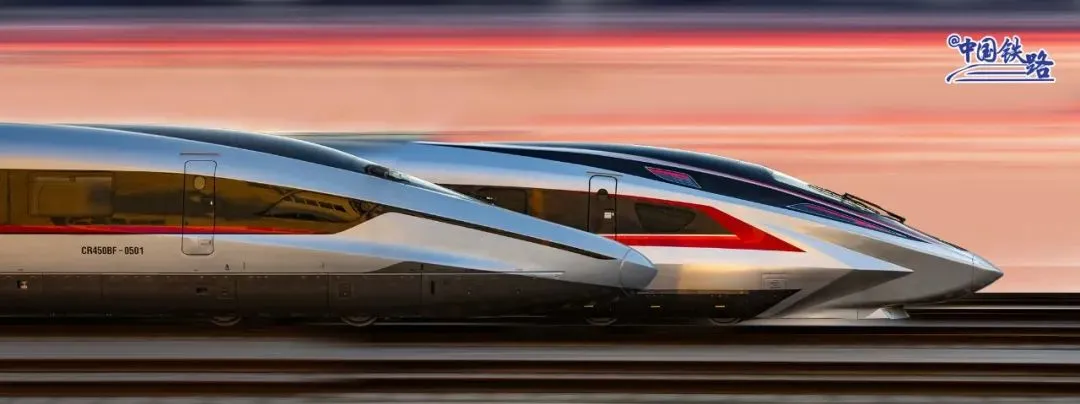
High-speed rail is the preferred method for most travelers due to its exceptional frequency and speed. To choose the right ticket, it is important to understand the differences in pricing and service levels between the various train types and classes available.
2.1 Overview
High-speed rail is the backbone of transportation between Chengdu and Chongqing. This route features the "Chengdu-Chongqing Intercity Railway," a flagship line in China's high-speed network.
-
Commonality: It is the most dominant mode of travel, with over 100 daily departures.
-
G vs D Distinction: G-series (Gaotie) are top-tier bullet trains running up to 350 km/h. D-series (Dongche) are slightly older or use mixed-speed tracks, running at 200–250 km/h.
2.2 Travel Time & Speed
The choice between G and D significantly impacts your journey duration:
-
G-Series (Fastest): Typically takes 62 to 90 minutes. Non-stop "Fuxing Hao" models are the gold standard for speed.
-
D-Series (Standard High-Speed): Typically takes 2 to 2.5 hours. These trains often make more intermediate stops, adding to the total time.
-
Affecting Factors: Stops at stations like Suining or Hechuan can add 15–30 minutes to any itinerary.
2.3 Ticket Prices & Seat Classes
Pricing is tiered based on the speed of the train and the level of comfort:
|
Class |
G-Series Price |
D-Series Price |
Experience |
|---|---|---|---|
|
Second Class |
¥140 – ¥154 |
¥80 – ¥105 |
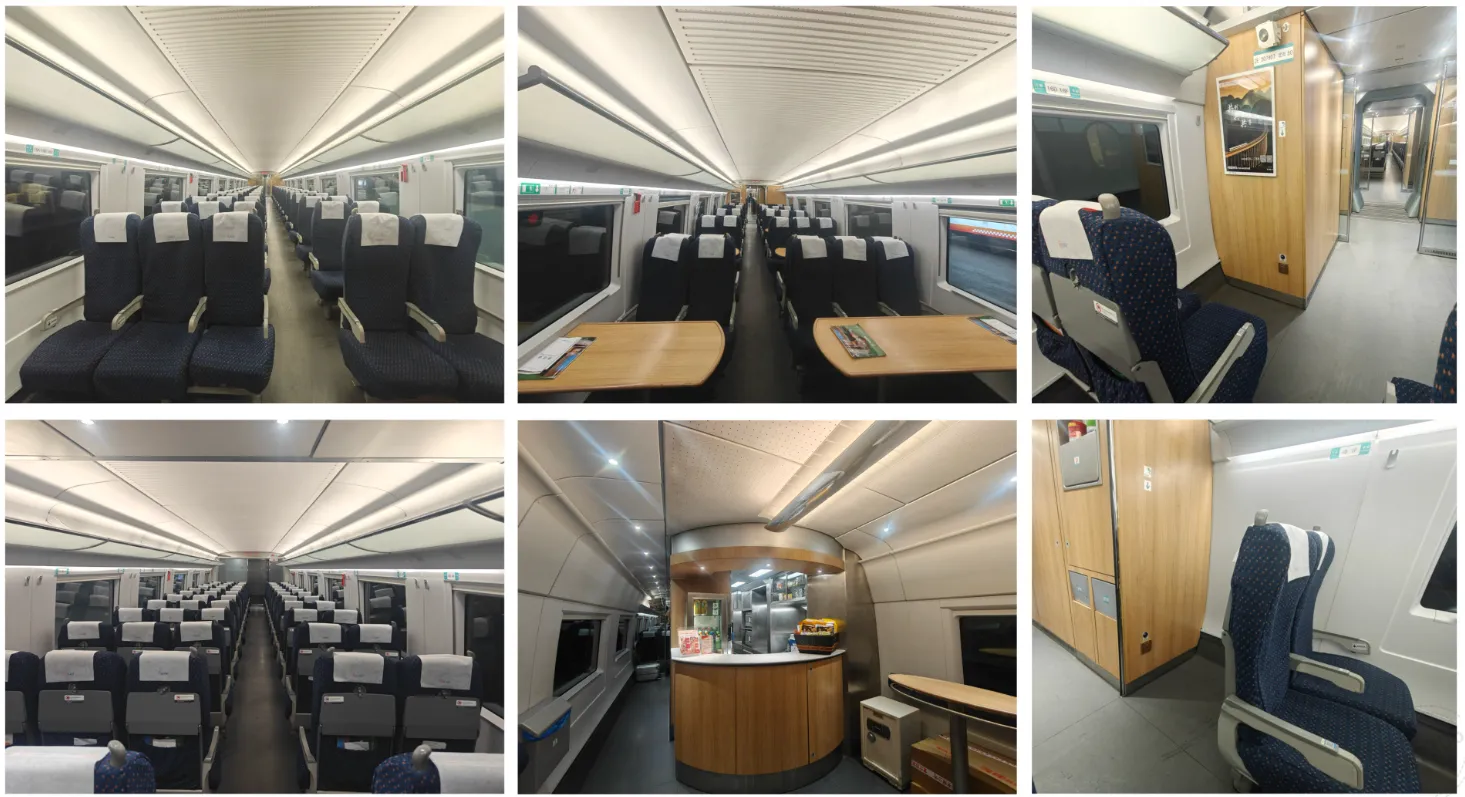
Standard 3+2 seating; best value. |
|
First Class |
¥230 – ¥246 |
¥130 – ¥160 |
2+2 seating; quieter with more space. |
|
Business Class |
¥460 – ¥495 |
N/A (usually) |
Fully reclining pods; VIP lounge access. |
2.4 Departure & Arrival Locations
-
Main Departure Points (Chengdu): Primarily Chengdu East (Dong) Railway Station.
-
Main Arrival Points (Chongqing): Most arrive at Chongqing North (Bei) or Chongqing West (Xi). Shapingba Station is central Chongqing hub that exclusively handles the fastest intercity shuttle trains, putting you right in the heart of one of Chongqing's major commercial districts.
-
Connectivity: All major stations are directly linked to city metro systems (Line 2/7 in Chengdu; Line 3/10 in Chongqing).
2.6 Pros and Cons
-
Pros:
-
Extreme punctuality and "depart-anytime" frequency.
-
City-center access avoids the 1-hour commute to airports.
-
Modern facilities including power outlets and hot water.
-
-
Cons:
-
G-series tickets can sell out instantly during holidays.
-
Terminals are huge; expect a 15-minute walk from entrance to platform.
-
2.7 Best For
-
Business & Time-Sensitive Travelers: Should always prioritize G-series for the 1-hour transit.
-
Budget-Conscious Travelers: D-series offers nearly the same comfort as Second Class G-trains but saves you about ¥50–¥70.
-
Luxury Seekers: Business Class on a G-train is the most premium way to travel in the region.
🧳 Pro Tip: Handling Luggage on the Bullet Train There is no checked baggage system on Chinese high-speed trains. You must carry your luggage on board.
-
Small/Medium Bags: Can be placed on the overhead racks above your seat.
-
Large Suitcases (24"-28"): Must be placed in the dedicated luggage closets located at the front or rear of each carriage. Space is limited, so try to board early to secure a spot for oversized bags!
If you don't know how to buy high-speed train tickets, please read our guide named 12306 App English Guide; if you want to know more about high-speed rail travel, please read this 22 Essential Facts for China Train Travel
3. Regular Trains from Chengdu to Chongqing (K, T, Z)
3.1 Overview
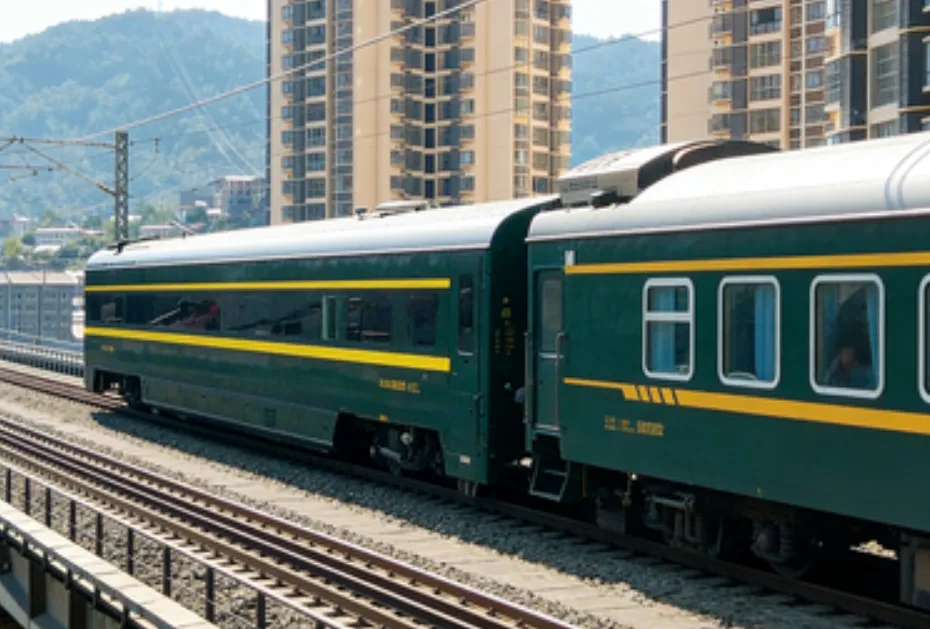
Regular trains, often called "Green Trains" (Lü Pi Che), are conventional locomotives that offer the most economical way to travel between Chengdu and Chongqing.
-
Frequency: While less frequent than high-speed rail, there are still several daily departures available.
-
Typical Use Case: These trains are primarily used by extreme budget travelers or those looking for a "slow travel" experience through the Sichuan countryside.
3.2 Travel Time
-
Average Duration: Typically ranges from 3.5 to 5 hours.
-
Factors Affecting Time: The speed varies by train type (Z is fastest, K is slowest), and the number of intermediate stops in smaller towns significantly impacts the total duration.
3.3 Ticket Prices
-
Price Range: Generally between ¥45 and ¥160 depending on the seat type.
-
Seat/Class Options: * Hard Seat (approx. ¥46): The basic and cheapest option.
-
Hard Sleeper (approx. ¥90 - ¥110): Open compartments with six bunks.
-
Soft Sleeper (approx. ¥140 - ¥160): Private compartments with four bunks.
-
3.4 Departure & Arrival Locations
-
Main Departure Points (Chengdu): Usually Chengdu Railway Station (North Station) or Chengdu East.
-
Main Arrival Points (Chongqing): Mostly Chongqing North or Chongqing Station (Caiyuanba).
-
Context: These stations are generally located in older, very central city districts, though some facilities may feel dated compared to high-speed hubs.
3.5 Pros and Cons
-
Pros:
-
The lowest possible travel cost.
-
Availability of sleeper berths for those who prefer to lie down.
-
A unique, nostalgic cultural experience.
-
-
Cons:
-
Much slower than high-speed options.
-
Crowded conditions, especially in Hard Seat carriages.
-
Older facilities and less consistent cleanliness.
-
3.6 Best For
-
Extreme Budget Travelers: Those prioritizing cost over time.
-
Slow Travel Enthusiasts: Travelers who enjoy the scenery and the social atmosphere of traditional Chinese rail.
-
Sleeper Seekers: People who prefer a bed (Hard/Soft Sleeper) but find High-Speed Business Class too expensive.
China Train Guide: High-Speed & Conventional Rail tells the difference between two types, and this guide named China Sleeper Trains will tell you the difference among Hard, Soft & First Class Guide.
4. Long-Distance Bus from Chengdu to Chongqing
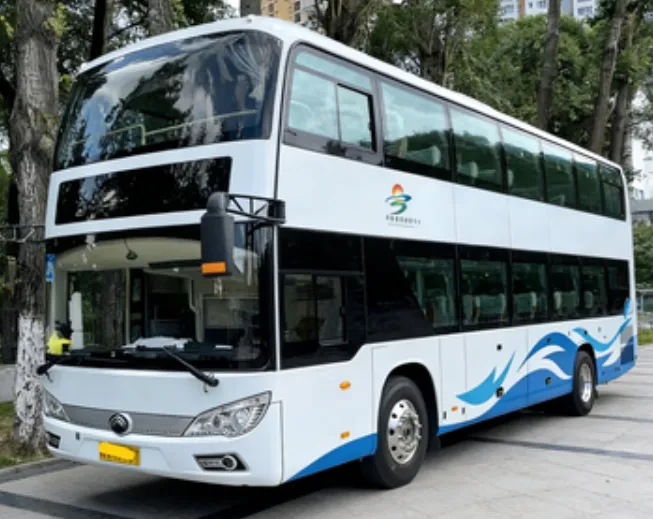
While the railway dominates this route, long-distance buses remain a viable alternative for specific travel needs, particularly for those heading to suburban areas.
4.1 Main Departure Hubs in Chengdu
Buses between the two cities operate from multiple key terminals in both Chengdu and Chongqing:
In Chengdu:
-
Chengdu East Bus Station: Located adjacent to the Chengdu East Railway Station, this is the most convenient hub for intermodal transfers.
-
Chadianzi Bus Station: Primarily serves routes to western and northern Sichuan, but also hosts some inter-city coaches.
-
Xinnanmen Bus Station (Chengdu Tourism Dispatch Center): Best for tourists, though it has fewer daily departures for this specific route than Chengdu East.
In Chongqing:
-
Chongqing Long-distance Bus Station (Caiyuanba): Located near the older Chongqing Railway Station, it serves as a major hub for traditional routes.
-
Chenjiaping Bus Station: Primarily handles traffic heading towards western destinations like Chengdu.
-
Chongqing North Railway Station Bus Terminal: Convenient for those arriving by train who need to transfer to a bus for suburban travel.
-
Sigongli Interchange Station: A key hub in the south of the city, well-connected to the Metro system.
4.2 Travel Time and Cost
-
Travel Time: Typically between 3.5 and 4.5 hours. Unlike the train, buses are subject to traffic conditions on the G93 Chengyu Ring Expressway or the G5013 Yu-Rong Expressway.
-
Ticket Cost: Prices are generally stable, ranging from ¥100 to ¥120. This makes it cheaper than a G-train but more expensive than a D-train or a regular train.
4.3 Where to Buy Tickets
Booking bus tickets can be done through both digital and physical channels:
-
At the Station: You can purchase tickets directly at the ticket windows or self-service kiosks at any of the major bus stations mentioned above. A valid ID (passport for foreigners) is required.
-
Online Platforms: * Trip.com: The most international-friendly option, offering English support and credit card payments.
-
WeChat Mini-Programs: Search for "Sichuan Coach" (Sichuan Qiche Piao) or specific station names within WeChat. Note that these are typically in Chinese and may require a local phone number.
-
-
Advanced Booking: It is recommended to buy tickets 1-2 days in advance during weekends, and at least a week in advance during public holidays.
4.4 Pros and Cons of Bus Travel
-
Pros:
- Direct Access to Suburbs: Buses often stop at secondary districts in Chongqing (like Bishan or Yongchuan) that might be far from the main high-speed rail hubs.
-
Short-Notice Availability: If train tickets are sold out during a holiday, buses are often the last reliable backup.
-
Cons:
-
Traffic Risk: Significant delays can occur during Friday evening rushes or rainy weather.
-
Comfort: While most coaches are "Gaoji" (High-end) with air conditioning and reclining seats, there is no space to walk around, and onboard restrooms are rare (drivers usually make one rest stop).
-
4.5 Best For
Travelers whose final destination is a specific suburban town not served by high-speed rail, or those who failed to secure a train ticket during peak travel seasons.
5. Flights from Chengdu to Chongqing
Currently, there are no direct commercial flights between Chengdu and Chongqing city centers due to the overwhelming efficiency of the high-speed rail network. Any flight search will typically result in 4-8 hour journeys with mid-way stopovers in cities like Xi'an or Wuhan.
However, for travelers arriving by air from international or long-haul domestic locations, understanding airport connectivity is vital.
5.1 Airport Hubs Overview
-
Chengdu Shuangliu (CTU): Located closer to the city; has its own high-speed railway station (Shuangliu Airport Station) in the basement of Terminal 2.
-
Chengdu Tianfu (TFU): The main international hub. It is connected to the city via Metro Line 18 and also has a high-speed rail station (Tianfu Airport Station) with direct links to Zigong and Yibin.
-
Chongqing Jiangbei (CKG): Well-connected via Metro Lines 3 and 10 to major railway hubs.
5.2 Best Strategy for Air Travelers
If your flight lands in Chengdu and your final destination is Chongqing (or vice versa):
-
Do NOT book a connecting flight. It will take significantly longer than any other method.
-
Use the "Airport High-Speed Rail" Link: From Chengdu Shuangliu (CTU), you can take a high-speed train directly from the airport station to Chengdu East, then transfer to a 1-hour G-train to Chongqing.
-
From Tianfu (TFU): Take Metro Line 18 to Chengdu East Station (approx. 45-50 mins) and then board a high-speed train to Chongqing.
5.3 Pros and Cons
-
Pros: Efficient for long-haul travelers to enter the high-speed rail network directly from the terminal.
-
Cons: No direct flight exists; navigating large airports like TFU can be time-consuming for first-time visitors.
5.4 Best For
International arrivals or domestic travelers from remote provinces (e.g., Xinjiang, Heilongjiang) who need to bridge the gap between Chengdu and Chongqing as part of a larger itinerary.
6. Which Transportation Option Is Best?
Choosing the right transport depends entirely on your priorities. Here is a definitive breakdown of the best options for different scenarios:
6.1 Best Overall for Most Travelers
Option: G-Series High-Speed Train (Chengdu East to Chongqing North)
-
Why: It is the fastest, most reliable, and most frequent option. For approximately ¥154, you get a seat on a world-class bullet train that delivers you right into the city center in just over an hour.
6.2 The Fastest Way (Door-to-Door)
Option: The "62-minute" Non-stop Fuxing Hao
-
Why: If you manage to book one of the non-stop G-trains, you will spend less time traveling between these two megacities than most people spend on their daily commute. It is undeniably the most time-efficient method.
6.3 The Cheapest Way (For Extreme Budgeting)
Option: K-Series Regular Train (Hard Seat)
-
Why: At roughly ¥46, this costs less than a single cocktail at a rooftop bar in Chongqing. While it takes 4-5 hours and lacks modern luxuries, it is the ultimate choice for backpackers on a shoestring budget.
6.4 Most Comfortable/Premium Experience
Option: Business Class on G-Series Train
-
Why: Skip the flight (as there are no direct ones) and choose a Business Class seat. You will have a fully reclining pod, personal entertainment, high-quality snacks, and priority boarding. It offers more space and better service than a short-haul flight's first-class cabin.
6.5 Best for International Transit
Option: High-Speed Rail from Airport Stations
-
Why: If you land at Chengdu Shuangliu, the airport's integrated railway station allows you to start your journey to Chongqing without ever leaving the airport building.
Travel Tip: Most major stations offer Left Luggage (行李寄存) services. If you have a few hours between a flight and a train, you can store your bags and explore nearby areas.
7. Practical Advice for Train Ticket Booking and Stations
Successfully navigating the booking systems and large terminals in China is essential for a stress-free trip.
7.1 Ticket Booking Platforms
-
Official Rail App (12306):

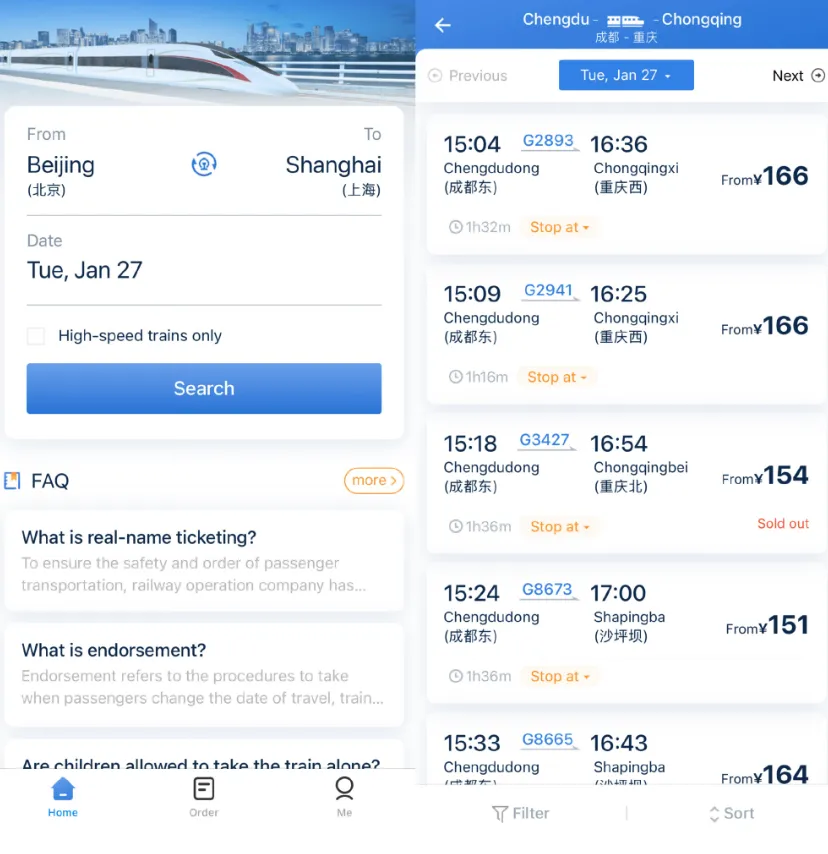 The China Railway 12306 app is the most reliable source for train tickets. It now has a dedicated English version and supports international credit cards (Visa/Mastercard). Booking directly here avoids service fees.
 -
Third-Party Platforms (Trip.com): For many international travelers, Trip.com is the easiest option for both trains and long-haul flights into the region. It has a superior English UI and excellent customer support, though it charges a small service fee per train ticket.
7.2 ID and Boarding Requirements for Foreign Travelers
-
Passport is Mandatory: Your passport serves as your ticket for all forms of long-distance transport. When booking online, ensure the name and passport number match your document exactly.
-
E-Ticket System: China has transitioned to a paperless system. You do not need to pick up a physical ticket. Simply scan your passport at the manual "Staff" channel at the railway station entrance and boarding gates.
-
Arrival Time: For trains, arrive at the station at least 45–60 minutes before departure to clear security and find your gate.
7.3 Best Stations and Airports to Use
-
In Chengdu: Use Chengdu East (Dong) for almost all high-speed rail. Avoid the old "Chengdu Station" (North Station) unless you are taking a regular K-train.
-
In Chongqing: Chongqing North (Bei) is generally closer to the popular Jiefangbei area. Chongqing West (Xi) is newer but slightly further from the city center.
7.4 Travel Tips During Chinese Holidays
-
Book 15 Days in Advance: Train tickets are released exactly 15 days before departure at a specific time. During Chinese New Year or Golden Week (October 1-7), they sell out in seconds.
-
Alternative "End-to-End" Booking: If tickets to Chongqing are sold out, try searching for a ticket to a station further down the line and simply getting off early at Chongqing.
-
Expect Crowds: Stations will be extremely busy. Allow an extra 30 minutes for security lines during holiday periods.
8. Frequently Asked Questions (FAQ)
Q: Are G-series trains worth the higher price?
A: Yes. For a difference of only about ¥50, you save over an hour of travel time and enjoy a much smoother, quieter ride.
Q: Can I fly directly from Chengdu to Chongqing?
A: No, there are currently no direct commercial flights between the two cities due to the high-speed rail competition.
Q: How do I pay for tickets online?
A: The official 12306 app now accepts major international credit cards like Visa, Mastercard, and JCB. Alternatively, you can use WeChat Pay or Alipay if they are linked to your card.
Q: What is the luggage allowance on high-speed trains?
A: Generally, each adult is allowed 20kg of carry-on luggage. While there isn't a strict "check-in" process, bulky items must fit in the racks at the end of each carriage or above the seats.
Q: What happens if I miss my train?
A: If you miss your train, you can usually change it to a later train on the same day for free at the station ticket window, provided seats are available. However, you cannot get a refund after the train has departed.
Q: Is there Wi-Fi on the trains?
A: Most G-series Fuxing Hao trains offer free Wi-Fi, but you usually need a Chinese phone number to receive a verification code to log in. 4G/5G signal is generally strong throughout the journey.
9. Conclusion
For the vast majority of visitors, the High-Speed G-train is the undisputed champion of the Chengdu–Chongqing route. It offers a futuristic, efficient, and affordable way to traverse the Sichuan Basin. We recommend booking your tickets at least 2–3 days in advance and arriving at the station 45 minutes before departure to navigate the security checks. Enjoy your journey through the heart of Southwest China!
Related guide: Chengdu Metro Guide; Chongqing Metro Guide; Chongqing Yangtze River Cableway Guide