Taking the High-Speed Rail from Hong Kong to Mainland China? A complete 2026 guide to West Kowloon Station, covering 12306 tickets, Co-location immigration, and boarding times.
As the southern terminus of the colossal Guangzhou–Shenzhen–Hong Kong Express Rail Link (High-Speed Rail or HSR), HKWKS is more than just a train station—it is Hong Kong’s high-tech gateway to over 60 destinations across Mainland China, including Shenzhen, Guangzhou, Shanghai, and Beijing.
This guide is designed for first-time visitors and seasoned travellers alike, providing essential, up-to-date information on ticketing, customs procedures, and facilities, ensuring your HSR journey is smooth, efficient, and stress-free.
📌 West Kowloon Station Survival Rules
-
The 45-Minute Cutoff: You MUST pass through the ticketing gates at least 45 minutes before departure, or you will miss your train. Arrive at the station 60–90 minutes early!
-
Two Borders, One Building: The station features "Co-location." You will go through Hong Kong Exit Customs AND Mainland China Entry Customs back-to-back on Level B3 before you board the train.
-
Visas are Required: Once you pass the checkpoint on Level B3, you are legally in Mainland China. You must have a valid Chinese visa or qualify for visa-free entry.
-
Paperless Boarding: If you booked on the 12306 app, your physical passport is your ticket. Swipe it at the turnstiles!
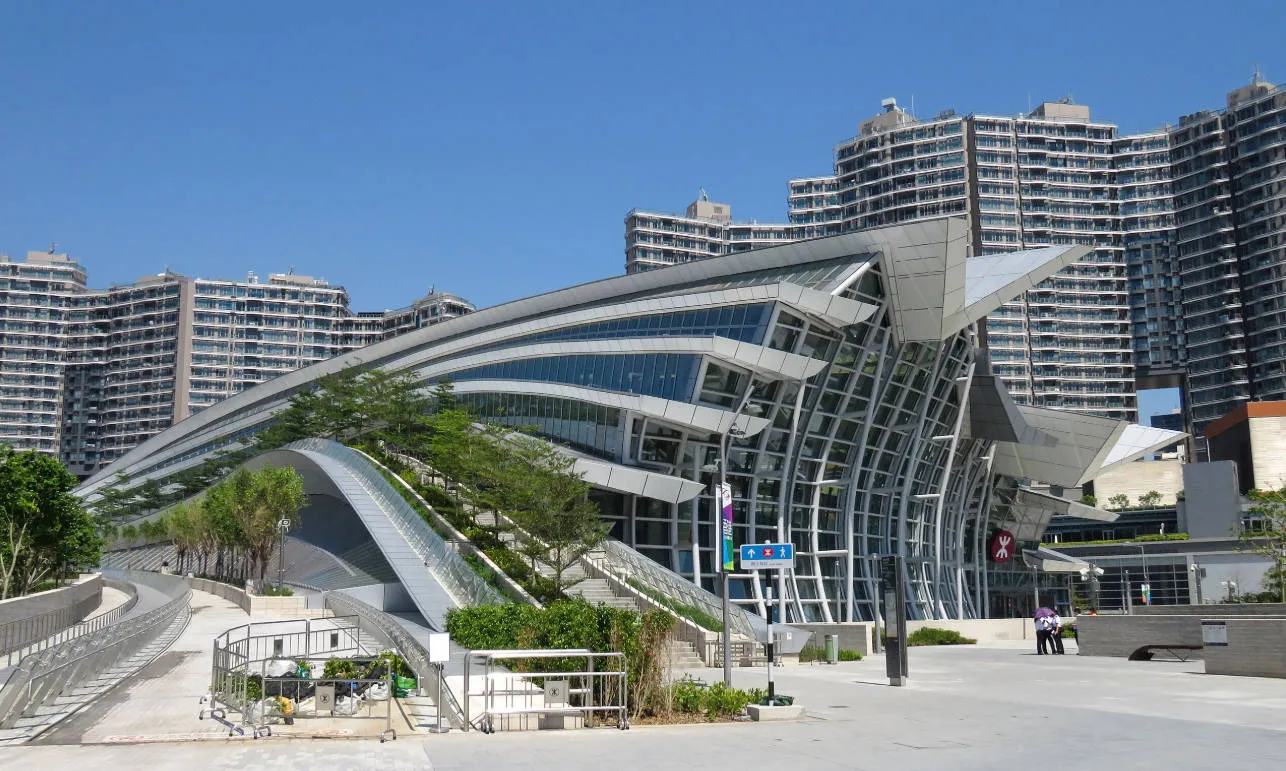
I. Getting to Hong Kong West Kowloon Station
HKWKS is strategically located in the heart of the West Kowloon Cultural District, making it highly accessible via multiple transport options.
1. MTR (Subway) Connections
The station is strategically connected to two major MTR stations by dedicated, covered walkways. This is generally the fastest and most reliable way to get there from within the city.
| MTR Station | MTR Line(s) | Connection to HK West Kowloon Station | Estimated Walk Time |
| Austin Station | Tuen Ma Line | Directly connected via an underground subway and an overhead footbridge. | ~2 to 3 minutes |
| Kowloon Station | Airport Express & Tung Chung Line | Directly connected via a covered footbridge that passes through the Elements shopping mall. | ~8 to 12 minutes |
Pro Tip: If you are coming from the New Territories or Tsim Sha Tsui, Austin Station (Tuen Ma Line) is the most convenient and quickest walk.
2. Bus Services
HK West Kowloon Station is served by a large number of franchised bus routes, with a dedicated West Kowloon Station Bus Terminus located on the ground floor.
-
City Bus / KMB Routes: Many routes serve the station, connecting it to Kowloon, Hong Kong Island, and the New Territories.
-
Look for routes that terminate at or pass through the West Kowloon Station Bus Terminus or the nearby Kowloon Station Public Transport Interchange.
-
Examples include routes like 36B, 42A, 46, 81, 95, 271, and cross-harbour routes like 970 and 971.
-
-
Minibuses: Several green minibus routes also stop near the station.
3. Taxi / Private Car
-
Drop-off: Taxis and private cars can drop passengers off directly at Level B1 of the station.
-
Pick-up: The designated taxi stand for pick-up is located on Level B2.
4. Walking and Accessibility
The station is fully integrated with surrounding pedestrian paths, including bridges to the West Kowloon Cultural District, ideal for pre- or post-travel relaxation. All routes are barrier-free and accessible.
5. From Hong Kong International Airport (HKG)
There are several fast and economical options if you are coming directly from the airport.
| Mode of Transport | Route/Connection | Estimated Time | Estimated Cost (HKD) |
| Airport Express (MTR) | Airport Station → Kowloon Station | ~23-29 minutes | $95-$120 |
| Airport Bus | Route A22 to Austin Station (Jordan Road) or A25 to Wui Cheung Road | ~20-60+ minutes | $35-$50 |
| Taxi | Direct Ride | ~24 minutes (without heavy traffic) | $340-$410 |
Note: For the Airport Express, you will arrive at Kowloon Station and then take the 8-12 minute walk via the footbridge to HK West Kowloon Station.
II. Station Layout & Key Facilities
The HKWKS is a massive, multi-level underground terminal, often compared to an airport in terms of its design and the border control processes it houses. It is the southernmost terminus of China's national High-Speed Rail network.
1. Station Layout: Five Levels
The station consists of five main levels, with four below ground (B1 to B4) and one on the surface (G). The levels are designed for clear, separated flows for arriving and departing passengers.
| Level | Primary Function | Key Features & Facilities |
| G (Ground Floor) | Entrance, Public Space & Transport |
* Main Entrance/Lobby (The "Sky Corridor") with high ceilings and natural light. * Public Green Plaza/Rooftop Promenade with city views. * Bus Terminus and Taxi Drop-off Area. * Pedestrian connections to Austin Station (MTR) and the West Kowloon Cultural District. |
| B1 | Ticketing & Public Facilities |
* Ticket Office/Ticketing Counters (Hong Kong and Mainland tickets). * Ticket Vending Machines. * Information Counter, ATMs, shops, and restaurants. * Priority Lane for First/Business Class and passengers with special needs. |
| B2 | Arrivals Concourse & Immigration |
* Arrival Hall for passengers arriving from the Mainland. * Co-location Checkpoint: Includes both Mainland and Hong Kong Clearance Areas for arrivals. * Taxi Stand, MTR e-Store, and connection to the MTR Austin Station subway. |
| B3 | Departures Concourse & Immigration |
* Departure Hall (Waiting Hall) for passengers boarding trains. * Co-location Checkpoint: Where passengers complete all border formalities before boarding. * The Lounge (for First/Business Class passengers). |
| B4 | Platforms |
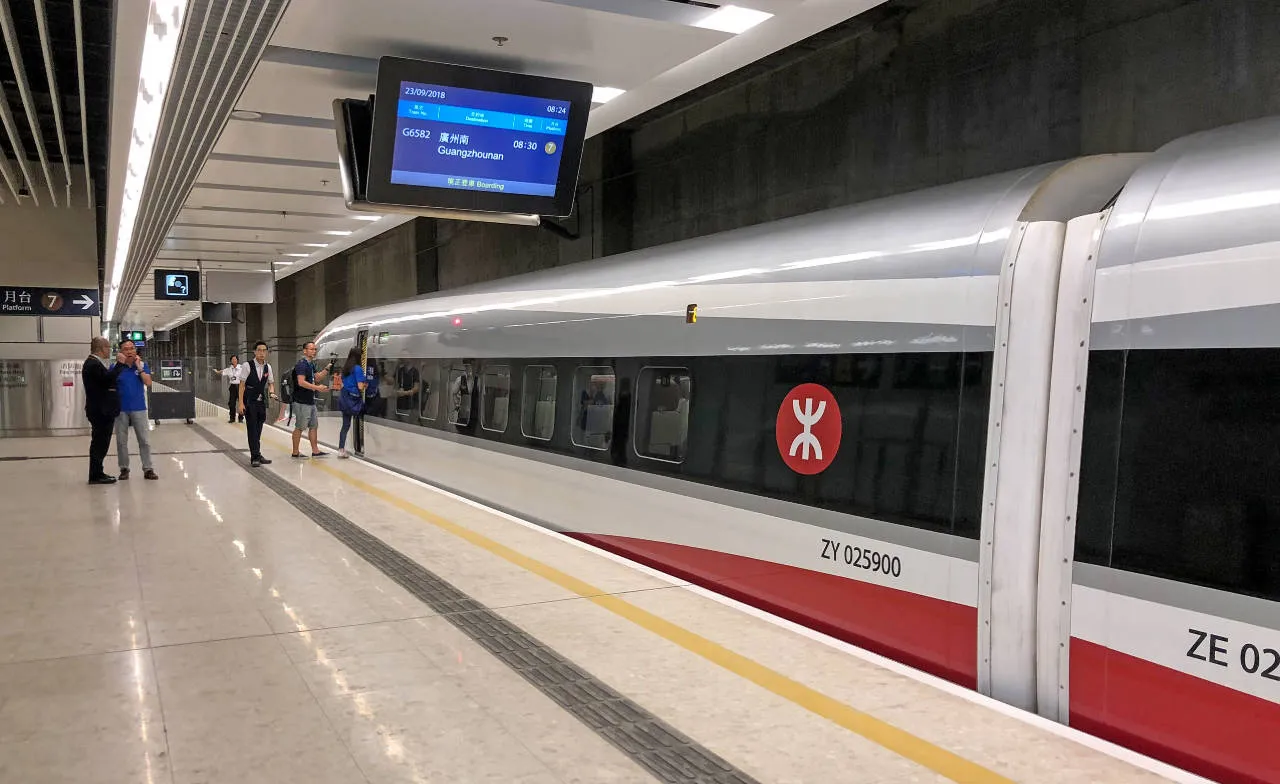
* 15 Platforms in total (9 for Long-Haul, 6 for Short-Haul trains). * Dedicated platforms for boarding and alighting on short-haul tracks (Spanish Solution). |
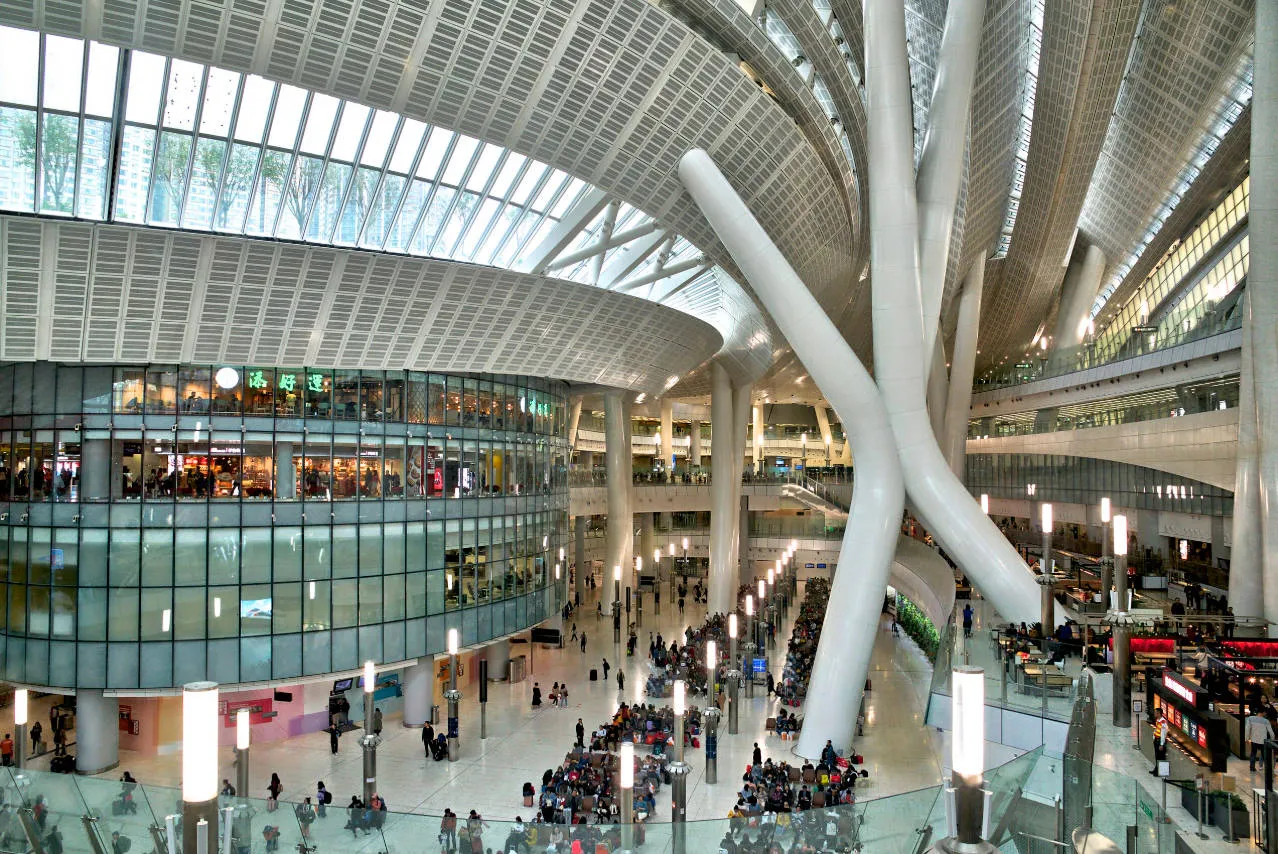
2. Key Facilities & Traveler Services
-
Co-location Border Control: This is the most defining feature. Passengers complete both Hong Kong and Mainland immigration and customs clearance within the B2 (Arrivals) and B3 (Departures) levels of the station. This is necessary before boarding the train.
-
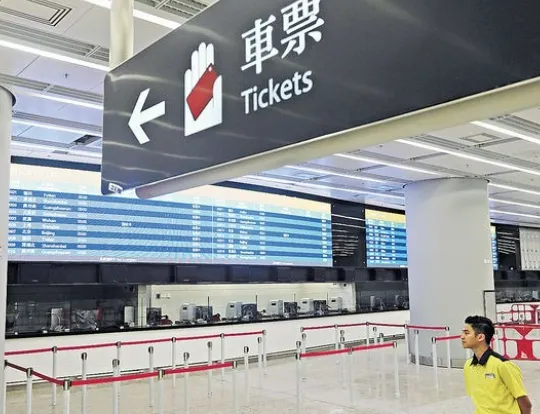
Ticketing: Counters are located primarily on Level B1 for both Hong Kong and Mainland railway operators.
-
Waiting Areas: The main waiting hall for departing passengers is on Level B3 (within the Mainland Port Area). Additional seating is available throughout the station concourses.
-
Wi-Fi & Charging:
-
Free Wi-Fi is available (look for "MTR Free Wi-Fi").
-
Mobile Charging Facilities (including USB sockets) are provided on Levels G, B1, B2, and B3.
-
-
Retail & Dining: A selection of shops, fast-food, and dining options are available primarily on Level B1 and the Ground Floor. More extensive shopping and dining can be found via the covered walkway to the nearby Elements Mall (connected via Kowloon Station).
-
Accessibility: The station is fully equipped with elevators, escalators, and accessible restrooms. A Priority Lane is designated on B1 for smooth ticket verification and security check for passengers with special needs.
III. High-Speed Rail (HSR) Ticketing & Booking 2026
The ticketing process for the High-Speed Rail (HSR) service from Hong Kong West Kowloon Station is different from many other international rail services due to China's "real-name ticketing" policy and the dual ticketing systems. Booking your HSR ticket efficiently is key to a smooth journey.
1. Booking Channels
There are three primary ways to purchase tickets, with the official Mainland system being the most comprehensive.
A. China Railway 12306 (Official Mainland Platform)
This is the official online ticketing system for the entire China Railway network.
-
Website/App: www.12306.cn (and the official China Railway 12306 mobile app, which offers an English interface).
-
Payment: Accepts international credit cards (Visa, Mastercard, UnionPay) and various Mainland designated payment methods.
-
Ticket Window: Tickets are typically released 15 days before the departure date, but you can check specific travel periods.
-
Key Advantage: It offers the widest selection of trains, seats, and long-haul routes across the entire Chinese HSR network. Account registration and real-name verification (with your passport/ID) are required before booking.
B. Hong Kong MTR (Local Ticketing Channels)
The local operator offers more convenient payment options for HK residents and visitors.
-
At HK West Kowloon Station (Level B1):
-
Ticketing Counters: Accept HKD cash, RMB, Visa, Mastercard, UnionPay, Octopus, and mobile payments (Alipay, WeChat Pay, Apple Pay, Google Pay).
-
Self-service Ticket Machines: Accept contactless cards (Visa PayWave, Mastercard PayPass, etc.) and mobile payments. Note: These machines typically only recognize certain Mainland-issued ID documents (e.g., Home Return Permits, Mainland Resident ID Cards) and some passports for purchase.
-
-
Website/Mobile App: The MTR's designated online platform.
-
Ticket Window: Generally the same as the 12306 system.
-
Fare Currency: Tickets purchased through HK channels are usually settled in HKD.
C. Authorized Agencies (Online & Offline)
Many international travel agencies (like Trip.com or Klook) and local HK travel agents offer booking services.
-
Key Advantage: These platforms are often more user-friendly, have better English customer support, and can sometimes be booked further in advance (as they manually process the ticket once the official window opens).
-
Note: A service fee is usually charged.
2. Real-Name Ticketing & Required Documents
China's HSR operates on a strict Real-Name Ticketing System.
-
The Golden Rule: The name and ID number on your ticket MUST exactly match your original travel document.
-
Required Documents: You must use one of the following valid, original documents for booking and boarding:
-
Passport (Foreigners)
-
Mainland Travel Permit for Hong Kong/Macao Residents (Home Return Permit)
-
Mainland Travel Permit for Taiwan Residents
-
PRC Resident Identity Card (Mainland citizens)
-
3. Boarding with E-Tickets (No Paper Ticket Needed)
The process is generally paperless and streamlined, especially for non-Mainland travelers.
A. Skip the Line: You do not usually need to collect a paper ticket at the counter.
B. Go Directly to B1: Proceed to the Ticketing Concourse on Level B1 for Real-name Check and Ticket Verification.
C. Use Your ID: At the self-service gate or a staffed counter, simply present the original identification document (e.g., your Passport) that you used for booking. The system will read your document, verify your booking electronically, and allow you to proceed to the security check.
Crucial Tip: You must pass the Real-name Check/Verification and complete Security Check procedures at least 45 minutes before the scheduled departure time for trains leaving HK West Kowloon. Allow at least 1 hour during peak periods (weekends, holidays) or if you need to use a manual counter.
4. Ticket Classes, Types and Refunds
A. The HSR trains generally offer three main classes:
| Class | Description | Suitability |
| Second Class Seat (二等座) | Standard, comfortable seating, 3+2 configuration. | Most common and affordable. Perfect for short-haul trips (e.g., Shenzhen, Guangzhou). |
| First Class Seat (一等座) | Wider, more spacious seats, 2+2 configuration, more legroom. | Recommended for longer journeys (e.g., Shanghai, Beijing). |
| Business Class Seat (商务座) | Premium, lie-flat seats (typically 1+2 configuration), dedicated service, and priority access to a lounge. | Ideal for executives or those seeking maximum comfort on long-haul routes. |
Pro Tip: For e-tickets booked via the 12306 platform, your original travel document (e.g., passport) acts as your ticket. Simply swipe it at the turnstile for entry/exit.
B. The HSR system defines tickets based on the passenger's age and status:
-
Adult Ticket (成人票): For passengers aged 14 or above.
-
Child Ticket (兒童票):
-
Applicable to children aged 6 but under 14.
-
The fare is typically 50% of the Adult Second Class Published Fare (or slightly higher for higher classes).
-
The child must purchase a ticket using their own original ID.
-
-
Infant/Child Free (No Seat):
-
Children under 6 years old travel free, provided they are accompanied by a ticketed adult (aged 18+) and do not occupy a separate seat.
-
Only one child under 6 may travel free per paying adult. If you have two children under 6 or require a seat for the first child, you must purchase a Child Ticket.
-
-
Student Tickets: Discounted tickets (typically 75% of the Adult fare) are available but often require a Mainland-issued student ID and must be purchased at dedicated ticketing counters.
C. Refund and Change Fees:
Refund fees are assessed based on the time elapsed between the cancellation and the scheduled departure (fees calculated against the original RMB fare).
| Time Before Departure | Refund Fee Charged |
| 8 days or more | None (or minimal service charge) |
| 48 hours to 7 days | 5% of the fare |
| 24 hours to 48 hours | 10% of the fare |
| Less than 24 hours | 20% of the fare |
IV. The Co-location Border Control: Customs & Immigration Process
The Co-location Border Control at Hong Kong West Kowloon Station is a streamlined process known as "Two Inspections at One Place" (一地两检), allowing passengers to complete all required customs and immigration formalities for both Hong Kong and Mainland China in a single flow within the station.
This system is divided into two separate flows: Departures to the Mainland and Arrivals from the Mainland.
1. Departure Process (Hong Kong to Mainland China)
This entire process must be completed before boarding the train. Passengers transit from Hong Kong jurisdiction into the Mainland Port Area (MPA) at Level B3.
A. Pre-Clearance Steps (Hong Kong Port Area)
| Step | Location | Action | Jurisdiction |
| Real-name Check & Ticket Verification | Level B1 (Ticketing Concourse) | Present your original travel document (e.g., Passport, Home Return Permit) at the self-service gate or staff counter to electronically verify your ticket against your identity. | Hong Kong |
| Security Check | Level B1/B3 Transition | Pass through the Hong Kong-operated security screening (X-ray for baggage, walk-through metal detector). | Hong Kong |
| Hong Kong Immigration (Exit) | Level B3 (Departure Concourse) | Present your travel document to Hong Kong Immigration Officers (or use an e-Channel if eligible) to formally exit the Hong Kong Special Administrative Region (HKSAR). | Hong Kong |
| Hong Kong Customs (Exit) | Level B3 | Pass through the Hong Kong Customs checkpoint. | Hong Kong |
B. Mainland Clearance Steps (Mainland Port Area)
| Step | Location | Action | Jurisdiction |
| Mainland Immigration (Entry) | Level B3 (MPA) | Present your travel document and required visa (if applicable) to Mainland China Immigration Inspection (CIQ) officers to formally enter the Mainland. | Mainland China |
| Mainland Customs & Quarantine (Entry) | Level B3 (MPA) | Pass through the Mainland's Customs and Quarantine checkpoint (baggage X-ray, declaration). Be mindful of Mainland China's rules regarding prohibited items (e.g., certain foods, restricted publications). | Mainland China |
| Boarding | Level B3/B4 (Waiting Hall & Platform) | Proceed to the designated waiting area and platform (Level B4) to board your train. | Mainland China |
2. Arrival Process (Mainland China to Hong Kong)
This process is completed after alighting from the train. Passengers alight in the MPA and then pass into Hong Kong jurisdiction.
-
Alight from Train: You step off the train onto the platform on Level B4, which is part of the Mainland Port Area (MPA).
-
Mainland Exit Clearance: You proceed from Level B4 up to Level B2 where you pass through Mainland Immigration and Customs to formally exit the Mainland.
-
Hong Kong Entry Clearance: Immediately after exiting the MPA, you enter the Hong Kong Port Area on Level B2. You then proceed through Hong Kong Immigration (to formally enter the HKSAR) and Hong Kong Customs.
- Exit Station: Once cleared, you can proceed through the Arrival Concourse on Level B2 to the rest of the station and the city's transport links.
3. Key Jurisdictional Point
The efficiency of this system rests entirely on the Mainland Port Area (MPA).
-
Location: The MPA is a defined zone within HK West Kowloon Station (including parts of B2, B3, B4 platforms, and the train carriages themselves while in Hong Kong).
-
Law: For the purpose of applying law and jurisdiction, the MPA is legally "deemed to be situated in the Mainland."
-
Enforcement: Mainland Chinese laws are enforced by Mainland Chinese officers (Customs, Immigration, and Public Security) exclusively within the MPA. They have no law enforcement authority outside of this designated area.
Crucial Documents: Always have your passport, visa (if required), or Mainland Travel Permit ready. The process requires two separate immigration checks.
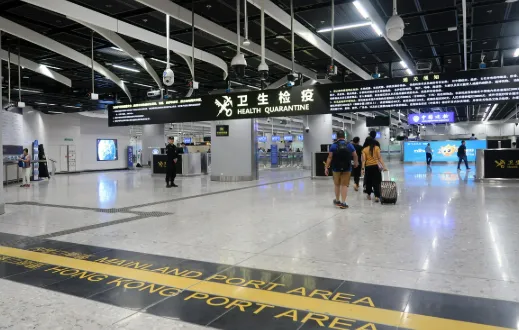
⚠️ Critical Warning: The Mainland Port Area (MPA) & Visas
Do not let the geography fool you! Even though you are physically still in downtown Hong Kong, the moment you cross the yellow line on Level B3 into the Mainland Port Area, you are subject to Mainland Chinese Law. There are NO "Visa on Arrival" counters inside West Kowloon Station. If you do not hold a valid Chinese Visa, an APEC card, or a passport eligible for visa-free entry, you will be denied entry by Mainland officers and sent back to the Hong Kong side.
V. Travel Destinations & Key Routes 2026
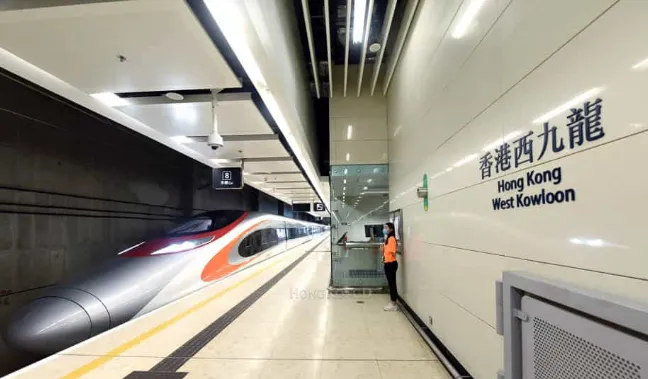
The Hong Kong West Kowloon Station serves as the gateway to Mainland China's vast High-Speed Rail (HSR) network, which is one of the most extensive in the world. As of 2026, the station provides direct service to over 96 destinations across the Mainland, connecting travelers to major economic and cultural hubs.
The routes are generally categorized into short-haul (within Guangdong Province) and long-haul (to destinations across the country).
1. Short-Haul Routes (Guangdong Province)
These routes are the most frequent and offer rapid transit within the Greater Bay Area (GBA), often taking less than an hour.
| Destination (Station) | Travel Time (Fastest) | Key Feature |
| Shenzhen Futian | ~14 minutes | Financial and commercial heart of Shenzhen; excellent metro connections. |
| Shenzhen North (Shenzhenbei) | ~18-30 minutes | Major HSR interchange, linking to many long-haul routes. |
| Humen (Dongguan) | ~30 minutes | Located in Dongguan City, a key manufacturing and technology hub. |
| Guangzhou South (Guangzhounan) | ~43-60 minutes | Major interchange for all of southern China; connects to Guangzhou Metro. |
| Guangzhou East (Guangzhoudong) | ~1 hour 20 minutes | Offers a more central Guangzhou arrival point compared to Guangzhou South. |
Ideal For: Day trips, quick business meetings, and connections within the Greater Bay Area.
2. Key Long-Haul Routes (National Network)
Direct long-haul routes connect Hong Kong to iconic cities across China, utilizing the HSR network's high-speed lines. The travel times below are estimates for the fastest direct trains and are competitive with flying when considering airport travel time and check-in.
| Destination (Station) | Travel Time (Approx.) | Key Feature |
| Beijing West (Beijingxi) | ~8.5 - 9 hours | Capital city, gateway to the northern rail network. The longest direct route. |
| Shanghai Hongqiao | ~8 - 8.5 hours | China's financial capital, major Eastern hub, connects to Hangzhou and the Yangtze River Delta. |
| Xiamen North (Xiamenbei) | ~3.5 - 4 hours | Coastal city with a relaxing, tropical atmosphere (near Gulangyu Island). |
| Changsha South (Changshanan) | ~3 - 3.5 hours | Capital of Hunan Province, known for spicy cuisine and cultural sites (Mao Zedong's birthplace). |
| Wuhan | ~4 - 4.5 hours | Central China hub, a major crossing point on the Yangtze River. |
| Chengdu East (Chenguodong) | ~7.5 - 8.5 hours | Capital of Sichuan Province, famous for Giant Pandas and spicy Sichuan cuisine. |
| Kunming South (Kunmingnan) | ~7.5 hours | Capital of Yunnan Province, known as the "City of Eternal Spring." |
| Guilin West (Guilinxi) | ~3 hours | Gateway to the famous karst mountain and Li River scenery in Guangxi. |
3. New/Notable Destinations (Post-2024 Additions)
The network is constantly expanding, with recent additions providing direct access to unique tourist and cultural locations:
-
Jingdezhenbei (Jiangxi): Known as the "Porcelain Capital."
-
Furongzhen (Hunan): A scenic ancient town built on cliffs above a waterfall.
-
Enping (Guangdong): A prominent ancestral hometown for many overseas Chinese and a hot spring resort area.
4. Travel Flexibility: Interchange Opportunities
While the direct trains are convenient, the greatest value of HK West Kowloon is its connection to the entire national HSR network. By utilizing the following interchanges, you can reach virtually any city with an HSR station:
-
Shenzhen North (Shenzhenbei): An ideal hub for changing to other trains heading up the eastern coastal line or routes toward the Southwest (e.g., Xi'an, Chongqing).
-
Guangzhou South (Guangzhounan): The largest hub in Southern China, offering connections to trains heading to the Yangtze River Delta, the Southwest, and Central China.
VI. Essential Travel Tips for HK West Kowloon Station (2026)
1. When to Arrive
The check-in process, including the co-location clearance, closes 45 minutes before the scheduled train departure.
-
General Rule: Arrive at B1 at least 60 minutes prior to departure.
-
Peak Season: Allow 90 minutes during major holidays (e.g., Chinese New Year, Golden Week).
2. Luggage Rules
There are strict luggage size and weight restrictions on the HSR:
-
Standard Limit: Total length, width, and height of each item must not exceed 130cm.
-
Weight Limit: 20 kg for adults, 10 kg for children.
-
Oversized items must be shipped separately.
3. Food & Dining
A variety of dining options are available on B1 and B3, including fast food, local Hong Kong snacks, and coffee shops. Note: Once on the train, options are more limited, so it’s wise to purchase any specific meal or drink before boarding.
4. Connectivity
Free Wi-Fi is available throughout the station. Charging points are located in the waiting areas on B3.
5. Exit Process (Arrival in HK)
Upon arrival in HKWKS:
-
Mainland Exit (B2): Complete Mainland China exit formalities (within the HK station).
-
Hong Kong Entry (B2): Complete Hong Kong entry formalities.
-
Exit B1: Proceed to the main hall (B1) and the MTR/Taxi/Bus connections.
The Hong Kong West Kowloon Station is a masterclass in modern infrastructure, offering a hyper-efficient travel experience through the co-location arrangement. By following this 2026 guide, you can confidently navigate the ticketing, customs, and boarding process, making your HSR trip into Mainland China a seamless part of your itinerary. Safe travels!
Frequently Asked Questions (FAQ)
Q: What are the station's service hours?
A: The station is open daily from 6:00 AM to 12:00 Midnight.
Q: Where do I clear Hong Kong and Mainland Customs/Immigration?
A: All clearance (for both Hong Kong Exit and Mainland Entry/Exit) takes place within the station's Co-location Zone on Levels B2 (Arrivals) and B3 (Departures).
Q: Do I need a Chinese Visa?
A: Yes. Entering the Mainland Port Area (MPA) on Level B3 is legally considered entering Mainland China. Foreign passport holders must have a valid visa or qualify for visa-free entry to the Mainland.
Q: What MTR stations connect to HK West Kowloon?
A: Austin Station (Tuen Ma Line) - Quickest walk (2-3 minutes) via underground passage. Kowloon Station (Airport Express & Tung Chung Line) - Connected via a covered footbridge through Elements Mall (8-12 minute walk).
Q: Can I bring restricted items like alcohol, nail polish, or knives?
A: Be cautious. Mainland Customs rules apply once you enter the Mainland Port Area. Strictly prohibited items include explosives and weapons. Restricted items with limits often include flammable liquids (like high-proof alcohol, nail polish, hair dye, and aerosols). Check specific Mainland China HSR regulations before traveling.